

Reviewed · SEOUL
Seoul : Suwon Hwaseong Fortress+Starfield Library+Waujeongsa
Suwon Hwaseong Fortress gives this day trip its backbone: a 5.7-kilometer Joseon-era defensive wall built in the 18th century to honor the king’s father. I like that the tour pairs this serious piece of Korean history with Starfield Library, a modern photo stop filled with towering bookshelves. It is a useful way to see two very different sides of Gyeonggi Province in one day.
I also like the hands-on finish. Making your own kimbap and trying hanbok at the cultural center gives you something to do, not just something to photograph. Guides including Andrew, April, Sean Kim, and Jinyong have been praised for clear explanations and a friendly approach. The catch is the amount of walking, so comfortable shoes are essential, and the schedule may change with traffic or weather.
Key points at a glance
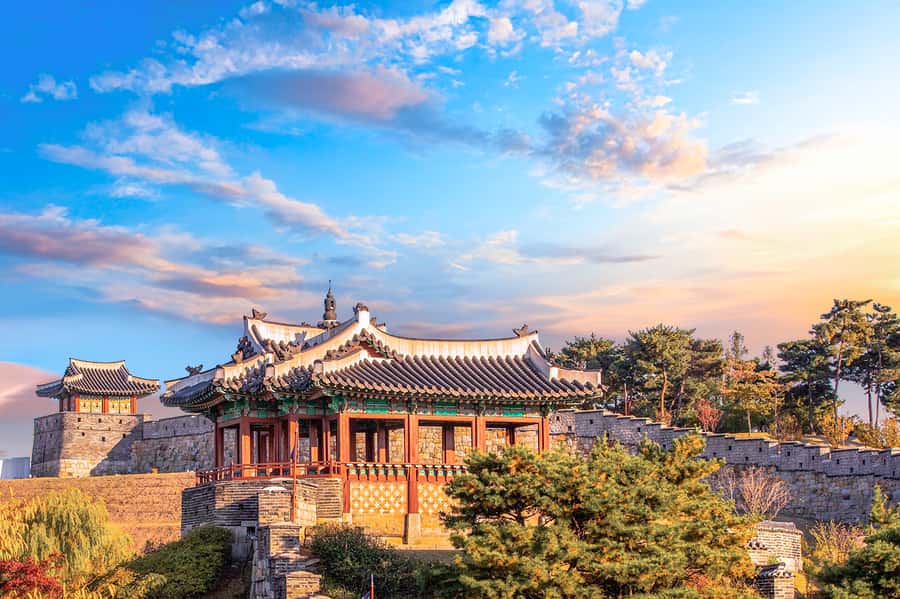
- Walk a UNESCO-listed fortress: Suwon Hwaseong stretches about 5.7 kilometers and offers views along its walls and defensive structures.
- See Suwon’s modern side: Starfield Library is a large, carefully designed reading space and a popular place for photographs.
- Visit a peaceful Buddhist temple: Waujeongsa features a gold-leaf Buddha over 10 meters tall, stone sculptures, a pagoda, and a stone bell.
- Make kimbap yourself: The cultural center includes a kimbap-making activity, along with a hanbok-wearing experience.
- Ride from Seoul and back: Round-trip transport and an English-speaking guide or driver are included.
- Good value at $49: Admissions, transport, guiding, and the two hands-on activities are included, but meals and drinks are not.
Suwon is close enough to Seoul for an easy day trip, yet it feels like a change of pace. This tour uses that short distance well, linking a major historic site with a contemporary shopping and culture space, a Buddhist temple, and a food activity.
At $49 per person, the package is aimed at convenience. You do not need to work out separate transport from Seoul, pay individual admission fees as you go, or arrange a visit to the fortress and temple yourself. You do need to budget for your own meals and drinks, and you should be ready for a fairly active day on foot.
The tour begins at one of three Seoul meeting points, depending on the option you book. The vehicle may be a car, van, or coach, based on the number of participants. It is air-conditioned in warm weather and heated when it is cold, which matters on a day that includes outdoor walking.
The fortress explains Suwon’s purpose
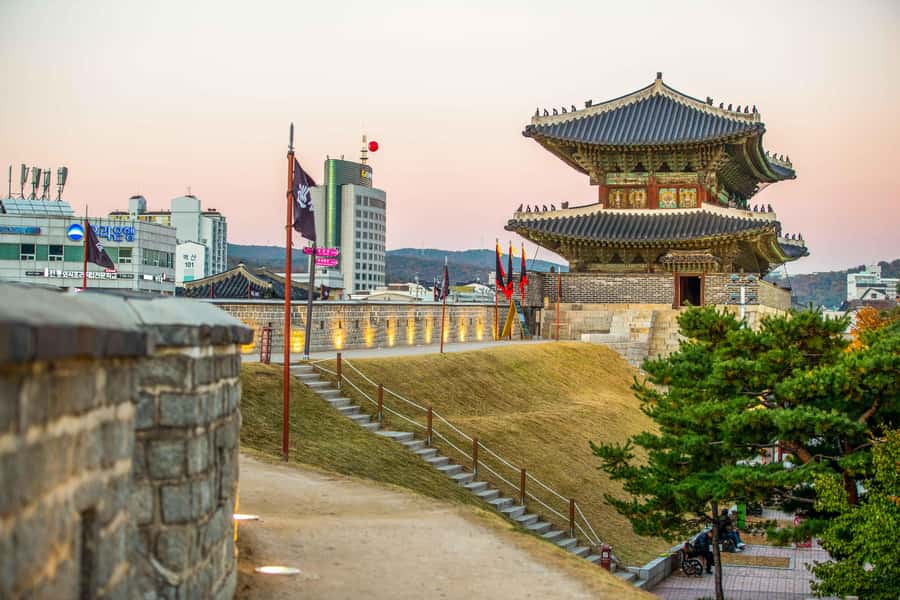
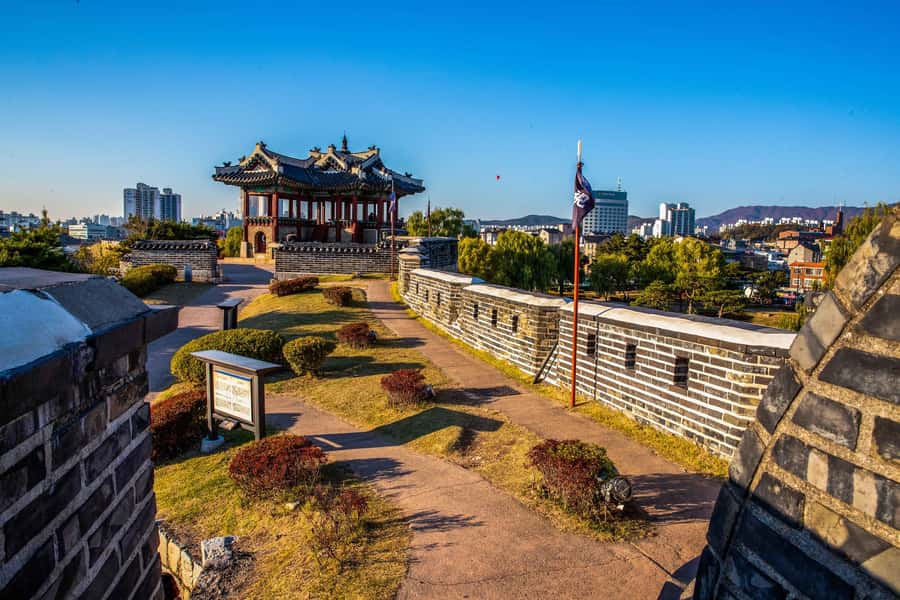
The first major stop is Suwon Hwaseong Fortress, a UNESCO World Heritage site in Suwon, Gyeonggi Province. Its walls extend for roughly 5.7 kilometers, making this much more than a single gate or isolated ruin.
The fortress was built in the 18th century as part of a royal project connected with honoring the king’s father. That detail gives the site a human purpose beyond military design. You are not simply looking at old stonework. You are seeing how royal family duty, political planning, and defense were tied together in Joseon-era Korea.
The fortress’s strategic layout is one of its most interesting features. Walls, gates, and defensive structures were arranged to use the surrounding ground to their advantage. Your guide can help explain how the site was planned and why its form mattered.
I would give this stop your best attention. The buildings and walls are the historical heart of the day, and walking along them gives you a stronger sense of scale than viewing photographs. The route is also where the tour becomes physically demanding. A visit here involves a significant amount of walking, with outdoor surfaces and some changes in level possible.
The experience is not designed for a quick photo beside one gate. You should expect time on your feet and bring comfortable shoes. People with heart problems should not book this activity, and it is not suitable for wheelchair users.
The fortress also rewards patience. Guides such as Andrew and April have been praised for making Korean history clear and engaging, while Jinyong has been noted for adjusting explanations to the interests of the group. That kind of guidance matters here because the defensive walls can otherwise look like a series of attractive but disconnected structures.
Some tours rush through historic sites to fit in more stops. This itinerary gives Hwaseong enough importance to make the day worthwhile for anyone interested in Korea’s past. If you only want shopping and photographs, the walking may feel like too much. If you want context, this is the stop that carries the most weight.
Other South Korea days people book on the same trip:
- Best DMZ Tour Korea from Seoul (Red Suspension Bridge Optional)
★ 5.0 · 41,422 reviews - DMZ Tour: 3rd Tunnel, Option(Suspension Bridge, Boat) from Seoul
★ 5.0 · 21,373 reviews - DMZ tour south Korea from Seoul (NK experience hall, defector)
★ 5.0 · 20,599 reviews
Starfield Library shifts the mood
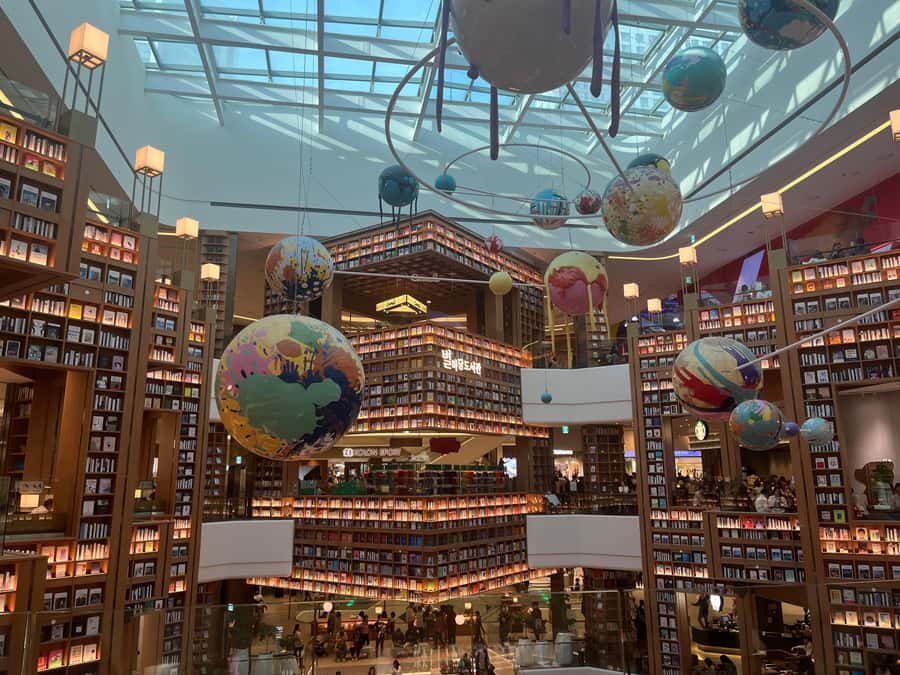
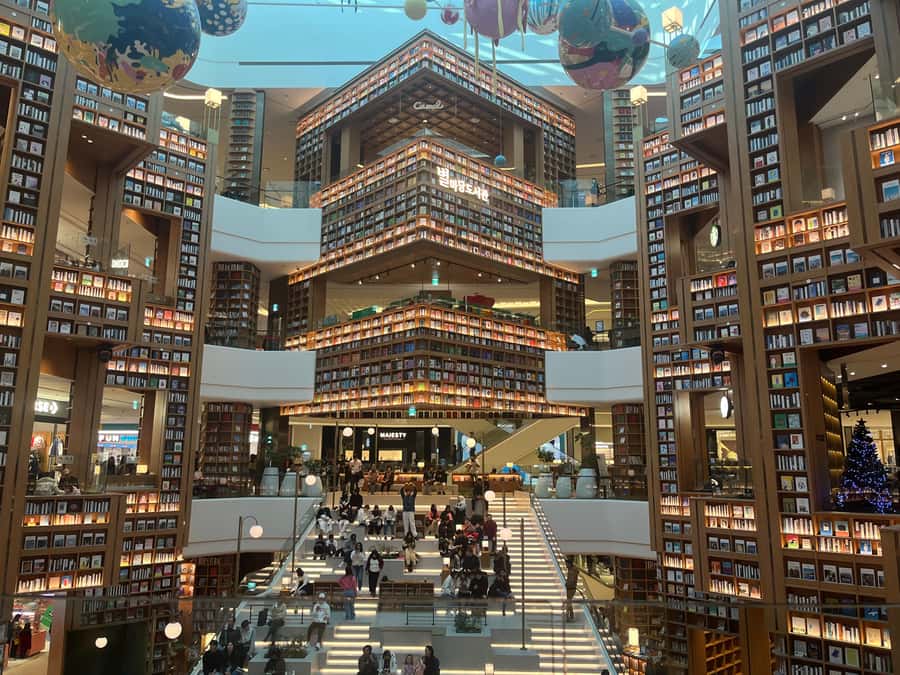
After the fortress, Starfield Library changes the visual and cultural tone completely. Instead of stone walls and royal-era defenses, you find a large contemporary library space with books arranged in dramatic vertical displays.
This is a photo stop, but it is not only a backdrop. The library presents books as part of the architecture, turning reading into a public design feature. The tall shelves and open arrangement create the sense of a cultural hub rather than a quiet, traditional library.
I like the contrast. The fortress shows how Suwon looked backward to royal power and defense, while Starfield Library shows a more current side of the city. Placing both in one day helps you avoid the usual single-theme sightseeing routine.
You should keep your expectations in check. Starfield Library is not a long guided museum visit, and the attraction’s appeal is mainly visual and cultural. If you want detailed information about Korean publishing or a quiet afternoon of reading, this may be a brief stop. If you want striking photographs and a modern indoor break, it fits the schedule well.
It is also a practical place to appreciate the value of the air-conditioned vehicle. After outdoor walking at Hwaseong, an indoor stop can give your feet and body a pause before the next part of the day.
Waujeongsa offers a quieter pause
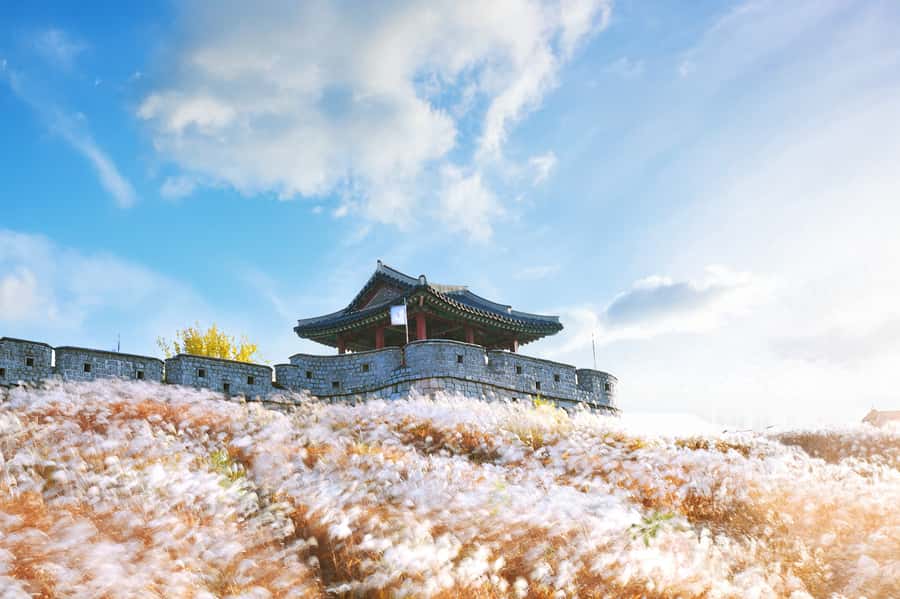
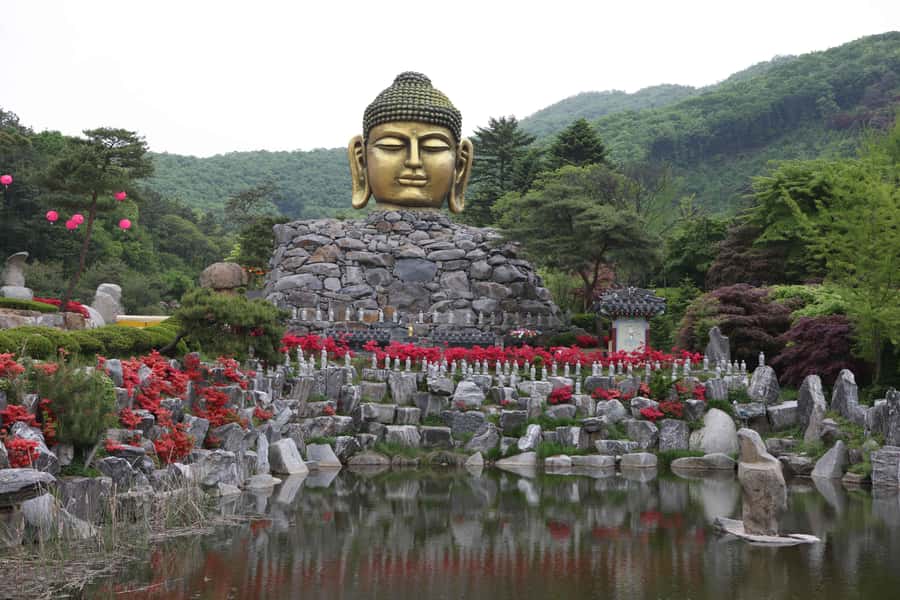
Waujeongsa Temple brings a different kind of atmosphere. The temple is described as a peaceful Buddhist sanctuary, and its grounds include a range of religious statues and stone sculptures.
The main hall houses a Buddha statue more than 10 meters tall and covered in gold leaf. Other features include a large stone Buddha seated on a lotus pedestal, a stone pagoda, and a stone bell. These details make the visit more than a general temple stop. You have several distinct objects to look for as you move through the grounds.
I would not treat Waujeongsa as filler between the fortress and the library. It gives the day a needed pause and adds a spiritual side of Korean culture that the other stops do not provide. The setting encourages slower looking, especially after the more structured explanation of the fortress.
Your guide can also help you understand what you are seeing rather than leaving you to identify each statue on your own. April was praised for explaining Korean history and the places visited, and Andrew was singled out for his help throughout the day. The exact guide is not guaranteed, but the experience is built around English-language guiding.
As with Hwaseong, you will spend time walking. This is not a vehicle-only temple visit. Wear shoes that you can use comfortably for the full day, and avoid planning this excursion if you need wheelchair access.
Kimbap and hanbok make the final stop useful
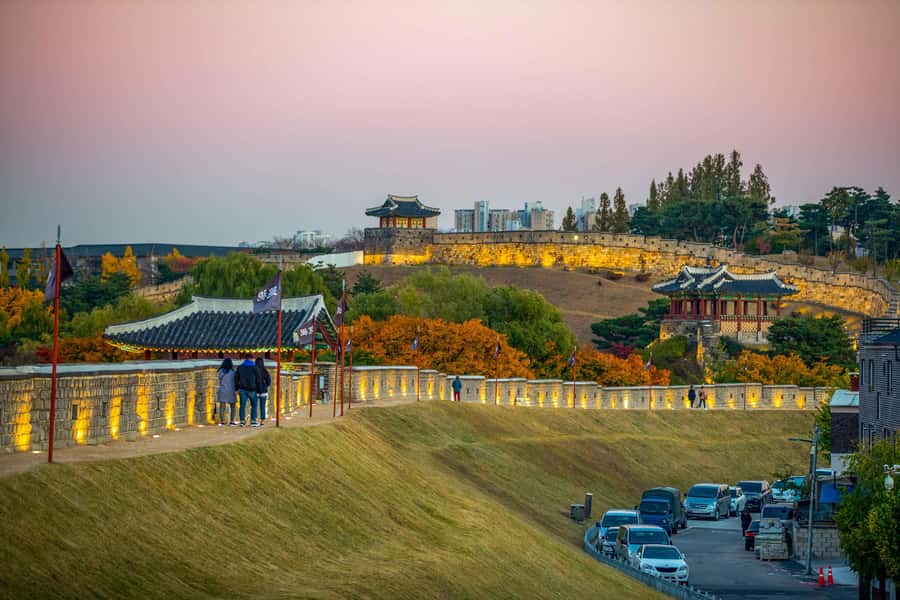
The day finishes at a Hanbok Wearing Experience Center. This stop includes an introduction to the process of making gim, or dried laver, and gives you a chance to buy it as a souvenir.
More importantly, the included activities are hands-on. You make kimbap and try hanbok, rather than simply watching a demonstration or browsing a shop. The kimbap activity has been a highlight for several people, and Sean Kim has been praised for adding a cooking experience to the day.
Kimbap is a good choice for this kind of activity because it connects ordinary Korean food with a simple group task. You get to see how the ingredients come together and finish with something you have made yourself. It also gives the tour a lighter ending after the history and religious sites.
The hanbok activity adds another cultural layer. You can try traditional Korean clothing and take photographs, though the supplied information does not specify how long you wear it or how extensive the selection is. Think of it as a short cultural activity included in the sightseeing day, not a full costume rental session.
Meals are not included, so you should not assume the kimbap activity replaces lunch. Bring money for food and drinks, along with any personal purchases such as dried gim.
A different way to spend a day from here:
- DMZ Insider Tour: 3rd Tunnel, NK Defector Meet & Red Bridge
★ 4.9 · 15,214 reviews - Seoul: DMZ Tour with Optional Suspension Bridge
★ 4.8 · 5,277 reviews - Seoul: DMZ The 3rd Tunnel and Suspension Bridge Tour
★ 5.0 · 4,656 reviews - Signature DMZ Tour: Exclusive Defector Talk & Suspension Bridge
★ 5.0 · 4,459 reviews
What the guide adds to the day
The quality of a packed day trip often depends on the guide. Four guides named in the feedback are Jinyong, Sean Kim, Andrew, and April. You may not receive a particular one, but the comments point to the sort of service this tour aims to provide: clear historical explanations, friendly group management, and some flexibility when conditions change.
Andrew has been praised both as a guide and driver, including for helping with group needs. One account also notes traditional archery and a martial arts demonstration during the fortress visit. These activities are not listed as guaranteed inclusions in the tour details, so you should treat them as possible additions rather than promises.
Sean Kim was noted for adding the museum cooking experience and bringing strong energy to the day. Jinyong was praised for tailoring the visit to group interests. April was appreciated for explaining Korean history and giving attention to the temple visit.
That range of comments suggests a tour where the guide can shape how much you get from each stop. The fortress, in particular, benefits from explanation. Without it, you may notice the walls and gates but miss the political and defensive reasons behind them.
Transport and timing require a little care
Round-trip transport from Seoul is included, which is the main practical advantage of booking this as a guided outing. You avoid arranging several separate journeys across Gyeonggi Province, where the stops are not all part of one compact sightseeing district.
There are three Seoul meeting points, but the exact location depends on the option you select. Read that detail carefully before booking and arrive at least 5 to 10 minutes early. Late arrival or a missed departure is not refundable.
The vehicle type depends on the group size. It may be a car, van, or bus, so you should not expect a particular seating arrangement. Infants aged 0 to 2 can ride free if they sit on a parent’s lap, but baby seats are not available. Children over age 3 must be included in the passenger count.
Traffic and weather can alter the order or timing of the stops. That is normal for a multi-stop day trip from Seoul, but it means you should not schedule a tight evening reservation immediately after the stated return time. The activity ends back at the meeting point in Seoul.
Extreme weather, political situations, and other unexpected events may lead to rescheduling or a refund. Ordinary rain or snow, and a participant’s sudden sickness, are not listed in that category. For standard cancellation, you can cancel up to 24 hours ahead for a full refund.
Who will get the most from this tour?
This is a strong match for a first visit to Korea if you want to see beyond Seoul without giving up the ease of a guided vehicle. It suits history-minded visitors, photographers, couples, families with older children, and anyone who likes a day with several different activities.
It is especially useful if you have only one free day. You see a major UNESCO site, a modern cultural space, a Buddhist temple, and two Korean culture activities without spending time piecing the route together.
The tour is less suitable if you want a slow, unstructured day. Four main stops create variety, but they also create a schedule. You will not have unlimited time at every location, and traffic can affect the plan.
It is also a poor choice for anyone who cannot manage substantial walking. The fortress and temple require time on foot, and there is no wheelchair suitability. People with heart problems should choose another outing.
Is $49 a fair price?
For $49, the value is good if you use the included parts. Round-trip transport from Seoul, attraction admission, an English-speaking guide or driver, kimbap making, and hanbok wearing are all covered.
The price is less compelling if you mainly want to visit the fortress and take a quick photograph at Starfield Library. Independent visitors may prefer building a shorter day around one or two places. This package earns its cost by combining locations that would take more planning to connect on your own.
You should add money for meals, beverages, and personal expenses. Dried gim is an easy souvenir option at the final stop, but purchases are separate.
The reserve-and-pay-later option can also help if your Seoul plans are still changing. Just remember that the early arrival rule and cancellation terms still matter.
Should you book it?
Book this Suwon day trip if you want a well-filled introduction to Gyeonggi Province, especially if Hwaseong Fortress is your main reason for going. The fortress has the strongest cultural value, while Waujeongsa, Starfield Library, and the kimbap activity keep the day from feeling like one long history lesson.
I would skip it if you dislike group schedules, need wheelchair access, have heart problems, or want a quiet day with very little walking. For everyone else, $49 is a sensible price for transport, admission, guiding, and several distinct experiences in one outing.
FAQ
Where does the Suwon tour start?
The tour starts at one of three convenient meeting points in Seoul. The exact meeting point depends on the option booked.
Does the tour return to Seoul?
Yes. Round-trip transportation is included, and the activity ends back at the Seoul meeting point.
What is included in the $49 price?
The price includes attraction admission, round-trip transport from Seoul, an English-speaking tour guide or driver, kimbap making, and hanbok wearing at the cultural center.
Are meals and drinks included?
No. Meals and beverages are not included, so you should bring money for food and drinks.
Is the tour suitable for young children?
Infants aged 0 to 2 can join free if they sit on an adult’s lap. Baby seats are not available. Children over age 3 must be included in the passenger headcount.
How much walking is involved?
The tour involves a significant amount of walking, especially at Suwon Hwaseong Fortress and Waujeongsa Temple. Comfortable shoes are strongly advised.
Recently added around South Korea
- Gyeongbokgung Palace Photo Session with your own phone★ 5.0 · 4 reviews
- Nami & Maple Road & Theatre des Lumieres Day Tour from Seoul★ 4.8 · 4 reviews
- Private Tour around Suwon UNESCO Fortress and Korea Folks Village★ 4.5 · 4 reviews
- Jisan Forest Resort: Ski Full-Day Tour or Shuttle from Seoul★ 5.0 · 4 reviews
- Seoul: Deoksugung Palace Night Tour★ 4.5 · 4 reviews
- N Seoul Tower + Namsan Cable Car Ticket (Collect in Myeongdong)★ 3.5 · 4 reviews
- Private Jeonju Hanok Village – Culinary tour★ 5.0 · 4 reviews
- Seoul Private Walking Tour with a Local★ 5.0 · 4 reviews