
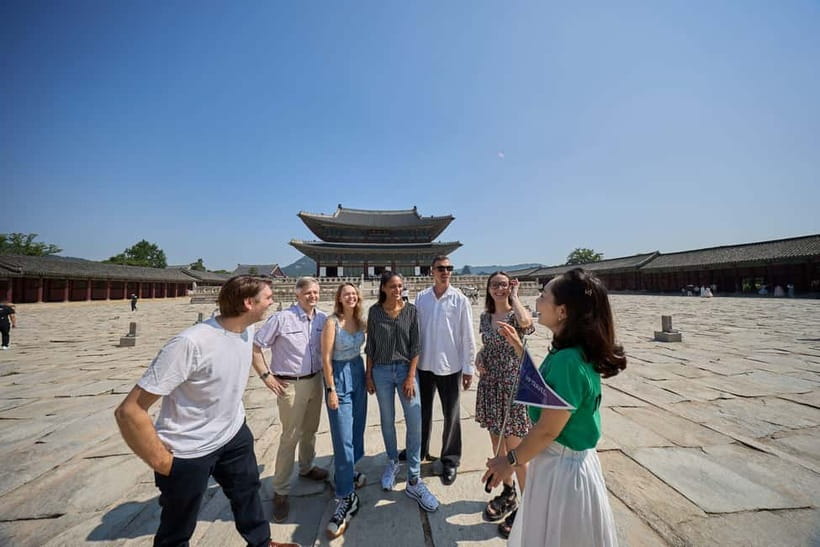
Reviewed · GYEONGBOKGUNG PALACE TOURS
Seoul: Bukchon Village, Gyeongbokgung, Gwangjang Market
The best part of this Seoul tour is the sharp change of scene: one minute you are walking among tiled-roof hanok houses, and soon after you are watching Joseon-era guards in bright uniforms at Gyeongbokgung Palace. It gives you old Seoul, royal Seoul, and everyday Seoul in one compact outing.
I like the well-chosen route, especially the pairing of Bukchon’s quiet lanes with the noisy food stalls of Gwangjang Market. I also like the human touch from guides such as Alice, Eva, Claire, and Lina, who have helped with photos, subway confusion, shade, and questions about Korean history and daily life.
The main consideration is pace. At $30 per person, the tour is good value, but you are covering several major stops in about three and a half hours. The ginseng center may also feel commercial to some people, although you can browse, drink the tea, and leave without buying anything.
Key points to know before booking
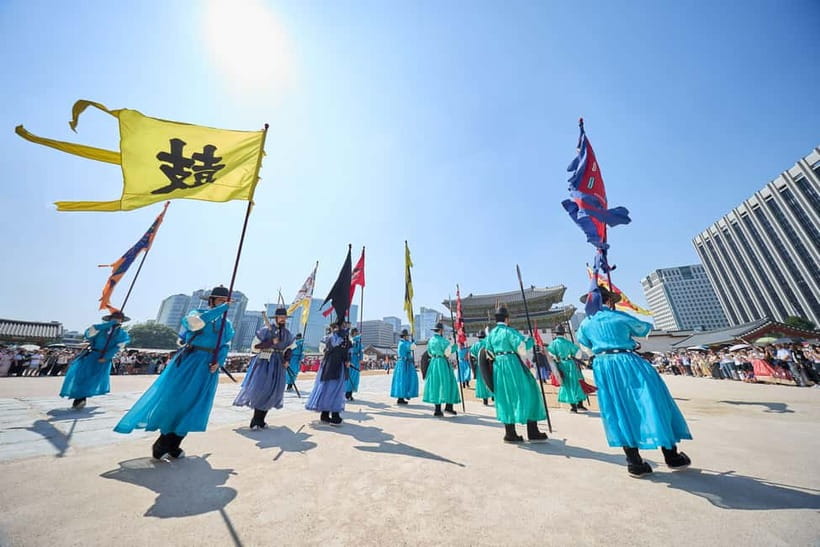
- The Royal Guard Changing Ceremony is the visual centerpiece: It includes colorful uniforms, instruments, and carefully timed movements at Gyeongbokgung.
- Bukchon is a walking stop, not just a photo from the bus: Expect narrow lanes, traditional homes, rooftop views, and some uphill walking.
- Gwangjang Market is your best chance to eat: Bindaetteok, mayak gimbap, and tteokbokki are available, but food costs extra.
- Tuesdays follow a different route: You visit Changdeokgung and Insadong because Gyeongbokgung and the ceremony are closed.
- The ginseng stop is educational but sales-oriented: A tea tasting and explanation are included, with no required purchase.
- The tour suits a first day in Seoul: You get useful ideas for places to revisit, as one guest did after spotting the Korean Folk Art Museum during the drive.
A fast introduction to Seoul’s old and new faces
This experience begins at Myeongdong Subway Station and ends there too, making it easy to fit into a day of shopping, sightseeing, or a short Seoul stopover. The advertised duration is 210 minutes, so think of it as a brisk half-day orientation rather than a slow study of each neighborhood.
I would consider it especially useful during your first few days. You see enough of Seoul’s main sights to understand how the city fits together, and the guide can point out places worth returning to later. Tyesha, visiting on a 23-hour layover, used the tour to get a broad look at the city in limited time.
The route uses a combination of walking and bus travel. That helps conserve energy between areas, though the schedule is still active. Wear shoes you can walk in comfortably, bring a camera, and carry cash for market snacks and personal purchases.
More Gyeongbokgung Palace visits:
- Best Seoul City Tour (Gyeongbokgung Palace,Insadong,Namsan Tower)
★ 5.0 · 1,647 reviews - Seoul City Sightseeing Tour Including Gyeongbokgung Palace, N Seoul Tower, and Namsangol Hanok Village
★ 5.0 · 1,423 reviews - Seoul: Hanbok Rental with Gyeongbokgung Palace Entry
★ 4.6 · 611 reviews
Bukchon Hanok Village, rooftops and quiet lanes
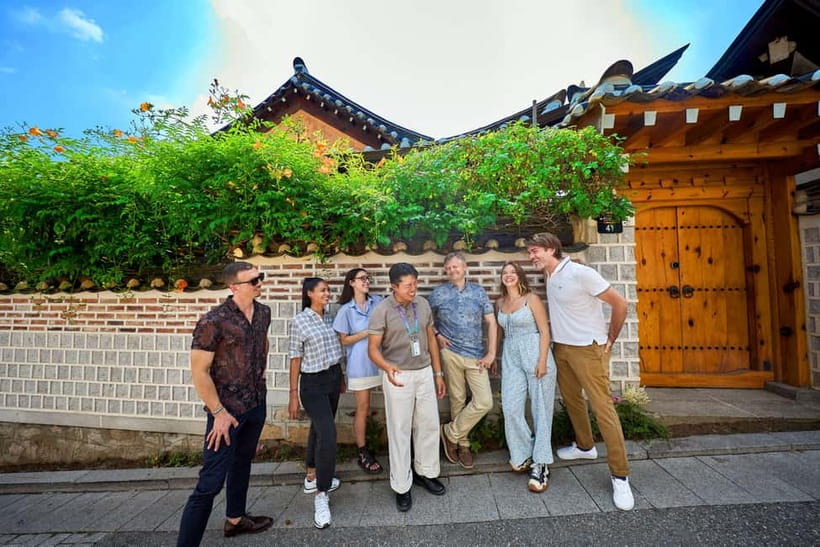
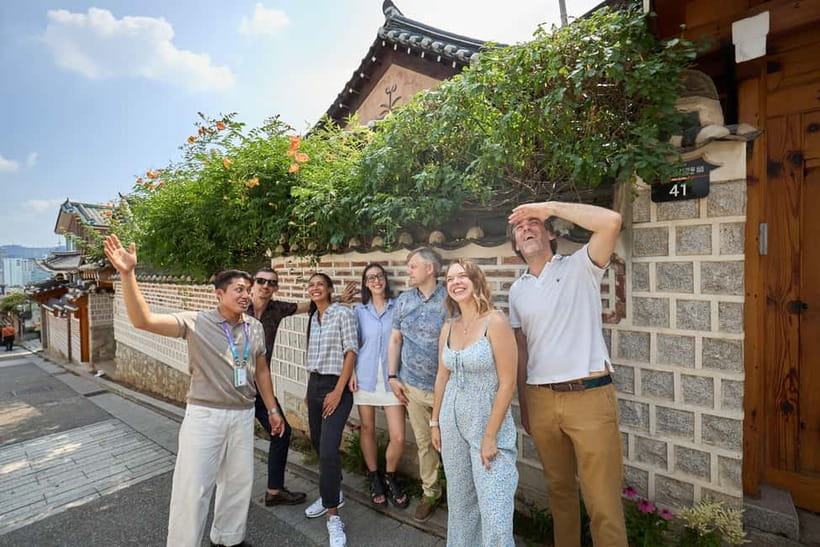
Bukchon Hanok Village gives you the tour’s most atmospheric walk. Its narrow alleys are lined with hanok, traditional Korean houses with tiled roofs, wooden details, and simple, balanced forms. The neighborhood sits between major palace areas, so you get a sense of how royal Seoul and residential Seoul once connected.
Your guide leads you through the lanes and explains what you are seeing. The main pleasure is not a single monument. It is the contrast between the low rooftops, calm side streets, and the modern Seoul skyline appearing beyond them.
This is an active neighborhood, not an open-air museum built only for sightseeing. You may pass homes, businesses, and residents going about daily life. Keep your voice low and follow the guide’s instructions about where to stop for photographs.
The scheduled visit lasts about an hour. That is enough for a useful introduction and several photographs, but not enough to explore every lane. One four-star assessment specifically wished for more time in Bukchon and a chance to sit for tea. If you already know you want a long, unhurried visit, plan to return independently.
The hills and uneven streets make comfortable shoes important. Your guide may stop often to explain the setting and point out views, but you should still expect some walking rather than a purely scenic drive.
Gyeongbokgung and the royal guard ceremony
Gyeongbokgung is the largest and most famous of Seoul’s five grand palaces. Built in 1395, it served as the main royal palace of the Joseon dynasty. Its broad courtyards, gates, gardens, and formal buildings give you a clear idea of royal ceremony and court life.
The Royal Guard Changing Ceremony adds movement and color to the palace visit. Guards appear in traditional uniforms while ceremonial music and instruments mark the change. It is a short, highly visual event, so arriving early enough for a good view matters.
Alyssa was fortunate to have a small private group and reached the ceremony early, with a front-row view. You may not have the same crowd conditions, but staying close to your guide should help you keep track of the group and find a useful viewing position.
After the ceremony, you tour the palace grounds with the guide. This is where the experience becomes more useful than a quick photograph. The guide can explain the Joseon period, the purpose of palace buildings, and the details you might otherwise pass without noticing.
The palace stop is listed as roughly one hour, including sightseeing and walking. That is a sensible amount for a first look, but it will feel short if you want to inspect every courtyard or spend time in the museum areas. The tour is about orientation and context, not complete coverage.
The palace is closed on Tuesdays, and so is the guard ceremony. That is not a minor change. If the ceremony is your main reason for booking, choose another day.
The Tuesday alternative, Changdeokgung and Insadong
On Tuesdays, the route changes to Changdeokgung Palace and Insadong. Changdeokgung is a UNESCO World Heritage site known for traditional architecture that works closely with its natural surroundings. Many people consider it the most graceful of Seoul’s palaces because of its calm setting and carefully planned grounds.
You should view this as a different experience, not a reduced version of Gyeongbokgung. Gyeongbokgung gives you grand scale and the guard ceremony. Changdeokgung offers a quieter setting and a more integrated relationship between buildings and gardens.
The tour description refers to the palace and its Secret Garden, but the exact amount of garden access can depend on the day’s schedule and operating arrangements. If the garden is your top priority, check the available details before booking rather than assuming a long garden visit.
The Tuesday route also includes Insadong. This cultural district is known for tea houses, antique shops, art galleries, craft stores, and traditional souvenirs. It is a useful place to browse if you want gifts with a Korean feel rather than ordinary mall merchandise.
Lina’s Tuesday route included Changdeokgung, Bukchon, Insadong, and Gwangjang Market. Her explanations of Korean history and culture, along with help taking photographs, made the altered schedule feel complete. For some people, this version may be just as appealing as the standard route.
More Bukchon and Insadong walks:
- Seoul: Gyeongbok Palace, Bukchon Village, and Gwangjang Tour
★ 4.9 · 2,321 reviews - Seoul: Gyeongbok Palace, Bukchon Village, and Gwangjang Tour
★ 5.0 · 1,044 reviews - Seoul Highlights: Gyeongbok Palace, Insadong & N Seoul Tower
★ 4.7 · 726 reviews - Korean Palace and Market Tour in Seoul Including Insadong and Gyeongbokgung Palace
★ 4.0 · 174 reviews
Passing the Blue House
The bus passes Cheongwadae, better known as the Blue House, for about five minutes. It was South Korea’s former presidential residence and executive office.
This is a drive-by, not a stop. You will get a view from the vehicle, but there is no time to walk around, take a detailed tour, or explore the grounds. Treat it as a useful point of reference between the palace and the next stop.
I like this brief pause because it connects the old political center of Korea with the country’s more recent government history. Just keep your camera ready and listen closely, since the bus will not linger.
The ginseng center, useful context with a shopping angle
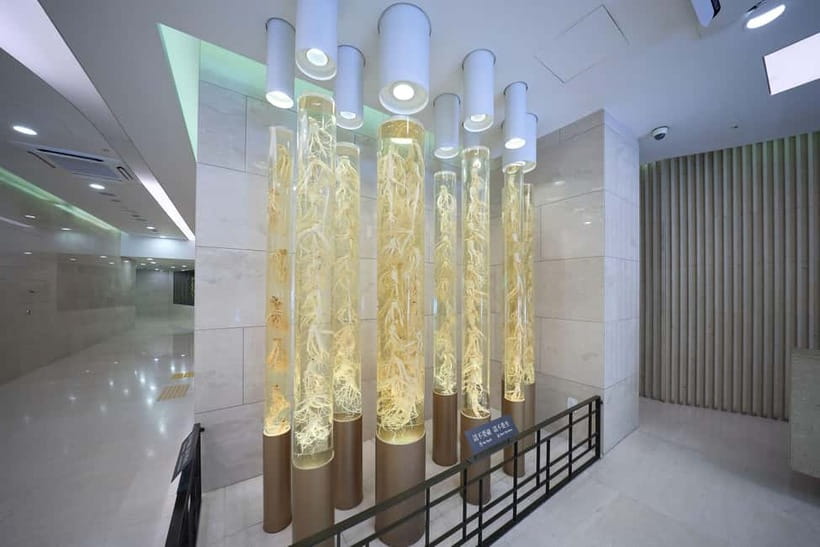
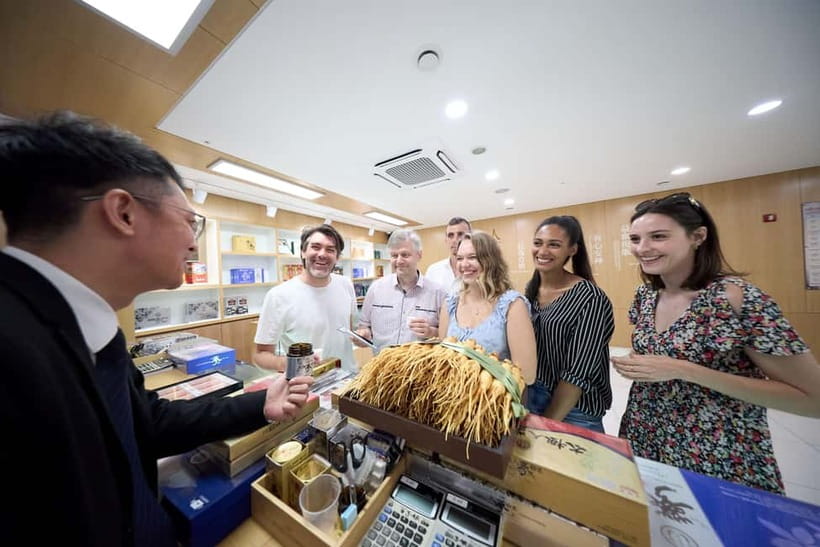
The stop at Cheongha Korean Ginseng Museum lasts about 30 minutes. You receive a cup of traditional Korean herbal tea and hear about ginseng’s place in Korean wellness customs, its history, and its claimed health benefits. Displays help explain why the root has such an important role in Korean culture and commerce.
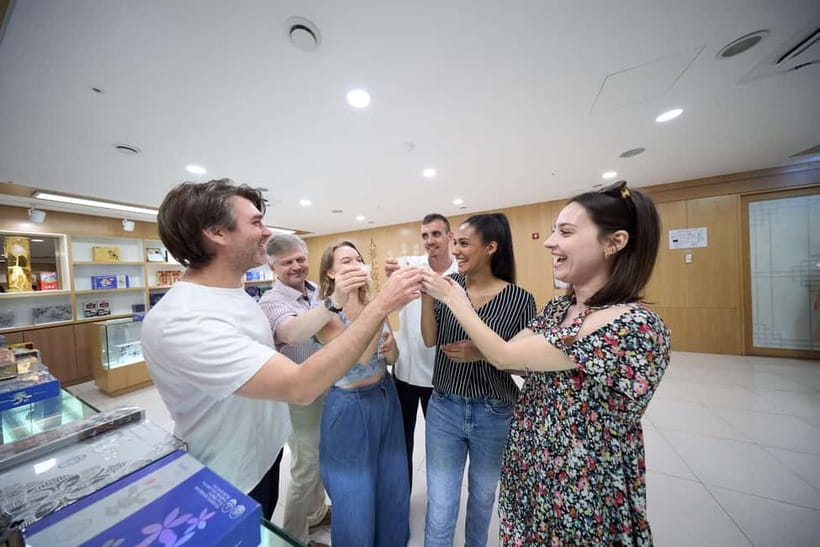
This is also a shopping stop. You can browse or buy ginseng products, but there is no obligation to purchase. Brittany initially worried that the visit might feel uncomfortable, then found the historical explanation worthwhile and did not feel pressured.
That is a fair way to approach it. Listen to the presentation if you are curious about Korean food and health traditions, enjoy the tea, and regard the shop as optional. You do not need to buy an expensive product to have received value from the stop.
Tali also appreciated being able to try ginseng during the visit. If you have dietary, medical, or allergy concerns, ask questions before tasting anything and do not treat the discussion as medical advice.
For some people, this will be the least exciting stop. If you prefer maximum time at palaces and markets, 30 minutes here can feel like a tradeoff. If you enjoy learning how traditional products fit into local life, it adds a useful layer to the day.
Gwangjang Market, where the tour turns to food
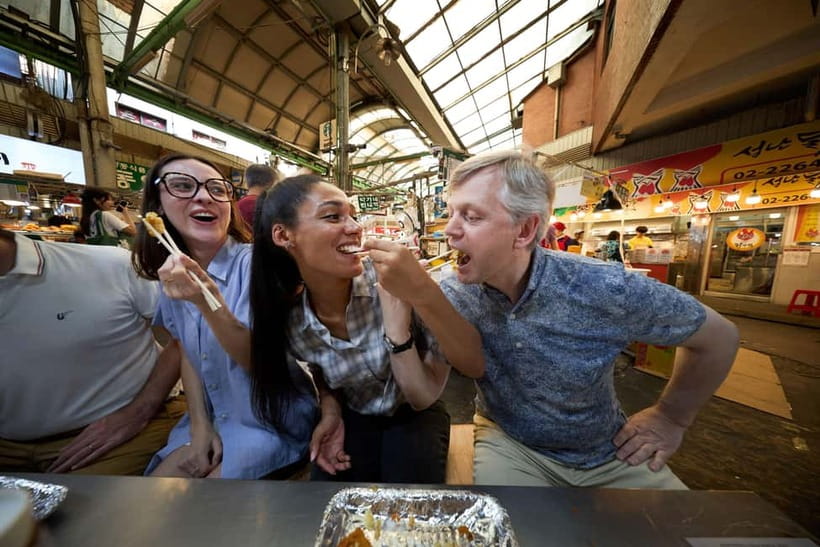
Gwangjang Market is the final major stop and one of the best places on this route to see Seoul’s food culture up close. It is a traditional market with crowded aisles, food counters, shoppers, and the smell of cooking all around you.
The guide helps you understand what to look for, then gives you free time to browse and eat. Popular choices include:
- Bindaetteok: A savory mung-bean pancake, often cooked fresh on a hot surface.
- Mayak gimbap: Small rolls of rice and fillings wrapped in seaweed.
- Tteokbokki: Chewy rice cakes served in a spicy sauce.
Food is not included in the $30 price, so bring cash and allow room in your budget for tastings. You can choose only one snack or build a small meal from several stalls. The market is a good place to try foods you might not order in a formal restaurant because portions and prices can be easier to manage.
The scheduled market visit lasts about an hour. That gives you time for a food stop and some browsing, but not an exhaustive tour of the entire market. If you find a dish you love, note the location so you can return later.
This is also where the pace can feel tight. You have already walked Bukchon and the palace, and the market can be crowded. Stay close to the guide when moving through the aisles, then use the free time for your own choices.
What the guides add to the day
The strongest part of this experience is the guide’s ability to connect the stops. Alice has explained the Joseon dynasty and helped people find the meeting point. Eva has combined historical background with details about everyday life in Seoul. Claire has been praised for clear explanations and extra care, while Alex has adjusted palace commentary to help people find shade during hot weather.
Kelly has been described as patient and well organized, and Lina has added a personal touch by taking photographs at scenic spots. These details matter because this tour moves quickly. A guide who keeps the group together, watches the clock, and answers questions can make the difference between a smooth morning and a confusing one.
You should not book this expecting a guaranteed private tour. Alyssa happened to have one, but the regular experience is a guided group outing. Group size and traffic can affect how much time you have at each location.
The guide speaks English. The tour also offers hotel pickup within Seoul on request for groups of five or more. Otherwise, you meet at a subway station and finish at Myeongdong Station.
Price, timing, and who gets the best value
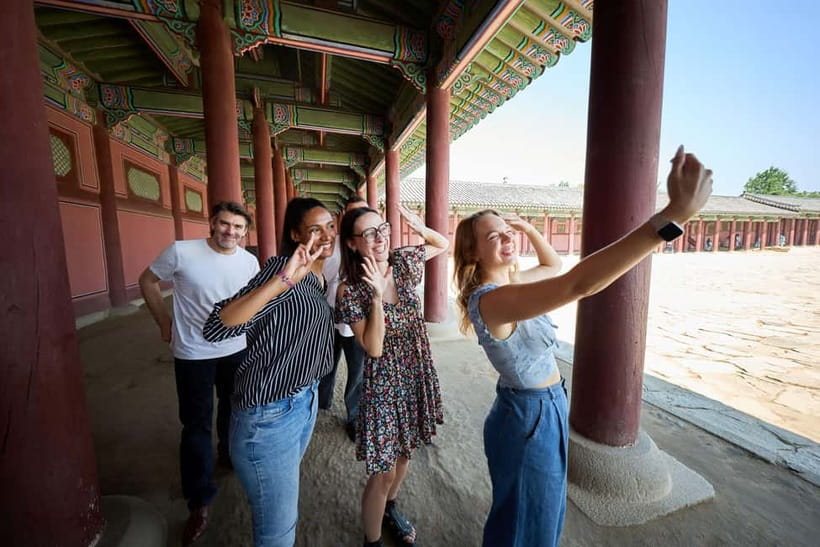
At $30 per person, this is strong value if you want transport between several central sights, an English-speaking guide, the palace visit, and a structured introduction to Seoul. Paying separately for transport and arranging the same route on your own would take more planning, even though independent travel would give you more time at each stop.
The price does not include meals or personal purchases. Budget extra for Gwangjang Market food, souvenirs in Insadong on Tuesdays, and anything you choose to buy at the ginseng center.
The tour begins with pickup options at Itaewon Station Exit 1 at 8:20, Myeongdong Station Exit 9 at 8:50, and City Hall Station Exit 6 at 9:00. The main meeting point is also given as Myeongdong Subway Station Exit 8, while the pickup details specify Exit 9. Confirm the exact exit on your booking information so you are not searching around the station.
If you are coming directly from Incheon Airport, allow plenty of time. Tamara needed at least two and a half hours for the airport train and subway journey before meeting the group. A late arrival can ruin a short tour, so an airport hotel or an earlier arrival in Seoul may make more sense.
You can cancel up to 24 hours ahead for a full refund, and you can reserve now and pay later. Those policies are useful if your Seoul schedule is still changing.
Should you book this Seoul tour?
Book it if you want a well-organized first look at Seoul and prefer a guide to handle the transport, timing, palace background, and market introduction. It is particularly good for first-time visitors, short stays, and layovers long enough to reach central Seoul without rushing.
Choose a non-Tuesday date if the Royal Guard Changing Ceremony and Gyeongbokgung are your priorities. Choose Tuesday if Changdeokgung’s calmer setting and Insadong’s shops appeal more to you.
I would not choose this tour if you want long, quiet visits, extensive palace photography, or a full meal at Gwangjang Market. For those goals, visit the sights independently and give each one more time.
For $30, the route covers a lot, the guides add useful context, and the market finishes the morning on a tasty note. Just wear good shoes, carry cash, confirm the station exit, and accept that this is a brisk introduction rather than the final word on Seoul.
FAQ
How long does the tour last?
The stated duration is 210 minutes, or three and a half hours. The route includes walking, bus travel, palace sightseeing, a ginseng center stop, and Gwangjang Market.
Where does the tour meet?
The listed meeting point is Myeongdong Subway Station Exit 8. Pickup information also refers to Myeongdong Station Exit 9, so confirm the exact exit when you book.
Where does the tour finish?
The tour ends at Myeongdong Station for all participants.
Is the tour offered in English?
Yes. The live tour guide language is English.
What happens on Tuesdays?
Gyeongbokgung Palace and the Royal Guard Changing Ceremony are closed on Tuesdays. The tour visits Changdeokgung Palace and Insadong instead.
Is the Royal Guard Changing Ceremony included every day?
It is included on operating days for Gyeongbokgung. It does not operate on Tuesdays because the palace is closed.
Is food at Gwangjang Market included?
No. Meals and personal expenses are not included. You pay separately for foods such as bindaetteok, mayak gimbap, and tteokbokki.
Do I have to buy something at the ginseng center?
No. You can drink the traditional herbal tea, learn about ginseng, browse, and leave without purchasing anything.
Is hotel pickup available?
Hotel pickup within Seoul is available on request for groups of five or more. You should leave a message when booking if you want to arrange it.
What should I bring?
Bring comfortable shoes, a camera, and cash. Comfortable footwear is useful because Bukchon and the palace involve walking.
More shopping trips in Seoul
- Private DMZ Tour (No Shopping): 3rd Tunnel & Suspension Bridge
★ 5.0 · 607 reviews - Seoul: Korean Cooking Class at a Local Home and Market Tour
★ 5.0 · 348 reviews - Seoul: Guided Food & Market Tour with 8+ Tastings
★ 4.9 · 342 reviews - Seoul Night Palace & Market Food Tour with Vehicle
★ 5.0 · 275 reviews
More Market Tours in Seoul
- Seoul Street Food Market Tour
★ 5.0 · 1,226 reviews - Local Home Korean Cooking Class & Market Adventure in Seoul
★ 5.0 · 1,024 reviews - Seoul: Night Market Food Tour with Local Guide
★ 4.9 · 943 reviews - Downtown Seoul Guided Food & Market Tour with 8+ Local Tastings
★ 5.0 · 580 reviews
Recently added around Seoul
- Nami & Maple Road & Theatre des Lumieres Day Tour from Seoul★ 4.8 · 4 reviews
- Gyeongbokgung Palace Photo Session with your own phone★ 5.0 · 4 reviews
- Private Tour around Suwon UNESCO Fortress and Korea Folks Village★ 4.5 · 4 reviews
- Jisan Forest Resort: Ski Full-Day Tour or Shuttle from Seoul★ 5.0 · 4 reviews
- N Seoul Tower + Namsan Cable Car Ticket (Collect in Myeongdong)★ 3.5 · 4 reviews
- Seoul: Deoksugung Palace Night Tour★ 4.5 · 4 reviews
- Seoul Private Walking Tour with a Local★ 5.0 · 4 reviews
- Private Jeonju Hanok Village – Culinary tour★ 5.0 · 4 reviews
Gyeongbokgung Palace Tours, compared.
Best Seoul City Tour (Gyeongbokgung Palace,Insadong,Namsan Tower)
Read the review →
Seoul City Sightseeing Tour Including Gyeongbokgung Palace, N Seoul Tower, and Namsangol Hanok Village
Read the review →
Hanbok Photoshoot and History Tour at Gyeongbokgung Palace
Read the review →
Korean Palace and Market Tour in Seoul Including Insadong and Gyeongbokgung Palace
Read the review →
Gyeongbokgung Palace Hanbok Rental Experience in Seoul
Read the review →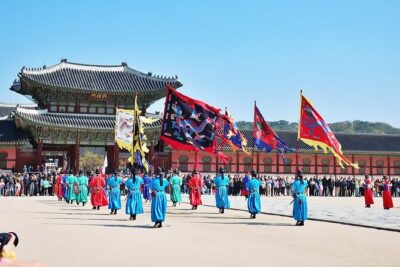
Small-Group Seoul Tour with Gyeongbokgung Palace (hotel pick-up)
Read the review →Browse the lists this tour appears in