
Reviewed · SEOUL TOURS
Small Group 7D Korea package Tour with Seoul Gyeongju Busan Jeju
South Korea in seven days is a fast-moving sampler, but this tour covers an impressive sweep: volcanic Jeju, seaside Busan, ancient Gyeongju, modern Seoul, and the DMZ. I like that flights, the KTX train, hotels, admission fees, and many meals are built in, so you spend less time arranging connections.
I especially like the no-compulsory-shopping policy and the mix of major sights with hands-on stops, such as a Korean cooking class and the food stalls of Gwangjang Market. The main drawback is the pace. You will change cities, take an early flight, walk quite a bit, and often have only an hour at a major site.
Key points to know before booking
- Five very different Korean destinations: Jeju, Busan, Gyeongju, Seoul, and the DMZ all fit into one seven-day route.
- Domestic flight and KTX included: You fly from Gimpo to Jeju at the start, then ride Korea’s bullet train from Gyeongju to Seoul.
- Small group, up to 15 people: The group size keeps transport and sightseeing manageable, though guides may change from city to city.
- Two useful hands-on experiences: You cook bibimbap, Korean pancake, and soup, then sample local food at Gwangjang Market.
- No forced shopping stops: Free time is used for places such as Hongdae, Myeongdong, Insadong, and Busan’s markets.
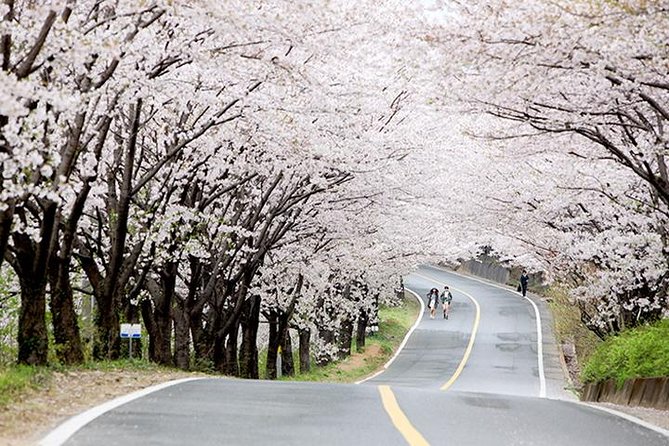
- A strong spring focus: Cherry blossoms and canola flowers feature prominently, but several flower stops are seasonal.
A whirlwind route from Jeju volcanoes to the DMZ
This is a tour for someone who wants to see the main chapters of South Korea without building the trip from scratch. You start with an airport pickup at Incheon International Airport, transfer to Gimpo Airport, fly to Jeju, then work your way back through Busan and Gyeongju to Seoul.
That routing makes sense geographically, but it leaves little room for a slow morning or an unplanned side trip. I would treat the seven days as an introduction rather than a leisurely holiday. You get a useful first look at the country and can later return to the places that deserve more time.
The tour uses an air-conditioned vehicle for sightseeing, a domestic flight, and the KTX bullet train. Guides can vary by location. The named guide team includes Jung, Jiyoung, Sang, Harry, Jones, and Clover. That arrangement can work well because local guides know their own cities, though you should not expect one guide to accompany you for every mile.
More Small Group Tours in Seoul
- Small Group Tour to DMZ & Suspension Bridge with Hotel Pickup
★ 5.0 · 1,568 reviews - Small-Group Royal Palace and Seoul City Tour (hotel pick-up)
★ 5.0 · 1,474 reviews - Seoul: Small-Group DMZ Tour with North Korea Experience Hall
★ 4.7 · 1,399 reviews
Day 1: Jeju’s black sand, lava, and village life
After your morning arrival and transfer to Gimpo, you fly to Jeju Island. The first day packs in the island’s eastern sights, so expect a full schedule soon after landing.
Woljeongri Beach is an easy opening stop. The beach is paired with a café street, giving you a quick taste of Jeju’s popular coastal style. The one-hour visit is enough for photos and a short look around, but not enough for a long café break.
At Gwangchigi Beach, the scenery changes. The soft black sand comes from weathered basalt, one of the clearest signs that Jeju is a volcanic island. From here, you visit Seongsan Ilchulbong, or Sunrise Peak, a tuff cone formed by an eruption in shallow water about 5,000 years ago.
The schedule allows about an hour at Seongsan Ilchulbong. You can climb toward the grassy crater for views, but the short stop means you may need to choose between a full ascent and a more relaxed look from below. If you have knee or mobility concerns, ask the guide how far the group will walk before the day begins.
The nearby canola flower field is highly seasonal. Canola generally appears from April through September in the supplied schedule, while the Noksan-Ro area is promoted for cherry blossoms from late March to early April. Flower displays depend on timing, so do not book this route solely for blooms unless your dates match the stated seasons.
Manjanggul Cave brings you below ground for a look at lava-formed rock. The scheduled visit is only 30 minutes, which makes this more of a quick geological stop than a long cave walk.
You then see traditional Jeju houses and village life at Seongeup Folk Village. Again, the visit lasts about 30 minutes. It adds cultural context after a day of beaches and volcanic features, but the short timing limits how much time you have to explore independently.
Day 2: Hallasan, waterfalls, and art made of light
The second Jeju day begins with seasonal cherry blossoms near Jeju National University’s Ara Campus. The King Cherry Tree flowers are known for their large petals, but the peak period is brief, with the listed timing around April 7 to 10.
A gravity-defying road illusion follows. Objects appear to roll uphill, though the effect is caused by the shape of the surrounding terrain and the way your eyes read the slope. It is a quick, playful stop rather than a major attraction.
Hallasan National Park gives the day its natural centerpiece. Hallasan rises to 1,950 meters and is South Korea’s highest mountain. The tour allows about two hours here, but that does not mean a summit hike. The practical expectation is a park visit and a manageable walk, with the exact route depending on the group and conditions.
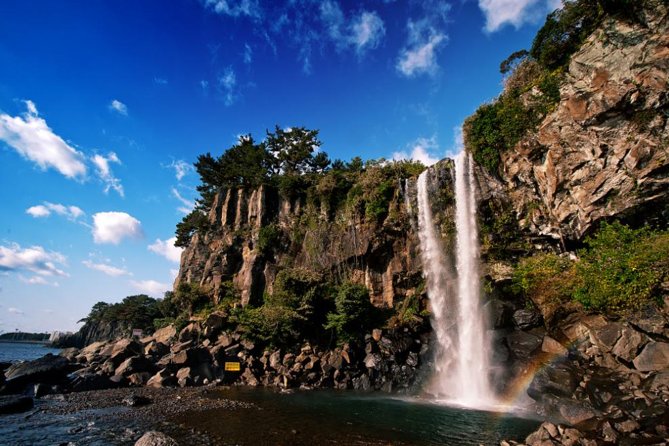
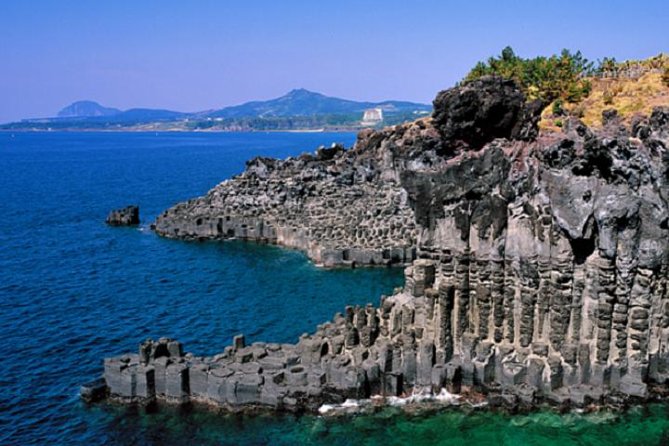
The remaining stops show different sides of Jeju’s coast. You pass a pine forest and see unusual black rock pillars formed in cube and hexagonal shapes. Cheonjiyeon Falls drops 22 meters into a pond, while Jeongbang Waterfall is notable for falling directly into the sea, a feature described as unique in Asia.
These stops are attractive, but the day involves repeated short visits and vehicle time. You will see many places, not settle into one. That tradeoff is fair for a seven-day national overview, but less appealing if your ideal Jeju trip means hiking, swimming, and lingering over island meals.
The final major stop is ARTE MUSEUM JEJU, a light and video art space. It provides a change of mood after the outdoor stops, with rooms designed around projected images and sound. The one-hour visit works well for a rainy day or for anyone who wants a modern cultural experience alongside Jeju’s geology.
Day 3: Busan markets, temples, and the coast
You move to Busan for a day that combines sea views, street food, markets, and a hillside neighborhood. Haeundae Dalmaji-gil Road is a short cherry blossom stop beyond Haeundae Beach. The road runs along a slope with pine trees, flowers, and views toward the sea.
At Gamcheon Culture Village, houses climb the coastal hillside in stair-step rows. The settlement began with war refugees, and later city work turned the area into a colorful arts district. The one-hour visit is enough to walk through the lanes and see the unusual arrangement, though the slopes and stairs can make this tiring.
Jagalchi Market gives you a more everyday Busan experience. It is the city’s famous seafood market, where you can see fresh fish and seafood vendors, many of them older women who have worked in the market trade for years. If you want to eat seafood here, clarify with the guide what is included and what you will pay yourself, since personal expenses are not included.
BIFF Square adds street food and cinema culture. Gukje Market, created by refugees who set up stalls after the Korean War, sells new and used goods in a more traditional market setting. Together, these stops make Busan feel less like a string of viewpoints and more like a working city.
Haedong Yonggungsa is the big scenic temple stop. Built beside the coast, it is widely described as one of Korea’s most beautiful temples. The setting is memorable, but you should expect steps and walking around uneven areas.
The day ends at Haeundae Blue Line Park, a newer coastal attraction where a train follows the shoreline. Admission is included. This is one place where the exact operating arrangements matter, so listen carefully to the guide’s instructions and keep the group schedule in mind.
A different way to spend a day from here:
- Best DMZ Tour Korea from Seoul (Red Suspension Bridge Optional)
★ 5.0 · 41,422 reviews - DMZ Tour: 3rd Tunnel, Option(Suspension Bridge, Boat) from Seoul
★ 5.0 · 21,373 reviews - DMZ tour south Korea from Seoul (NK experience hall, defector)
★ 5.0 · 20,599 reviews - Seoul: DMZ Tour with Optional Suspension Bridge
★ 4.8 · 5,277 reviews
Day 4: Silla treasures in Gyeongju, then KTX to Seoul
A one-hour transfer brings you to Gyeongju, the former capital of the Silla kingdom. The day shifts from Busan’s markets and coastline to temples, royal tombs, and ceremonial spaces.
Bulguksa Temple is the major historic stop. It is a UNESCO World Heritage site and one of Korea’s most important temple complexes. The hour here lets you see the main courtyards, stone details, and carefully arranged structures, though anyone interested in Buddhist art could easily spend much longer.
Seokguram sits on Tohamsan Mountain and contains a celebrated stone Buddha grotto. Its design has protected the interior for more than 1,200 years through natural ventilation and humidity control. The mountain setting adds travel time and some walking, but this is one of the route’s most important cultural visits.
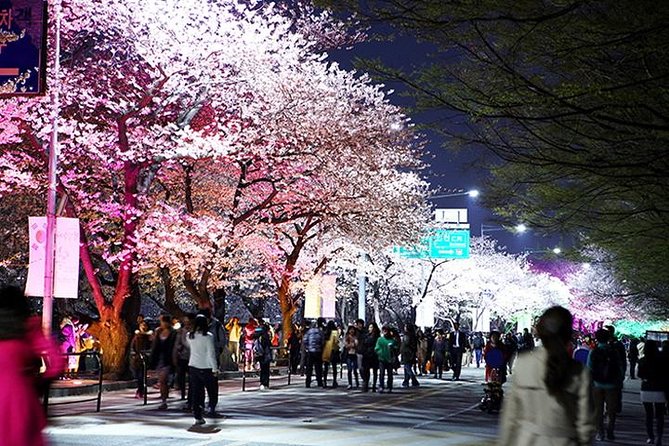
Bomunho Lake Tourism Complex is especially attractive in April, when cherry trees line the walkway. Outside blossom season it functions as a scenic break rather than a must-see historic site.
At Daereungwon Tomb Complex, huge rounded burial mounds fill an open area in the city. You can enter Cheonmachong Tomb, giving you a closer look at how a Silla royal burial was built. The broad grassy setting also offers a welcome change after temple courtyards.
Gyeongju Gyochon Traditional Village shows noble family homes and traditional architecture. The visit is short, so think of it as a compact introduction rather than a full village tour.
Donggung Palace and Wolji Pond is scheduled after dark, when the pavilions reflect in the water. This is a smart timing choice. The night view gives Gyeongju a different character from the daytime temple visits.
You then board the KTX at Gyeongju Station for the roughly two-hour ride to Seoul. One practical point deserves attention: a past participant found that help locating the correct train and station entrance would have been useful. Keep your ticket, watch the departure time, and ask the guide for clear instructions before parting from the group.
Day 5: Cook Korean food, then choose your Seoul evening
The cooking class lasts about three hours and is one of the tour’s most useful activities. You prepare three Korean dishes: bibimbap, traditional pancake, and soup. The menu can change with the season.
This class gives you something to take home beyond photographs. You learn how familiar Korean dishes are assembled, and you get a better sense of the balance between rice, vegetables, soup, and shared side dishes. Vegetarian arrangements are available if you request them when booking.
Hongdae supplies the contrast. This young Seoul district is known for shopping, food, street performances, and a youthful atmosphere. The scheduled hour is enough to get a taste, but you may wish you had more free time here.
NANTA at Myeongdong Theater is optional. It is a nonverbal performance built around kitchen work, physical comedy, and rhythm. Since the ticket costs extra, with listed prices of $35 for S seats, $45 for P seats, and $55 for V seats, decide based on your interest and energy after a busy day.
Day 6: Joseon Seoul, markets, and city views
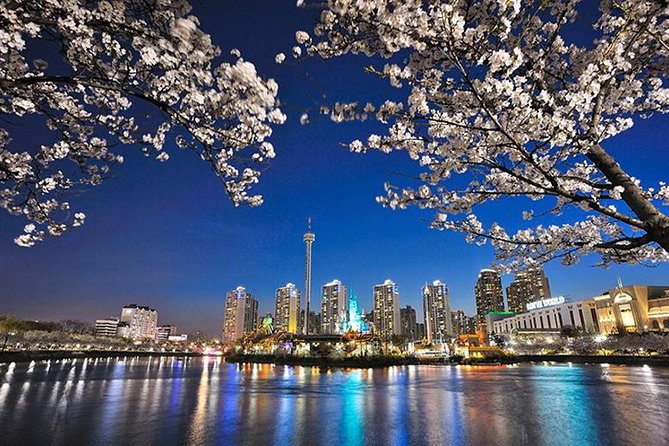
Day six is the fullest Seoul sightseeing day. You begin at Yeouido Park, a popular cherry blossom area in spring. The park sits on an island in the Han River and changes character during blossom season. Outside spring, it is mainly a city park stop.
Gyeongbokgung Palace is the central historic sight. Built in 1395 as the first and largest palace of the Joseon Dynasty, it gives you a clear introduction to Korea’s royal architecture. The one-hour visit is brisk, so focus on the main halls and overall layout rather than trying to absorb every detail.
Jogyesa Temple is smaller but important as the head temple of Korean Buddhism. Its city-center location makes the visit especially interesting: a quiet Buddhist space sits amid central Seoul streets.
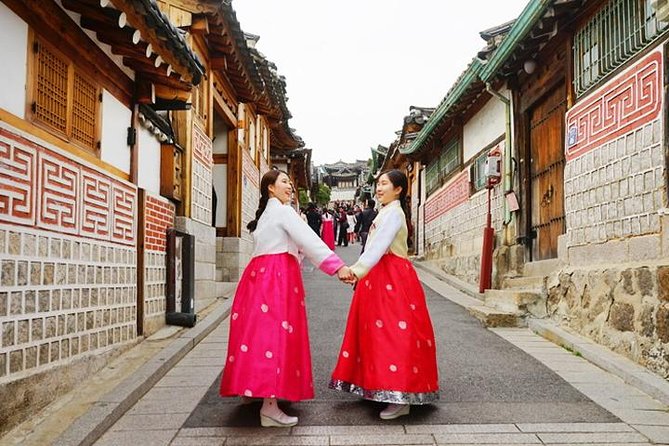
Bukchon Hanok Village follows, with narrow lanes and traditional homes from the Joseon period. This is a residential area as well as a sightseeing site, so keep your voice down and follow local signs. The slopes and tight streets can be demanding, particularly after several days of walking.
Gwangjang Market is the food tour stop. The market was Korea’s first permanent market and is now famous for cooked food, traditional stalls, and its appearance in a recent Netflix program. This is one of the best chances to taste several Korean specialties in one place, though food preferences and extra purchases are personal expenses unless specifically included.
N Seoul Tower gives you a wide view over the capital from Namsan Mountain. The top reaches nearly 480 meters above sea level, combining the mountain’s 243 meters with the tower’s height. Clear weather matters here, so the view can vary.
Myeongdong is for cosmetics, clothing, shoes, and department-store shopping. Insadong finishes the day with tea houses, antiques, crafts, souvenirs, traditional restaurants, and Korean sweets. These districts are useful for buying gifts, but they also provide the free time that a tightly scheduled tour otherwise lacks.
Day 7: Korea’s divided border and a final mountain view
The final day heads north to the DMZ area. At Imjingak Pyeonghoa-Nuri Park, you stop to buy the DMZ shuttle bus tickets and enter the civilian control zone. Bring your passport. An identity check is required.
The Third Tunnel is a sobering, physical part of the visit. North Korea dug the tunnel after the Korean War, and you can enter the actual passage for a closer look. The walk is not simply a photo stop, so wear sensible shoes and expect the tunnel visit to feel more demanding than the short duration suggests.
At Dora Observatory, you may see North Korea with the naked eye from one of the northernmost public observation points in South Korea. Visibility depends on conditions, and the experience is more about understanding the border than collecting a perfect photograph.
Tongilchonan-gil is a brief stop with souvenirs and local products. It sits inside the civilian control zone, where curfew rules apply, so stay with the group and follow instructions.
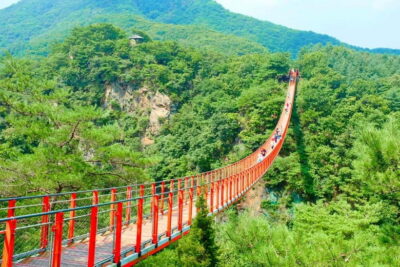
Gamaksan Chulleong Bridge gives the final stop a scenic finish. The area was once a Korean War battlefield, but today you reach a suspension bridge and mountain views after about a 10-minute hike. It is a fitting contrast to the serious DMZ stops.
The program ends after the day’s schedule. You can return directly or keep some extra time in Seoul, but an airport transfer is not listed, so arrange your onward transportation separately.
What the $1,988 price buys you
At $1,988 per person, this is not a bargain in the simple sense. It becomes more convincing when you add up the moving parts: six hotel nights, domestic air travel, KTX rail, an air-conditioned vehicle, an English-speaking guide, entrance fees, seven lunches, four breakfasts, a cooking class, and the DMZ transport arrangements.
The value is mainly in time and coordination. Organizing Jeju, Busan, Gyeongju, Seoul, and the DMZ independently in seven days would require careful timing, multiple transport bookings, and local knowledge. The route also removes compulsory shopping, which is important if you want sightseeing rather than sales stops.
The hotels are described as clean 3-star or 3 to 4-star properties. You should expect practical accommodation rather than luxury. Dinner is not clearly listed among the included meals, and personal expenses are excluded, so budget for evening food, snacks, shopping, and optional NANTA.
The tour is often booked about 69 days ahead, which is a useful signal to plan early, especially if you want spring blossoms. It also requires a minimum number of participants, and cancellation terms are strict: the booking is non-refundable and cannot be amended. If the operator cancels because the minimum is not reached, you are offered another date or experience, or a full refund.
Who will enjoy this fast-paced Korea tour?
I would recommend it to a first-time visitor who wants a broad introduction and prefers having transport, hotels, and sightseeing handled by one company. It also suits solo visitors and couples who like meeting a small international group, with a maximum of 15 people.
It is a good fit if you enjoy history, food, markets, coastlines, and changing scenery more than long stretches of free time. The guides are a major part of the experience, and the named team includes Jung, Jiyoung, Sang, Harry, Jones, and Clover. Guide quality can shape the trip, so it helps to ask questions and tell the guide what interests you.
I would hesitate if you want a slow Jeju holiday, several nights in each city, or complete control over meal choices and daily timing. The route is full, and the short stops can feel rushed. Also keep in mind that different city segments may use different guides, and assistance between the KTX station and the correct train may require you to ask directly.
Should you book it?
Book this tour if your priority is maximum coverage in one week. The combination of Jeju’s volcanic coast, Busan’s markets, Gyeongju’s Silla sites, Seoul’s palace districts, and the DMZ is hard to arrange alone in such a short period.
Skip it if you measure a good trip by slow mornings and spontaneous wandering. At this price, the tour earns its keep through logistics, included transportation, admission fees, and local guidance, not through luxury or spare time. For an active first visit to South Korea, it is a strong practical choice, provided you are ready for a busy schedule and strict cancellation terms.
FAQ
How long does the tour last?
The tour lasts approximately seven days and includes six nights of accommodation.
Which places in South Korea does the tour visit?
The route includes Jeju Island, Busan, Gyeongju, Seoul, and the DMZ area.
Where does the tour start?
The tour starts with airport pickup at Incheon International Airport. You then transfer to Gimpo Airport and fly to Jeju Island.
Is transportation included?
Yes. The package includes the domestic flight, the KTX bullet train from Gyeongju to Seoul, and an air-conditioned tour vehicle.
How many people can join the tour?
The tour has a maximum group size of 15 travelers.
Are meals included?
Seven lunches and four breakfasts are listed as included. Personal expenses are not included, and dinner coverage should be checked carefully before booking.
Is a cooking class included?
Yes. The cooking class lasts about three hours and covers bibimbap, traditional pancake, and soup, although the menu can change by season.
Is the NANTA show included?
No. NANTA is optional and has separate listed ticket prices of $35 for S seats, $45 for P seats, and $55 for V seats.
Do I need my passport for the DMZ visit?
Yes. You need your passport because an identity check is required before entering the civilian control zone.
Recently added around Seoul
- Nami & Maple Road & Theatre des Lumieres Day Tour from Seoul★ 4.8 · 4 reviews
- Gyeongbokgung Palace Photo Session with your own phone★ 5.0 · 4 reviews
- Private Tour around Suwon UNESCO Fortress and Korea Folks Village★ 4.5 · 4 reviews
- Jisan Forest Resort: Ski Full-Day Tour or Shuttle from Seoul★ 5.0 · 4 reviews
- N Seoul Tower + Namsan Cable Car Ticket (Collect in Myeongdong)★ 3.5 · 4 reviews
- Seoul: Deoksugung Palace Night Tour★ 4.5 · 4 reviews
- Seoul Private Walking Tour with a Local★ 5.0 · 4 reviews
- Private Jeonju Hanok Village – Culinary tour★ 5.0 · 4 reviews
Seoul Tours, compared.
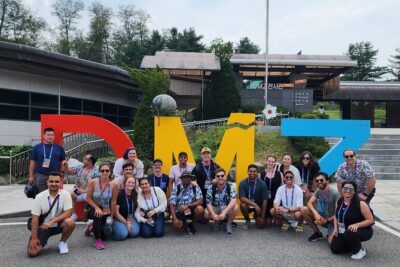
Best DMZ Tour Korea from Seoul (Red Suspension Bridge Optional)
Read the review →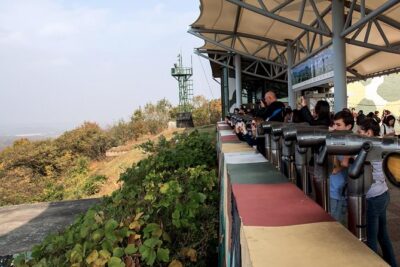
DMZ Tour: 3rd Tunnel, Option(Suspension Bridge, Boat) from Seoul
Read the review →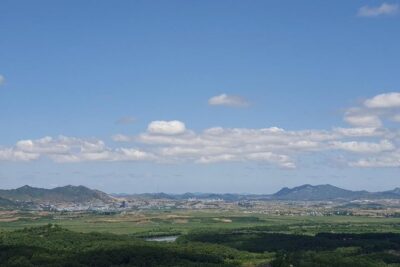
DMZ tour south Korea from Seoul (NK experience hall, defector)
Read the review →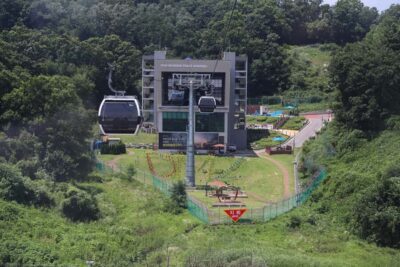
DMZ The 3rd Tunnel and Suspension Bridge Tour
Read the review →
Signature DMZ Tour: Exclusive Defector Talk & Suspension Bridge
Read the review →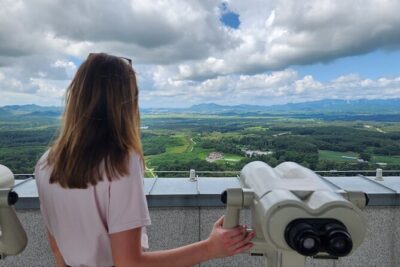
Thrilling Korean DMZ 3rd Tunnel Tour from Seoul + Red Bridge Rush
Read the review →
DMZ Past and Present: Korean Demilitarized Zone Tour from Seoul
Read the review →Browse the lists this tour appears in