
Reviewed · SEOUL TOURS
Seoul moonlight walking tour with local historian
Seoul’s best night views are not always found from a tower. This two-hour walk climbs from Hyehwa through Ihwa Mural Village and Naksan Park, ending beside the old Seoul City Wall with the city lights spread below. Along the way, your guide connects the scenery to Korean education, class, urban change, and everyday life.
I like the blend of history and present-day culture, especially the opening discussion of Seoul University Hospital Medical Museum and the intense role of education in Korea. I also like that guides such as Jessica, Ethan, June, and Smin bring different personalities to the walk, from calm storytelling to plenty of humor.
The main catch is the hill. You will climb stairs and sloping streets, then walk back down, so comfortable shoes matter. The tour is not presented as difficult, but it is not a flat stroll either, and one guide has received criticism for struggling with English.
Key points to know before booking
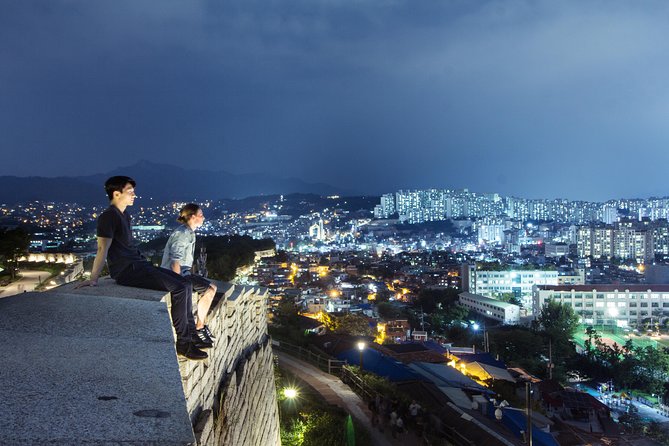
- The view comes after the climb: Naksan Park and the Seoul City Wall provide the big night panorama.
- Hyehwa gives the tour a local start: You begin among theaters, students, cafes, and ordinary city life rather than at a major monument.
- History includes modern Korea: The discussion covers university pressure, social class, urban development, and the changing capital.
- The group can reach 20 people: That is small enough for a walking tour atmosphere, though the experience may feel less personal at full capacity.
- Guides vary by date: Jessica, Ethan, June, Smin, Sumin, Leah, and Shin have led this experience.
- Bring practical gear: Wear walking shoes, charge your phone, and consider bug spray for the evening.
Why this night walk shows you a different Seoul
I like this tour because it does not treat Seoul as a collection of palace gates and shopping streets. It begins in Hyehwa, a neighborhood tied to universities, theater, youth culture, and steep residential roads. You then climb toward an old defensive wall, passing through a hillside district that raises plain questions about wealth, housing, and who has historically lived on the city’s slopes.
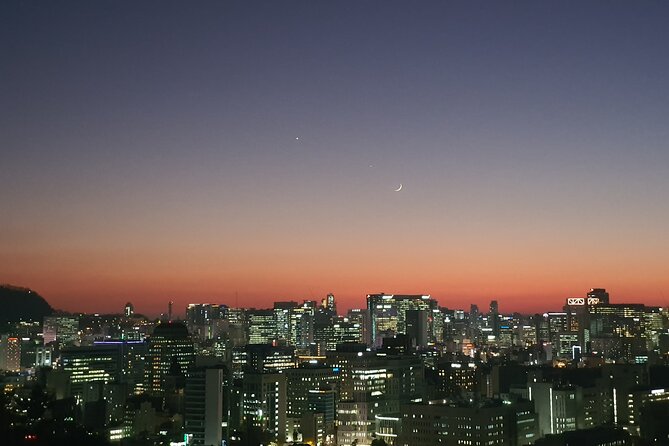
That mix gives the evening some substance. You get photographs, but you also get a way to read the city. The lights below are not just pretty. They are part of a story about Seoul’s growth, its capital status, and the social pressures that shape daily life.
The tour has earned recognition from Tripadvisor in 2024 and Klook in 2024. The guide team includes several local Korean hosts, and the names appearing in the experience feedback include Jessica, Ethan, June, Smin, Sumin, Leah, and Shin. Your guide will depend on the date, so the tone may vary, but the route and main themes remain the same.
More Walking Tours in Seoul:
- Seoul: Nighttime Hidden Gems Walking Tour
★ 5.0 · 775 reviews - Seoul: Evening Dark History, Folklore & Ghost Story Walking Tour
★ 5.0 · 593 reviews - Seoul: Dark Side of the City and Ghost Stories Walking Tour
★ 4.8 · 484 reviews
Starting in Hyehwa at Seoul University Hospital Medical Museum
Meet at Hyehwa120 Daehak-ro in Jongno District. The first stop is Seoul University Hospital Medical Museum, where the guide introduces current university culture in Korea.
This is an unusual opening. You are not starting with a royal palace or a famous viewpoint. Instead, you begin with the pressure surrounding university life and the importance of education. The phrase about reaching the highest place students can go in the country points to the strong status attached to top universities and medical schools.
The stop lasts about 10 minutes and has no admission fee. It works best if you are curious about modern Korean society rather than looking only for old buildings. The subject may feel less immediately scenic than the later portions, but it gives the climb a social purpose.
Guides have used this part of the tour to explain Korean values, education, competition, and the way university entrance can affect families. That context is useful because it moves beyond the standard tourist version of Seoul. You are given a starting point for understanding why certain neighborhoods, institutions, and careers carry such weight.
Marronnier Park and Hyehwa’s theater district
The walk continues to Marronnier Park, a five-minute stop in an area known for live theaters and shows. Hyehwa is often associated with performances, young people, and a strong arts scene, so this brief visit helps establish the neighborhood’s character.
The stop is short, but it breaks up the historical discussion with a look at current city life. You might see posters, theater activity, and people heading out for an evening in the district. The tour information does not promise a performance or theater admission, so treat Marronnier Park as a cultural waypoint rather than a show.
I find this kind of beginning more useful than a route that sends you straight to a viewpoint. Seoul can feel like a huge wall of buildings when you first arrive. Hyehwa gives you a human-scale introduction, with the guide explaining how the area works today before the group heads uphill.
Naksan Park and the story of Seoul’s capital
At Naksan Park, the guide turns to a much older question: why was Seoul chosen as Korea’s capital, and how has that decision shaped the city?
The listed stop lasts about 10 minutes, though the walking route around it continues into the longer climb. This is where the tour begins tying geography to history. The park sits on higher ground, and its position helps you understand Seoul as a city organized around hills, walls, and a central capital area.
You will hear about changes to the capital and the way Seoul developed over time. The value here is not a long lecture packed with dates. It is the connection between what you see under your feet and the city below. As the route gains height, the guide can point out how the capital has expanded and changed.
Naksan Park is also one of the major photo stops. The views become more impressive as daylight fades, and the walk is timed as a moonlight experience rather than a daytime sightseeing circuit. Some participants have described the sunset as a highlight, so the exact amount of light will depend on the season and starting time.
A few more Seoul half-days to weigh up
- Best DMZ Tour Korea from Seoul (Red Suspension Bridge Optional)
★ 5.0 · 41,422 reviews - DMZ Tour: 3rd Tunnel, Option(Suspension Bridge, Boat) from Seoul
★ 5.0 · 21,373 reviews - DMZ tour south Korea from Seoul (NK experience hall, defector)
★ 5.0 · 20,599 reviews - Seoul: DMZ Tour with Optional Suspension Bridge
★ 4.8 · 5,277 reviews
Ihwa Mural Village, art, and life on the hillside
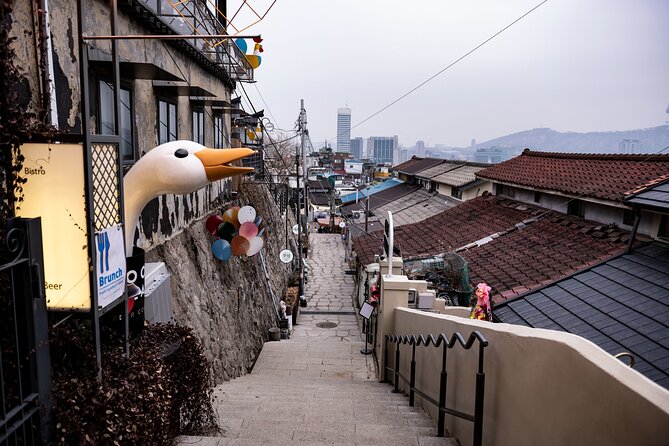
The group then reaches Ihwa Mural Village, with about 20 minutes set aside for the area. The tour frames this as a hillside neighborhood associated with people of limited means, using it to discuss the broader pattern of poorer communities on Seoul’s hills.
That is an important angle. Mural villages are often presented as cheerful art districts, but the pictures do not tell the whole story. Here, the guide uses the neighborhood to explain housing, income, and the social history of Seoul’s steep residential areas. You get the painted walls and photo opportunities, but you also get a reminder that these are living communities, not open-air theme parks.
The route’s social commentary is one of its strongest features. Several guides have explained Korean culture, values, modern life, and social problems in direct language. That approach may appeal to you if you want more than a polished sightseeing story.
Keep your voice down near homes and follow your guide’s advice about where to stop for photos. The information provided does not give specific rules for the village, but basic courtesy matters in any residential district.
Walking the old Seoul City Wall after dark
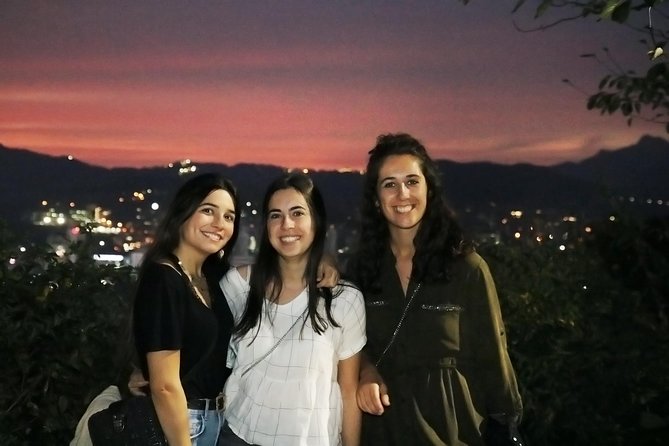
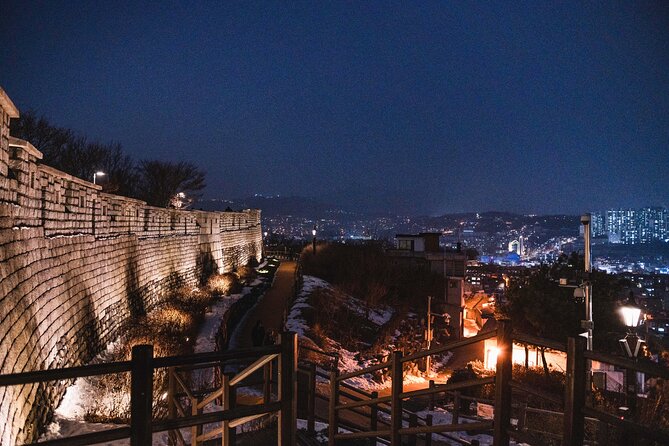
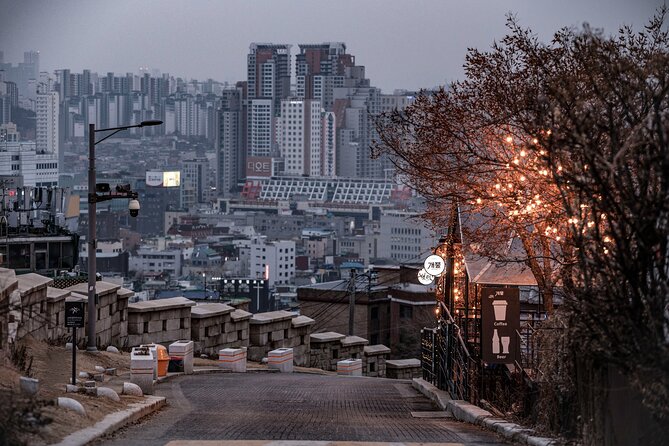
The high point of the evening is the Seoul City Wall, a major historical monument and the best viewpoint on this route. The walk beside the wall has a romantic feel after sunset, with the lights of Seoul spreading across the lower city.
The stop is listed at about 20 minutes. In practice, the climb and photo pauses form a larger part of the experience, so do not think of this as a single quick lookout. The route gains height gradually, then gives you a reward for the effort.
The wall also connects the view to Seoul’s past defenses and the old shape of the capital. From here, the city’s modern scale becomes clear. You can see why this route works at night: the wall supplies the historical setting, while the illuminated city supplies the drama.
The area has also been associated with the K-Pop Demon Hunters spot, which may interest fans looking for recognizable Seoul locations connected to current popular culture. The supplied details do not identify a precise scene or filming point, so ask your guide for the exact connection rather than assuming every viewpoint is part of the production.
Bring a charged phone. The city lights, wall, and sunset create some of the strongest photo opportunities of the evening. A small portable battery would be sensible, although no special equipment is required.
The guides shape the experience
The route is consistent, but the guide can change the feel of the evening. Jessica is described as funny and detailed, with an easy way of combining history and humor. Ethan is noted for calm delivery, cultural explanation, and helpful food and activity suggestions. June is praised for clear, lively explanations and enthusiasm for Seoul’s past.
Smin and Sumin have also led the walk, with Smin receiving praise for strong English, humor, and a friendly manner. Leah is described as guiding the group in a relaxed, companionable way, while Shin has been praised for making the history accessible.
This range is worth keeping in mind. A walking tour depends heavily on the person leading it. Most of the supplied feedback is strongly positive, but one two-star account raises a fair concern about English ability and storytelling. That does not define the whole team, yet it is a reminder that guide quality can vary from one date to another.
The group limit is 20 people. At a smaller size, you may get more chances to ask questions and pause for photographs. At the maximum, you should expect a more standard group walk, especially on narrow streets and stairways.
How hard is the uphill walking?
The most important practical fact is the terrain. You will walk uphill, use stairs, and later descend. Several comments stress this point, even from people who found the route manageable.
I would rate it as a moderate city walk rather than a strenuous hike. Still, anyone with knee problems, limited mobility, or little comfort on hills should think carefully before booking. The tour information says most people can participate, but it does not describe the route as wheelchair accessible.
Wear shoes with a good grip. Avoid making this the evening after a full day of exhausting sightseeing unless you are comfortable adding a climb. The pace is described as easy by some participants, and guides may allow time for photos and questions, but the hills remain part of the route.
Bug spray is another useful tip for warm evenings. It was specifically recommended after one walk. Seoul’s weather can also affect the experience, since the activity requires good conditions and may be moved or refunded if poor weather causes cancellation.
Price, timing, and what you receive
The price is $31.98 per person for about two hours. That is a reasonable rate if you value a local guide, cultural explanation, and access to viewpoints you might not find easily on your own.
You are not paying for admission to attractions. The listed stops are free, and no special supplies are included or needed. The value comes from the route, the guide’s interpretation, and the way the stops connect into one story.
A self-guided walk through Naksan Park would cost less, of course. You could also reach the wall and Ihwa Mural Village independently with a map and some planning. The advantage here is that you do not need to work out the best order, locate every viewpoint, or research the social background of the neighborhoods.
The tour ends back at the meeting point. Afterward, there is an optional food session, but dinner is not included in the price. That arrangement lets you decide if you want to continue eating with the group or make your own plans.
Who should book this Seoul evening walk?
I would recommend it most strongly to first-time visitors who want to understand Seoul beyond the main palace and shopping areas. It also suits solo visitors, since the two-hour format offers an easy way to meet people while seeing an area you might otherwise skip.
History fans will appreciate the city-wall setting, but you do not need a specialist background. The guide discusses current Korean life, education, social class, and urban change in plain terms. That makes the experience useful for anyone who wants cultural context along with photographs.
It is also a good fit for visitors who enjoy sunset walks and city views. The route becomes more rewarding as the lights appear, so try to book a start time that gives you some daylight and some darkness, if the schedule allows.
I would hesitate if you want a flat, effortless evening or a tightly scripted monument tour. The route includes stairs, uphill streets, and a residential neighborhood. You should also accept that the guide’s English style may differ by date.
Practical details before you go
The meeting point is Hyehwa120 Daehak-ro, in Seoul’s Jongno District, near public transportation. Confirmation is provided when you book, and the activity uses a mobile ticket.
The maximum group size is 20 people. Most people can take part, but the route is not described as accessible for every mobility level. Plan for two hours, plus extra time if you join the optional food session afterward.
Free cancellation is available up to 24 hours before the start time for a full refund. Changes or cancellations inside that window are not accepted, and the cut-off uses Seoul local time. If bad weather cancels the walk, you are offered another date or a full refund.
Should you book the Seoul Moonlight Walking Tour?
Book it if you want Seoul history with a modern social angle, strong night views, and a guide-led route through Hyehwa, Ihwa, Naksan Park, and the old wall. The price is fair for the local interpretation and the convenience of finding the viewpoints without planning the route yourself.
Skip it if you dislike hills, stairs, or group walks. For the best chance of enjoying it, wear proper shoes, charge your phone, carry bug spray in warm weather, and arrive ready to listen as well as take pictures. The scenery is the reward, but the discussion of education, class, and city life is what gives the evening lasting value.
FAQ
How long does the Seoul moonlight walking tour last?
The tour lasts approximately two hours.
How much does the tour cost?
The price is $31.98 per person.
Where does the tour start?
The meeting point is Hyehwa120 Daehak-ro in Jongno District, Seoul.
Where does the tour finish?
The activity ends back at the meeting point.
Which places does the tour visit?
The route includes Seoul University Hospital Medical Museum, Marronnier Park, Naksan Park, Ihwa Mural Village, and the Seoul City Wall.
Is dinner included?
No. An optional food session takes place after the tour, but the fee for dinner is not included.
Do I need special equipment?
No special supplies are required. Comfortable walking shoes are strongly advisable, and a charged phone will help you take photos.
Is the tour suitable for most people?
The activity information says most people can participate. You should still be comfortable walking uphill and using stairs.
How many people can join the tour?
The maximum group size is 20 people.
What happens if the weather is poor?
The experience requires good weather. If it is canceled because of poor conditions, you can choose another date or receive a full refund.
Recently added around Seoul
- Nami & Maple Road & Theatre des Lumieres Day Tour from Seoul★ 4.8 · 4 reviews
- Gyeongbokgung Palace Photo Session with your own phone★ 5.0 · 4 reviews
- Private Tour around Suwon UNESCO Fortress and Korea Folks Village★ 4.5 · 4 reviews
- Seoul: Deoksugung Palace Night Tour★ 4.5 · 4 reviews
- Jisan Forest Resort: Ski Full-Day Tour or Shuttle from Seoul★ 5.0 · 4 reviews
- N Seoul Tower + Namsan Cable Car Ticket (Collect in Myeongdong)★ 3.5 · 4 reviews
- Seoul Private Walking Tour with a Local★ 5.0 · 4 reviews
- Private Jeonju Hanok Village – Culinary tour★ 5.0 · 4 reviews
Seoul Tours, compared.
Best DMZ Tour Korea from Seoul (Red Suspension Bridge Optional)
Read the review →
DMZ Tour: 3rd Tunnel, Option(Suspension Bridge, Boat) from Seoul
Read the review →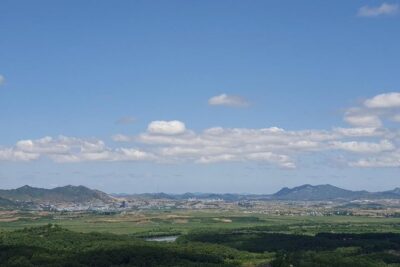
DMZ tour south Korea from Seoul (NK experience hall, defector)
Read the review →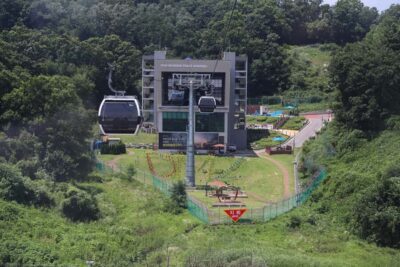
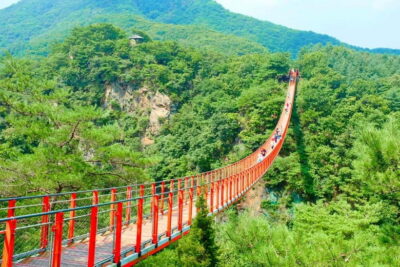
DMZ The 3rd Tunnel and Suspension Bridge Tour
Read the review →
Signature DMZ Tour: Exclusive Defector Talk & Suspension Bridge
Read the review →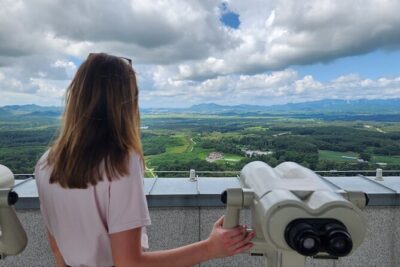
Thrilling Korean DMZ 3rd Tunnel Tour from Seoul + Red Bridge Rush
Read the review →
DMZ Past and Present: Korean Demilitarized Zone Tour from Seoul
Read the review →Browse the lists this tour appears in