
Reviewed · DMZ TOURS
Half-Day DMZ Tour Led by a Retired Military Officer from Seoul
The most unusual feature here is the guide. PLK Travel uses former military officers, including SJ, a Special Forces major and Iraq veteran, Eddie, a former captain and tunnel specialist, and Tiger, a former artillery commander. Their briefings turn a bus ride and a few border stops into a clear lesson on how the Korean War still shapes daily life.
I like the on-the-day observatory choice, since the guide checks weather, visibility, and live CCTV instead of sending you to the same viewpoint in every condition. I also like the no-shopping format. You spend the half-day on the Third Tunnel, war memorials, and the border itself.
The catch is that this is not a quick outing just because it is called half-day. The stated six to seven hours includes traffic, and the tour can change or be canceled because of military activity, weather, or the minimum number of participants.
Key points before you book
- Retired military guides: SJ, Eddie, Tiger, Julie, Jay, and Dylan are among the guides named for this experience, with several bringing direct service experience near the DMZ.
- The Third Tunnel is physical: The tunnel is about 1.95 meters high and 2.1 meters wide, so you walk through a low, enclosed passage.
- One observatory is selected daily: You visit either Dora Observatory or Odusan Unification Observation Deck, based on the clearest available conditions.
- No shopping stops: The schedule concentrates on border history, military geography, and memorial sites.
- The total cost is $45 per person: That includes Seoul transport, a licensed guide, and DMZ admission, but not lunch or insurance.
- Bring your passport: A current valid passport is required for the border-area checks.
Why a former officer changes the DMZ experience
A DMZ visit can easily become a series of lookouts, signs, and souvenir photos. The guide is what gives those places meaning. Here, the strongest part of the experience is the military background of the people leading it.
SJ is described as a former Special Forces major who served with the 707 Battalion and was an Iraq veteran. Eddie is presented as a retired captain and former infiltration tunnel expert who briefed senior American and Korean officials. Tiger spent more than 20 years as an artillery commander on the front line.
That does not make the tour a military exercise. You are still riding by bus, walking through a historic tunnel, and looking north from an observation deck. But the guide can explain terminology, distances, checkpoints, and the military logic behind the sites in a way a standard city guide may not.
Eddie’s style appears to be especially personal. He has shared stories from his service, including an encounter involving a game of ping-pong with North Koreans at a bunker. SJ is praised for combining a detailed account of the Korean War with humor. Dylan has been noted for explaining both military history and the scenery along the route, while also speaking excellent English and Japanese.
You should not assume that you can select a particular guide when booking. The named guides vary by departure. Still, the company’s central idea is clear: your guide is not simply reading a script about the border.
More DMZ Tours in Seoul:
- Best DMZ Tour Korea from Seoul (Red Suspension Bridge Optional)
★ 5.0 · 41,422 reviews - DMZ Tour: 3rd Tunnel, Option(Suspension Bridge, Boat) from Seoul
★ 5.0 · 21,373 reviews - DMZ tour south Korea from Seoul (NK experience hall, defector)
★ 5.0 · 20,599 reviews
From Seoul to the edge of the DMZ
The journey begins with round-trip transport from Seoul. The advertised duration is six to seven hours, and that includes traffic, so keep the full morning and early afternoon open. One review describes returning by early afternoon, but road conditions can change the timing.
Before entering the restricted DMZ area, the group stops near the Bridge of Freedom and Mangbaedan Altar. These are not just warm-up photo stops. They introduce the human cost of the division.
Mangbaedan is a symbolic altar where separated Korean families face north and pay tribute to ancestors and relatives who remain across the border. For families divided by the Korean War, the DMZ is not an abstract line on a map. It is a barrier between people who may never have been able to meet again.
The Bridge of Freedom has its own postwar significance as a crossing associated with prisoners and divided families. The stop is brief, listed at about five minutes in one part of the schedule, while another description allows more time around the area. Treat it as a short introduction rather than a long museum visit.
You will also encounter an identity check before entering the DMZ zone. Keep your passport ready and follow the guide’s instructions. This is an active security area, not an ordinary sightseeing district, and military schedules can affect access.
Walking into the Third Invasion Tunnel
The Third Tunnel is the physical centerpiece of the outing. It was one of several tunnels dug beneath the border, and this route lets you walk into the passage rather than simply view an entrance from outside.
The tunnel is listed as about 1,635 meters long, 1.95 meters high, and 2.1 meters wide. Those dimensions matter. If you are tall, watch your head. The enclosed route is not difficult in the sense of technical hiking, but it is a walk through a low passage, and the tour requires a moderate level of physical fitness.
You have about 40 minutes here. That is enough for a memorable visit, though not enough for an unhurried exploration of every detail. The narrow ceiling and plain rock walls make the military purpose feel immediate. You are not only hearing that an invasion route existed. You are walking through one.
The tunnel can be the most exciting stop, but it may not suit everyone. If you dislike confined spaces, have trouble bending or walking, or prefer a relaxed museum visit, this part deserves careful thought. The experience information does not provide accessibility details, so contact the operator before booking if mobility is a concern.
Choosing between Dora and Odusan Observatory
One of the better planning choices is that PLK Travel does not promise the same observatory every day. The guide checks the weather, visibility, and live CCTV, then selects either Dora Observatory or Odusan Unification Observation Deck.
Dora Observatory is described as the northernmost point of the western front and a place where you may see the Gaeseong Industrial Complex and Songhaksan Mountain. Odusan is about two kilometers from North Korea and is described as the closest point from Seoul where you can clearly view North Korean territory with your own eyes.
The practical advantage is obvious: an observatory is only useful if the air is clear enough to see. On a hazy day, a fixed promise of one viewpoint could leave you staring into grayness. The flexible choice gives the guide a chance to make the best of the conditions.
The limitation is also clear. You cannot count on visiting both. The included admission covers one observatory, selected for the date of your tour. If seeing a particular site matters to you, ask before booking rather than assuming the itinerary will include both Dora and Odusan.
At the viewpoint, you may see North Korean territory, with the exact visibility depending on weather. One especially clear account describes seeing people and bicycles across the border. That is not something you should expect every time, but it shows why conditions matter so much.
The observatory is also where the military briefing becomes easiest to understand. Distances that sounded abstract on the bus become visible. A guide can point out the relationship between villages, mountains, industrial areas, and the border line. This is a place to listen first and photograph second.
More day trips out of Seoul:
- Thrilling Korean DMZ 3rd Tunnel Tour from Seoul + Red Bridge Rush
★ 5.0 · 3,097 reviews - DMZ Past and Present: Korean Demilitarized Zone Tour from Seoul
★ 5.0 · 2,481 reviews - Ultimate Korea DMZ Tour from Seoul (Gondola & Suspension Bridge)
★ 5.0 · 2,396 reviews - DMZ Tour from Seoul – Optional Suspension Bridge Experience
★ 5.0 · 1,918 reviews
The locomotive and memorials that slow the pace
The schedule includes a short stop at the steam locomotive at Jangdan Station on the Gyeongui Line. The locomotive was damaged by American forces during the Korean War in 1950, when the railway was being used to move United Nations supplies north and the line was being blocked to slow the Chinese advance.
The train still carries more than 1,000 bullet and shell marks. You only have about five minutes listed here, so this is a quick look rather than a full railway-history visit. Even so, the locomotive is a powerful object. It shows war damage in a way that a paragraph on a display board cannot.
Mangbaedan receives another brief stop in the schedule, listed at about ten minutes. The repeated appearance of this site in the route details suggests its importance, not an extra attraction. Use the time to understand the family stories behind the altar rather than treating it as another border photo point.
The itinerary also lists the Bridge of Freedom separately after the locomotive, again for about five minutes. The exact order may shift with military instructions and traffic. You should think of these locations as a compact group of related memorial sites, not as long, independent sightseeing sessions.
A strict schedule with little filler
This tour is built for people who want the main DMZ sights without a shopping stop or a drawn-out commercial detour. That focus is a real advantage in Seoul, where a single excursion can consume most of a day.
The schedule is strict. One account describes the day as well organized, with enough time at each stop but no dragging. Another notes that the transit to and from the DMZ was smooth. That balance is useful: you get the tunnel, an observatory, memorials, and military explanations without turning the excursion into a full-day commitment.
Still, the phrase half-day can mislead. The official duration is approximately six to seven hours, and traffic is included in that figure. The bus ride is not wasted time if your guide is like SJ, Eddie, or Dylan, since the road journey is used for maps, terminology, and background. But you should not schedule a tight afternoon appointment in Seoul.
Unexpected changes are part of the deal. Military training, weather, traffic, and security conditions can alter the route. The observatory can change, and poor weather can cancel the outing. This flexibility is sensible for a live border area, but it means you are booking an experience, not a perfectly fixed checklist.
What $45 buys you
At $45 per person, the tour is priced as an efficient way to reach a restricted area outside Seoul. The fee includes a licensed professional guide, round-trip transport from Seoul, DMZ admission, and entry to one observatory.
Lunch is not included, and neither is travel insurance. The supplied details do not promise a meal stop, so eat before departure or plan for food afterward. One individual review mentions excellent noodles at a buffet, but that does not appear in the stated inclusions, so I would not treat lunch as guaranteed.
The price makes the most sense if you value interpretation and transport. Reaching the DMZ independently would require more planning, and entry procedures and military restrictions are not the sort of things you want to navigate casually. The former-officer guides are the main reason this is more than a bus transfer.
Group discounts are available. For groups of 10 or more, free hotel pickup is included. The activity is also described as private, with only your group participating, yet the pricing is given per person and group discounts are advertised. Because those details can depend on the booking arrangement, confirm the group format and pickup terms before paying.
Who will get the most from this tour
I would choose this outing if you want the Korean War explained through military geography, personal service stories, and real border sites. It suits first-time visitors to Seoul who want one major excursion beyond the city and have six to seven hours available.
It is also a strong choice for people who dislike shopping stops. The route keeps its attention on the tunnel, the observatories, memorials, and war evidence. Guides are described as friendly and willing to answer questions, so you should feel comfortable asking about history, reunification, military terms, or what you can actually see from the viewpoint.
Families and older visitors should consider the tunnel carefully. The route requires moderate physical fitness, and the low ceiling may be uncomfortable. Anyone who needs detailed accessibility information should ask PLK Travel before booking.
This is less suitable if you need a guaranteed visit to both observatories, a guaranteed clear view of North Korea, or a fixed return time. It is also not ideal for a very short Seoul stay if losing most of a day would crowd out your city plans.
Practical details for a smoother morning
Bring your current valid passport. You need it on the day of travel for the identity check and access procedures.
Wear shoes suitable for walking. The Third Tunnel is the main reason, with its low ceiling and enclosed passage. The supplied information does not specify weather protection or clothing requirements, so dress for the forecast and expect conditions to affect the observatory choice.
Keep your schedule flexible. The tour requires a minimum number of participants, and it may be canceled if that number is not reached. If poor weather cancels the experience, you are offered another date or a full refund.
Free cancellation is available up to 24 hours before the start time. Changes or cancellations made less than 24 hours before departure are not accepted for a refund. The cut-off uses local time.
Should you book this Seoul DMZ tour?
Book it if the guide matters as much as the sights. The Third Tunnel and the North Korea viewpoint are memorable, but the former officers give the day its real value. SJ, Eddie, Tiger, Julie, Jay, and Dylan are associated with a style that mixes military expertise, clear English explanations, personal stories, and humor.
The $45 price is fair for transport, admission, and a focused route with no shopping. Just accept the trade-offs: six to seven hours, a physically demanding tunnel, one observatory rather than two, and possible changes caused by weather or military operations.
If you want a compact, serious introduction to the Korean border, this is a sensible pick. If you want a relaxed sightseeing day with guaranteed scenery and no security restrictions, choose another Seoul outing.
FAQ
How long does the DMZ tour take?
The experience lasts approximately six to seven hours, including traffic on the bus journey to and from Seoul.
What is included in the price?
The $45 price includes a licensed professional guide, round-trip transfer from Seoul, DMZ admission, and admission to one observatory.
Is lunch included?
No. Lunch is listed as an extra cost and is not included in the tour price.
Which observatory will I visit?
You will visit either Dora Observatory or Odusan Unification Observation Deck. The guide chooses one based on weather, visibility, and live CCTV conditions on the day.
Can I visit both Dora and Odusan?
No. The included visit is to one observatory, selected for the clearest view on the date of the tour.
Do I need a passport?
Yes. A current valid passport is required on the day of travel for the identity check and DMZ access.
Is the Third Tunnel physically demanding?
The tour requires a moderate level of physical fitness. The Third Tunnel is about 1.95 meters high and 2.1 meters wide, and the visit involves walking through the tunnel.
Are shopping stops included?
No. This experience is presented as a no-shopping tour focused on the DMZ, historical sites, the tunnel, and the observatory.
Is hotel pickup available?
Free hotel pickup is included for groups of 10 or more. The included transfer information otherwise describes round-trip transport from Seoul.
Can the tour be canceled because of weather or military activity?
Yes. The schedule may change because of military training, traffic, weather, or other unexpected situations. If poor weather or an insufficient number of participants causes cancellation, you are offered another date or a full refund.
More Half-Day in Seoul
- Seoul: Half-Day DMZ Tour Led by a Retired Military Officer
★ 4.9 · 1,399 reviews - Seoul Half-Day City Highlight, Palace Tour with Hanbok
★ 4.9 · 764 reviews - Half-Day South Korea DMZ Small-Group Tour from Seoul
★ 5.0 · 43 reviews - Seoul: Highlights of Seoul Half-Day Tour
★ 5.0 · 22 reviews
Recently added around Seoul
- Gyeongbokgung Palace Photo Session with your own phone★ 5.0 · 4 reviews
- Private Tour around Suwon UNESCO Fortress and Korea Folks Village★ 4.5 · 4 reviews
- Nami & Maple Road & Theatre des Lumieres Day Tour from Seoul★ 4.8 · 4 reviews
- Jisan Forest Resort: Ski Full-Day Tour or Shuttle from Seoul★ 5.0 · 4 reviews
- Seoul: Deoksugung Palace Night Tour★ 4.5 · 4 reviews
- N Seoul Tower + Namsan Cable Car Ticket (Collect in Myeongdong)★ 3.5 · 4 reviews
- Private Jeonju Hanok Village – Culinary tour★ 5.0 · 4 reviews
- Seoul Private Walking Tour with a Local★ 5.0 · 4 reviews
DMZ Tours, compared.
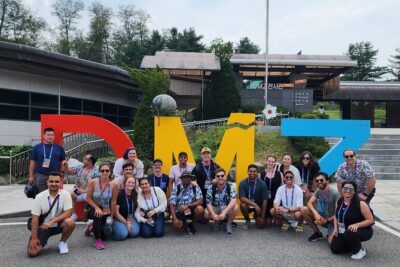
Best DMZ Tour Korea from Seoul (Red Suspension Bridge Optional)
Read the review →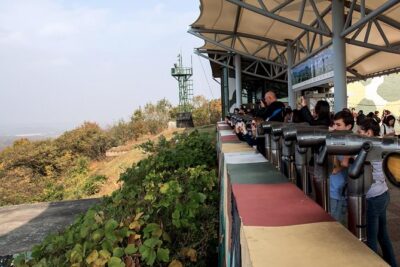
DMZ Tour: 3rd Tunnel, Option(Suspension Bridge, Boat) from Seoul
Read the review →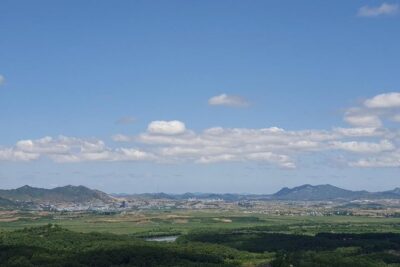
DMZ tour south Korea from Seoul (NK experience hall, defector)
Read the review →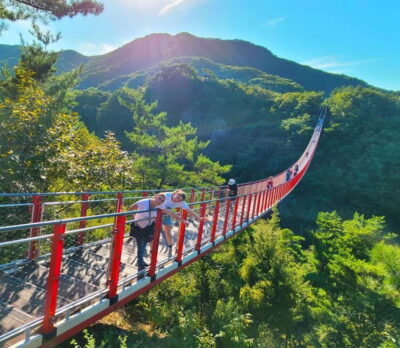
DMZ Insider Tour: 3rd Tunnel, NK Defector Meet & Red Bridge
Read the review →
DMZ The 3rd Tunnel and Suspension Bridge Tour
Read the review →
Signature DMZ Tour: Exclusive Defector Talk & Suspension Bridge
Read the review →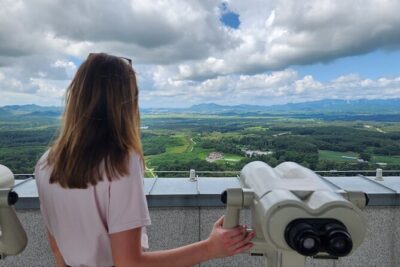
Thrilling Korean DMZ 3rd Tunnel Tour from Seoul + Red Bridge Rush
Read the review →Browse the lists this tour appears in