
Reviewed · SEOUL TOURS
Make your K-scent perfume: Modern oneday class in Seoul
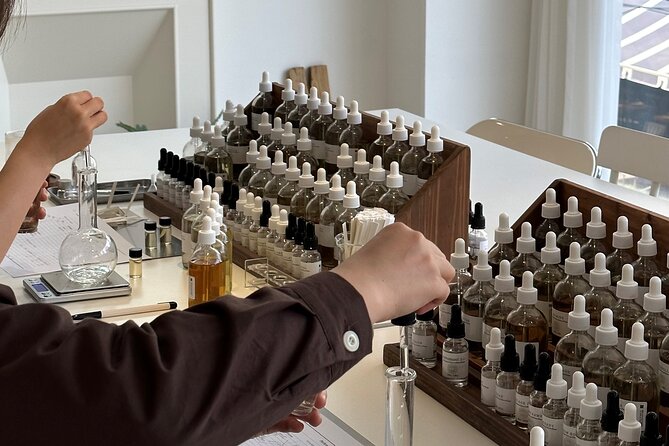
Making a perfume from scratch is a fine way to take home a Seoul memory that will not sit forgotten on a shelf. At Casamu, you taste Korean tea and sweets, study top, heart, and base notes, then blend your own fragrance from Korean-inspired scents and other perfume materials.
I like the small group size of four, which leaves room for patient help when your nose gets confused. I also like the hands-on approach: you do the measuring and mixing yourself, rather than simply choosing a scent and watching someone else finish it. The main consideration is the price, $96 per person, for a two-hour activity, so this makes the most sense if you value a personal souvenir and a creative class more than a quick attraction.
Key points to know before you book
- You create a finished 50ml perfume, not just a temporary sample.
- Three trial blends let you experiment before settling on your final formula.
- Korean tea, sweets, and scent materials add cultural context to the class.
- Casamu uses IFRA-certified fragrance materials for the perfume-making session.
- Groups are limited to four people, with the possibility of a one-person appointment.
- The studio is in Apgujeong, a stylish Seoul neighborhood near public transportation.
Why a handmade scent makes a better Seoul souvenir
Photos record what you saw. A scent can bring back a place in an instant. That is the central idea behind this class, and it gives the activity more purpose than simply mixing pleasant-smelling liquids.
Casamu presents perfume as a way to bottle a memory. You might build something around Korean green tea, a favorite tea-time moment, or a blend that reminds you of a particular day in Seoul. The result is personal because you choose the ingredients, test the balance, and name or define the scent for yourself.
This also makes the class appealing to people who do not usually think of perfume as a feminine activity. The fragrance can be made as perfume or cologne, and the creative process suits couples, families, parent and child outings, and groups of friends. Several teenagers have enjoyed the trial-and-error side of the class, while older participants have used it as a special family activity.
The final bottle is 50ml, enough to feel like a real product rather than a novelty sample. You also receive a 10ml travel-sized bottle, which is useful during the rest of your trip and easier to pack in a small bag.
More hands-on workshops in Seoul:
- Local Home Korean Cooking Class & Market Adventure in Seoul
★ 5.0 · 1,024 reviews - Seoul: Korean Cooking Class at a Local Home and Market Tour
★ 5.0 · 348 reviews - Yongpyong Ski Resort from Seoul with Optional Lesson and Packages
★ 5.0 · 217 reviews
Arriving at Casamu in Apgujeong
The class meets at Casamu, at 32 Eonju-ro 164-gil, second floor, in Seoul’s Gangnam District. It is near public transportation, but you should still allow time to find the building and reach the second floor. The meeting point and ending point are the same, so you can continue exploring Apgujeong after the class.
The location matters because Apgujeong gives the experience a modern Seoul setting. This is not a palace tour or a traditional craft workshop in an old village. You are making a contemporary Korean product in an area associated with fashion, beauty, and new trends.
The studio has been described as bright and attractive, with a friendly atmosphere. It is a useful setting for a scent class because the work requires concentration. You need a clean place to compare fragrances, write down your choices, and decide what belongs in your final bottle.
The class can accommodate up to four people. That limit is one of its strongest practical features. A large group would make perfume blending feel rushed and impersonal, while a small class gives you time to ask why one note works better than another. One appointment has gone ahead with only one participant, so a solo booking can still feel worthwhile.
Starting with Korean tea and sweets
The session begins with a short Korean tea and snack time, called da-gwa time. The food is not just a courtesy before the class begins. It helps set the theme of memory, taste, and smell, while giving you a gentle introduction to Korean flavors.
You may taste seasonal Korean tea and traditional sweets, then think about the aromas and memories connected with them. This is a pleasant change from a standard perfume lesson that begins with rows of bottles and technical terms.
The tea also helps you slow down before the scent work starts. Perfume making is more difficult when you rush from one bottle to the next. A short opening pause gives you a chance to think about the kind of fragrance you want to create.
If you are sensitive to food or have dietary restrictions, the available information does not specify ingredients or substitutions. Ask Casamu directly before booking if that matters to you. The tea and snacks are part of the experience, but the main product is the perfume.
Learning top, heart, and base notes
After the welcome tea, the instructor explains basic perfume structure. You will hear about the olfactory pyramid, commonly described as top notes, heart notes, and base notes.
Top notes are the first scents you notice. They often make the initial impression but can fade sooner. Heart notes form the main character of the fragrance, while base notes provide depth and last longer. Understanding this structure helps you avoid creating a blend that smells good for only a few seconds.
The lesson is kept practical. Rather than listening to a long lecture, you move quickly into smelling and comparing materials. The instructor explains where scents come from and how different ingredients work together.
English-language instruction is available, and Henny is one of the instructors praised for clear guidance and patient help. The teaching style is supportive rather than stern. That matters because scent is subjective. There is no single correct answer when you prefer a fresh note, dislike a powdery one, or change your mind halfway through.
A few more Seoul half-days to weigh up
- Best DMZ Tour Korea from Seoul (Red Suspension Bridge Optional)
★ 5.0 · 41,422 reviews - DMZ Tour: 3rd Tunnel, Option(Suspension Bridge, Boat) from Seoul
★ 5.0 · 21,373 reviews - DMZ tour south Korea from Seoul (NK experience hall, defector)
★ 5.0 · 20,599 reviews - Seoul: DMZ Tour with Optional Suspension Bridge
★ 4.8 · 5,277 reviews
Exploring 40 selected accords and Korean scents
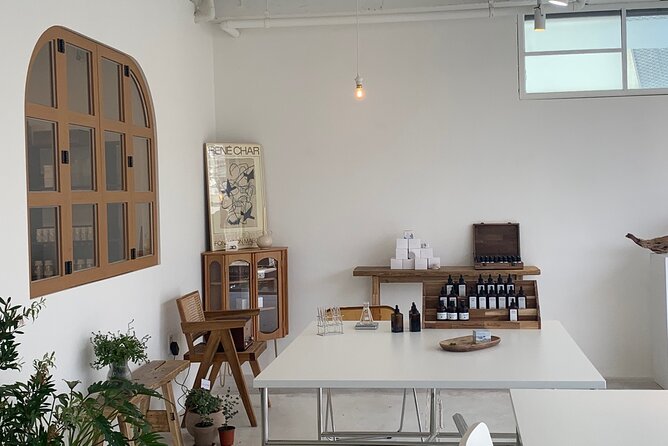
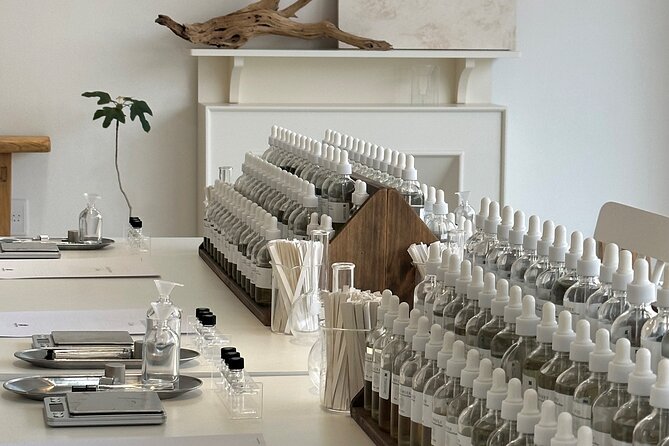
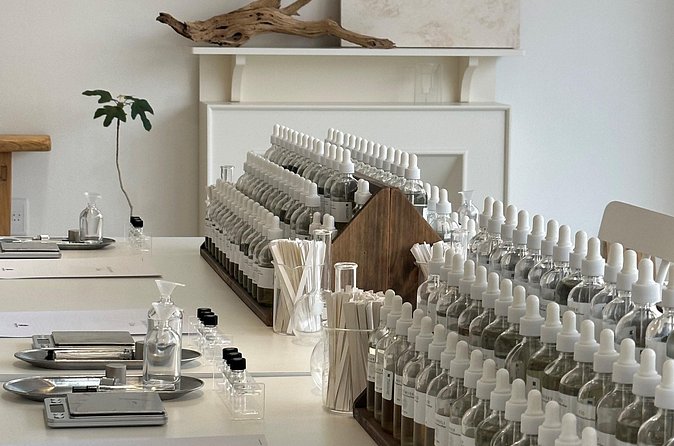
Casamu has about 250 fragrances in its wider collection, with 40 selected accords and natural raw materials prepared for this class. That is a good compromise. You have enough choice to create something individual, but not so many bottles that the session becomes an exhausting search.
The selection includes scents connected with Korea, alongside more familiar perfume materials. Korean green tea has been a favorite for some participants because it brings a clear sense of place without turning the final fragrance into a souvenir-shop scent.
The Korean options are the part that gives this class its identity. You are not simply reproducing a fragrance formula from a European perfume lesson. You can combine a Korean note with other accords to make something that feels modern and personal.
Expect your preferences to shift as you smell more materials. A scent that seems appealing on a paper strip may feel too strong when combined with another accord. A note you first dismiss may become useful in a small amount. The instructor helps you notice these changes and keeps the process from becoming guesswork.
Casamu says the class uses IFRA-certified fragrance materials. IFRA standards relate to the safe use of fragrance ingredients, which is reassuring for a hands-on activity. You should still mention any personal fragrance sensitivities before you begin.
Building three trial perfumes
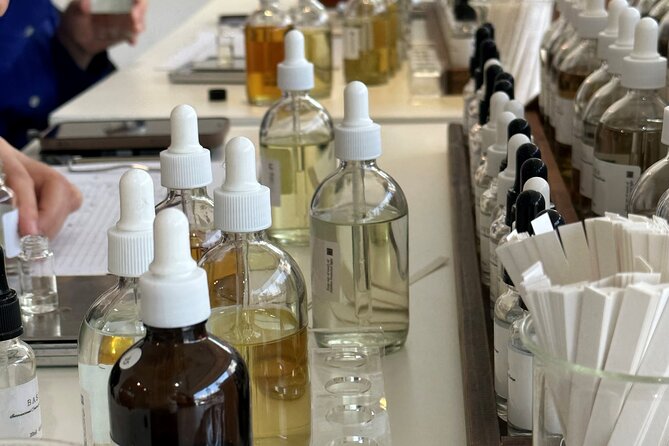
The main creative stage involves making three trial blends of 5ml each. This is where the class earns much of its value. You can test different proportions rather than committing to your first idea.
For example, you might make one blend around a tea note, another with a sweeter character, and a third that uses more wood or musk. The available information does not promise particular ingredients, so the exact options depend on the materials offered during your appointment and your own choices.
The instructor can help you compare the trials, but you remain involved in the decisions. That ownership is important. Some perfume workshops let you select a few preferred notes and then have staff do the final blending. Here, you get to measure and add the essences yourself.
Take notes as you work. Your sense of smell can become tired after repeated sampling, and it is easy to forget which trial used which proportion. If Casamu provides a formula card during your session, keep it with your bottle. If not, ask whether your final recipe can be recorded.
The 10ml travel bottle is a useful extra. You can carry it more easily during your trip, while the 50ml bottle becomes the lasting souvenir. The exact timing of the travel bottle in the process is not specified, so confirm with the instructor if you want to understand how it relates to the three trials.
Finalizing the 50ml bottle
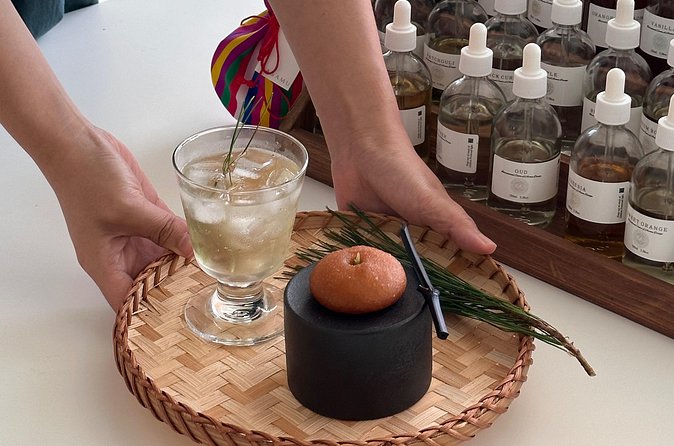
Once you have compared your trial blends, you choose the direction for the finished perfume. The instructor helps you refine the balance, then you finalize a 50ml personalized bottle.
This is the moment when the class shifts from experiment to keepsake. You are not leaving with a generic scent selected from a shelf. The bottle represents your own decisions, including the Korean notes you selected, the proportions you preferred, and the name or idea attached to it.
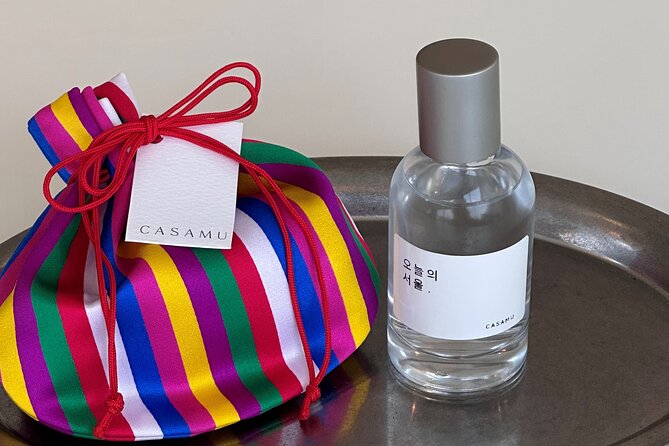
The packaging adds to the sense of occasion. Your finished perfume is placed in a Korean blessing pouch, along with a small gift. That makes it ready to give as a present, although the personal nature of the blend may tempt you to keep it.
The bottle also works well for a life event. The class can suit a wedding trip, birthday, anniversary, or family holiday because you are creating something tied to a specific time. One birthday participant described the experience as a favorite part of the trip, and that connection is easy to understand: the perfume becomes a small reminder you can use long after the holiday ends.
What the two-hour schedule feels like
The listed duration is about two hours. That is long enough for an introduction, tea, fragrance education, several trials, and the final bottle without taking an entire day from your Seoul plans.
Still, perfume making is not a perfectly fixed process. If you are indecisive, the choice between accords can take time. One participant needed extra patience while deciding on the final scent, and that is a normal part of the activity rather than a flaw.
Plan this as a focused appointment, not a quick stop between two tightly timed attractions. You may be finished in around two hours, but you will enjoy it more if you are not watching the clock. The class ends back at Casamu, which makes it easy to plan a meal, shopping, or another activity in Apgujeong afterward.
Because the group is capped at four, you should expect a personal pace rather than a large workshop rhythm. A solo appointment may be especially calm. A family group can be more lively, but each person still gets a chance to work on an individual blend.
Is $96 a fair price?
At $96 per person, this is not a budget activity. You are paying more than you would for a simple museum visit or a short tasting. The price needs to be judged against what you take home and how much personal attention you receive.
The package includes the tea and Korean sweets, scent instruction, three 5ml trial blends, a 10ml travel bottle, a finished 50ml perfume, a Korean blessing pouch, and a small gift. The main value comes from the final bottle and the fact that you make it yourself.
I would consider the price fair for someone who wants a structured creative class and a substantial souvenir. It is less attractive if you only want to smell Korean fragrances or buy an inexpensive bottle. You can find cheaper scent-related shopping in Seoul, but you will not get the same hands-on process or personal formula.
The small group limit also affects the value. You are not paying for a crowded demonstration. You get time with an instructor who can help you adjust your blend, explain the notes, and answer questions as your preferences change.
Who will enjoy this class most
I would recommend Casamu to:
- Couples looking for a shared souvenir with a personal story
- Families, including parents with teenagers
- Solo visitors who enjoy calm, creative activities
- Anyone interested in Korean beauty and modern Seoul culture
- People marking a birthday, wedding, anniversary, or other special event
- Perfume fans who want to understand how blends are constructed
You do not need previous perfume-making experience. The class starts with basic information and guides you through the process.
It is also a good rainy-day or winter activity. You are indoors, the tea creates a warm opening, and the work feels more like making small potions than following a dry technical lesson. If your Seoul schedule already includes many indoor shopping stops, though, you may prefer to balance this with outdoor sightseeing.
This is not the right pick if you dislike fragrance, become overwhelmed by many smells, or want a fast activity with no decisions. You must sample, compare, and make choices. That is the fun, but it is also the work.
Booking and practical details
Confirmation is provided when you book, and mobile tickets are accepted. The experience is offered in Seoul, with the meeting point at Casamu in Apgujeong.
Book with the timing rule in mind. You can cancel for a full refund up to 24 hours before the start time. Cancellations or changes made less than 24 hours before the start are not accepted for a refund, and a 30-minute no-show policy applies.
Since the class is often reserved well ahead of the date, planning about a month in advance is sensible, especially if you need a particular time. Arrive on time, since late arrival can shorten the tea, teaching, or blending portions of a two-hour appointment.
Should you book the Casamu perfume class?
Book it if you want a souvenir you helped create, not something pulled from a shop shelf. The Korean tea, Korean scent options, small group format, and hands-on blending give the class a clear sense of place.
I especially recommend it for families with teenagers, couples, and solo visitors who like creative workshops. The $96 price is high for a two-hour activity, but the 50ml perfume, travel bottle, trials, packaging, and personal instruction make it a reasonable splurge for the right person.
Skip it if perfume is not your interest or if your itinerary allows no room for a slow, thoughtful activity. For everyone else, Casamu offers a pleasant way to carry a personal piece of Seoul home with you.
FAQ
Where does the perfume class take place?
The class takes place at Casamu, 32 Eonju-ro 164-gil, second floor, in Seoul’s Gangnam District. It is near public transportation.
How long does the experience last?
The class lasts approximately two hours.
What will I make during the class?
You will create three trial perfumes of 5ml each, receive a 10ml travel-sized bottle, and finalize a personalized 50ml perfume.
Does the class include Korean food or tea?
Yes. The experience begins with Korean tea and snacks, including seasonal tea and traditional sweets.
How many people can join?
The activity has a maximum of four participants.
What will I learn about perfume?
The instructor covers basic perfume information, including the olfactory pyramid and the role of top, heart, and base notes. You will also explore accords and natural raw materials.
Are the fragrance materials certified?
Casamu states that it uses IFRA-certified fragrance materials for the perfume-making class.
Can I cancel my booking?
You can cancel up to 24 hours before the start time for a full refund. Cancellations or changes made less than 24 hours before the start are not accepted for a refund.
Recently added around Seoul
- Nami & Maple Road & Theatre des Lumieres Day Tour from Seoul★ 4.8 · 4 reviews
- Gyeongbokgung Palace Photo Session with your own phone★ 5.0 · 4 reviews
- Private Tour around Suwon UNESCO Fortress and Korea Folks Village★ 4.5 · 4 reviews
- N Seoul Tower + Namsan Cable Car Ticket (Collect in Myeongdong)★ 3.5 · 4 reviews
- Jisan Forest Resort: Ski Full-Day Tour or Shuttle from Seoul★ 5.0 · 4 reviews
- Seoul: Deoksugung Palace Night Tour★ 4.5 · 4 reviews
- Private Jeonju Hanok Village – Culinary tour★ 5.0 · 4 reviews
- Seoul Private Walking Tour with a Local★ 5.0 · 4 reviews
Seoul Tours, compared.
Best DMZ Tour Korea from Seoul (Red Suspension Bridge Optional)
Read the review →
DMZ Tour: 3rd Tunnel, Option(Suspension Bridge, Boat) from Seoul
Read the review →
DMZ tour south Korea from Seoul (NK experience hall, defector)
Read the review →
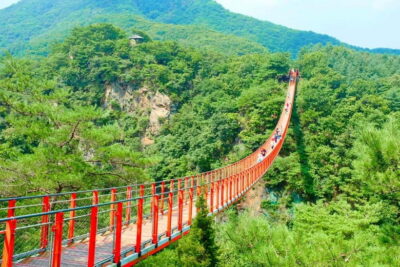
DMZ The 3rd Tunnel and Suspension Bridge Tour
Read the review →
Signature DMZ Tour: Exclusive Defector Talk & Suspension Bridge
Read the review →
Thrilling Korean DMZ 3rd Tunnel Tour from Seoul + Red Bridge Rush
Read the review →
DMZ Past and Present: Korean Demilitarized Zone Tour from Seoul
Read the review →Browse the lists this tour appears in