
Reviewed · SEOUL TOURS
(Closed) Korea’s White House Walking Tour Blue House
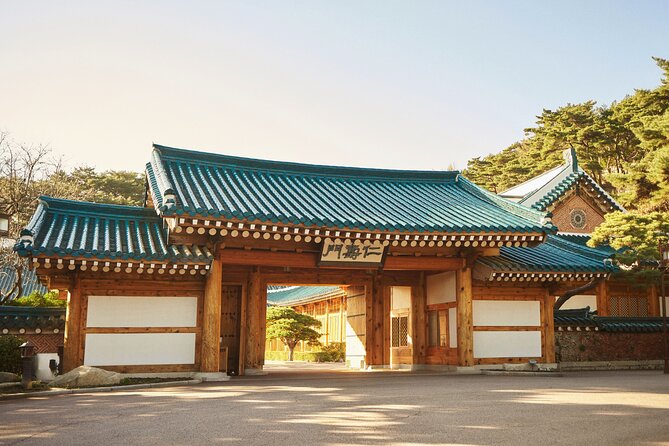
For more than 70 years, Seoul’s Blue House, or Cheong Wa Dae, was closed to ordinary people. Presidents worked and lived here, while access was limited to foreign leaders, Olympic medalists, K-pop stars, and major business figures. This tour offers a close look at that once-forbidden compound, guided by Jungho, whose storytelling and English are major strengths.
I like the small group of no more than nine people, which makes it easier to hear and ask questions. I also like the route’s mix of political history, formal state rooms, family spaces, and traditional Korean buildings. The main drawback is important: this experience is marked closed, and the original access period was scheduled to end in June, so you must confirm that it is operating before planning around it.
Key points about the Blue House walk
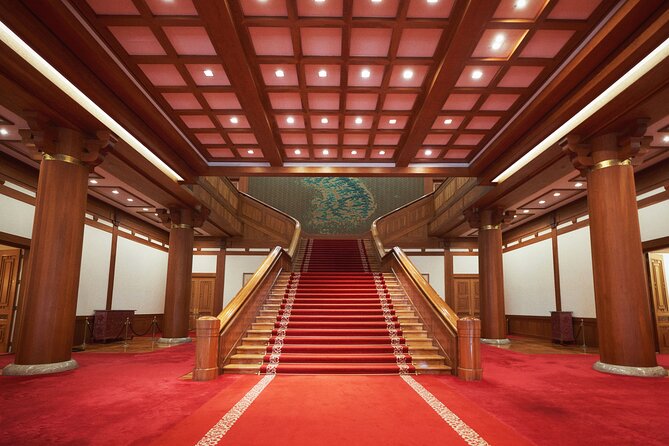
- Former presidential headquarters: See the place where Korean presidents worked, met foreign leaders, and handled major decisions.
- Jungho’s English storytelling: Expect clear explanations, personal attention, and plenty of historical context rather than a quick photo stop.
- Nine-person maximum: The limited group size suits anyone who prefers a quieter walk and a chance to ask questions.
- Seven stops in two and a half hours: The route includes the reception hall, main office, former office site, residence, pavilions, traditional guest house, and press center.
- A rare opening: The Blue House was not normally open to the public for decades, making this a special look at modern Korean government.
- Easy starting point: Meet at Gyeongbokgung Station at 10 a.m. and return to the same meeting point.
Why the Blue House matters in Seoul
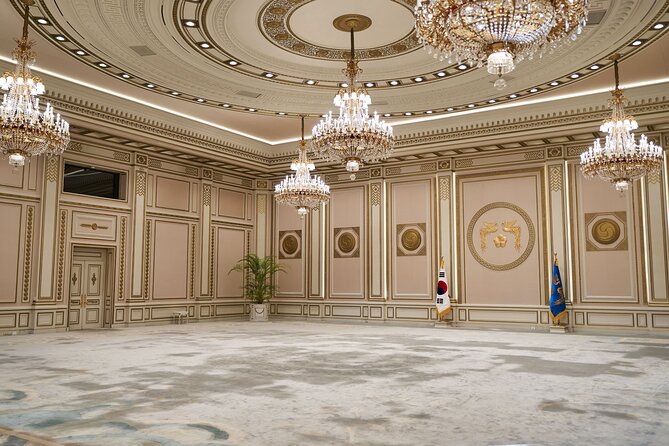
The Blue House is more than a striking building with a blue-tiled roof. It was the center of South Korea’s executive power for over 70 years, serving as both presidential workplace and residence.
That long period of restricted access gives the walk its appeal. You are not simply seeing another palace or government building. You are seeing where national decisions were made and where presidents received foreign leaders, held meetings, and lived with their families.
The tour also gives you a useful contrast with nearby Gyeongbokgung Palace and the traditional Bukchon area. Those sites help explain Korea’s royal past and older architecture. The Blue House adds the modern political chapter, including the way Korean government presented itself to the public and the world.
I find that context especially useful in Seoul, where old royal buildings and sleek modern districts can appear side by side without much explanation. Here, the setting itself helps connect Korea’s past, its twentieth-century development, and its present political identity.
More Walking Tours in Seoul:
- Seoul moonlight walking tour with local historian
★ 5.0 · 940 reviews - Seoul: Nighttime Hidden Gems Walking Tour
★ 5.0 · 775 reviews - Seoul: Evening Dark History, Folklore & Ghost Story Walking Tour
★ 5.0 · 593 reviews
Meeting at Gyeongbokgung Station
The tour begins at Gyeongbokgung Station at 10 a.m. This is a practical meeting point for a morning visit to the Blue House, since the station is near the palace and the northern part of central Seoul.
You do not receive hotel pickup or drop-off, so you need to make your own way to the station. Public transportation is nearby, and the walk ends back at the starting point. That return arrangement makes it easier to continue sightseeing afterward or head back toward central Seoul.
Clear meeting instructions matter here. Jungho has been praised for sending precise directions and for helping people find their way after the tour. One person even received help getting back to the metro station. Still, I would arrive early, especially if Seoul’s subway system is new to you.
The tour lasts about two hours and 30 minutes. That is long enough for real explanation without taking up your entire day. Plan for a walking visit rather than a brief indoor attraction. Comfortable shoes are sensible, even though the route is not described as strenuous.
Yeongbingwan, where Korea welcomed foreign leaders
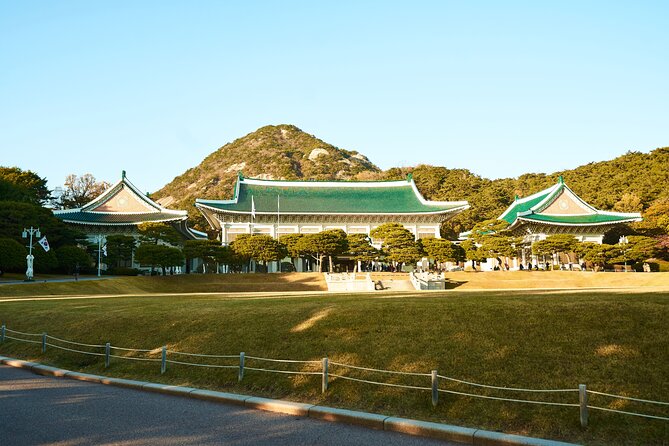
The first stop is Cheong Wa Dae Yeongbingwan, the formal reception building. Presidents used this space to welcome important visitors from other countries, hold dinners, and host major meetings.
This is a good opening stop because it introduces the ceremonial side of the presidency. You can think of Yeongbingwan as the public face of the office, a place designed to represent Korea during formal events.
The building has a modern appearance but includes Korean design elements. That combination reflects a larger theme you will see across the grounds: the Blue House had to function as a modern seat of government while also presenting a distinct Korean identity.
The stop lasts about 10 minutes. That is enough time for orientation and explanation, but not a full architectural study. If you enjoy design, listen closely to how Jungho explains the building’s purpose and the way its appearance connects official power with Korean tradition.
The main Blue House and its blue-tiled roof
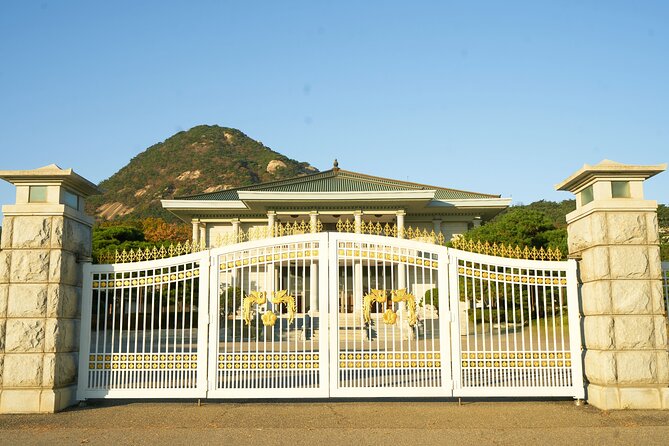
The main Blue House is the central political stop. This was where the president worked and where important meetings took place. Its roof became one of the clearest symbols of the Korean government.
The building combines modern functions with Korean architectural ideas. The blue roof is the most visible feature, but the meaning goes beyond color. For decades, images of this building represented the presidency itself, much as the White House in Washington became shorthand for the American executive branch.
You spend about 20 minutes here. That short time works best when you focus on the building’s role rather than expecting a detailed room-by-room visit. The value comes from understanding what happened here and why the site carried such weight in Korean public life.
This is also where a strong guide makes a real difference. A quick walk around the exterior would show you the roof and formal structure. Jungho’s job is to explain the decisions, ceremonies, and political setting connected to the place.
A few more Seoul half-days to weigh up
- Best DMZ Tour Korea from Seoul (Red Suspension Bridge Optional)
★ 5.0 · 41,422 reviews - DMZ Tour: 3rd Tunnel, Option(Suspension Bridge, Boat) from Seoul
★ 5.0 · 21,373 reviews - DMZ tour south Korea from Seoul (NK experience hall, defector)
★ 5.0 · 20,599 reviews - Seoul: DMZ Tour with Optional Suspension Bridge
★ 4.8 · 5,277 reviews
The former presidential office site
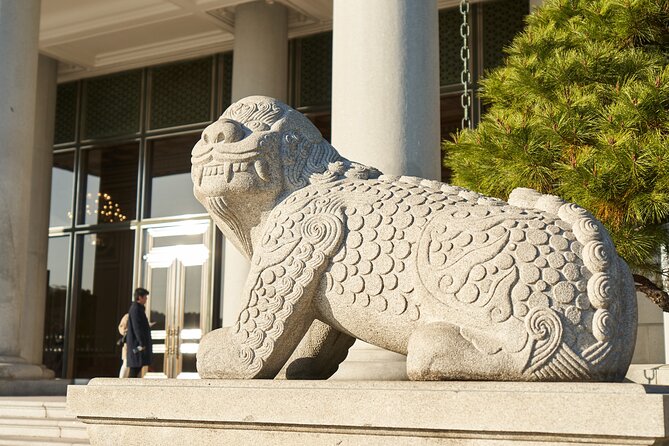
Another stop marks the area where the old presidential office once stood before the current main Blue House was built. Korean presidents worked here and held important meetings during an earlier phase of modern Korean history.
The site may be less visually impressive than the main building, but I would not skip it. It helps you understand that the Blue House was not a single building created all at once. The presidential compound changed as the office and the country changed.
This section also gives the tour a sense of time. You are not only seeing an official residence in its final public form. You are following the development of the presidential workplace and the way important events in modern Korea were connected to this ground.
The planned stop takes about 20 minutes. That suggests a good amount of explanation, especially for people interested in Korean politics. If your main goal is photography, this may feel slower. If you want the story behind the place, it is one of the more useful parts of the route.
The private residence of the president
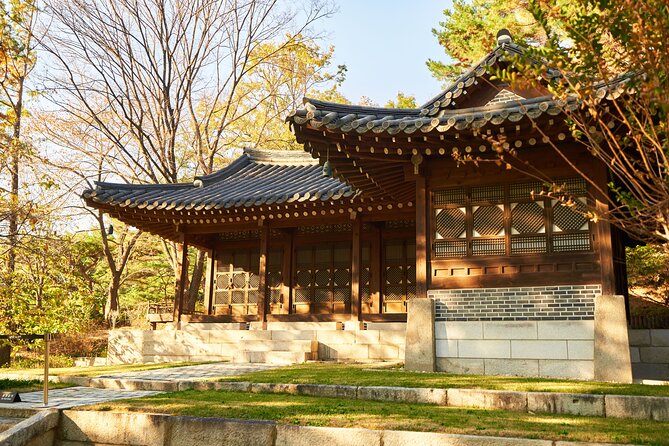
The presidential residence was separate from the office. The president and family lived here, away from the formal work of government.
That separation is easy to understand. A president needs a secure workplace, but a family also needs privacy. The residence was quieter, surrounded by trees, and designed as a home rather than a public office.
You spend about 10 minutes at this stop. Do not expect the same kind of political explanation as at the office buildings. The interest here lies in the contrast between public duty and private life.
The residence also reminds you that the Blue House was a working compound, not just a ceremonial address. Presidents made decisions in one part of the grounds and returned to family life in another. That simple layout gives the site a more human scale.
Chimnyugak and the quieter side of the grounds
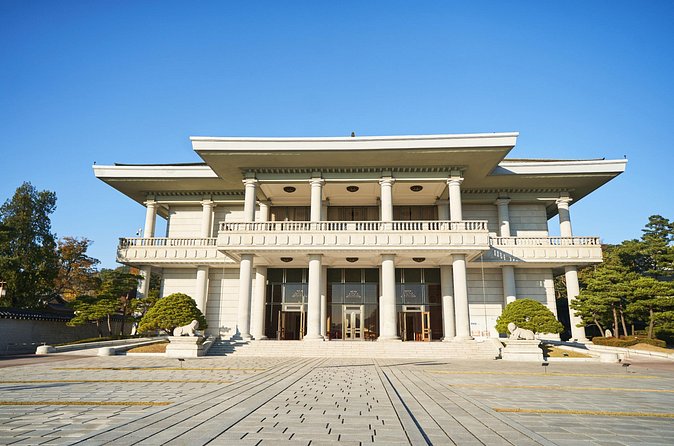
Chimnyugak House is a small traditional pavilion surrounded by trees. The tour uses it as a short pause, giving you time to notice the quieter side of the compound.
This stop lasts about 10 minutes. Your guide explains its architecture and history while you take in the setting. After the main office and reception buildings, a small pavilion can feel like a welcome change of pace.
Chimnyugak also shows how Korean traditional design remained part of the presidential grounds. The Blue House was a modern political center, but it did not abandon older forms. The pavilion provides a more relaxed setting for understanding that balance.
The stop may appeal most to people who like architecture, gardens, and smaller historic structures. If you prefer nonstop political detail, it is a brief pause rather than a major highlight. I see that as a strength on a two-and-a-half-hour walk, since the route needs a few quieter moments.
Sangchunjae, a traditional building for special meetings
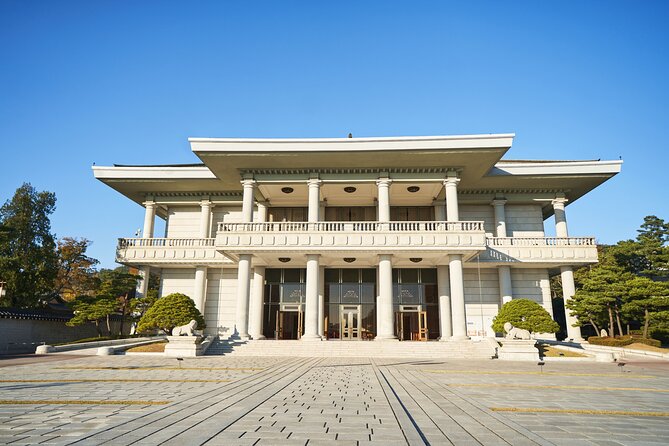
Sangchunjae is described as one of the most beautiful traditional buildings on the grounds. It was used for special visitors and quieter meetings.
Here, you walk around a wooden structure and hear how it functioned within the presidential compound. The building offers a clear change from the formal modern offices. Its purpose was still tied to government, but its design created a more distinctly Korean setting.
This stop takes about 10 minutes. It is a good place to pay attention to woodwork, roof lines, and the way the building fits into the surrounding grounds. You may find that the traditional structures are more visually memorable than the office buildings, even though the offices carry more political weight.
Sangchunjae is also useful for understanding official hospitality. Yeongbingwan represented large state occasions. Sangchunjae offered a smaller, more traditional setting for selected meetings and visits.
Chunchugwan, the former press center
The final listed stop is Chunchugwan, the former press center. This is where reporters from Korea and around the world came to hear official announcements from the president.
You spend about five minutes here, so the stop is brief. Its importance is not in the amount of time but in what it represents: the connection between the presidency, the press, and the public.
After seeing where presidents worked and lived, Chunchugwan completes the picture. Government decisions were made inside the compound, but they had to be announced and explained outside it. Reporters gathered here to carry those messages to the country and the world.
For anyone interested in politics, this can be a satisfying final stop. It shows that the Blue House was not only a private presidential world. It was also a place built for public communication.
What Jungho adds to the experience
The guide is central to the value of this tour. The listed guide, Jungho, leads in excellent English and uses stories to explain Korean history, politics, architecture, and culture.
That matters because many of the buildings may not explain themselves. A roof, pavilion, or former office site can look attractive without revealing why it mattered. Jungho connects each stop to the people and decisions associated with it.
His approach also appears conversational. He has handled questions about Korean history, encouraged quiz-style interaction, and adjusted the walk to the interests of the group. That is useful if you already know some Korean history and want more than basic facts.
You should not book this expecting a silent photo walk. The point is the interpretation. If you want to ask questions, the nine-person limit gives you a better chance than a large coach tour.
The guide has also helped people with practical directions after the walk. That is a small detail, but it can matter when you are navigating an unfamiliar part of Seoul.
Is $199 a fair price?
At $199 per person, this is an expensive two-and-a-half-hour experience. The admission itself is listed as free, so you are paying mainly for reserved access and the licensed English-speaking guide.
That price can make sense if access is genuinely limited or temporary. The Blue House was closed to ordinary people for decades, and the tour was designed around a short period when the gates opened. For a rare site with a small group, guided access has more value than a standard city walk.
Still, I would compare it with your own priorities. If you are happy to see the grounds without much explanation, or if access is available directly at no charge, $199 may feel high. If you want the political background, a small group, and a guide who can answer questions in English, the cost is easier to justify.
The tour is best viewed as a specialist experience, not a budget attraction. It suits a first-time visitor who wants one focused morning about modern Korean government, or someone who has already seen Seoul’s palaces and wants a different side of the city.
Because the experience is marked closed, do not pay based on the old price without confirming current availability and terms. The access period was tied to a change in government and was expected to end in June. That timing is the single biggest practical issue.
Who should book this walk?
I would choose this tour for you if you enjoy political history, presidential buildings, architecture, or guided sightseeing with plenty of explanation.
It is also a good fit if you have visited Gyeongbokgung and want a modern counterpart. The palace shows royal Korea. The Blue House shows the working center of the republic that followed.
Families with older children may appreciate the range of subjects, especially if the children enjoy famous buildings, leaders, or K-pop connections. The tour is not described as restricted for most people, and service animals are allowed.
You may want to skip it if your Seoul schedule is tight, your main goal is shopping and food, or you dislike guided interpretation. The tour spends time on political context, and the price is substantial for a short activity.
Practical details before you decide
The meeting point is Gyeongbokgung Station in Seoul. Start time is 10 a.m., and the activity returns to that same meeting point.
The group has a maximum of nine people. Confirmation is received when booking, and the site is near public transportation. Most people can take part, and service animals are allowed.
Free cancellation is available if you cancel at least 24 hours before the local start time. Cancellations or changes made inside that window are not accepted for a refund.
The tour includes reserved entrance to Cheong Wa Dae and the English-speaking licensed guide. It does not include transportation to or from your hotel.
Should you book the Blue House tour?
Book it if the Blue House is open during your visit and you want the story behind the buildings, not just a few photographs. The combination of restricted former access, a nine-person group, and Jungho’s clear English explanations gives this walk a real purpose.
I would be cautious about booking until you confirm that the tour has resumed. The experience is marked closed, and its original appeal depended on temporary public access. If it is operating again, it is a strong choice for history-minded visitors who can accept the $199 price. If not, do not build your Seoul plans around it.
FAQ
Where does the Blue House walking tour start?
The tour starts at Gyeongbokgung Station in Seoul at 10 a.m.
Where does the tour end?
The activity ends back at the meeting point near Gyeongbokgung Station.
How long does the tour last?
The tour lasts approximately two hours and 30 minutes.
How many people can join the tour?
The tour has a maximum of nine people.
Who leads the English tour?
The tour is led by an English-speaking licensed guide. The named guide connected with this experience is Jungho.
What is included in the price?
The price includes reserved entrance to Korea’s White House, also called Cheong Wa Dae, and the English-speaking licensed tour guide.
Can I cancel for a full refund?
Yes. You can cancel for a full refund at least 24 hours before the experience start time. Cancellations or changes made less than 24 hours before the start are not accepted for a refund.
Recently added around Seoul
- Gyeongbokgung Palace Photo Session with your own phone★ 5.0 · 4 reviews
- Private Tour around Suwon UNESCO Fortress and Korea Folks Village★ 4.5 · 4 reviews
- Nami & Maple Road & Theatre des Lumieres Day Tour from Seoul★ 4.8 · 4 reviews
- Seoul: Deoksugung Palace Night Tour★ 4.5 · 4 reviews
- N Seoul Tower + Namsan Cable Car Ticket (Collect in Myeongdong)★ 3.5 · 4 reviews
- Jisan Forest Resort: Ski Full-Day Tour or Shuttle from Seoul★ 5.0 · 4 reviews
- Private Jeonju Hanok Village – Culinary tour★ 5.0 · 4 reviews
- Seoul Private Walking Tour with a Local★ 5.0 · 4 reviews
Seoul Tours, compared.
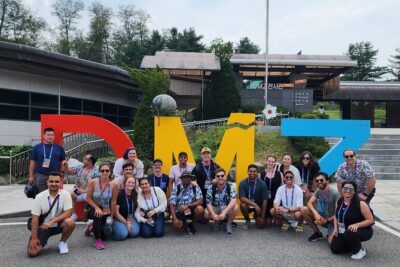
Best DMZ Tour Korea from Seoul (Red Suspension Bridge Optional)
Read the review →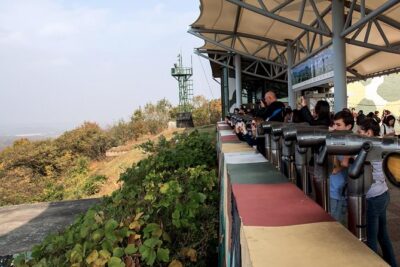
DMZ Tour: 3rd Tunnel, Option(Suspension Bridge, Boat) from Seoul
Read the review →
DMZ tour south Korea from Seoul (NK experience hall, defector)
Read the review →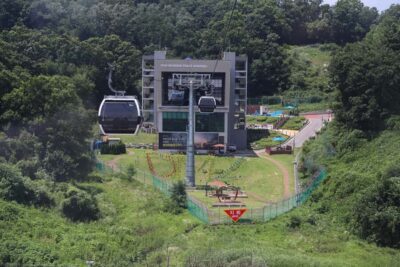
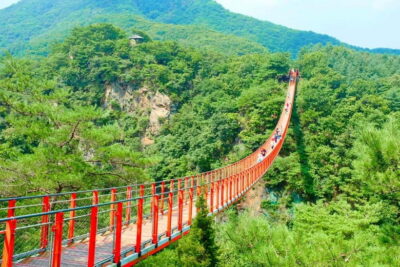
DMZ The 3rd Tunnel and Suspension Bridge Tour
Read the review →
Signature DMZ Tour: Exclusive Defector Talk & Suspension Bridge
Read the review →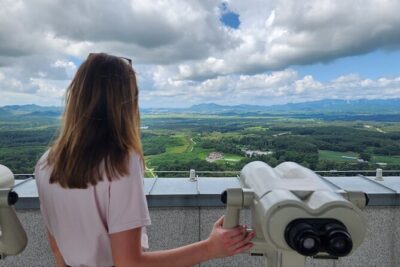
Thrilling Korean DMZ 3rd Tunnel Tour from Seoul + Red Bridge Rush
Read the review →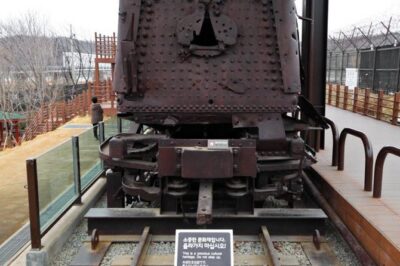
DMZ Past and Present: Korean Demilitarized Zone Tour from Seoul
Read the review →Browse the lists this tour appears in