
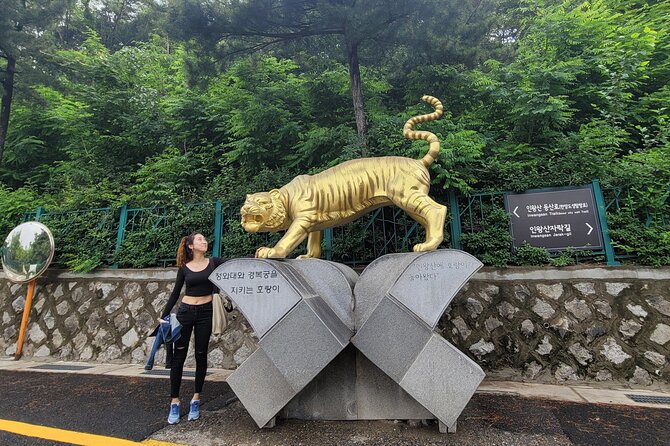
Reviewed · SEOUL TOURS
Inwangsan hike & historical sites
Inwangsan gives you a side of Seoul that palace tours miss: a quiet mountain trail, old city walls, and a sweeping view of the capital’s lights. The climb to the top takes less than an hour, and the route mixes nature with Joseon-era landmarks instead of treating the mountain as just a lookout point.
I like the small group limit of 15, which makes it easier to keep pace with the guide, and I like the way Sajik Park and the fortress wall give the hike a clear historical thread. Traditional snacks add a friendly touch. The main thing to watch is the timing: the experience is promoted as a night hike, yet the supplied schedule lists a 9:00 am start, so confirm the actual departure time before booking.
Key points at a glance
- Sajik Park begins the story: See Sajikdan and Tangun Shrine before heading uphill.
- The summit comes quickly: The climb takes less than an hour and is described as easy and enjoyable, though it still requires steady walking.
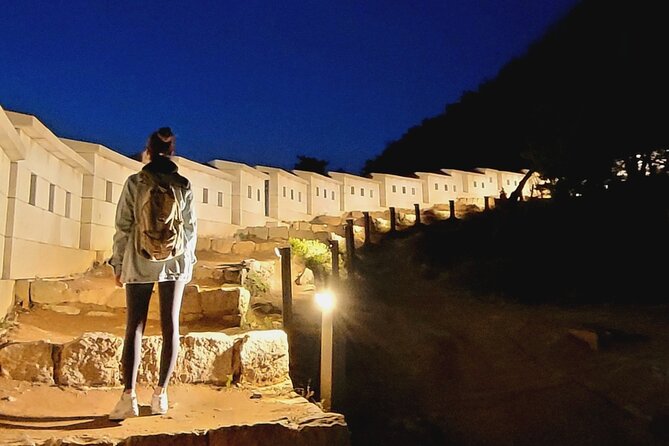
- Joseon-era walls share the trail: You walk beside Hanyangdoseong, Seoul’s old city wall.
- The night view is the payoff: Look across illuminated Seoul toward N Seoul Tower and Lotte Tower.
- Lee may be your guide: Past outings have been led by Lee, whose route knowledge and encouragement are frequently praised.
- Budget for the ride back: The bus after the hike is not included in the $69.28 price.
Why Inwangsan makes a good evening outing
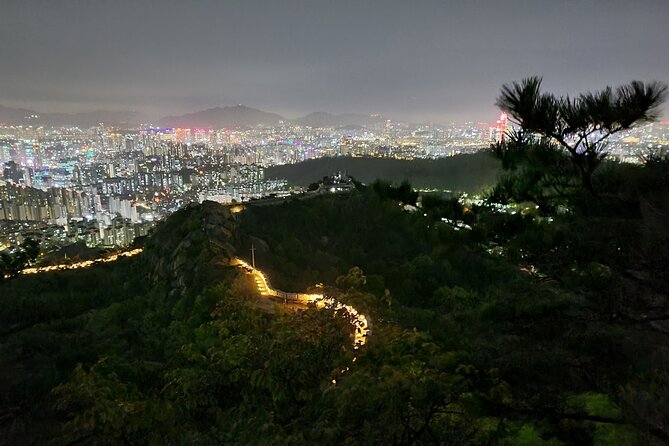
Seoul can feel like a city of crowded streets, polished shopping districts, and grand palace gates. Inwangsan changes the scale. You climb above the city and watch the capital spread out below, with major landmarks picked out by lights.
The appeal is not only the view. This mountain sits beside one of Seoul’s most important historic areas, close to Gyeongbokgung Palace and the old royal capital. The hike lets you connect the city’s royal, religious, military, and modern sides in about three hours.
That makes this a useful choice if you have already seen the main palace sights and want something more active. You get a guided walk, cultural explanation, and a strong photo stop without giving up most of the day.
The experience is also more personal than a large city sightseeing bus. With a maximum of 15 people, you should have a better chance to hear the guide and ask questions. A small group does not guarantee a private tour, but it usually makes a mountain path easier to manage.
More Hiking Tours in Seoul
- Seoul: Guided City Wall Sunset Hike with Korean Dinner
★ 4.9 · 227 reviews - Private Hiking tour to Bukhansan Peak(Baegundae: 836.5m) with Mountain Expert
★ 5.0 · 113 reviews - Fortress Night Hike & Snack at a Local Market
★ 5.0 · 112 reviews
Starting at Sajik Park and its sacred sites
The outing begins near Gyeongbokgung Station and heads first to Sajik Park. This is more than a green opening to the walk. The park holds Sajikdan, an altar connected with royal ceremonies for the gods of Earth and Crops.
The Joseon dynasty placed Sajikdan west of Gyeongbokgung Palace, while Jongmyo Shrine was built to the east. That arrangement reflected the order of the royal capital and the importance of both land and ancestors to the state.
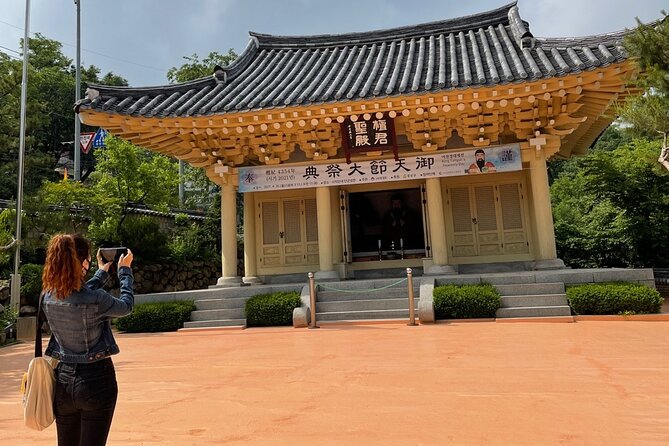
You will also see Tangun Shrine, which honors Tangun, the legendary founder of Korea. The site gives the guide a chance to explain an older layer of Korean identity before the walk turns toward the Joseon period.
I like this beginning because it gives the climb a purpose. You are not simply walking up a nearby hill for a skyline photo. You are following a route through places tied to Korean religious and political tradition.
Do not expect a long museum visit here. Sajik Park is a short stop within a moving walking tour, and the emphasis is on orientation and explanation before the uphill section begins.
The Inwangsan climb in under an hour
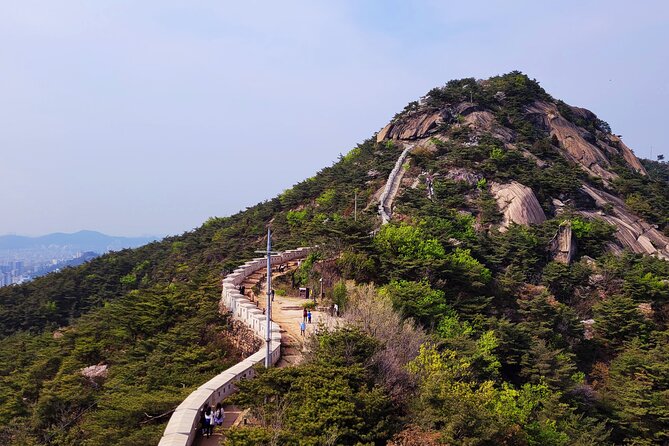
From the park, the route continues into Inwangsan Mountain. The supplied description calls the trail easy and enjoyable, with less than an hour needed to reach the peak. Several past outings also describe the climb as achievable rather than severe, including one with a 10-year-old child.
That said, easy is a relative word. You are still hiking uphill, and one account describes the walk as enough to work the cardio. Wear shoes with a firm sole and bring water. The experience includes traditional Korean treats, but snacks are not a substitute for your own drink or a proper meal.
The guide’s presence matters here. Lee has been praised for encouragement during the ascent and for knowing the scenic route well. That can be especially useful when the group has mixed fitness levels. You can walk at a sensible pace, pause when needed, and hear about the places along the trail instead of rushing to the top.
The path also seems to offer variety. You pass through wooded sections, historic walls, and open points with views across Seoul. One especially unusual stop connected with the route is a forest library or rest area. It is an unexpected place to pause and gives the hike a local, lived-in feel.
The listing does not provide an exact elevation, distance, or trail surface details. If you have knee problems, balance concerns, or limited hiking experience, ask Honey Trail for current conditions before you reserve. The general description suggests that most people can participate, but the route is not a flat city stroll.
Walking beside the Seoul City Wall
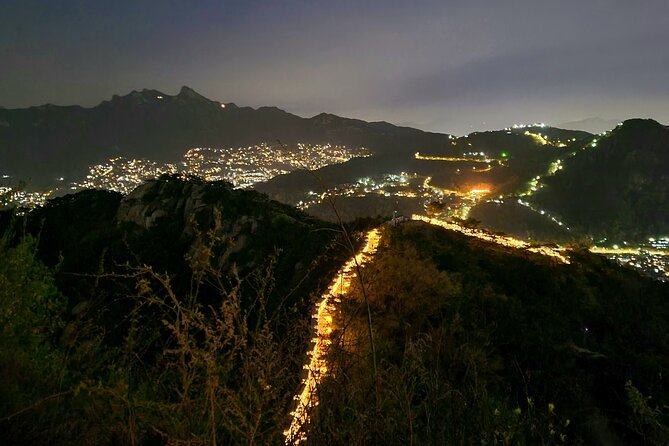
Hanyangdoseong, also called the Seoul City Wall, is the historical backbone of the hike. Built during the Joseon dynasty to protect the capital from foreign enemies, the wall once marked the edge of the city.
Walking beside it helps you understand old Seoul in a way that a single palace courtyard cannot. The wall traces the defensive line around the historic capital, while the modern city now stretches far beyond it. Glass towers and dense neighborhoods replace the threatened frontier, yet the stonework still marks the older shape of Seoul.
The guide adds value here by explaining the wall’s purpose and place in the city’s past. The route is not just a nature walk with a few old stones along the way. You get a clear connection between the royal center below, the defensive hills above, and the modern city beyond.
This portion should suit anyone who likes history but does not want a long indoor lecture. The information comes while you are moving, with the view changing as you climb.
The tradeoff is that the wall and mountain path may require more attention than a standard sightseeing route. Watch your footing, especially if the outing is held after sunset. One account describes the final part of an evening hike taking place with a flashlight, so ask how much of the route is expected to be in darkness.
More Historical Tours in Seoul
- Seoul: Evening Dark History, Folklore & Ghost Story Walking Tour
★ 5.0 · 593 reviews - Hanbok Photoshoot and History Tour at Gyeongbokgung Palace
★ 5.0 · 276 reviews - From Seoul: Dae Jang Geum Park Historic K-Drama Set Tour
★ 4.9 · 143 reviews - Seoul: City Highlights and Historical Experience No Shopping
★ 5.0 · 74 reviews
The summit view: N Seoul Tower, Lotte Tower, and the city lights
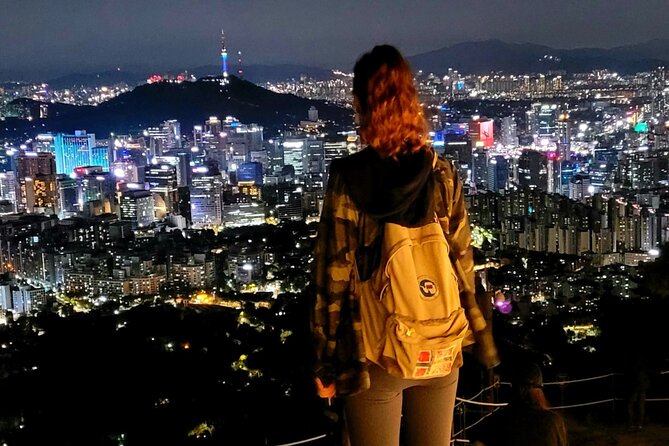
The high point of the experience is the view from Inwangsan. From above the city, you can see Seoul’s illuminated landmarks, including N Seoul Tower and Lotte Tower.
The two towers help you read the city at a glance. N Seoul Tower is the familiar marker above central Seoul, while Lotte Tower rises from the newer eastern side of the capital. Between them, the city lights show just how far Seoul has grown beyond the Joseon walls.
The night timing is a major reason to choose this outing. You avoid the daytime heat and get a different view of the city, with the palace district and surrounding neighborhoods changing character after dark. The quiet of the mountain also contrasts with the bright city below.
If you want the best possible view, confirm the actual start time and sunset plan. The description repeatedly presents this as a night hike, but the schedule supplied for the activity says 9:00 am. That is a meaningful inconsistency, not a minor detail. A morning departure would not deliver the advertised illuminated skyline.
Weather also matters. The experience requires good conditions, and poor weather can lead to a date change or full refund. Even on a clear day, haze can affect long views across Seoul, so the mountain’s famous panorama is never entirely guaranteed.
What the guide adds to the experience
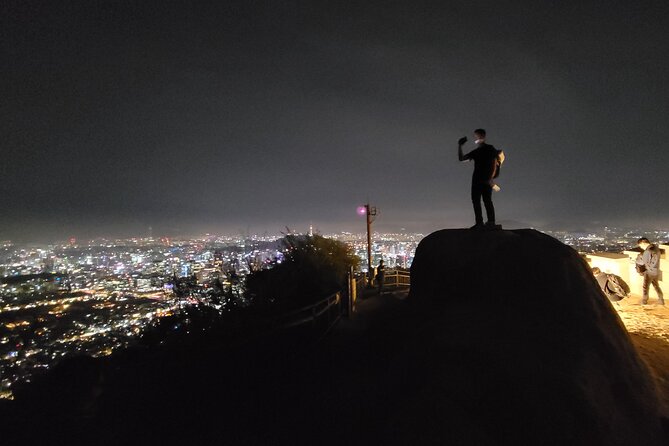
A certified guide leads the tour, and Lee is the guide name connected with many of the supplied outings. The strongest praise focuses on warmth, patience, route knowledge, and encouragement rather than on a formal lecture style.
That suits this kind of walk. On a mountain, a good guide does more than recite dates. You need someone who can keep the group together, explain why Sajikdan matters, point out the city wall, and make a pause feel natural rather than awkward.
Lee’s approach appears particularly useful for first-time hikers and families. One family outing included a 10-year-old who enjoyed the route, while other walks were described as challenging enough to feel rewarding but not intimidating.
The personal touches also seem to be part of the experience. Traditional snacks are included, and past outings have included Korean food or a cafe stop afterward. The precise ending arrangement may vary, so do not assume a full meal is part of the $69.28 price. The stated inclusions list only the certified guide, and personal expenses are not included.
Is $69.28 a fair price?
At $69.28 per person, this is not the cheapest way to walk up Inwangsan. You can visit Seoul’s mountains independently, and the trail itself does not require an expensive attraction ticket.
The value comes from the combination. Your fee covers a certified guide, a small group, historical interpretation, route guidance, and the chance to see the mountain at the right time for city lights. For someone unfamiliar with Seoul, that package can be worth paying for.
I would especially consider it good value if you want context. Without a guide, you could walk along the wall and enjoy the view, but you might miss why Sajikdan was built, what Tangun Shrine represents, and how the wall fits into the old capital.
The price becomes less attractive if you mainly want a quick viewpoint or prefer to hike alone. You also need to add the bus fare after the hike, since that cost is not included. Personal expenses are separate as well.
The small group helps justify the price. A maximum of 15 people is intimate enough for conversation, though not so small that you should expect a private guide. If the group reaches its limit, the walk may feel more like a guided group outing than a quiet solo mountain experience.
Practical planning for the three-hour route
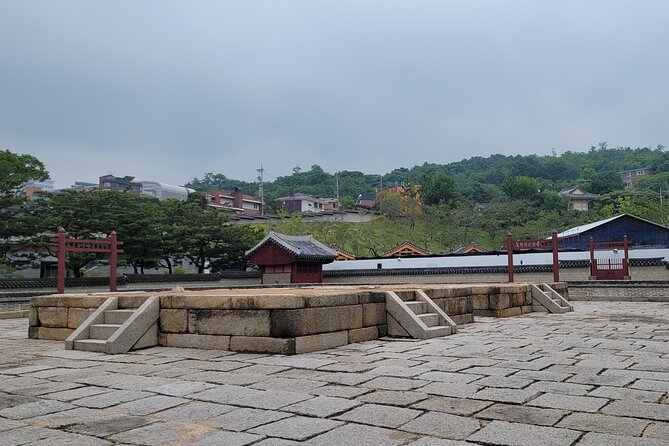
Meet at Gyeongbokgung Station in Seoul. The activity is near public transportation, and the supplied information says it ends back at the meeting point. At the same time, the description says the group will take a bus to the city after the hike, with the bus fee excluded. Confirm the final drop-off arrangement before setting up a tight evening plan.
The tour lasts about three hours. That includes the park visit, climb, wall walk, summit pause, and return portion, but the exact pace can depend on the group and conditions.
Wear practical walking clothes and shoes. The climb is presented as accessible to most people, but it is not a paved palace tour. Bring water, and consider a light layer because a mountain viewpoint can feel cooler than the streets below.
A mobile ticket is provided, and booking confirmation is received at the time of booking. The group limit is 15 people. Free cancellation is available up to 24 hours before the start time, while cancellations or changes made less than 24 hours in advance are not refunded.
Because the activity depends on good weather and a minimum number of participants, it can be moved or canceled. In those cases, you are offered another date or experience, or a full refund.
Who will enjoy this hike most
I would recommend this outing to you if you want three things in one package: a manageable hike, a dose of Korean history, and a memorable view over Seoul.
It suits:
- First-time visitors who have seen the palace district and want a different angle on the city
- Families with older children who can manage a steady uphill walk
- People who enjoy cultural explanation but do not want to spend another day indoors
- Solo visitors who would rather hike with a guide than find the route alone
- Anyone looking for Seoul photos beyond the usual palace and shopping streets
It may not suit you if you want a flat route, a private outing, or a fully fixed schedule with no weather risk. It is also a poor match if you are booking specifically for night views without first resolving the 9:00 am time conflict.
Should you book Honey Trail’s Inwangsan hike?
Book it if you want the view to come with a story. Sajik Park, Tangun Shrine, the Seoul City Wall, and the summit create a stronger experience than a simple uphill walk. The small group, personal guiding style, and reasonable climb make it approachable for many visitors.
Before paying, confirm two details with Honey Trail: the true start time and the exact transport arrangement after the hike. If the outing does run at dusk or night as described, the combination of city lights and old stone walls is the main reason to choose it. If it runs in the morning, you are booking a historical mountain walk with daytime views instead.
FAQ
Where does the hike begin?
The meeting point is Gyeongbokgung Station in Seoul, South Korea.
How long does the experience last?
The hike and sightseeing experience lasts approximately three hours.
What places do you visit?
The route includes Sajik Park, Sajikdan, Tangun Shrine, Inwangsan Mountain, and the Seoul City Wall.
How long does it take to reach the peak?
The supplied information says it takes less than one hour to reach the peak.
Is the hike difficult?
The trail is described as easy and enjoyable, and most people can participate. It is still an uphill mountain walk, so you should be comfortable with steady walking.
Is a guide included?
Yes. A certified tour guide leads the experience. Past outings have been led by a guide named Lee.
How large is the group?
The tour has a maximum of 15 participants.
Is transportation included after the hike?
No. The bus used after the hike is not included in the tour price, so you should budget separately for that fare.
Can I cancel for a refund?
Yes. You can cancel at least 24 hours before the start time for a full refund. Cancellations or changes made less than 24 hours before the start time are not accepted for a refund.
Recently added around Seoul
- Gyeongbokgung Palace Photo Session with your own phone★ 5.0 · 4 reviews
- Private Tour around Suwon UNESCO Fortress and Korea Folks Village★ 4.5 · 4 reviews
- Nami & Maple Road & Theatre des Lumieres Day Tour from Seoul★ 4.8 · 4 reviews
- Jisan Forest Resort: Ski Full-Day Tour or Shuttle from Seoul★ 5.0 · 4 reviews
- Seoul: Deoksugung Palace Night Tour★ 4.5 · 4 reviews
- N Seoul Tower + Namsan Cable Car Ticket (Collect in Myeongdong)★ 3.5 · 4 reviews
- Private Jeonju Hanok Village – Culinary tour★ 5.0 · 4 reviews
- Seoul Private Walking Tour with a Local★ 5.0 · 4 reviews
Seoul Tours, compared.
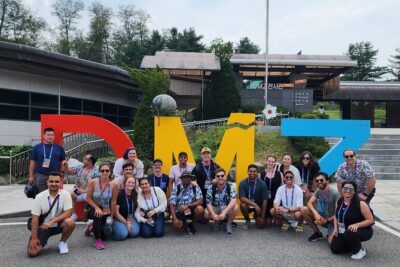
Best DMZ Tour Korea from Seoul (Red Suspension Bridge Optional)
Read the review →
DMZ Tour: 3rd Tunnel, Option(Suspension Bridge, Boat) from Seoul
Read the review →
DMZ tour south Korea from Seoul (NK experience hall, defector)
Read the review →
DMZ The 3rd Tunnel and Suspension Bridge Tour
Read the review →
Signature DMZ Tour: Exclusive Defector Talk & Suspension Bridge
Read the review →
Thrilling Korean DMZ 3rd Tunnel Tour from Seoul + Red Bridge Rush
Read the review →
DMZ Past and Present: Korean Demilitarized Zone Tour from Seoul
Read the review →Browse the lists this tour appears in