
Reviewed · SEOUL TOURS
Hiking Adventure Bukhansan Highest Peak & Old Buddhist temples visit (Lunch inc)
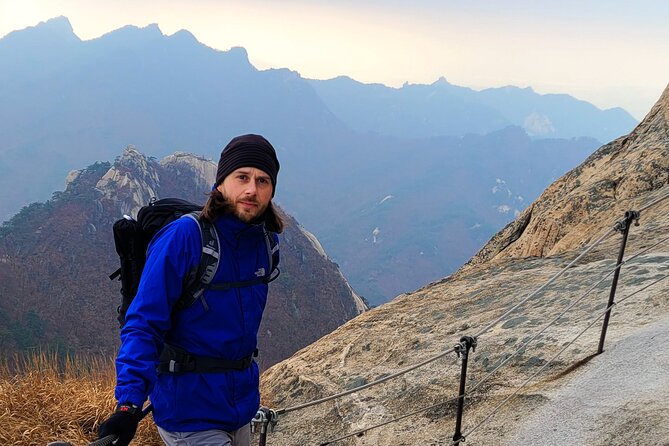
Seoul’s highest mountain is not far from the city’s train lines, yet Bukhansan quickly feels like a world apart. This six-hour outing takes you to Baekundae, the summit, by the shortest route, with stops at Doseonsa Temple and the old fortress walls along the way. I like the mix of mountain scenery and Korean history, and I like that guide Lee handles the route and provides lunch. The main catch is simple: this is a real uphill hike, not a gentle city walk.
You should also plan carefully for water and footwear. A seaweed roll is provided before the hike, and shops near Bukhansan UI station sell snacks and gear, but you need to bring enough water yourself. The small group, capped at 15 people, should suit you if you want help on the trail without joining a large bus tour.
Key points to know before you book
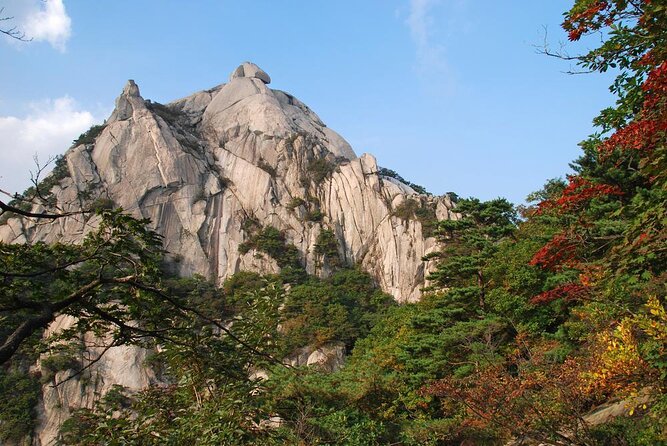
- Baekundae is Seoul’s highest peak: Expect a proper climb and wide views over the city from the top.
- Doseonsa dates to 862: This old Buddhist temple adds a strong cultural stop before the steeper mountain sections.
- Bukhansanseong Fortress is part of the route: You get nature and Joseon-era military history in one morning.
- Guide Lee leads the hike: She is praised for careful support, local knowledge, and practical suggestions for exploring Seoul.
- Lunch is included, but water is not: A seaweed roll is supplied before hiking, so carry your own drinks.
- The tour lasts about six hours: It begins at 9:00 a.m. and returns to the meeting point near Bukhansan.
Why Bukhansan makes such a good Seoul escape
Seoul can feel full and noisy, with towers, traffic, cafés, and shopping streets competing for your attention. Bukhansan offers a sharp change of pace without requiring a long trip from the capital. It is South Korea’s only national park and the highest mountain in Seoul, so you can trade city streets for rock, trees, temples, and open views in the same day.
The scale of the park is part of the surprise. You are still close to one of Asia’s largest cities, but the mountain gives you a sense of distance from it. From higher points, Seoul spreads below you, while the surrounding slopes provide a natural frame.
This route is also a good way to see how local people use their city. Hiking is a major part of Korean outdoor life, and Bukhansan receives millions of visits each year. The tour gives you a reason to go beyond the standard palace and shopping circuit and take part in an activity that many Seoul residents make time for themselves.
The route is described as the shortest way to the summit, which matters during a six-hour schedule. Shortest does not mean effortless. You should have moderate fitness and be ready for sustained uphill walking, uneven ground, and a more demanding final approach to the peak.
More Hiking Tours in Seoul
- Seoul: Guided City Wall Sunset Hike with Korean Dinner
★ 4.9 · 227 reviews - Private Hiking tour to Bukhansan Peak(Baegundae: 836.5m) with Mountain Expert
★ 5.0 · 113 reviews - Fortress Night Hike & Snack at a Local Market
★ 5.0 · 112 reviews
Starting near Bukhansan UI station
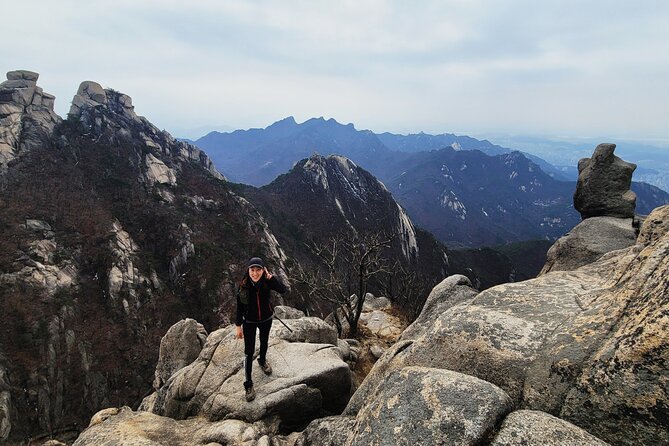
The meeting point is at Bukhansan in Seoul, near public transportation, with the start set for 9:00 a.m. The nearby Bukhansan UI station area has a handful of shops where you can buy last-minute snacks, gimbab, drinks, or even hiking equipment if you forgot something.
That convenience is useful, but do not depend on it too heavily. The tour includes a seaweed roll before the hike, yet water is specifically excluded. Bring enough for six hours, since the experience is active and the route climbs steadily.
A morning start also gives you a sensible rhythm. You meet the guide, sort out food and supplies, and begin while the day is still young. The exact trail conditions and crowd levels can change, especially because weather affects whether the tour runs. If poor weather forces a cancellation, you are offered another date or a full refund.
The group maximum is 15 people. That is large enough to create a social outing but small enough for the guide to offer direction and answer questions along the way. If you prefer total solitude or a private pace, this format may feel too structured. For most people unfamiliar with Bukhansan, having a guide is a sensible trade for independence.
Doseonsa Temple and the story in the stone
Doseonsa is the first major cultural stop. The temple was established in 862 during the Silla Kingdom by the monk Doseonguksa. Its age gives the hike an immediate sense of time: you are not simply walking through a modern recreation area, but through a place tied to centuries of Korean Buddhist practice.
One of the most memorable stories connected with Doseonsa concerns its carved Buddha. According to the local legend, Doseonguksa broke huge rocks with his bare hands and carved the figure. The unusual detail is that there is said to be no evidence of chisel marks. You do not need to accept every part of the story literally to appreciate what it reveals about the temple’s place in local belief.
This stop also helps break up the physical effort. Rather than charging straight into a long climb, you begin with a cultural site where the guide can explain the temple and its setting. Guide Lee is especially well suited to this kind of outing because she combines route support with stories about Korean history, wildlife, and places to visit elsewhere in Seoul.
The temple is not a full day of sightseeing. You should think of it as an atmospheric opening to the hike, not a separate temple tour with extended indoor visits. The main goal remains the mountain and summit.
Climbing through Bukhansan National Park
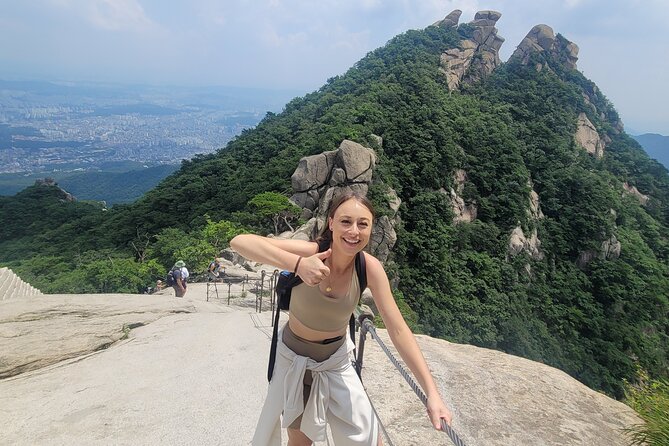
After Doseonsa, the route continues into Bukhansan National Park toward Baekundae. The tour description calls this the shortest summit route, but the climb still requires a moderate level of fitness. Wear comfortable hiking shoes with dependable grip, not casual sneakers that may feel fine on flat streets.
The guide’s role is most useful here. A local leader can help you keep the correct route, set a sensible rhythm, and explain what you are seeing instead of leaving you to concentrate only on your feet. The experience is designed to be stress-free in that practical sense. You do not have to manage navigation or build your own schedule around the temple, fortress, and summit.
The mountain is also a chance to learn about Korean wildlife. The available information does not name specific animals you will see, so do not book this expecting guaranteed wildlife sightings. Instead, expect commentary about the natural setting and the kinds of creatures and habitats found in the park.
The route includes a small praying spot among the rocks. That detail gives the climb a more personal feel. The mountain is not only a place for exercise and photographs. Religious practice appears in small corners of the trail, often in ways that you might miss if you were walking alone and focused only on reaching the top.
A different way to spend a day from here:
- Best DMZ Tour Korea from Seoul (Red Suspension Bridge Optional)
★ 5.0 · 41,422 reviews - DMZ Tour: 3rd Tunnel, Option(Suspension Bridge, Boat) from Seoul
★ 5.0 · 21,373 reviews - DMZ tour south Korea from Seoul (NK experience hall, defector)
★ 5.0 · 20,599 reviews - Seoul: DMZ Tour with Optional Suspension Bridge
★ 4.8 · 5,277 reviews
Reaching Baekundae and the Seoul views
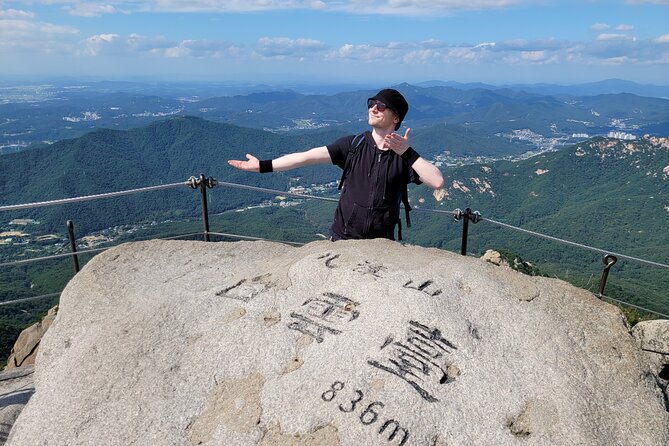
Baekundae is the payoff. As Seoul’s highest peak, it provides a clear reason to accept the uphill work. From the summit, you can look across the city and surrounding mountain country, seeing how closely Seoul’s urban core sits beside its natural edges.
The final section can feel more demanding than the opening walk. The available details do not provide exact elevation gain or trail difficulty ratings, so you should not treat this as a technical climbing trip, but it is still a mountain hike. Moderate fitness is required, and a cautious pace makes more sense than racing toward the top.
The summit itself is also a lunch setting. The included seaweed roll is provided before the hike, and the food gives you a simple meal to carry or eat during the day. It is practical Korean picnic fare rather than a restaurant lunch. Bring additional snacks if you normally need more food during a six-hour outing.
The views are a major reason to choose this tour over a shorter temple visit. You get the physical satisfaction of reaching a summit, plus a perspective on Seoul that you cannot find from a palace courtyard or observation deck. Weather will shape the experience, so clear conditions matter. On a cloudy or wet day, the mountain may still be worthwhile, but the city views can lose some of their impact.
Bukhansanseong Fortress and Joseon-era history
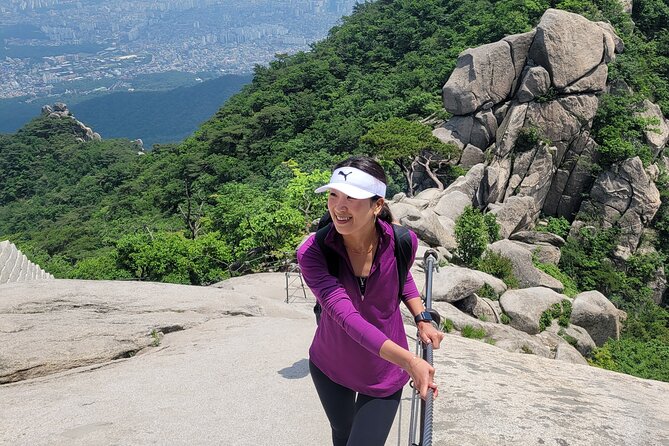
The hike also takes you along Bukhansanseong Fortress, built in 1711 to protect the Joseon dynasty from foreign enemies. This gives the day a second historical layer. Doseonsa represents centuries of Buddhist tradition, while the fortress points to the political and military concerns of the Joseon period.
The fortress is valuable because it appears as part of the mountain route rather than as an isolated museum stop. You see how defensive walls used the terrain, and you can connect the physical shape of the mountain with the reason the site mattered. The setting makes the history easier to picture than a short paragraph in a guidebook.
Do not expect a long fortress lecture or a fully separate guided visit. The emphasis remains on walking. The guide can explain the site as you pass through the area, which suits you if you prefer history tied to real places and movement.
This combination of temple, fortress, and national park is the tour’s strongest feature. Many day outings give you either nature or culture. Here, the three parts support each other, though the schedule means none receives the depth of a specialist temple or history tour.
What guide Lee adds to the day
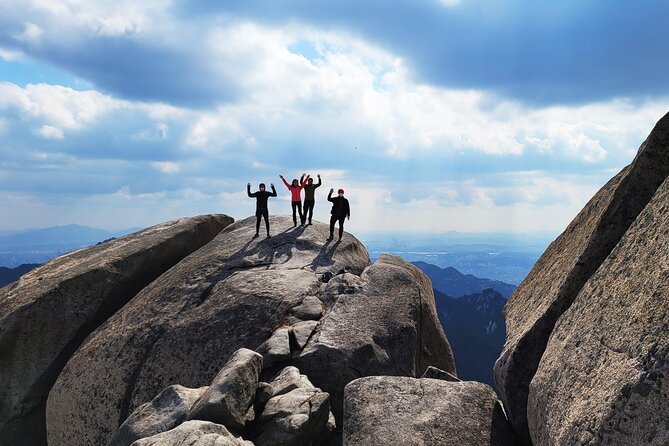
Guide Lee is central to the experience. Her support is described in practical terms: she helps people feel safe, answers questions, explains Korean history, and offers ideas for other places to visit in Seoul. She is also presented as someone who genuinely enjoys mountains and wild places.
That matters on a route where the main challenge is not only fitness. You may want to know why a temple sits where it does, what the fortress protected, or how Koreans use the national park. A guide who can move between natural and cultural subjects makes the hours feel more purposeful.
Her easygoing manner should also help if you are new to Korean hiking. You are not expected to know local trail customs or the route. Still, a friendly guide cannot remove the physical demands. If you have knee problems, poor balance, or little experience with uphill walking, you should think carefully before booking.
The group format can produce a nice shared rhythm, but pace differences are possible. The tour has a maximum of 15 people, not a guaranteed small group of only a few hikers. If you want the guide’s full attention or need frequent stops, ask about the group makeup before booking.
Is $97.27 a fair price?
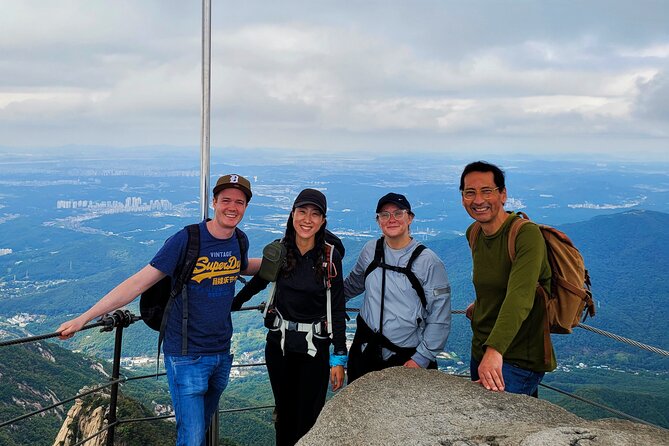
At $97.27 per person, this is not the cheapest way to walk in Bukhansan. You could reach the park independently by public transportation and hike without a guide. The price makes more sense if you value route support, historical explanation, a supplied lunch, and the convenience of combining the temple, summit, and fortress in one organized outing.
You are paying for a six-hour experience rather than simple transportation. A certified guide leads the group, and the route is planned around the major highlights. That removes the work of researching the shortest summit path, fitting Doseonsa and Bukhansanseong Fortress into the day, and deciding where to stop for food.
The value is strongest for first-time visitors to Seoul, solo hikers who want company, and anyone uneasy about tackling the mountain alone. It is weaker for experienced hikers who already know Bukhansan and prefer to set their own speed.
Group discounts may reduce the cost for people booking together. The mobile ticket and confirmation at booking also make the arrangement straightforward. Personal expenses are not included, and water is your responsibility, so allow for those small additions.
Who should book this hike?
I would choose this tour if you want one active day that covers Seoul’s mountain scenery and several layers of Korean history. It suits people who enjoy walking, do not mind a climb, and prefer an explained experience to simply following a trail on a phone.
It is also a good choice if you are traveling alone. Guide Lee’s support and the group setting provide company without requiring you to arrange a private outing. The maximum of 15 people keeps the day more personal than a large coach excursion.
Families with older children may find it suitable if everyone has moderate fitness, but the information does not give a minimum age or child-specific route details. Ask the provider before booking for younger hikers.
You should skip it if your ideal Seoul day means easy walking, long café stops, or indoor sightseeing. The summit is the point of the trip, and reaching it requires real effort. Comfortable shoes, enough water, and a willingness to walk uphill are basic requirements, not optional extras.
Free cancellation is available up to 24 hours before the 9:00 a.m. start. Changes or cancellations inside that window are not accepted for a refund. Since the hike needs good weather and a minimum number of people, the provider may offer another date or a refund if the tour cannot run.
Final verdict: a strong choice for an active Seoul day
Book this Bukhansan hike if you want to see Seoul from above while learning why the mountain matters. The strongest parts are the well-chosen route, the old Doseonsa Temple, the Joseon fortress walls, the summit views, and the steady support from Lee.
The drawback is the same feature that makes the day worthwhile: you have to climb. At nearly $100, the tour asks you to value guidance and cultural context, not just the trail itself. If that sounds right, this is a useful, authentic way to spend six hours beyond central Seoul.
FAQ
How long does the Bukhansan hiking tour last?
The experience lasts approximately six hours. It starts at 9:00 a.m. and ends back at the meeting point.
What peak does the tour visit?
The hike goes to Baekundae, the highest peak in Seoul and the summit of Bukhansan.
Is lunch included?
Yes. A seaweed roll is provided before the hike. You need to bring your own water, and personal expenses are not included.
What historic sites are included?
The route visits Doseonsa Temple, established in 862 during the Silla Kingdom, and walks along Bukhansanseong Fortress, built in 1711 during the Joseon dynasty.
How fit do I need to be?
You should have a moderate level of physical fitness. This is an uphill mountain hike, so comfortable shoes and enough water are important.
What happens if bad weather cancels the hike?
If poor weather prevents the experience from running, you are offered a different date or a full refund. A refund or alternative may also be offered if the minimum number of participants is not met.
More lunch stops around Seoul
- Seoul City Private Full-Day Tour Including Lunch
★ 5.0 · 469 reviews - Premium Private DMZ Tour & (Suspension Bridge or N-Tower) include lunch
★ 5.0 · 348 reviews - Private DMZ Tour with North Korean Defector + N Korean Lunch
★ 5.0 · 122 reviews - From Seoul: Cheorwon DMZ and 2nd Tunnel Tour with Lunch
★ 4.9 · 116 reviews
Recently added around Seoul
- Private Tour around Suwon UNESCO Fortress and Korea Folks Village★ 4.5 · 4 reviews
- Nami & Maple Road & Theatre des Lumieres Day Tour from Seoul★ 4.8 · 4 reviews
- Gyeongbokgung Palace Photo Session with your own phone★ 5.0 · 4 reviews
- Seoul: Deoksugung Palace Night Tour★ 4.5 · 4 reviews
- N Seoul Tower + Namsan Cable Car Ticket (Collect in Myeongdong)★ 3.5 · 4 reviews
- Jisan Forest Resort: Ski Full-Day Tour or Shuttle from Seoul★ 5.0 · 4 reviews
- Private Jeonju Hanok Village – Culinary tour★ 5.0 · 4 reviews
- Seoul Private Walking Tour with a Local★ 5.0 · 4 reviews
Seoul Tours, compared.
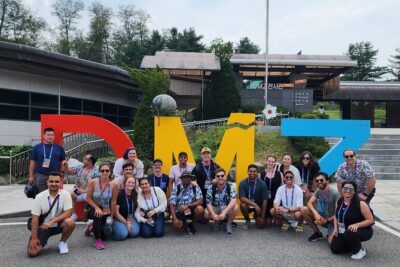
Best DMZ Tour Korea from Seoul (Red Suspension Bridge Optional)
Read the review →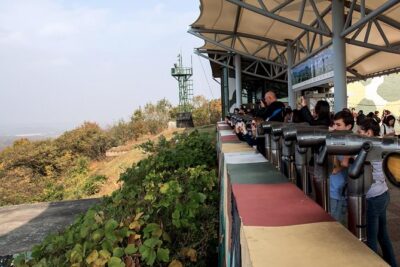
DMZ Tour: 3rd Tunnel, Option(Suspension Bridge, Boat) from Seoul
Read the review →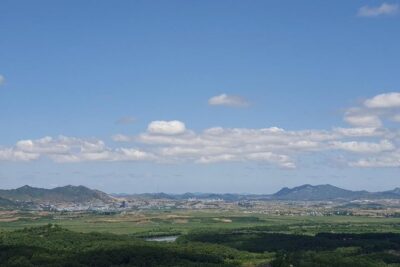
DMZ tour south Korea from Seoul (NK experience hall, defector)
Read the review →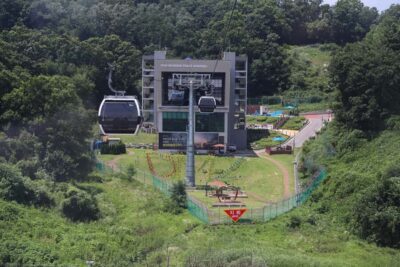
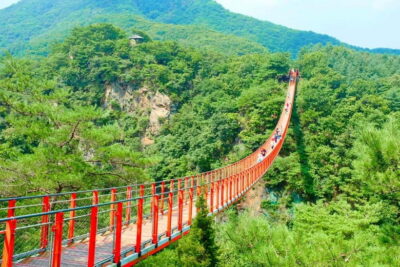
DMZ The 3rd Tunnel and Suspension Bridge Tour
Read the review →
Signature DMZ Tour: Exclusive Defector Talk & Suspension Bridge
Read the review →
Thrilling Korean DMZ 3rd Tunnel Tour from Seoul + Red Bridge Rush
Read the review →
DMZ Past and Present: Korean Demilitarized Zone Tour from Seoul
Read the review →Browse the lists this tour appears in