
Reviewed · SEOUL
Hantan Canyon & Goseokjeong Flower Garden & Pink Muhly Park
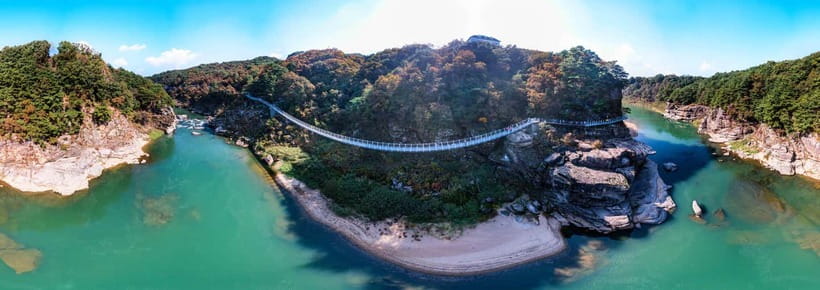
Hantan Canyon is the star of this day out: dark volcanic rock, columnar joints, clear river views, and a walkway that lets you see the geology from above. I like the mix of nature and seasonal color, especially the chance to pair a proper canyon walk with Goseokjeong’s flowers and the pink muhly fields at Nari Park.
I also like that transport from Seoul and attraction admission are included for $55 per person. English and Chinese speaking guides, including guides named Ryan and Lio on different departures, help keep the long drive useful. The catch is the canyon walk can be tiring, and sections of metal-grate bridge may trouble anyone uneasy with heights.
Key points at a glance
- Columnar joints beside Hantan River: See the striking rock formations that give the canyon its character.
- Three very different stops: The day moves from geological scenery to seasonal flowers, then to pink muhly fields.
- A good value from Seoul: Round-trip transfers and entry fees are included in the $55 price.
- Walking matters here: The canyon route is physically demanding in places and includes open metal walkways.
- Autumn brings chrysanthemums and cosmos: Goseokjeong changes with the seasons, so the flower display is not the same all year.
- Plan for your own lunch and water: Meals and drinks are not included, though a guide may help arrange a convenience-store stop.
Why Hantan Canyon deserves the long ride from Seoul
Cheorwon is not a quick city-side outing. You spend a fair part of the day on the road, but that is the trade for reaching a quieter corner of Gangwon Province and seeing scenery that feels far removed from Seoul’s busy streets.
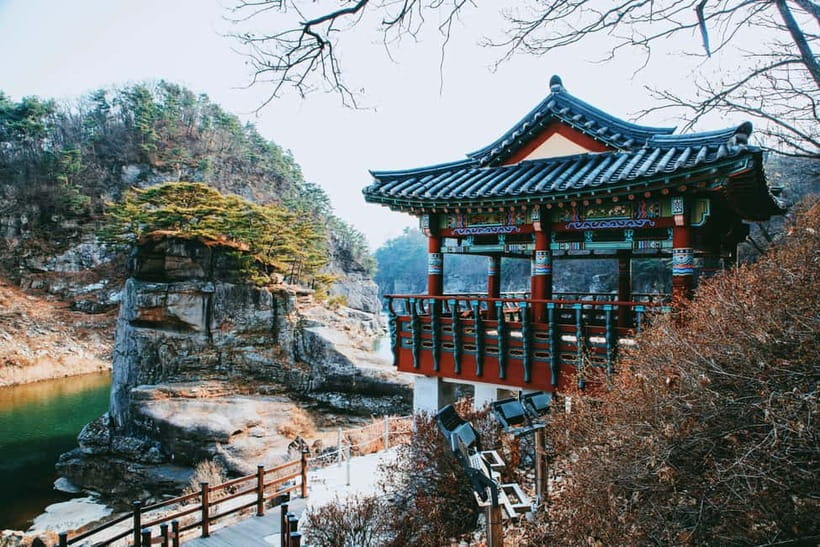
The main natural feature is Hantan River’s columnar rock. When volcanic lava cools, it can split into tall, regular columns. Here, those formations shape the canyon walls and river edge, giving the walk a strong sense of place. You are not just looking at pretty water and trees. You are seeing how the ground itself was formed.
I find that geological detail makes the stop more rewarding. The rock is the reason the canyon looks so unusual, and the guide can help connect the views to the land beneath your feet. The result is part outdoor outing, part simple geology lesson, without turning the day into a classroom.
The scenery also changes as you move along the route. You may look down toward the river, then across to the rock walls, then through open sections of the walkway. It is a fine place for photography because the views are not all the same. Take a wide shot of the canyon, then slow down for the shapes and textures in the rock.
Other South Korea days people book on the same trip:
- Best DMZ Tour Korea from Seoul (Red Suspension Bridge Optional)
★ 5.0 · 41,422 reviews - DMZ Tour: 3rd Tunnel, Option(Suspension Bridge, Boat) from Seoul
★ 5.0 · 21,373 reviews - DMZ tour south Korea from Seoul (NK experience hall, defector)
★ 5.0 · 20,599 reviews
The canyon walk is scenic, but not effortless
You should arrive ready to walk. One account of the outing describes the canyon route as physically demanding, so I would not choose this trip if you have mobility issues or are very unfit. You can wait for the group if needed, but that means giving up part of the walk rather than finding an easier parallel route.
The bridge and pathway deserve special attention. Some stretches use metal grating, allowing you to see below your feet. That makes the route more exciting for many people, but it can be uncomfortable if you have a fear of heights. Wear shoes that feel secure and give yourself time to pause at viewpoints.
This is not an extreme adventure tour. Still, it is more active than a coach ride with a few short photo stops. You will get more from Hantan Canyon if you can manage uneven or extended walking and are comfortable with an exposed walkway.
Bring water. It is not included, and a guide may need to know if you want a convenience-store stop. That small bit of planning matters on a full day when the weather may be warm and the walk is more demanding than the flower parks.
Goseokjeong Flower Garden changes with the calendar
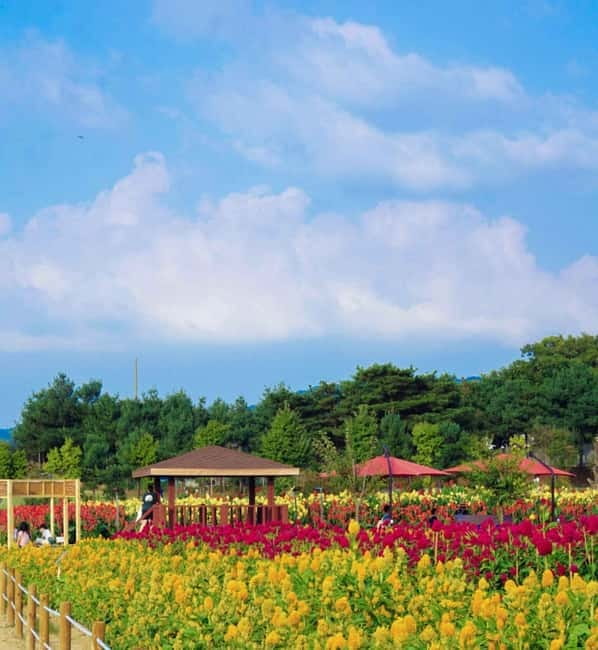
After the canyon, Goseokjeong Flower Garden provides a softer change of pace. Instead of rock walls and river views, you get planted beds, open paths, and seasonal color. The display changes throughout the year, which means the exact experience depends on your travel date.
Autumn features chrysanthemums and cosmos. These flowers give the garden a different mood from the canyon, with broad areas of color and plenty of simple subjects for photos. The garden works well for a relaxed stroll because you can set your own pace and stop whenever a view catches your eye.
I like this middle stop because it prevents the day from becoming one long geology excursion. The canyon gives you drama and movement. Goseokjeong gives you order, color, and an easy place to reset before the final park.
A small train ride is also available for an extra ₩5,000. It can help you see more of the garden during the allotted time, but the cars may feel cramped for people with long legs or larger builds. I would treat it as an optional shortcut, not a must-do attraction. Walking gives you more freedom for photographs, while the train may be useful if time or energy is limited.
The garden is also a likely lunch stop area, but food is not part of the tour price. One account of the day found the lunch stop good, though you pay for your own meal. Keep some Korean won available if you want the garden train or need to buy food and drinks.
Finishing among the pink muhly at Yangju Nari Park
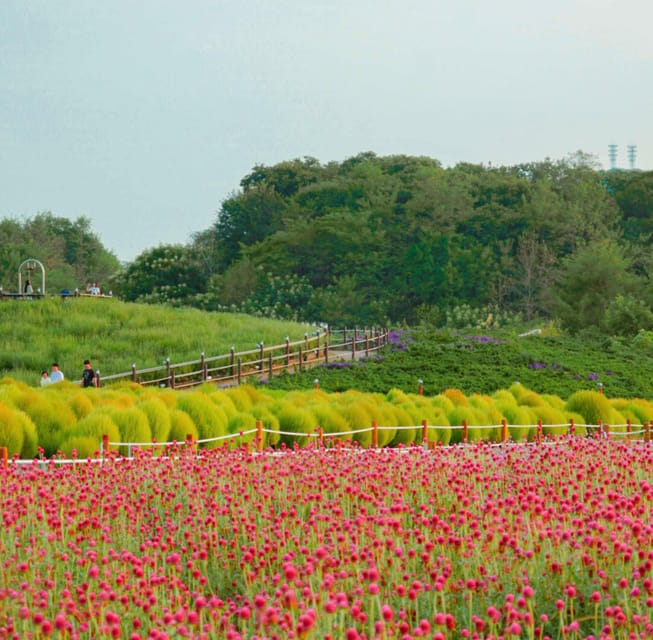
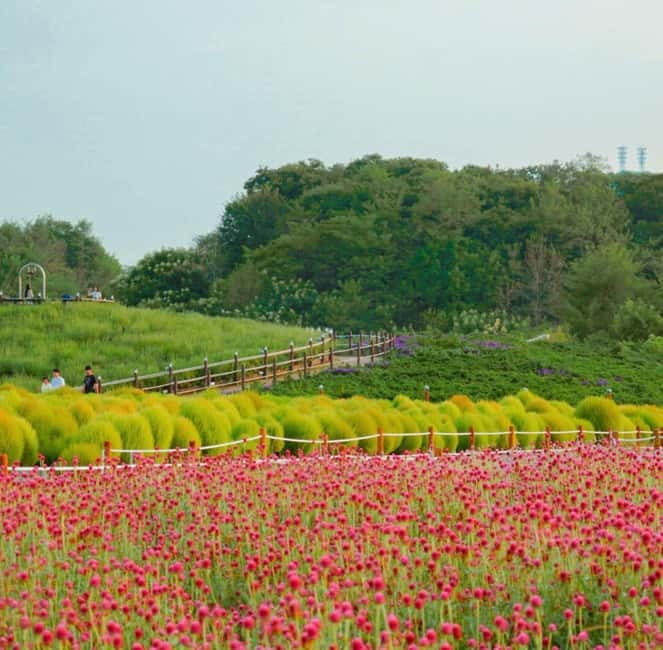
Yangju Nari Park gives the day its most recognizable flower scene. Pink muhly grass spreads across broad fields, creating soft rose-colored views that look especially appealing in photographs. The park is described as a calm place for walking, taking pictures, and sitting with the scenery after the earlier canyon route.
The timing can make this final stop feel special. One departure reached Nari Park around sunset, when the light gave the flowers and surrounding greenery a quieter look. Sunset timing will depend on the season and the day’s schedule, so do not treat it as guaranteed. Still, the park is a strong final stop because it offers an unhurried contrast to the canyon’s height and rock.
You can expect maintained paths and open flower areas rather than a strenuous route like the canyon. That makes Nari Park a good place to slow down. If you are carrying a camera, this is where you will want room for wide photographs, close shots of the grass, and pictures of the group among the fields.
The park’s appeal is seasonal. Pink muhly is the main reason to visit, but the precise condition of the fields depends on the date. Flower displays are never a fixed product, so book this trip for the combination of scenery rather than a promise of one exact photograph.
A different way to spend a day from here:
- DMZ Insider Tour: 3rd Tunnel, NK Defector Meet & Red Bridge
★ 4.9 · 15,214 reviews - Seoul: DMZ Tour with Optional Suspension Bridge
★ 4.8 · 5,277 reviews - Seoul: DMZ The 3rd Tunnel and Suspension Bridge Tour
★ 5.0 · 4,656 reviews - Signature DMZ Tour: Exclusive Defector Talk & Suspension Bridge
★ 5.0 · 4,459 reviews
How the three stops work together
The itinerary has a sensible visual rhythm:
- Hantan Canyon supplies rock, river, height, and geological interest.
- Goseokjeong Flower Garden adds planned flower beds and seasonal blooms.
- Yangju Nari Park ends with wide pink muhly fields and a peaceful walk.
That variety is the chief strength of the outing. You are not spending the whole day at one attraction, and each stop gives you a different kind of photograph. The day also works for people who want nature without arranging several separate regional trips.
The tradeoff is time on the road. You need to accept the long transfer from Seoul to reach the best parts of the day. If you prefer maximum time in one place, a single destination may suit you better. If you like a full day that links several scenic stops, the driving becomes a reasonable price for access.
The guide makes a difference on a schedule like this. Ryan helped keep one departure entertaining despite bad weather, while Lio was praised for safe driving and for helping with a convenience-store stop when needed. Guide assignments can change, so do not book on the assumption that one particular person will lead your departure. What matters is that the service includes an English or Chinese speaking guide who can help coordinate the day.
What the $55 price really covers
At $55 per person, the main value is convenience. You get round-trip transport from Seoul, admission to the attractions, and a guide. For a regional day out, that removes several pieces of planning: finding a route to Cheorwon, arranging the separate stops, and paying entry fees along the way.
You still need to budget for lunch, drinks, and personal purchases. The optional Goseokjeong train costs ₩5,000, and it is not included. The tour is therefore not an all-expenses-paid day, but the listed price covers the costly and awkward parts of reaching the sites.
A small-group departure may be possible. One outing had only five participants, which made the day feel more personal and avoided the slow movement of a full coach. Group size can vary by date and booking option, so consider it a possible benefit rather than a guarantee.
The reserve-and-pay-later option also gives you flexibility. You can hold a place without paying today, and cancellation is allowed up to 24 hours in advance for a full refund. Check the exact meeting point for your selected option because it may vary, and the activity returns you to that meeting point at the end.
Weather, comfort, and what to pack
Bad weather does not automatically ruin the day. One guide kept the atmosphere upbeat during poor conditions, and the attractions still offered plenty to see. Even so, rain can make a canyon walk less comfortable, so pack clothing that protects you from changing weather and footwear suitable for walking.
Your most useful items are simple:
- Water, since drinks are not included.
- Comfortable walking shoes for the canyon.
- A camera or phone with extra storage for the rock and flower scenes.
- Money for lunch, drinks, and the optional ₩5,000 garden train.
- Weather protection suitable for the forecast.
Do not count on the coach ride alone to make the trip easy. The long transfer can be restful, and one departure used it for a nap, but the physical part begins once you reach Hantan Canyon. The best preparation is to think of this as a walking day with transport, not a sightseeing bus day.
Who should book this nature day trip
I would recommend it to you if you want to get beyond Seoul without handling regional transport yourself. It suits photographers, flower fans, couples, small groups, and anyone who likes a day with changing scenery. The combination of rock formations and flowers also works well for companions who do not all want the same type of attraction.
It is less suitable if you dislike long drives, need a fully accessible route, or feel uneasy on high open walkways. The canyon is the part to assess honestly. Waiting for the group is possible, but that is not the same as having a gentle alternative route.
Families and older adults may enjoy the flower gardens and Nari Park, but the canyon’s walking demands still matter. Look at your own stamina rather than assuming every stop will be easy because flowers are involved. The final park is calm, but you must first complete the more active section.
Should you book Hantan Canyon and the flower parks?
Book this trip if you want a well-priced route to three distinct natural sights and you are happy to trade Seoul convenience for a long day in the countryside. The included transfers, guide, and admission make $55 a fair price, especially when you add the unusual columnar rock at Hantan Canyon.
Skip it if your priority is a short outing, a fully gentle walking route, or guaranteed peak flower conditions. For the right person, though, this is a strong seasonal escape: geological scenery first, chrysanthemums and cosmos in the middle, and pink muhly fields to finish.
FAQ
Where is the tour located?
The experience visits sites in Gangwon Province, South Korea, including Hantan Canyon, Goseokjeong Flower Garden, and Yangju Nari Park in the Cheorwon and Yangju areas.
How much does the experience cost?
The listed price is $55 per person.
Is transportation from Seoul included?
Yes. Round-trip transfers from Seoul are included, and the activity ends back at the meeting point.
Are attraction admission fees included?
Yes. Admission to the listed attractions is included in the tour price.
What languages are available?
The tour offers English and Chinese speaking guides.
Are meals and drinks included?
No. Meals, beverages, and other personal expenses are not included.
Does Goseokjeong Flower Garden look the same all year?
No. The flowers change by season. Autumn features chrysanthemums and cosmos.
Is the Goseokjeong garden train included?
No. The optional train ride costs ₩5,000.
Is the canyon walk physically difficult?
The canyon walk can be demanding. It may not suit people with mobility issues or people who are very unfit.
Can I cancel for a full refund?
Yes. You can cancel up to 24 hours in advance for a full refund.
Recently added around South Korea
- Gyeongbokgung Palace Photo Session with your own phone★ 5.0 · 4 reviews
- Nami & Maple Road & Theatre des Lumieres Day Tour from Seoul★ 4.8 · 4 reviews
- Private Tour around Suwon UNESCO Fortress and Korea Folks Village★ 4.5 · 4 reviews
- Jisan Forest Resort: Ski Full-Day Tour or Shuttle from Seoul★ 5.0 · 4 reviews
- Seoul: Deoksugung Palace Night Tour★ 4.5 · 4 reviews
- N Seoul Tower + Namsan Cable Car Ticket (Collect in Myeongdong)★ 3.5 · 4 reviews
- Private Jeonju Hanok Village – Culinary tour★ 5.0 · 4 reviews
- Seoul Private Walking Tour with a Local★ 5.0 · 4 reviews