
Reviewed · SEOUL TOURS
Half day Morning Seoul City Tour(Temple & Gyeongbok Palace)
Gyeongbokgung Palace and its royal guard ceremony are the main event here, but the tour gives you more than a quick palace photo. In four hours, you move from Jogyesa Temple’s working Buddhist tradition to Joseon royal grounds, then into the National Folk Museum for a look at ordinary Korean life.
I like the hotel pickup and included admission fees, especially if you are new to Seoul and do not want to sort out transport first thing in the morning. I also like the finish in Insadong, where you can continue with lunch, tea, galleries, and souvenir shopping.
The trade-off is pace. This schedule is tight, and one stop is a ginseng museum and shopping visit. If you want long, quiet time inside the palace or museum, book a full-day experience instead.
Key points to know before booking
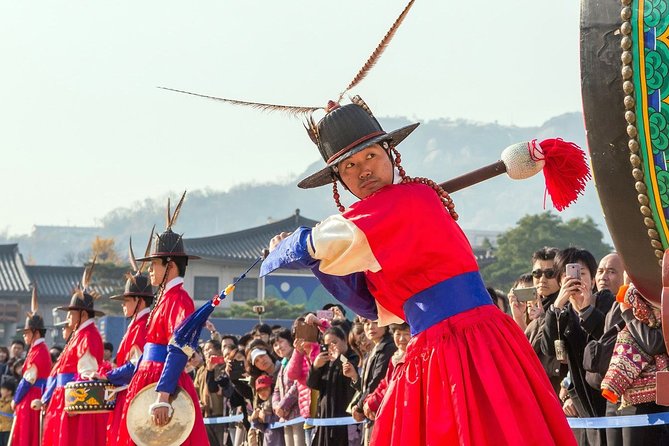
- The palace ceremony depends on the weather: The royal guard changing ceremony is canceled when it rains.
- The tour starts early: Hotel pickup begins around 8:30 am, helping you reach Gyeongbokgung before the day gets busier.
- You see four major cultural stops: Jogyesa Temple, Gyeongbokgung Palace, the National Folk Museum, and Cheongwadae Sarangchae.
- The tour ends in Insadong: Hotel pickup is included, but hotel drop-off is not.
- The group can reach 44 people: Your guide may use a microphone, and one review found it occasionally hard to understand.
- The ginseng stop may not suit everyone: It adds a shopping element and can feel like valuable sightseeing time is being squeezed.
Seoul in one morning, from temple bells to royal gates
At $32 per person, this is priced as an affordable introduction to Seoul. Transportation, an English-speaking guide, hotel pickup, and admission fees are included, so you are paying for convenience as much as sightseeing.
That price works best if you have limited time, are visiting Seoul for the first time, or want a clear introduction before exploring on your own. Several guides, including Cathy, Molly, Rose, KC, JJ, June, Moon, and Lee, have been praised for explaining Korean history, answering questions, taking photos, and keeping the group together.
You should think of this as an orientation tour, not a slow museum day. The listed visits add up to about three hours and 50 minutes before allowing for city traffic and movement between stops. The result is a useful morning, but you will need to keep moving.
The tour has a strong overall rating of 4.8 from 54 reviews, with 93 percent recommending it. That points to a reliably good experience, while the lower-rated feedback gives you the key warning: the schedule can feel rushed, especially if the ginseng visit takes time.
More City Tours in Seoul
- Best Seoul City Tour (Gyeongbokgung Palace,Insadong,Namsan Tower)
★ 5.0 · 1,647 reviews - Small-Group Royal Palace and Seoul City Tour (hotel pick-up)
★ 5.0 · 1,474 reviews - Seoul City Sightseeing Tour Including Gyeongbokgung Palace, N Seoul Tower, and Namsangol Hanok Village
★ 5.0 · 1,423 reviews
Jogyesa Temple, a working Buddhist center downtown
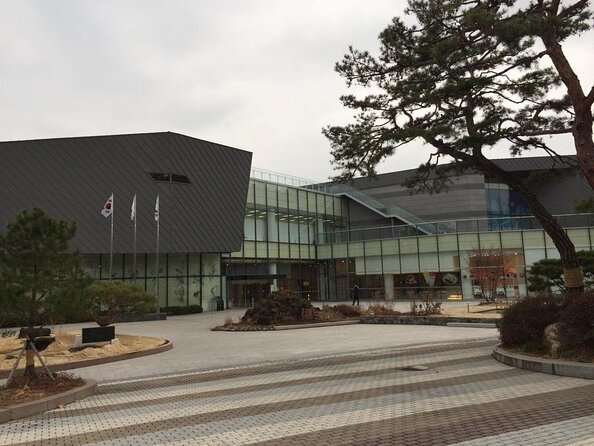
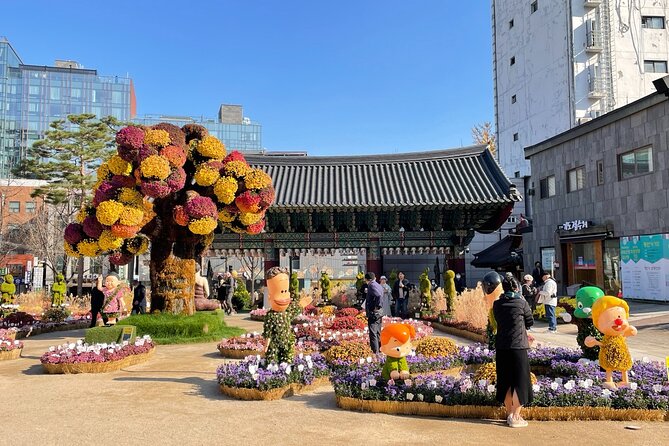
The first major stop is Jogyesa Temple, with about 30 minutes to look around. Its location is part of the appeal. You are in central Seoul, surrounded by office buildings and traffic, yet the temple offers a quiet change of pace.
Jogyesa is not presented as a forgotten ruin or a staged historical set. It is a living Buddhist temple founded in 1935. Your guide can explain its place in Korean Buddhism and point out the architectural details that are easy to miss if you simply walk through with a camera.
Thirty minutes is enough for an introduction. You can see the principal spaces, take photographs, and hear the basic story of the temple. It is not enough for a long personal visit or extended time watching temple activity, so people who want a slower spiritual experience may wish to return later.
This stop also helps set up the rest of the morning. You begin with Korea’s continuing religious tradition, then move toward the royal institutions of the Joseon period.
Gwanghwamun Square and the changing of the royal guard
Gwanghwamun Square is part of the city’s historic center and acts as a natural approach to the palace district. The square is known for its statues and its connection to Seoul’s political and cultural life.
The palace portion includes the royal guard changing ceremony at Gwanghwamun Gate, when guards change posts and confirm their identities. The colorful uniforms and formal movements make this one of the easiest moments on the tour to enjoy without a long history lesson.
Your guide may try to position the group early for a better view. Cathy was praised for reaching the palace in time for good photographs and a useful viewing position, while another guide adjusted the route to help the group cope with hot, humid conditions.
There is one firm condition: the ceremony is canceled if it rains. That does not necessarily cancel the tour, but you should not book this experience solely for the ceremony. The palace and museum remain the main sights, and the changing of the guard is an added feature when conditions allow.
Gyeongbokgung Palace in a one-hour visit
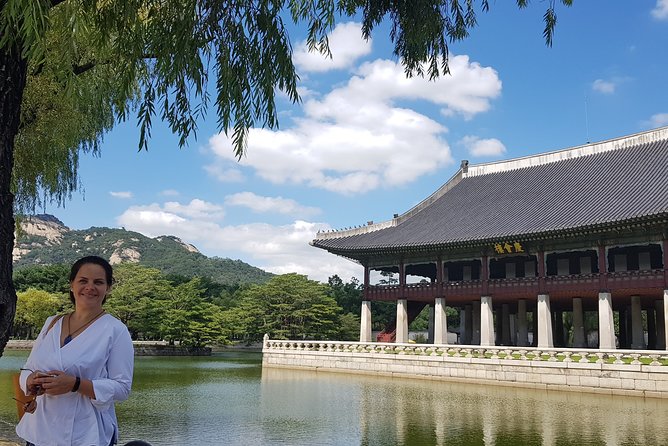
Gyeongbokgung Palace receives about one hour, with admission included. Built in the 14th century, it was the principal royal palace of the Joseon dynasty and is much larger than many first-time visitors expect.
The scale is important. You will pass through grand gates and courtyards, see traditional rooflines, and get a sense of how the palace operated as a center of government and royal life. A guide makes the visit more useful by explaining architecture, dynastic history, and the role of different structures.
This is where the guide’s skill matters most. Molly was praised for making Joseon history and architecture easy to follow. Moon was praised for handling questions about Korean history and development. Other guides were noted for making sure everyone saw the main structures and felt included.
One hour gives you the central story and the major views. It does not give you time to inspect every building. If you are interested in palace architecture, Korean dramas, or historical photography, you may want to return independently after the tour.
The early start is helpful here. Reaching the palace before the largest crowds can make photographs easier and reduce the feeling of being carried along in a human tide. Still, the group must stay on schedule, so do not expect a leisurely solo wander.
A few more Seoul half-days to weigh up
- Mt. Seorak+Nami Island+Garden of Morning Calm Day Trip from Seoul
★ 5.0 · 959 reviews - Seoul: Nami Island and Garden of Morning Calm opt Railbike
★ 4.6 · 907 reviews - Day Trip to Nami Island with Rail bike and The Garden of Morning Calm
★ 4.5 · 459 reviews - Trip to Nami Island with Petite France & Italian Village, Garden of Morning Calm
★ 4.5 · 373 reviews
The National Folk Museum and daily Korean life
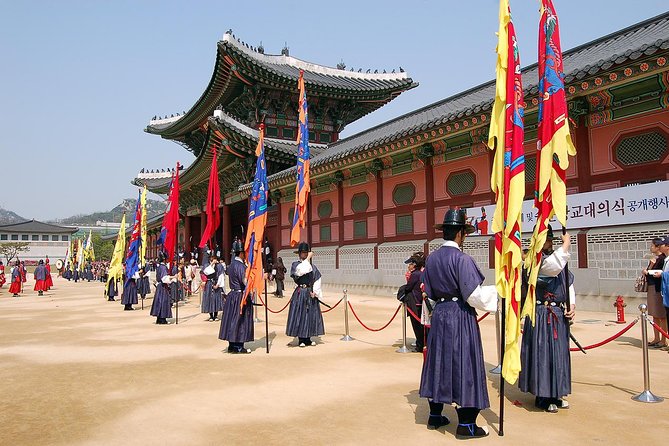
The National Folk Museum sits within the Gyeongbokgung grounds, making it a practical second palace-area stop. The visit lasts about 45 minutes, and admission is included.
The museum shifts your focus away from kings and court ceremony. Its collections cover the everyday lives of Korean people through historical objects and displays. You get a better sense of household customs, work, celebrations, clothing, and social practices than you would from palace buildings alone.
I consider this one of the most valuable parts of the morning because it supplies context. The palace shows how the court looked. The folk museum helps explain how life was organized beyond the royal compound.
Forty-five minutes is enough for a guided introduction and a look at the main exhibits. It is not enough to read every display or see everything in detail. One person specifically planned to return to spend more time there, which is sensible if museums are a priority for you.
Families may find this stop useful because the morning changes pace. Children can move from open palace grounds to objects and displays that show how people actually lived. One family found the children stayed engaged across the cultural sites, helped by the transportation between them.
A pass by the Blue House and Cheongwadae Sarangchae
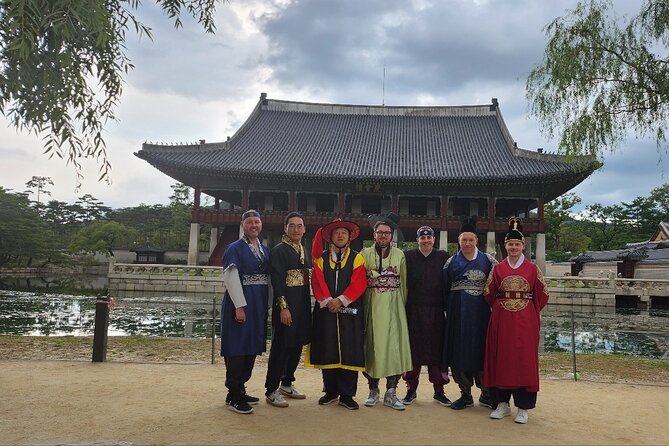
The route continues past Cheongwadae Sarangchae, a visitor center associated with the Blue House, Korea’s former presidential residence. The scheduled time is about 15 minutes, and the stop is described as a pass-by rather than a full interior visit.
This is a brief look at modern Korean political life after a morning focused on temples and monarchy. It helps show how Seoul’s historic center also connects to the country’s recent government institutions.
Security restrictions can affect the route. You may not be allowed to pass directly by the Presidential Blue House, so treat this as a possible sight rather than a guaranteed close view. The tour still continues, but the exact view can change.
The ginseng museum and shopping stop
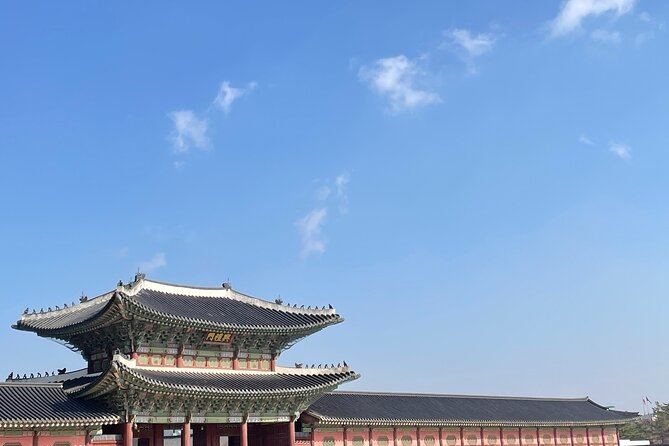
The final scheduled visit is the Cheongha Korea Ginseng Museum, lasting about 20 minutes. You learn about ginseng and how it is processed, followed by a shopping opportunity.
This stop can be useful if you want to understand one of Korea’s best-known traditional products or are looking for a packaged gift. It is also the part most likely to divide opinion. One detailed account felt that too much time was spent on the ginseng explanation and soft sales pitch, leaving the main cultural stops feeling hurried.
That concern is worth taking seriously. A 20-minute slot sounds modest, but a shopping stop can feel longer when you would rather be inside the palace or museum. If you dislike commercial visits, ask yourself if the low price and convenient transport still make the trade-off worthwhile.
The ginseng museum also means the morning is not purely a heritage tour. It combines sightseeing with retail. Some people will appreciate the chance to buy a Korean product. Others will prefer a route that stays entirely at temples, palaces, and museums.
Why the Insadong drop-off is useful
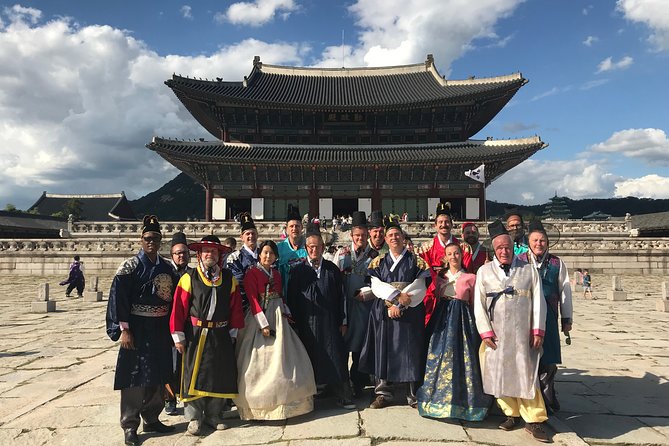
The tour ends in Insadong rather than returning you to your hotel. This is a practical finish, not a flaw, if you have time to continue exploring central Seoul.
Insadong is known for arts, crafts, galleries, tea, food, and shopping. Guides have recommended places for lunch and later sightseeing, and one group was dropped near Bukchon Village. The exact final location should be confirmed when you book, since the stated endpoint is Insadong.
Plan your next step before the bus arrives. You might have lunch, walk through nearby cultural streets, or continue toward Bukchon. If you have luggage, a tight appointment, or a hotel far from central Seoul, remember that you must arrange your own return.
The lack of hotel drop-off is the main logistics point to keep in mind. In exchange, you finish in an area where you can make good use of the rest of your day.
Guides, transport, and the group experience
The tour includes a professional English-speaking guide and transportation between stops. Hotel pickup removes one early-morning task, which matters in a large city where a wrong subway exit can cost you valuable time.
The maximum group size is 44 people. That is not a private or intimate tour, and the experience may feel more like a standard group outing than a personal walk. Some feedback describes the group as small, but the stated maximum is the safer figure to use when deciding.
Guides appear to be the strongest part of the experience. Cathy was praised for explaining history, finding good photo positions, and managing a hot day. Molly was praised for warmth, detail, and a clear explanation of Joseon architecture. Rose was singled out for making Korean culture easier to understand, while KC was praised for energy and for covering a lot in four hours.
JJ was described as friendly and accommodating, and June was noted for answering questions about earlier Korean dynasties. Moon was praised for explaining Korea’s history and development. These names reflect guides who have led the tour, but you should not assume a particular person will be assigned to your date.
One practical note: a guide was excellent overall, but a participant sometimes found the microphone difficult to understand. With a group of up to 44, stay near the guide when possible and speak up if you miss an explanation.
Is $32 a fair price for four hours?
For $32, the tour offers solid value if you want several major sights without arranging transport or buying tickets yourself. Admission to Gyeongbokgung and the National Folk Museum is included, along with hotel pickup, transportation, and an English-speaking guide.
You are also paying for structure. The route links places that make sense together, and the guide supplies the historical thread between them. That can be especially helpful on your first morning in Seoul, when the city’s size and unfamiliar street layout can make independent planning slow.
The value falls if you want depth. You have only an hour at the palace, 45 minutes at the museum, and 30 minutes at the temple. Add the Blue House pass-by and ginseng stop, and there is little room for lingering.
Lunch is not included. Since the tour ends in Insadong, that is easy to handle after the final stop, but budget for the meal separately.
Who should book this morning tour?
I would choose this tour if you have one or two days in Seoul, want a guided introduction, or prefer not to navigate between central sights on your first morning. It also suits families who value transportation and a clear schedule.
It is a good fit for people interested in Korean history, palace architecture, Buddhist culture, and everyday traditions. K-drama fans may particularly enjoy seeing Gyeongbokgung in person, while museum fans should use the tour as a preview and return later for a longer visit.
I would hesitate if your main goal is quiet photography, extended palace exploration, or a deeply personal temple visit. I would also think twice if shopping stops frustrate you. A full-day tour would give you more breathing room, but this half-day option makes sense when your schedule is tight.
Free cancellation is available up to 24 hours before the start time for a full refund. Cancellations or changes inside that window are not accepted, and the tour requires a minimum number of participants, so check the confirmation details before building your day around it.
Should you book the Half-day Morning Seoul City Tour?
Book it if you want to see Seoul’s key cultural sights in one organized morning, with hotel pickup and a guide who can explain what you are seeing. The palace, guard ceremony, Jogyesa Temple, and folk museum make a strong first look at Korea’s capital.
Go in with realistic expectations: it is fast, the group may be large, the ceremony depends on rain, and the ginseng stop adds a retail element. For $32, I think the tour is a smart choice for a first visit or short stay, as long as you plan to return to Gyeongbokgung or the folk museum if they catch your interest.
FAQ
What time does the tour start?
The stated start time is 8:30 am.
How long does the tour last?
The tour lasts approximately four hours.
Does the tour include hotel pickup?
Yes. Hotel pickup service is included.
Does the tour return me to my hotel?
No. The tour ends with drop-off in Insadong, and hotel drop-off is not included.
Which main sights are included?
The route includes Jogyesa Temple, Gyeongbokgung Palace, the National Folk Museum of Korea, Gwanghwamun Square, a pass-by of Cheongwadae Sarangchae and the Blue House area, and the Cheongha Korea Ginseng Museum.
Is admission included?
Yes. Admission fees for the included paid attractions are covered.
Will I see the royal guard changing ceremony?
The tour is scheduled to include the ceremony at Gwanghwamun Gate, but it is canceled when it rains.
What happens if Gyeongbokgung Palace is closed?
Gyeongbokgung Palace is replaced with another tourist attraction when it is closed on Tuesdays.
Is lunch included?
No. Lunch is not included in the tour price.
How large can the group be?
The tour can have a maximum of 44 participants.
Can I cancel for a full refund?
Yes, if you cancel at least 24 hours before the experience start time. Cancellations or changes made less than 24 hours before the start time are not accepted for a refund.
Is the tour available to most people?
Most participants can take part, according to the provided tour information.
Recently added around Seoul
- Nami & Maple Road & Theatre des Lumieres Day Tour from Seoul★ 4.8 · 4 reviews
- Gyeongbokgung Palace Photo Session with your own phone★ 5.0 · 4 reviews
- Private Tour around Suwon UNESCO Fortress and Korea Folks Village★ 4.5 · 4 reviews
- N Seoul Tower + Namsan Cable Car Ticket (Collect in Myeongdong)★ 3.5 · 4 reviews
- Jisan Forest Resort: Ski Full-Day Tour or Shuttle from Seoul★ 5.0 · 4 reviews
- Seoul: Deoksugung Palace Night Tour★ 4.5 · 4 reviews
- Private Jeonju Hanok Village – Culinary tour★ 5.0 · 4 reviews
- Seoul Private Walking Tour with a Local★ 5.0 · 4 reviews
Seoul Tours, compared.
Best DMZ Tour Korea from Seoul (Red Suspension Bridge Optional)
Read the review →
DMZ Tour: 3rd Tunnel, Option(Suspension Bridge, Boat) from Seoul
Read the review →
DMZ tour south Korea from Seoul (NK experience hall, defector)
Read the review →
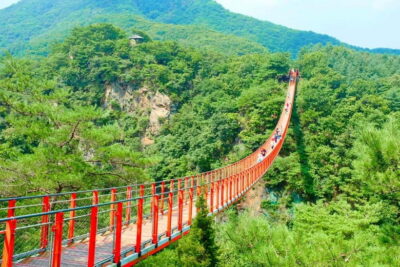
DMZ The 3rd Tunnel and Suspension Bridge Tour
Read the review →
Signature DMZ Tour: Exclusive Defector Talk & Suspension Bridge
Read the review →
Thrilling Korean DMZ 3rd Tunnel Tour from Seoul + Red Bridge Rush
Read the review →
DMZ Past and Present: Korean Demilitarized Zone Tour from Seoul
Read the review →Browse the lists this tour appears in