
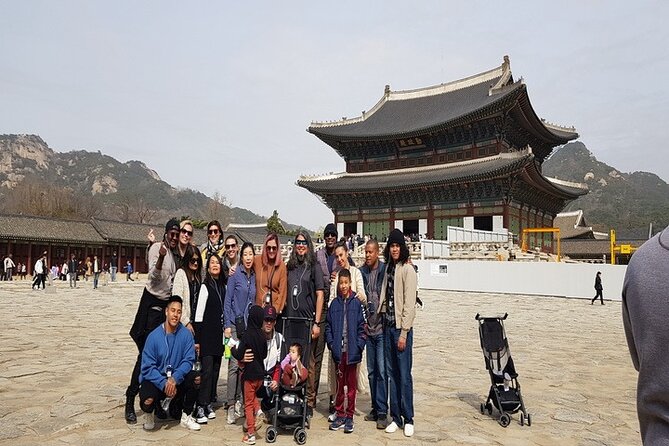
Reviewed · GYEONGBOKGUNG PALACE TOURS
Seoul: Gyeongbokgung Palace Half day Tour
Gyeongbokgung Palace is not just a backdrop for rented hanbok photos. It is the grandest reminder of the Joseon dynasty in Seoul, and this two-hour English tour helps you see the palace as a working royal compound rather than a long run of pretty roofs. You will hear about kings, queens, court life, architecture, and the animals carved or placed around the grounds.
I like the detailed explanations and the chance to ask questions as you walk. I also like that admission is included, so the $35 price covers more than simply meeting at the gate. The main drawback is the firm schedule: the group will not wait for late arrivals, and the tour may be canceled if fewer than four people book.
- Gwanghwamun Gate introduces Joseon royal power before you enter the palace grounds.
- Geunjeongjeon throne hall gives the tour its grand architectural center.
- Royal bedrooms and offices show how the palace functioned beyond ceremonies.
- Animal statues and architectural details add small stories to the large site.
- Gabriela is specifically praised for personal help, including finding a participant at the wrong meeting place.
- Tuesday closure and the four-person minimum are the two booking details you need to check first.
Why Gyeongbokgung Works Best With Explanation
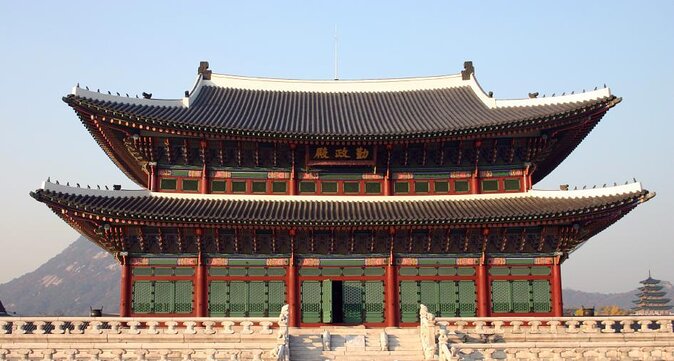
Gyeongbokgung Palace can be visited on your own, but its courtyards and halls make more sense when someone explains their purpose. Without guidance, you may see a throne hall, an office, a bedroom, and a pavilion without understanding how they fitted into royal life.
This tour gives you a clear route through the palace and ties the buildings to the Joseon dynasty. The palace was built in 1394 and is the oldest and most important of Seoul’s five palaces. It was badly damaged during the Japanese Colonial Period, but ongoing restoration has preserved and rebuilt much of its value.
I especially like the focus on small details. The guide does not only point out famous buildings. You will also hear about the animal figures found around the palace and what makes them worth noticing. Those details give you something specific to look for, instead of leaving you with a blur of painted beams and tiled roofs.
The guide also explains the stories of famous Joseon kings. That matters because the palace is not presented as a collection of empty rooms. You get a basic sense of the people who used these spaces and the ceremonies, decisions, and routines connected with them.
Starting Beside the National Palace Museum
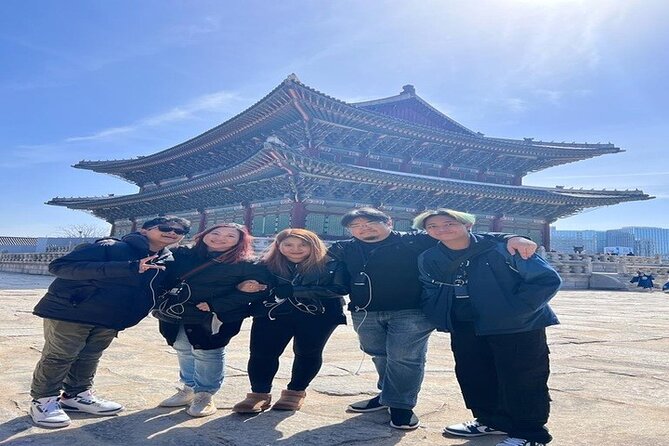
The meeting point is the National Palace Museum of Korea at 12 Hyoja-ro in Jongno District. This location places you close to the palace and gives you a practical landmark for the start of the tour.
The exact meeting time and any meeting instructions are sent by email or WhatsApp. You must leave a working name and contact number, or provide a messaging contact such as WeChat or Line that works in Korea. This is important, not decorative paperwork. If the operator cannot reach you because the number is wrong or unavailable in Korea, it accepts no responsibility for a missed tour.
The meeting point deserves care because one participant accidentally walked to the wrong place. Guide Gabriela went out of her way to find that person. That is a reassuring example of personal help, but it is not a reason to arrive casually. I would check the meeting message the night before and allow extra time in Jongno.
The group can include up to 20 people. That is small enough for a guide-led walk to remain useful, though it is not a private tour. If you want a private experience, you need to request an estimate by email.
More Gyeongbokgung Palace visits:
- Best Seoul City Tour (Gyeongbokgung Palace,Insadong,Namsan Tower)
★ 5.0 · 1,647 reviews - Seoul City Sightseeing Tour Including Gyeongbokgung Palace, N Seoul Tower, and Namsangol Hanok Village
★ 5.0 · 1,423 reviews - Seoul: Hanbok Rental with Gyeongbokgung Palace Entry
★ 4.6 · 611 reviews
Gwanghwamun Gate and the Palace Entrance
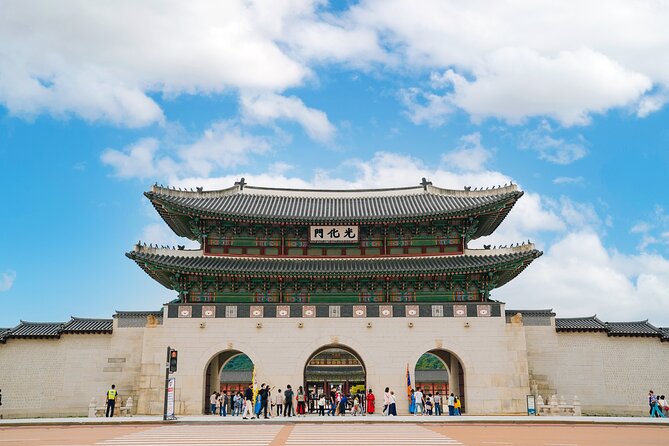
The tour begins at Gwanghwamun Gate, the south gate of Gyeongbokgung Palace. This is the right place to begin because the gate establishes the scale and importance of the compound before you reach the central buildings.
Your guide sets the palace in the context of Joseon and explains why Gyeongbokgung became such a major royal site. The first stop is not simply a photo opportunity. It gives you a framework for the buildings ahead.
I find that a guide is particularly useful here because the palace grounds are large and the main sights are spread through different areas. A two-hour visit cannot cover every corner, so the planned route keeps attention on the buildings most closely tied to royal life.
The pace should suit most people who can walk around a palace complex for two hours. Comfortable shoes still make sense. The tour is outdoors for much of the time, and the experience requires good weather, so keep Seoul’s conditions in mind when booking.
Geunjeongjeon, the Throne Hall
Geunjeongjeon is the main throne hall and the architectural centerpiece of the visit. This is where the palace’s ceremonial side comes into focus.
The guide explains the hall’s role and points out details in the architecture. You will learn how the building relates to the authority of Joseon kings, rather than simply hearing that it is the largest or most important hall.
The value here is visual and practical. Once you know what the hall was used for, its broad setting and formal design become easier to read. You can look at the roofline, decorative features, and surrounding space with a reason for each detail.
This is also the part of the tour most likely to attract attention from other people at the palace. The group size can reach 20, so your guide may need to gather everyone before moving on. If you prefer to linger for a long time at one angle or take many photographs, the guided pace may feel brisk.
Sajeongjeon and the Working Palace
Sajeongjeon was the king’s office space. This stop helps correct the common idea that a palace existed only for grand ceremonies and royal display.
The building gives the guide a chance to discuss the administrative side of Joseon rule. You can ask questions about how the king’s daily work connected with the larger palace compound. That question-and-answer element is one of the strongest reasons to choose a guided visit.
I like this contrast with Geunjeongjeon. The throne hall represents public ceremony, while Sajeongjeon points toward decisions, meetings, and the routine work of governing. Seeing both in one route makes the palace feel more functional.
The supplied information does not promise a particular number of interior rooms or a special demonstration, so you should expect explanation and exterior viewing as the core of this stop. The strength lies in the context supplied by the guide.
A few more Seoul half-days to weigh up
- Best DMZ Tour Korea from Seoul (Red Suspension Bridge Optional)
★ 5.0 · 41,422 reviews - DMZ Tour: 3rd Tunnel, Option(Suspension Bridge, Boat) from Seoul
★ 5.0 · 21,373 reviews - DMZ tour south Korea from Seoul (NK experience hall, defector)
★ 5.0 · 20,599 reviews - Seoul: DMZ Tour with Optional Suspension Bridge
★ 4.8 · 5,277 reviews
Gangnyeongjeon and Gyotaejeon
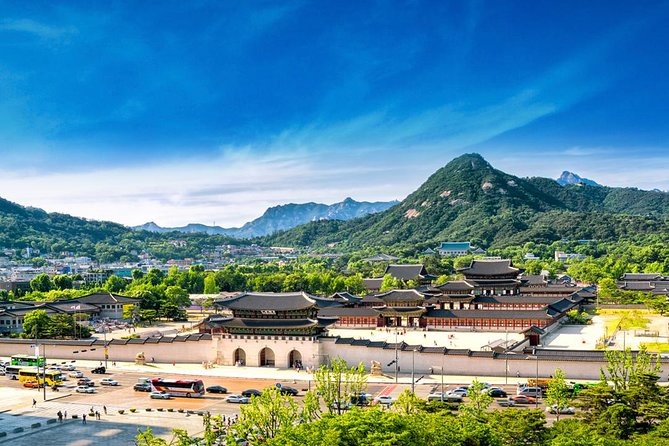
Gangnyeongjeon was the king’s bed-chamber, and Gyotaejeon was the queen’s bed-chamber. These buildings shift the focus from government to private royal life.
I find these stops useful because they show that the palace had different zones for public duty and personal life. The guide can connect the rooms to the roles of the king and queen, as well as to the design of the palace itself.
Do not expect a long stop in each chamber. The whole experience lasts about two hours and includes six named areas, so the guide must keep the route moving. Still, even a short explanation can change how you look at the buildings. A royal bedroom is not just another painted structure once you understand where it fit within the compound.
These stops may be especially useful if you are interested in palace architecture or social history. They also give younger visitors a more relatable angle. Thrones and ceremonies can feel distant, but sleeping quarters and daily routines are easier to picture.
Gyeonghoeru Pavilion and the Palace Setting
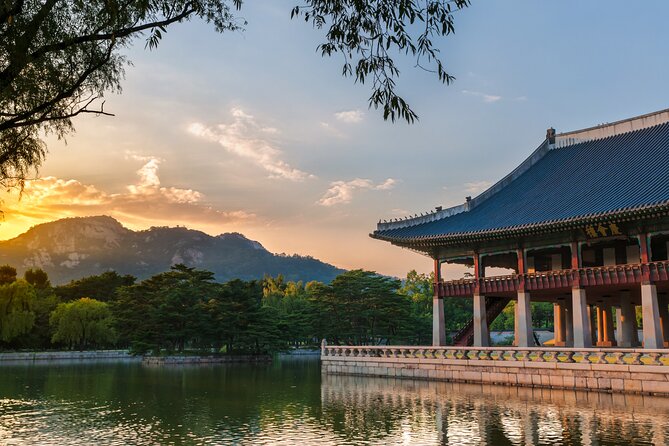
Gyeonghoeru Pavilion is described as an event hall. It brings the tour back to formal gatherings and the palace’s more open, scenic spaces.
The guide explains the pavilion as part of the royal compound and points out architectural beauty that might be missed during a quick walk. The palace is not only about enclosed halls. Its courtyards, open views, and carefully placed structures help create the setting for royal events.
This is a good place to ask questions about how ceremonies and gatherings differed from the king’s office work. Since questions are welcomed throughout the tour, you can use the stop to connect the earlier buildings.
The route ends at 7-25 Tongui-dong, Jongno District. Because the ending point is different from the museum meeting point, check the map before planning your next activity. The end location remains in the palace area, but you should not assume you will finish exactly where you started.
Animal Statues and Details Worth Watching
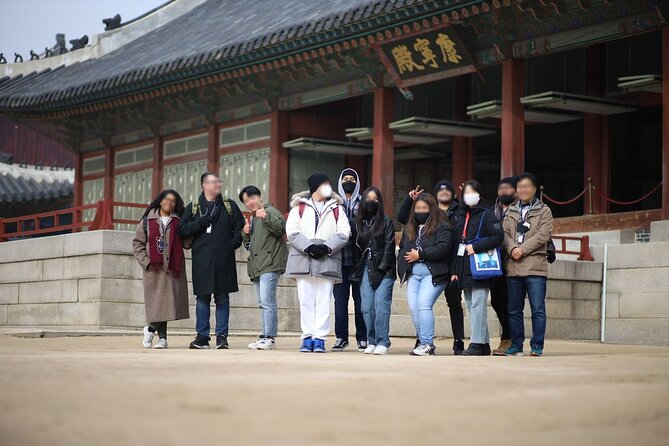
The animal statues are one of the more unusual themes of this experience. They give the guide a way to explain features that many people would otherwise pass without a second look.
I like this kind of detail because it makes the palace walk more active. Instead of only following the guide from major hall to major hall, you can keep your eyes open for the animals and ask what they represent or why they were placed there.
The supplied information does not identify every animal or assign a specific meaning to each statue, so the exact explanation depends on what the guide points out on the day. You can expect the subject to form part of the palace discussion, not a separate specialist workshop.
For photographers, these smaller features can also break up the usual palace pictures. You will still see the major buildings, but the statues offer more distinctive subjects than another wide shot of a roof.
The English Guide and Personal Attention
The central benefit is the English explanation. The tour is designed for visitors who want more than a self-guided walk and who may have questions as they go.
Gabriela is the guide specifically named in the available feedback. One participant praised her kindness and detailed insight, particularly after getting lost at the meeting point. That personal effort is worth noting because meeting instructions in a busy city can sometimes create stress.
I would still treat the guide’s help as a bonus, not a guarantee that the same person will lead every departure. The provider is koreaguidetour, and the tour promises a professional palace guide, but no fixed guide roster is supplied beyond Gabriela’s name.
Recording or filming the tour is not allowed. You can take in the explanations directly and ask questions, but do not plan to record the guide for later use. Pets are also not allowed, and there is no stated place to leave them.
Is $35 a Fair Price?
At $35 per person, this is a reasonable choice if you value interpretation and a planned route. Admission is included, and the tour lasts about two hours. You are paying for access plus a guide who explains the palace rather than simply handing you a ticket.
The value depends on your travel style. If you enjoy reading signs and moving at your own pace, you may prefer an independent visit. If you want the Joseon background, explanations of the architecture, and the freedom to ask questions, the price is easier to justify.
A group of up to 20 means this is not the same as hiring a private historian. The benefit is the lower shared-tour cost. The tradeoff is that the guide must keep the group together and cannot spend unlimited time on every question.
The experience is booked, on average, 18 days ahead. That suggests you should not leave it until the last moment if your Seoul dates are fixed. At the same time, the minimum requirement matters more than the average booking pattern: if fewer than four people join, the tour can be canceled.
Timing, Weather, and Tuesday Closures
Gyeongbokgung Palace is closed on Tuesdays. Do not schedule this tour for that day. A Deoksugung night tour is offered as an alternative, but it is a different experience, not a substitute palace visit at the same site.
The tour requires good weather. If poor weather causes cancellation, you are offered another date or a full refund. I would keep a little flexibility in your Seoul plan, especially if this palace is one of your main sightseeing goals.
Free cancellation is available when you cancel at least 24 hours before the start time. Changes or cancellations inside that 24-hour window are not accepted and are not refunded. The same 24-hour rule applies to a full refund.
The operator does not allow late joining after the tour has begun, since waiting would hold up the rest of the group. Build in time for public transport and finding the museum meeting point.
Who Should Book This Palace Walk?
I would recommend this tour to you if:
- You want English explanations at a major Seoul landmark.
- You are interested in Joseon kings, court life, and palace design.
- You like being able to ask questions instead of following a printed guide.
- You have about two hours and want the main royal buildings covered in a clear order.
- You prefer a shared tour at $35 rather than paying for a private guide.
I would think twice if you want complete freedom to wander, take your time, or film the explanations. The fixed route, no-recording rule, group size, and strict late-arrival policy may feel restrictive for independent sightseers.
The tour also suits first-time visitors who want an introduction before exploring more of Seoul’s palaces alone. You can use the visit to learn what to notice, then return later at your own pace if the grounds capture your interest.
Should You Book the Gyeongbokgung Tour?
Book it if the palace’s meaning matters as much to you as its appearance. For $35, you get admission, a two-hour route, and English explanations covering the gate, throne hall, office, royal bedrooms, pavilion, architecture, kings, and animal statues.
Before paying, confirm that your date is not Tuesday, leave a working Korean contact number or messaging contact, and read the meeting instructions carefully. If you can arrive early and accept a shared group format, this is a practical way to turn a famous photo stop into a more understandable visit.
FAQ
How much does the Gyeongbokgung Palace tour cost?
The tour costs $35 per person.
How long does the tour last?
The tour lasts approximately two hours.
Is admission to Gyeongbokgung Palace included?
Yes, the admission ticket is included in the tour.
Where does the tour begin?
The meeting point is the National Palace Museum of Korea at 12 Hyoja-ro, Jongno District, Seoul, South Korea.
Where does the tour end?
The tour ends at 7-25 Tongui-dong, Jongno District, Seoul, South Korea.
Is the tour offered in English?
Yes, the experience provides detailed explanations in English.
Is Gyeongbokgung Palace open for this tour on Tuesdays?
No. Gyeongbokgung Palace is closed on Tuesdays. A Deoksugung night tour can be booked as an alternative.
What happens if fewer than four people book?
The tour may be canceled if fewer than four people participate. You will be offered a different date or experience, or a full refund.
What happens if the weather is poor?
If the tour is canceled because of poor weather, you will be offered a different date or a full refund.
Can I cancel for a full refund?
Yes. You must cancel at least 24 hours before the experience start time to receive a full refund. Changes or cancellations made less than 24 hours before the start time are not accepted.
Recently added around Seoul
- Private Tour around Suwon UNESCO Fortress and Korea Folks Village★ 4.5 · 4 reviews
- Nami & Maple Road & Theatre des Lumieres Day Tour from Seoul★ 4.8 · 4 reviews
- Gyeongbokgung Palace Photo Session with your own phone★ 5.0 · 4 reviews
- Seoul: Deoksugung Palace Night Tour★ 4.5 · 4 reviews
- N Seoul Tower + Namsan Cable Car Ticket (Collect in Myeongdong)★ 3.5 · 4 reviews
- Jisan Forest Resort: Ski Full-Day Tour or Shuttle from Seoul★ 5.0 · 4 reviews
- Private Jeonju Hanok Village – Culinary tour★ 5.0 · 4 reviews
- Seoul Private Walking Tour with a Local★ 5.0 · 4 reviews
Gyeongbokgung Palace Tours, compared.
Best Seoul City Tour (Gyeongbokgung Palace,Insadong,Namsan Tower)
Read the review →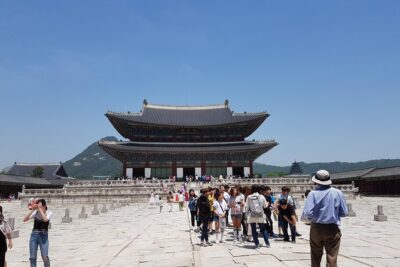
Seoul City Sightseeing Tour Including Gyeongbokgung Palace, N Seoul Tower, and Namsangol Hanok Village
Read the review →
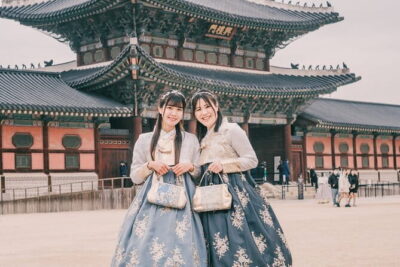
Hanbok Photoshoot and History Tour at Gyeongbokgung Palace
Read the review →
Korean Palace and Market Tour in Seoul Including Insadong and Gyeongbokgung Palace
Read the review →
Gyeongbokgung Palace Hanbok Rental Experience in Seoul
Read the review →
Small-Group Seoul Tour with Gyeongbokgung Palace (hotel pick-up)
Read the review →Browse the lists this tour appears in