
Reviewed · SEOUL TOURS
Blood & Tears: Korea Independence & Resistance Dark History Tour
Seoul’s past is not tucked away in a single museum. It is written into a prison, a city gate, a journalist’s house, a market, and a former intelligence headquarters. This tour links those places to show how Korea fought first for independence from Japan, then for democracy under military rule.
I like the choice between two focused routes, Then: Fight for Independence and Now: Road to Democracy. I also like that public transportation and admission fees are included, while the group is capped at 10 people. The main drawback is the pace: the full program can run from four to seven hours, with substantial walking and emotionally difficult material.
Key things to know before booking
- Two historical routes: Choose the colonial-era independence tour, the modern democracy tour, or combine both for a fuller day.
- Seodaemun Prison is the emotional center: Allow about 1 hour and 35 minutes for the former prison complex and its exhibits.
- Small groups help: The maximum is 10 people, giving you a better chance to ask questions and hear the guide clearly.
- Joseph and Jonathan guide the experience: Both are described as friendly, well prepared, and strong at explaining difficult subjects.
- Public transit is part of the tour: Transportation fees are covered, but you should be ready to walk between sites.
- Tongin Market is not a free lunch: Food is not included, so bring money for your meal.
Two routes, one story of Korean resistance
The tour is built around two linked chapters. The first follows Korea’s independence struggle during Japanese colonial rule. The second explains the long and often painful route from war and military dictatorship to democracy.
You can book one package if your time is tight. Package 1 is the more concentrated historical experience, with Seodaemun Prison, Dongnimmun Gate, Dilkusha, and Tapgol Park. Package 2 shifts toward postwar Korea, taking in a national museum, Tongin Market, the former KCIA site at Namsan, and the Korea Democracy Foundation.
If you have enough time, combining both makes the most sense. The first route explains why independence mattered so deeply. The second shows that liberation in 1945 did not end Korea’s struggle for political freedom.
The full experience may last four to seven hours. One person’s day ran from 9:50 in the morning until 3 in the afternoon, so I would not schedule a tight afternoon appointment afterward. Traffic, weather, walking speed, and the chosen package can affect the timing.
More Historical Tours in Seoul
- Seoul: Evening Dark History, Folklore & Ghost Story Walking Tour
★ 5.0 · 593 reviews - Hanbok Photoshoot and History Tour at Gyeongbokgung Palace
★ 5.0 · 276 reviews - From Seoul: Dae Jang Geum Park Historic K-Drama Set Tour
★ 4.9 · 143 reviews
Seodaemun Prison: the tour’s hardest stop
Seodaemun Prison History Hall gives Package 1 its weight. This former prison was used under Japanese rule to imprison, torture, and execute Korean independence activists. The visit lasts about 1 hour and 35 minutes, enough time to see more than a quick display of old buildings.
You move through a place designed to show the machinery of colonial control. The subject matter is grim, and the experience is not softened for easy sightseeing. That is precisely why it matters. Rather than discussing resistance as an abstract political idea, the tour puts you in a place where people paid for their beliefs with imprisonment, physical suffering, and their lives.
I would allow yourself time to pause here. The guide’s explanations are important, but so is the physical setting. The former cells and prison spaces help you understand the scale of the pressure placed on independence activists.
This stop may be difficult for children or anyone who prefers light historical touring. It is also the reason to choose this experience if you want a serious account of Korea’s past rather than a quick overview.
Dongnimmun Gate and the meaning of lost sovereignty
Dongnimmun Gate is a short stop, about 10 minutes, but it gives the day a useful change of pace. The gate was built to celebrate Korean independence, then became a witness to the country’s loss of sovereignty and the years of Japanese control.
You will not spend long here, and admission is free. The value comes from the guide’s context. A gate can look like a simple monument when you pass it alone. With the story attached, it becomes a reminder that national independence was not a settled fact. It was something people had to demand, protect, and later explain to the world.
This is a good example of the tour’s method. It does not rely only on large museums. It uses ordinary city spaces to show how political events shaped Seoul.
Dilkusha: a journalist’s view of colonial violence
Dilkusha, also known as the Albert W. Taylor House, adds an international angle to Package 1. The Western-style home belonged to an American journalist who reported Japan’s atrocities and helped expose them beyond Korea.
The visit takes about 30 minutes and admission is free. It is a smaller, more personal stop than Seodaemun Prison. Instead of focusing only on imprisoned activists, it raises questions about who could report abuse, how information crossed borders, and what risks people took when they challenged official accounts.
Bring socks you do not mind wearing inside, or simply be prepared to remove your shoes. Shoes may need to come off to help protect the historic residence, and slippers are provided on site.
Dilkusha may appeal most to you if you like overlooked personal stories alongside major political events. It also helps keep the tour from becoming a single-note account of suffering. You see how an outsider used his position to bring Korean experiences to a wider audience.
A different way to spend a day from here:
- Best DMZ Tour Korea from Seoul (Red Suspension Bridge Optional)
★ 5.0 · 41,422 reviews - DMZ Tour: 3rd Tunnel, Option(Suspension Bridge, Boat) from Seoul
★ 5.0 · 21,373 reviews - DMZ tour south Korea from Seoul (NK experience hall, defector)
★ 5.0 · 20,599 reviews - Seoul: DMZ Tour with Optional Suspension Bridge
★ 4.8 · 5,277 reviews
Tapgol Park and the March 1st Movement
Tapgol Park is described as the birthplace of the March 1st Movement in 1919. Here, the first public calls for Korean independence helped spark a nationwide uprising.
The stop lasts about 30 minutes and admission is free. The park itself is a public urban space, so the power of the visit comes from knowing what happened there. The guide can connect the location to the wider movement and explain how a gathering in Seoul became part of a national push for independence.
I like ending Package 1 here. Seodaemun Prison shows the punishment imposed by colonial rule. Tapgol Park brings you back to public action and collective courage. The contrast gives the route a clear shape, moving from repression to organized resistance.
The National Museum of Korean Contemporary History
Package 2 begins at the National Museum of Korean Contemporary History, where you spend about an hour. The museum provides background on Korea’s postwar recovery, industrial growth, and development into a democracy.
This is an important bridge between the two routes. If you know only about the colonial period, it is easy to imagine that independence solved the country’s main problems. The museum helps you see the difficult decades that followed, including recovery after war, fast economic change, and the political conflicts that came with military rule.
The museum stop is free. Its role is less about one dramatic building and more about giving you a framework for the rest of the day. Pay attention to the guide’s explanation of how economic development and political freedom did not always move together.
If you choose only Package 2, this museum gives you the basic background you need. If you combine both packages, it prevents the second half from feeling disconnected from the independence story.
Tongin Market: lunch with a historical setting
Tongin Traditional Market is the most everyday stop on the route. You spend about an hour walking through its food stalls and having lunch. The market was also a gathering place for ordinary people living through extraordinary political times, which gives the meal a little more meaning than a standard food break.
Food is not included in the tour price, so plan to pay for lunch yourself. That is a small but important detail when comparing costs. The market lets you choose what you want rather than locking you into a fixed meal, but you should have some Korean won available unless the guide advises otherwise.
This stop also gives your mind a rest after the museum. The subject remains connected to modern Korean life, yet the setting is less formal and less heavy. I appreciate that the tour does not place every serious topic inside a museum. A market shows the daily life that political movements were meant to protect.
Keep an eye on the clock here. An hour can pass quickly if you are choosing food, eating, and listening to the guide at the same time.
Namsan and the former KCIA headquarters
Namsan brings Package 2 into darker territory. The peaceful hill was once associated with the Korean Central Intelligence Agency, or KCIA, where dissidents were interrogated and tortured during military rule.
The visit lasts about an hour. The contrast between a calm public setting and its former political use is the point. You are asked to consider how places that appear ordinary today can carry memories of surveillance, fear, and abuse.
This part of the route explains that the fight for freedom did not end with the end of Japanese colonial rule. Korean citizens continued to challenge governments that restricted speech and political opposition. The guide’s job here is especially important because the site needs context. Without it, you may see a hill and a former government facility. With it, you can connect the location to the people who risked their safety to oppose dictatorship.
Namsan also adds walking and may feel tiring after the museum and market. Wear comfortable shoes and expect the schedule to move at a steady pace.
Korea Democracy Foundation: citizens pushing for change
The final scheduled stop is the Korea Democracy Foundation, housed in a former police building. The visit takes about 40 minutes and focuses on protests, uprisings, reforms, and the citizens who pushed Korea toward democracy.
This is a fitting end because it shifts attention from the institutions of repression to the people who opposed them. The former police setting reinforces the contrast. A building once tied to state power now presents the story of democratic change.
The visit can be adjusted depending on conditions at the site. That means you should treat it as an important planned stop, but not assume every visit will follow exactly the same format.
I find this section most useful for understanding democracy as a long process rather than a single event. The route shows sacrifice, protest, political pressure, and reform. It also gives the modern city a stronger meaning. Seoul is not only a capital of technology and commerce. It is a place shaped by citizens who repeatedly challenged authority.
What the guides add to the experience
A dark-history tour depends heavily on the guide. The best guide does more than repeat dates. You need someone who can explain why a place matters, connect separate events, and handle painful subjects without turning them into spectacle.
Joseph and Jonathan are the named guides associated with this experience. Joseph is described as friendly and very well informed, while Jonathan is praised for his preparation, clear historical explanations, and approachable manner. One full-day participant found the program tiring but worthwhile because Joseph kept the family engaged across a long morning and afternoon.
Jonathan’s strength appears particularly useful on the democracy route. The subject includes colonial rule, dictatorship, protest, and reform, all of which can become confusing when presented as a list of events. A guide who can connect the causes and consequences will make the museum and former KCIA site much easier to understand.
The small maximum of 10 people is another advantage. You are more likely to hear the explanation at outdoor sites and ask a question without slowing down a large coach group.
Price, pace, and practical value
At $57.14 per person, the price is reasonable if you choose the full experience. You receive an English-speaking guide, public transportation fees during the tour, and admission fees. Since most stops are free, the main value is the guide’s time, organization, and interpretation rather than a stack of entrance tickets.
For a single package, the price is harder to judge without knowing how the operator structures the booking. The full day gives you more historical range and better value from the guide’s expertise. If you are short on time, Package 1 offers a strong, focused route around independence. Package 2 suits you if modern political history matters more.
Meals and personal expenses are not included. Tongin Market is the one planned food stop, so budget separately for lunch. The tour is near public transportation and uses transit during the day, which keeps the route tied to the real city rather than separating you from it in a private vehicle.
You should also allow extra energy for the program. The published duration is approximate, and a full day can be tiring. Most people can participate, but the pace and walking are worth considering if you have limited mobility or dislike moving between several stops.
You receive confirmation at booking, and free cancellation is available up to 24 hours before the local start time. Changes or cancellations made later are not accepted for a refund.
Who should book this Seoul history tour?
I would recommend it to you if you want political and social history with a strong sense of place. It is especially useful for first-time visitors who know Korea mainly through modern culture and want to understand the sacrifices behind the country’s independence and democracy.
Package 1 is best for a direct account of colonial oppression and the independence movement. Package 2 is better for understanding postwar Korea and the struggle against military rule. If your schedule allows, take both. The two routes explain each other.
I would not choose this as a casual sightseeing outing. The subjects include torture, executions, surveillance, and political repression. The day can be long, and the full program may leave you tired. But if you are ready for serious history, the combination of sites, public transit, and a small group offers a useful way to see Seoul beyond its palaces and shopping streets.
Final verdict: choose one chapter or take the full day
Book this tour if you want Seoul’s freedom story explained at the places where it unfolded. The strongest features are Seodaemun Prison, the personal story behind Dilkusha, and the link between the independence movement and the later fight for democracy.
Choose Package 1 for the clearest introduction to Korean independence. Choose Package 2 for modern political history. Take both if you can spare up to seven hours, bring money for lunch, wear good walking shoes, and expect a serious day rather than light sightseeing.
FAQ
How long does the tour last?
The experience lasts approximately four to seven hours, depending on which package you choose, traffic, weather, and the day’s conditions.
Can I choose only one package?
Yes. You may choose Package 1, Package 2, or both for a broader understanding of Korea’s independence and democracy movements.
What does Package 1 include?
Package 1 visits Seodaemun Prison History Hall, Dongnimmun Gate, Dilkusha, and Tapgol Park. It focuses on Korea’s colonial period and the fight for independence.
What does Package 2 include?
Package 2 visits the National Museum of Korean Contemporary History, Tongin Traditional Market, Namsan, and the Korea Democracy Foundation. It focuses on postwar struggles and Korea’s road to democracy.
Is lunch included?
No. Meals are not included. Package 2 includes time at Tongin Market for lunch, but you pay for your own food.
Are public transportation fees included?
Yes. Public transportation fees used during the tour are included in the experience price.
Is the tour conducted in English?
Yes. An English-speaking guide is included.
Is the Korea Democracy Foundation visit guaranteed?
The visit may be adjusted depending on on-site conditions. The operator advises that the schedule can change because of traffic and weather as well.
How many people can join the tour?
The maximum group size is 10 people.
Do I need to remove my shoes at Dilkusha?
You may need to remove your shoes to help preserve the historic residence. Slippers are provided on site.
Can I cancel for a refund?
You can cancel at least 24 hours before the local start time for a full refund. Cancellations or changes made less than 24 hours in advance are not accepted for a refund.
Recently added around Seoul
- Private Tour around Suwon UNESCO Fortress and Korea Folks Village★ 4.5 · 4 reviews
- Nami & Maple Road & Theatre des Lumieres Day Tour from Seoul★ 4.8 · 4 reviews
- Gyeongbokgung Palace Photo Session with your own phone★ 5.0 · 4 reviews
- Seoul: Deoksugung Palace Night Tour★ 4.5 · 4 reviews
- N Seoul Tower + Namsan Cable Car Ticket (Collect in Myeongdong)★ 3.5 · 4 reviews
- Jisan Forest Resort: Ski Full-Day Tour or Shuttle from Seoul★ 5.0 · 4 reviews
- Private Jeonju Hanok Village – Culinary tour★ 5.0 · 4 reviews
- Seoul Private Walking Tour with a Local★ 5.0 · 4 reviews
Seoul Tours, compared.
Best DMZ Tour Korea from Seoul (Red Suspension Bridge Optional)
Read the review →
DMZ Tour: 3rd Tunnel, Option(Suspension Bridge, Boat) from Seoul
Read the review →
DMZ tour south Korea from Seoul (NK experience hall, defector)
Read the review →
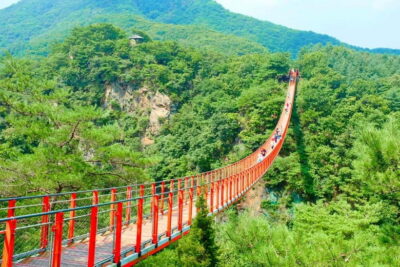
DMZ The 3rd Tunnel and Suspension Bridge Tour
Read the review →
Signature DMZ Tour: Exclusive Defector Talk & Suspension Bridge
Read the review →
Thrilling Korean DMZ 3rd Tunnel Tour from Seoul + Red Bridge Rush
Read the review →
DMZ Past and Present: Korean Demilitarized Zone Tour from Seoul
Read the review →Browse the lists this tour appears in