
Reviewed · SEOUL TOURS
Highlights & Hidden Gems With Locals: Best of Seoul Private Walking Tour
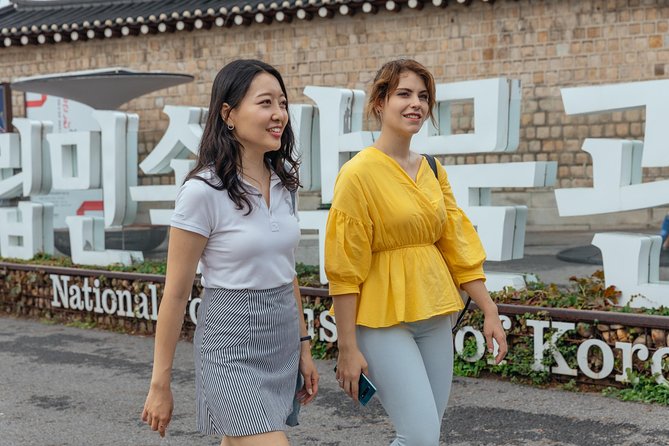
Seoul’s old center makes the most sense on foot, and this private tour gives you a useful first look at four very different places: Gwangjang Market, Jogyesa Temple, Bukchon Hanok Village, and Gyeongbokgung Palace. In three hours, you move from mung bean pancakes and market stalls to Buddhist lanterns, traditional homes, and the royal court.
I like the private format because you can ask questions without holding up a group, and I like the flexible local angle. Guides such as Sarah, Jimmy, Cristina, Sanghee, and Hojin have helped visitors adjust the route, explain everyday Seoul, and offer practical help with buses, subways, food, and later sightseeing. The main drawback is that the experience depends heavily on the individual guide. Most feedback is excellent, but a few bookings report a short tour, weak explanations, poor communication, or a guide who failed to arrive.
Key Points Before You Book
- Four sides of old Seoul in three hours: The route links food, religion, traditional homes, and royal architecture.
- Gwangjang Market includes a local tasting: Your included tasting or drink may be a good chance to try mung bean pancake, known as bindae-tteok.
- Gyeongbokgung admission is covered: You do not need to buy a separate palace ticket for this tour.
- Private means genuinely flexible: It is only your party and the guide, with room to adjust the pace and focus.
- Expect plenty of walking: One booking reached about 15,000 steps, so comfortable shoes are essential.
- Guide quality matters: Confirm the meeting place and tell the guide what interests you before the start.
Why This Tour Works as a First Look at Seoul
At $123.22 per person, this is not a budget sightseeing walk. The price makes more sense for a couple, family, or small group that wants a private introduction rather than a fixed group route. You are paying for the guide’s time, a tailored outing, the Gyeongbokgung ticket, and a chance to ask very specific questions about Seoul.
That last part is important. A good local guide can turn a palace visit into a conversation about Korean customs, food, neighborhoods, public transportation, and daily life. Sarah, Yejin, Jimmy, Cristina, Camille, and Sanghee are among the guides associated with especially warm and useful outings, while Hojin has adapted tours for hot weather and helped with transportation.
The tour is also a sensible choice for your first day in Seoul. It gives you an orientation to Jongno, one of the city’s key historic areas, and puts several useful neighborhoods within reach. You can ask where to eat, how to use the subway, or what to see after the tour.
Still, this is a walking tour, not a deep historical seminar. The advertised time at each stop is approximate, and a guide who emphasizes conversation may cover fewer formal facts. If you want detailed architectural history at every site, you should state that when booking.
More Walking Tours in Seoul:
- Seoul moonlight walking tour with local historian
★ 5.0 · 940 reviews - Seoul: Nighttime Hidden Gems Walking Tour
★ 5.0 · 775 reviews - Seoul: Evening Dark History, Folklore & Ghost Story Walking Tour
★ 5.0 · 593 reviews
Gwangjang Market: Start With Seoul on a Plate
The tour begins at Gwangjang Market, where one hour is set aside for food, stalls, and an early taste of Korean city life. This is a strong opening because the market gives you something to do immediately. You are not just looking at buildings. You are seeing what people eat and buy.
The included local drink or tasting can be used here, although the information does not promise a full meal. Food beyond the included item is your responsibility. If bindae-tteok is available during your visit, try the mung bean pancake. It is a popular market snack with a savory, hearty character and makes a useful introduction to Korean street food.
Your guide can help explain what you are seeing and point out items you might otherwise pass by. That is one of the private tour’s better advantages. A market can feel confusing if you do not know what to order or how long to linger.
The tradeoff is time. One hour sounds generous, but it can pass quickly if you stop for food and photographs. If you are especially interested in Korean cooking, tell your guide at the start so the market portion does not get squeezed by the later stops.
Jogyesa Temple and the Calm Center of Jongno
The next planned stop is Jogyesa Temple, with about 30 minutes for a visit. Located in the center of Seoul, it offers a sharp change from the market. The temple is associated with Korean Buddhism and is known for lotus lanterns and plant displays.
The site is described as dating to 1395 and as one of Korea’s important Buddhist temples. Your guide can give the setting more meaning by explaining what the lanterns represent and how the temple fits into modern Seoul. Even a short stop works well here because the point is contrast: a religious space in the middle of a busy capital.
Thirty minutes is enough for a look around and some questions, but not for a long, quiet visit. If you hope to spend time observing the temple on your own, mention that. A private guide can usually adjust the pace more easily than a large group, though the full route still has four main stops.
Bukchon Hanok Village: Seoul’s Best Walking Section
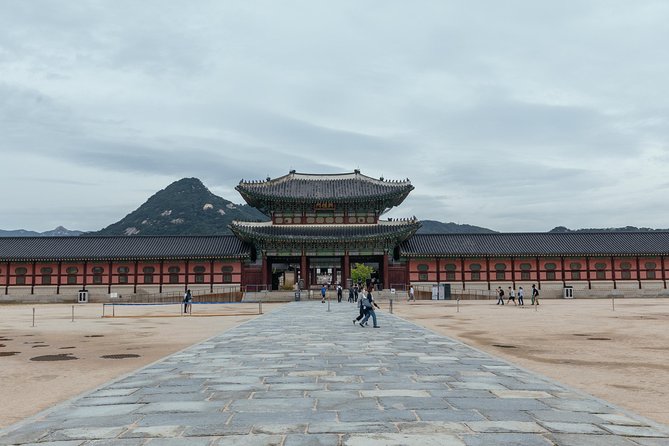
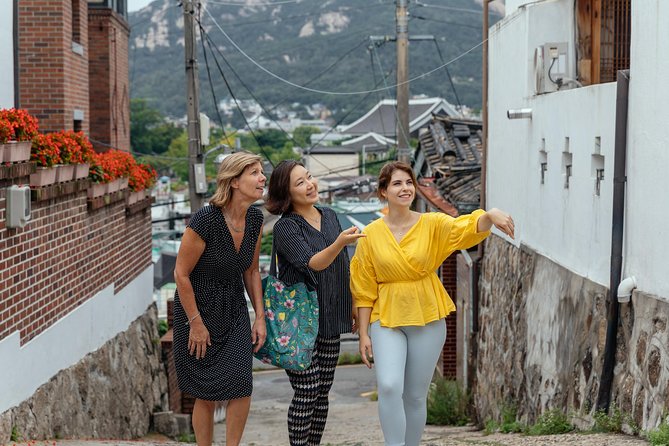
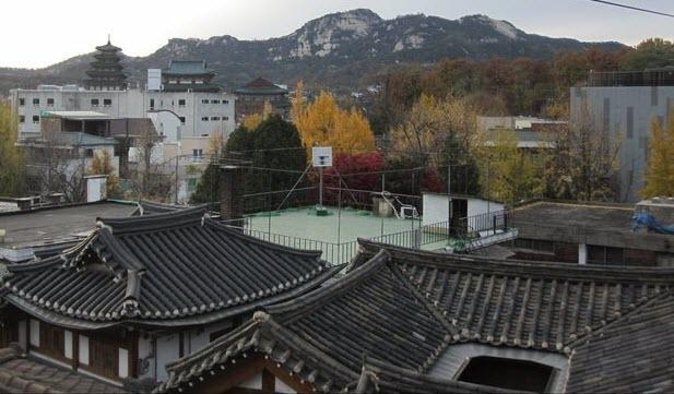
Bukchon Hanok Village gets about an hour, and this is likely to be the most enjoyable part for many people. The neighborhood is known for preserved hanok, or traditional Korean houses, and its lanes offer a clear sense of how older Seoul looked before the city filled with towers and traffic.
The village is also where a local guide can add real value. The route is more than a checklist of pretty streets. A guide can point out viewpoints, explain the houses, and help you understand why the area matters. Jin has taken visitors to less obvious views in Bukchon, while Camille has made the walk feel more personal by mixing historical details with stories about life in Korea.
The practical warning is the walking. Bukchon has sloped streets, and the broader outing can involve a great deal of time on your feet. One booking reached roughly 15,000 steps before the day was over. Wear comfortable shoes, carry water, and be realistic about Seoul’s heat, especially in summer.
Bukchon is also a residential area, so your guide’s conduct matters. You should expect a sightseeing walk through a lived-in neighborhood, not a loud group parade. A considerate pace and low voice make the experience better for everyone.
A few more Seoul half-days to weigh up
- Best DMZ Tour Korea from Seoul (Red Suspension Bridge Optional)
★ 5.0 · 41,422 reviews - DMZ Tour: 3rd Tunnel, Option(Suspension Bridge, Boat) from Seoul
★ 5.0 · 21,373 reviews - DMZ tour south Korea from Seoul (NK experience hall, defector)
★ 5.0 · 20,599 reviews - Seoul: DMZ Tour with Optional Suspension Bridge
★ 4.8 · 5,277 reviews
Gyeongbokgung Palace: The Big Historic Finish
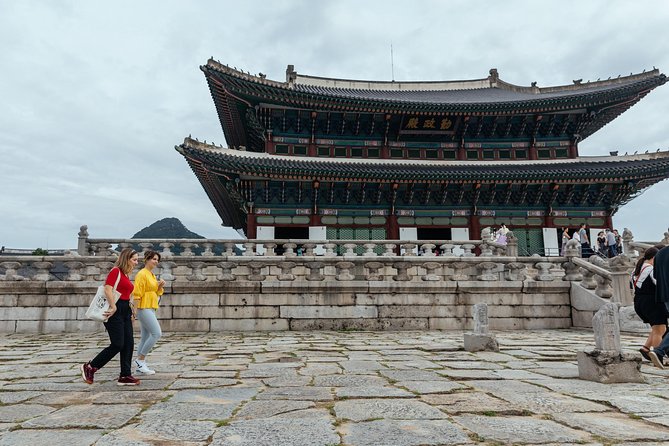
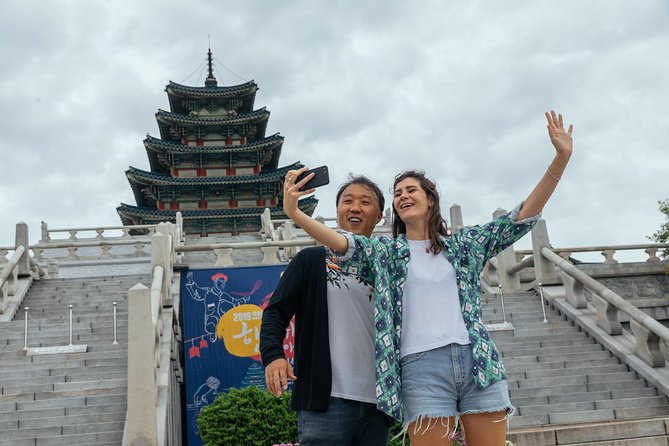
Gyeongbokgung Palace receives about 30 minutes on the stated route, and admission is included. Built in the 14th century, it is one of Seoul’s essential historic sights and gives the tour a strong finish after the smaller-scale market, temple, and hanok lanes.
The palace is the stop where guide quality can make the largest difference. John has been praised for explaining the site and stopping for photographs, and Jimmy has been described as offering strong English and entertaining conversation. A good guide can connect the palace to Korea’s royal past without burying you in dates.
Thirty minutes is a short palace visit. You will get an introduction and hear stories from your guide, but you should not expect to see every important building or spend hours exploring the grounds. If the palace is your main reason for booking, ask in advance how much time your guide plans to devote to it.
The route may also include additional stops depending on the guide and chosen path. Those extras are not guaranteed, so treat them as a bonus rather than part of the core promise.
The Private Format: Worth the Extra Cost?
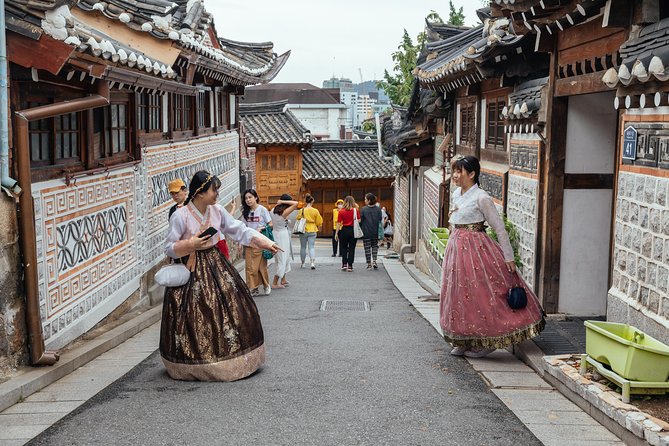
The private setup is the tour’s clearest selling point. Only your party and the local guide take part, so you can ask questions, pause for pictures, and discuss what you want from the rest of your time in Seoul.
This flexibility has produced some memorable touches. Sanghee has helped a visitor learn the bus and subway system and obtain a transportation card. Hojin has brought fans and umbrellas in hot weather, changed the route to suit the conditions, and used a car when walking became uncomfortable. That kind of adjustment is difficult on a fixed group tour.
You should not assume every guide will offer the same extras. The standard information promises a private guide, one local drink or tasting, and the Gyeongbokgung ticket. It does not promise private car transport, a mountain viewpoint, a tea house, or help buying a transit card.
At $123.22 per person, the value is strongest when you have two or more people who want personal attention. A solo visitor pays the same listed per-person rate, so the cost is harder to justify unless you place a high value on local conversation and a custom route. Group discounts may be available, which can improve the price for a larger private party.
The Human Variable: Choosing and Communicating With Your Guide
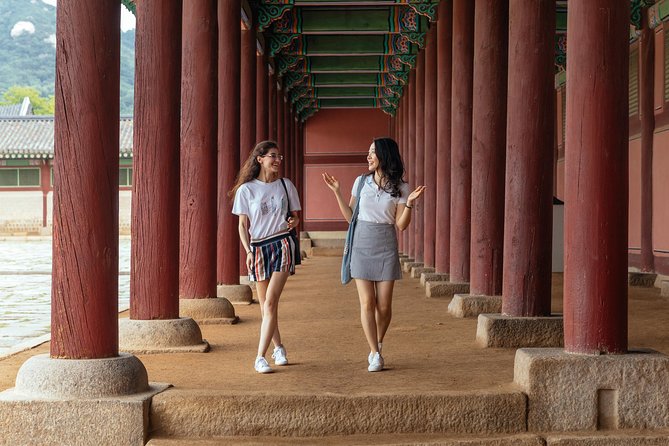
The strongest feedback centers on guides who are friendly, flexible, and easy to talk with. Sarah has been described as an engaging first-day guide. Yejin has confirmed arrangements before the tour and created an easygoing outing. Cristina has helped cover many places while keeping the experience personal.
English ability has also been praised for several guides, including Jimmy and Hojin. Sanghee has been singled out for her grasp of Seoul and Korean history. These details suggest that the right guide can make the tour feel less like a formal lecture and more like a walk with a well-informed local friend.
But you should plan for variation. Some bookings have reported only two of the four main stops, little background information, a guide walking far ahead, and a tour that lasted about two hours instead of three. Another report describes a changed meeting point followed by a no-show and unsuccessful attempts to reach the guide.
Those are serious problems, not minor quibbles. Confirm the meeting point and start time in advance, keep the booking contact details available, and message your guide about your interests before the tour. If history matters most, say so. If food, photography, neighborhood life, or public transportation matters more, say that instead.
Heat, Hills, and the Pace of the Walk
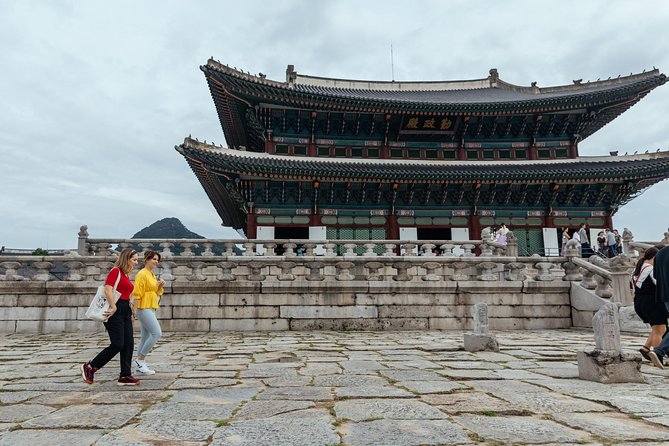
Seoul’s historic center is well suited to walking, but three hours on foot can be tiring. The combination of market lanes, temple grounds, village slopes, palace paths, and transfers between areas means you should arrive ready to walk steadily.
Weather can change the feel of the outing. One particularly strong adaptation involved fans, umbrellas, a car ride, and a revised route during very hot weather. That shows what a responsive private guide can do, but it should not be read as a standard inclusion.
A moderate level of physical fitness is recommended. If you have mobility concerns, ask before booking how the route can be adjusted. The information confirms that the tour is near public transportation, but it does not provide a detailed accessibility plan.
Who Should Book This Seoul Walking Tour?
I would recommend it most strongly for:
- First-time visitors who want a quick orientation to central Seoul
- Couples, families, or friends who prefer a private guide
- People who enjoy mixing food, culture, history, and neighborhood walks
- Visitors who want practical tips for the rest of their trip
- Anyone who likes asking questions and changing the pace
It is less suitable for you if you want a low-cost group walk, a long palace visit, or a tightly scripted academic tour. It may also disappoint if you expect the words hidden gems to guarantee secret sites. The route includes famous places, with the possibility of less obvious views or extra stops depending on the guide.
The tour is also not ideal for a very hot day unless you are prepared to slow down or discuss adjustments in advance. Comfortable shoes are not optional here.
Booking Details That Matter
The tour lasts about three hours and starts at 159 Sejong-daero in Seoul’s Jongno District. It ends back at the meeting point, and hotel pickup and drop-off are not included.
A mobile ticket is provided, and confirmation is received at booking. Free cancellation is available until 24 hours before the local start time. Inside that window, the payment is not refunded and changes are not accepted.
The tour is carbon neutral through carbon offsetting. Post-pandemic operating rules may affect participant numbers, delivery, and content, so check the current details close to your date.
Should You Book It?
Book this tour if you want a private first-day introduction to Seoul and value conversation as much as sightseeing. The mix of Gwangjang Market, Jogyesa Temple, Bukchon Hanok Village, and Gyeongbokgung Palace is well chosen, and the included palace admission and local tasting add practical value.
I would book it with two conditions: confirm the meeting point and tell the guide exactly what you want to learn. The overall rating is 4.6 from 83 ratings, and many outings have been praised for friendly guides, useful local advice, and flexible pacing. Still, the small number of serious service complaints means you should keep expectations realistic.
For a private party sharing the cost, this can be a convenient and personal way to get oriented. For a solo visitor on a tight budget, Seoul’s excellent public transportation and self-guided sightseeing may offer better value.
FAQ
How long is the Seoul private walking tour?
The tour lasts approximately three hours.
Is the tour private?
Yes. Only your party and the local guide participate.
What places are included?
The planned route includes Gwangjang Market, Jogyesa Temple, Bukchon Hanok Village, and Gyeongbokgung Palace.
Is admission to Gyeongbokgung Palace included?
Yes. The palace admission ticket is included in the tour price.
Is food included?
One local drink or tasting is included. Other food and drinks are not included.
Where does the tour begin?
The meeting point is 159 Sejong-daero in Seoul’s Jongno District.
Where does the tour end?
The activity ends back at the meeting point.
Is hotel pickup included?
No. Hotel pickup and drop-off are not included.
How much walking should I expect?
You should expect a substantial amount of walking and have a moderate level of physical fitness. One reported outing reached about 15,000 steps, so comfortable shoes are important.
Can I cancel for a full refund?
Yes, if you cancel at least 24 hours before the local start time. Cancellations within 24 hours are not refunded, and late changes are not accepted.
Recently added around Seoul
- Nami & Maple Road & Theatre des Lumieres Day Tour from Seoul★ 4.8 · 4 reviews
- Gyeongbokgung Palace Photo Session with your own phone★ 5.0 · 4 reviews
- Private Tour around Suwon UNESCO Fortress and Korea Folks Village★ 4.5 · 4 reviews
- N Seoul Tower + Namsan Cable Car Ticket (Collect in Myeongdong)★ 3.5 · 4 reviews
- Jisan Forest Resort: Ski Full-Day Tour or Shuttle from Seoul★ 5.0 · 4 reviews
- Seoul: Deoksugung Palace Night Tour★ 4.5 · 4 reviews
- Private Jeonju Hanok Village – Culinary tour★ 5.0 · 4 reviews
- Seoul Private Walking Tour with a Local★ 5.0 · 4 reviews
Seoul Tours, compared.
Best DMZ Tour Korea from Seoul (Red Suspension Bridge Optional)
Read the review →
DMZ Tour: 3rd Tunnel, Option(Suspension Bridge, Boat) from Seoul
Read the review →
DMZ tour south Korea from Seoul (NK experience hall, defector)
Read the review →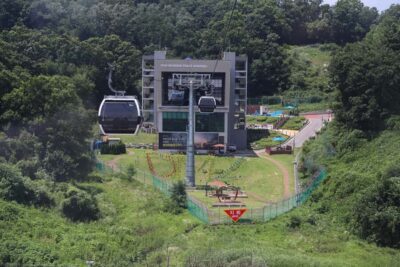
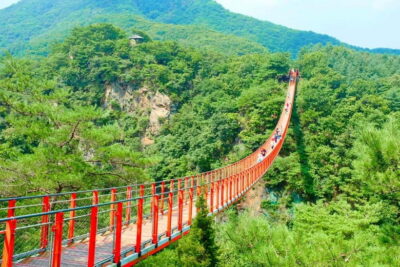
DMZ The 3rd Tunnel and Suspension Bridge Tour
Read the review →
Signature DMZ Tour: Exclusive Defector Talk & Suspension Bridge
Read the review →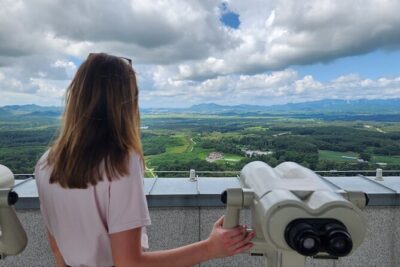
Thrilling Korean DMZ 3rd Tunnel Tour from Seoul + Red Bridge Rush
Read the review →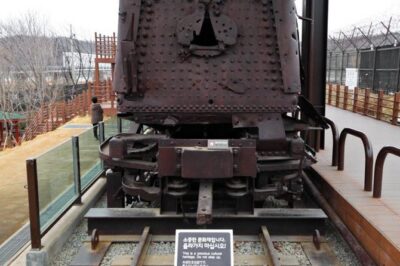
DMZ Past and Present: Korean Demilitarized Zone Tour from Seoul
Read the review →Browse the lists this tour appears in