
Reviewed · BUSAN TOURS
From Busan: Gyeongju UNESCO World Heritage Guided Day Tour
Gyeongju is where Korea’s ancient Silla kingdom comes into focus, and this long day from Busan brings its biggest sights together without making you piece together local buses and taxis. I especially like the night visit to Donggung Palace and Wolji Pond on Packages A and B, plus the chance to see Bulguksa and royal tombs in one organized run.
I also like the choice of three routes: Yangdong Village for old Joseon-era homes, Gyochon Village for Gyeongju family history, or the National Museum for gold crowns and Buddhist relics. The catch is simple: this is an 8 to 12-hour day with plenty of walking, and you must choose your package carefully because no single option includes every stop.
Key points at a glance
- Three different Gyeongju routes: Pick Yangdong Village, Gyochon Traditional Village, or Gyeongju National Museum.
- Bulguksa in context: Spend about 70 minutes at one of Korea’s finest Buddhist temple complexes with a guide.
- Royal tombs and modern cafés: Walk through Daereungwon and then enjoy free time on Hwangnidan Street.
- Best evening views: Packages A and B finish at illuminated Woljeong Bridge and Donggung Palace and Wolji Pond.
- Easy transport from Busan: Depart from one of six listed pickup points and ride by coach for roughly 100 minutes each way.
- Strong value at $52: Transportation, guiding, and several admission fees are included, though meals are extra.
Why Gyeongju makes a great day from Busan
Busan is Korea’s energetic port city. Gyeongju offers a very different mood, with temple courtyards, grassy royal burial mounds, old village lanes, and palace ruins lit after dark. It was the capital of Silla for nearly a millennium, so the city’s important sights are scattered across a broad area rather than packed into one compact old quarter.
That geography makes a guided coach trip useful. You can spend the day looking out the window instead of working out connections between Bulguksa, the tomb complex, the riverfront, and the evening palace site. The roughly 100-minute ride each way is not short, but it is much less troublesome than arranging several separate journeys.
At $52 per person, the tour is priced as a practical sightseeing option rather than a luxury outing. You are paying for transport from Busan, a live guide, group coordination, and admission to selected sites. Meals and personal expenses are not included, so keep some money aside for lunch and snacks.
The large-group limit is up to 43 people, though the actual number can vary. A big coach group may feel less personal than a private tour, but the low price makes it easier to accept, especially if you want to cover several distant sights in one day.
More Historical Tours in Busan
- Gyeongju UNESCO World Heritage Guided Day Tour from Busan
★ 5.0 · 660 reviews - Old Korea Thousand History Tour of Gyeongju from Busan
★ 5.0 · 518 reviews - Busan history and market food tour with local chef
★ 5.0 · 58 reviews
Bulguksa Temple: the day’s grand opening
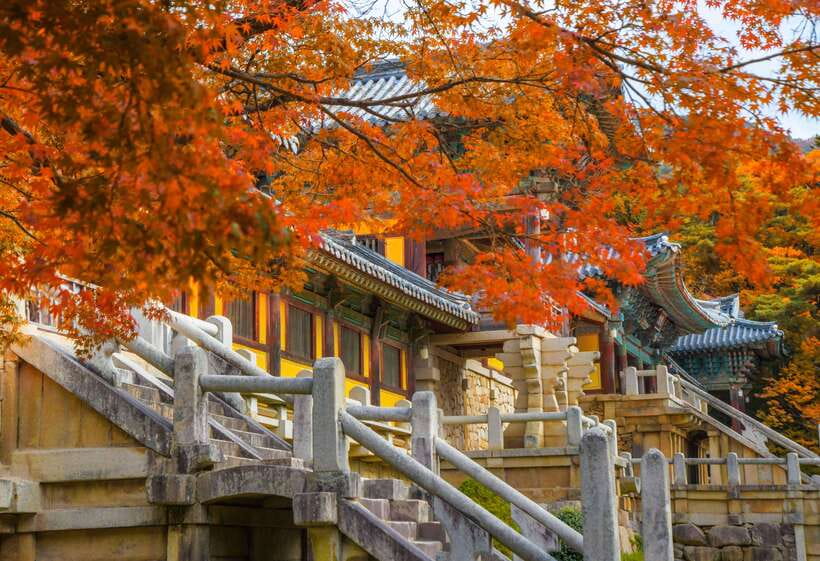
Bulguksa is the anchor of the route. The temple is known for its wooden buildings set above carefully built stone terraces, and the approach gives you a strong sense of how architecture, religion, and ceremony worked together in Silla Korea.
You get about 70 minutes here with a guided visit. That is enough time to hear the main stories, see the principal courtyards, and take photographs, but it is not enough for a slow, every-corner exploration. Listen closely at the start, then use your free moments to look at roof details, stairways, gates, and the quiet spaces between the main halls.
The stone terraces and steps are part of what makes Bulguksa memorable, but they also make comfortable shoes essential. The day includes repeated walking and standing, and several people who have taken the trip specifically advise preparing for that.
A guide adds real value at Bulguksa. Without context, it can be easy to see a beautiful temple and move on. Guides such as Bobby Kim, Jun-a, Olivia, Song, and Charles Lee have been praised for explaining the meaning of the sites clearly, pointing out photo locations, and answering questions. Guide assignments change, so do not book expecting one particular person.
Package A: Yangdong Village and the old Joseon way of life
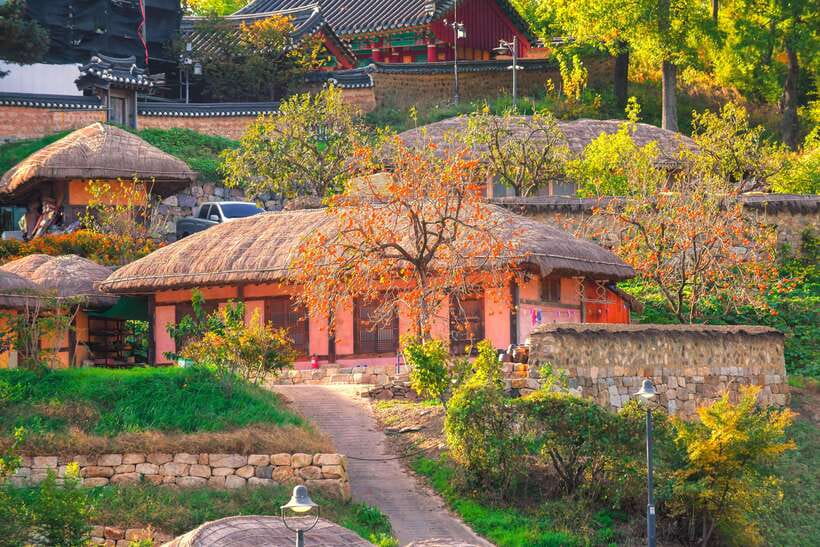
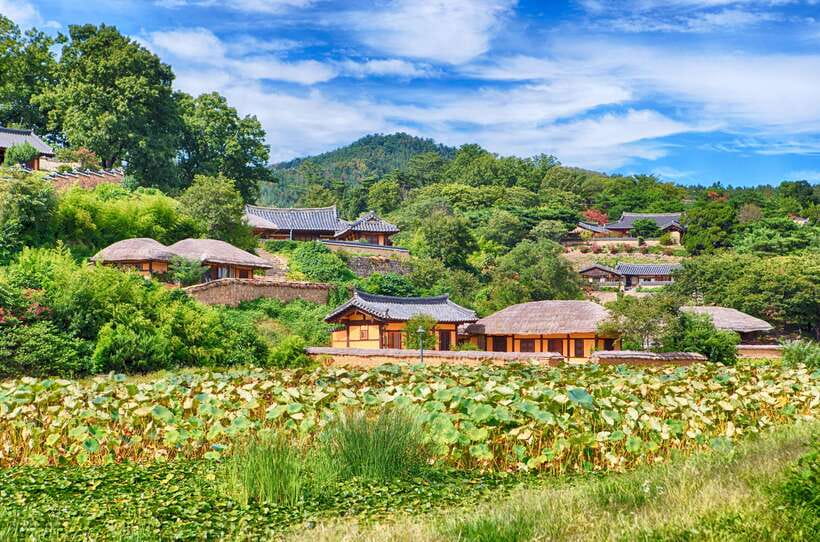
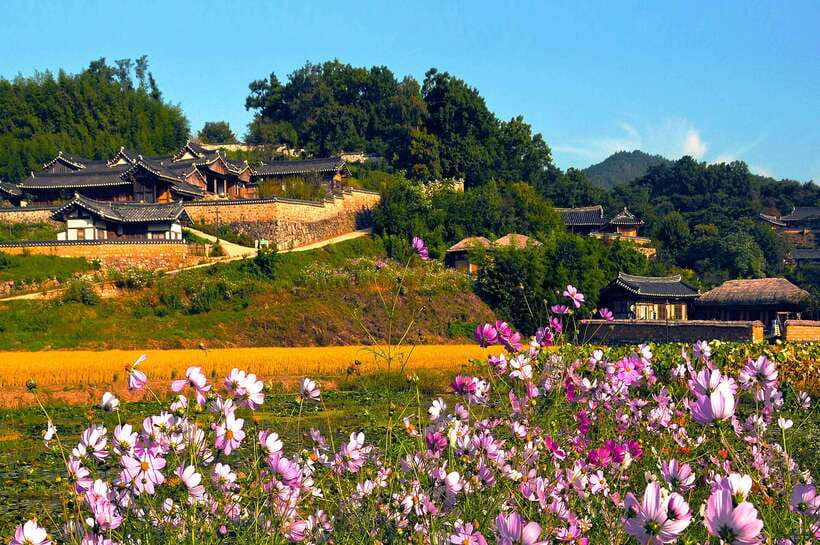
Package A visits Yangdong Folk Village after Bulguksa. This UNESCO World Heritage site is known for traditional Korean hanok houses and the setting of an old Joseon-period village. It gives the day a useful contrast: Bulguksa takes you back to Silla Buddhism, while Yangdong shows a later period of Korean family life and social order.
The stop lasts about 90 minutes. You can expect a guided walk through the village area, with time to look at tiled roofs, wooden homes, lanes, and the surrounding hills. The value here is not just the appearance of the buildings. The layout helps you picture how a traditional Korean village functioned, with homes, status, family lines, and daily routines tied to place.
Yangdong is not the most convenient stop to reach independently from Busan, which is one reason this package earns its higher practical value. The coach removes a fair amount of planning.
Package A includes the Yangdong Village entrance fee and the Daereungwon Cheonmachong Tomb entry fee. It also includes admission to Donggung and Wolji later in the day. Those inclusions matter when comparing the three routes.
Package B: Gyochon Village and Gyeongju family history
Package B replaces Yangdong with Gyeongju Gyochon Traditional Village. The stop lasts about 100 minutes and focuses on the old homes of the Gyeongju Choi clan. It is a good choice if you want a closer look at local heritage within the historic city itself.
Gyochon is less about a broad rural village setting and more about the connection between prominent family homes and Gyeongju’s long social history. A guide can help explain why the preserved houses matter instead of leaving you to judge them only as photogenic old buildings.
I would choose Package B if you want the most balanced mix of temple, historic neighborhood, tombs, street food, and evening scenery. It gives you a traditional village experience without the longer-feeling rural stop of Yangdong, though the final choice depends on your interest in architecture and village life.
As with Package A, the route includes Daereungwon, Hwangnidan Street, Woljeong Bridge, and Donggung Palace and Wolji Pond. Admission to Donggung and Wolji is included for Package B.
A different way to spend a day from here:
- Busan: Gyeongju Guided Day Trip to Three Kingdoms Capital
★ 4.8 · 1,925 reviews - Small Group Full Day Busan Tour (Max 6 Pax)
★ 5.0 · 1,464 reviews - Busan Private Tour with licensed tour guide + private vehicle
★ 5.0 · 1,143 reviews - Busan: Coastal Treasures Beach Train, Culture Village & More
★ 4.7 · 832 reviews
Daereungwon: walking among Silla royal tombs
All three packages visit Daereungwon Royal Tomb Complex, with about 75 minutes for the stop. The site is immediately recognizable by its large, rounded grassy burial mounds. These are not ordinary small graves. They are royal tombs from the Silla period, and their scale gives you a visual sense of the power held by the ancient court.
The Cheonmachong Tomb entry is included in Packages A and B. That detail is important because it gives you an interior look at one of the tombs rather than viewing only the mounds from outside.
The walking here is easier than at Bulguksa in some places, but you still spend a good amount of time outdoors. The open grass, curved paths, and rounded tombs make Daereungwon one of the day’s best photo stops. I would save a little energy for it because the tomb complex arrives after the first major sites, when tired feet begin to make themselves known.
Hwangnidan Street: a short break in modern Gyeongju
The old and new sides of Gyeongju meet on Hwangnidan Street. You get about 30 minutes of free time among cafés, small shops, street food vendors, and renovated traditional-style buildings.
Thirty minutes is enough for a quick drink, a snack, or a few photographs. It is not enough for a leisurely meal and serious shopping, so keep expectations sensible. This stop works best as a change of pace after temples and tombs.
Food is not included in the tour. Some groups stop at a restaurant for an affordable traditional Korean meal, and meal choices may sometimes be discussed on the bus for an additional cost. Vegetarian choices may be limited, so tell the operator about dietary needs before the day if possible. The supplied information confirms that meals are separate, but not a fixed restaurant or menu.
Woljeong Bridge after dark
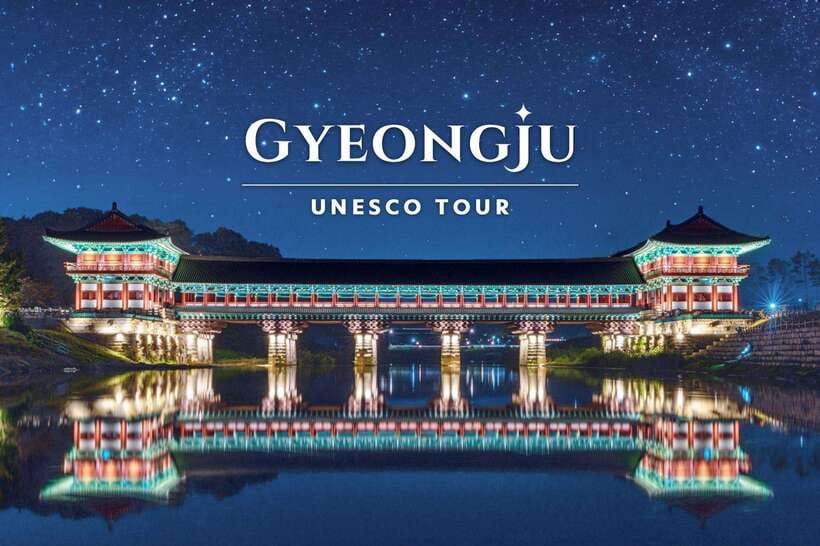
Packages A and B continue to Woljeong Bridge, a beautifully reconstructed wooden bridge crossing the Nam River. The visit is listed as a 20-minute photo stop, and the evening lighting is the main reason it earns a place on the route.
Do not expect a long historical walk here. The bridge is primarily a scenic pause, giving you time to photograph its structure and reflections. The short stop also shows how the tour manages a packed schedule: you see the key view, then move on before the group loses too much time.
The night setting changes the feel of the day. After hours of stone, wood, earth, and museum-style history, the illuminated bridge provides a clean, dramatic image. Bring a phone or camera with enough battery, since this is one of the stops where guides often point out the best photo angles.
Donggung Palace and Wolji Pond: the strongest finish
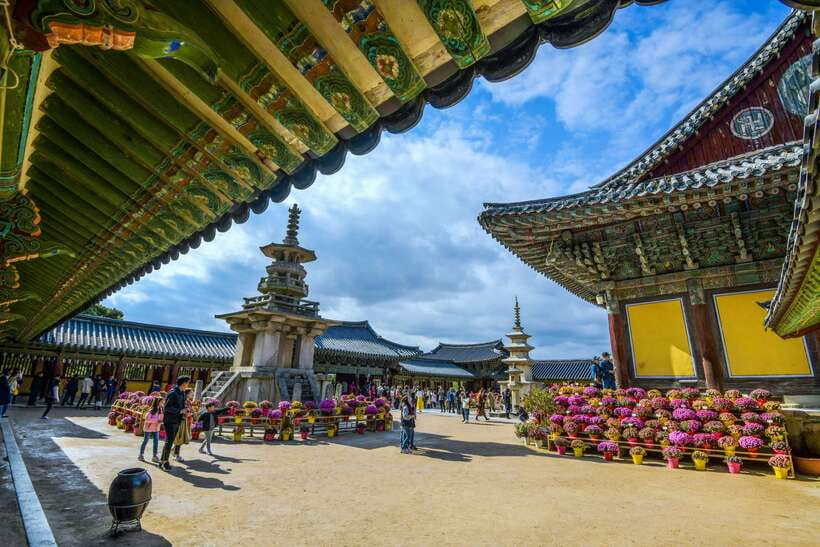
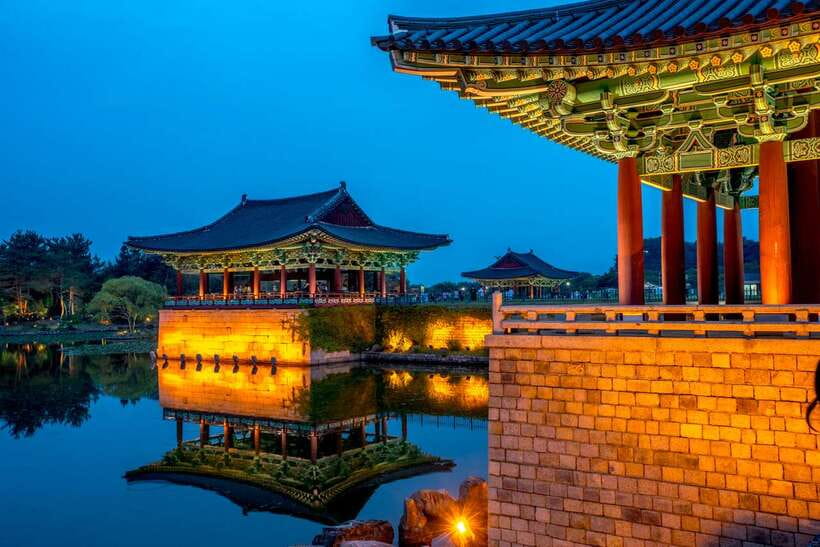
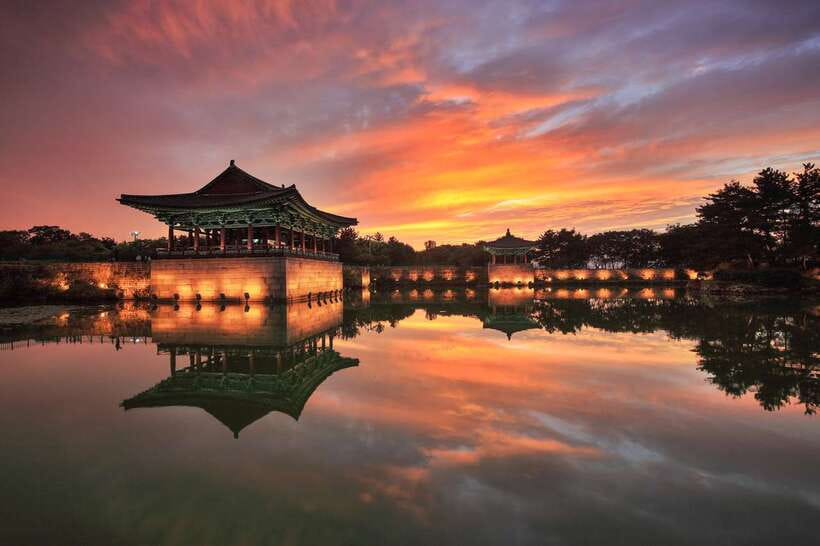
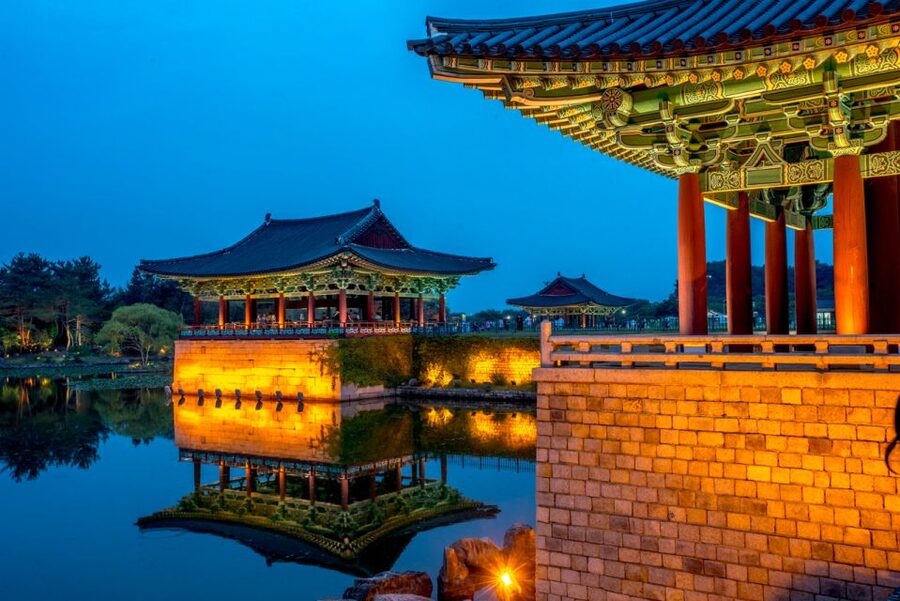
The final major stop for Packages A and B is Donggung Palace and Wolji Pond, with about an hour for sightseeing. The pond was once part of the Silla palace complex, and its nighttime reflections give the site a calm, almost theatrical quality.
This is the tour’s most atmospheric moment. The palace buildings, water, and lights come together in a way that feels different from daytime temple viewing. If you are choosing between a daytime-only Gyeongju outing and this schedule, the evening finish gives the trip a memorable closing scene.
The drawback is timing. You reach the pond after a full day of travel and walking, and the exact arrival time depends on traffic, weather, and how smoothly the group moves. Still, the late finish is part of the appeal, not a flaw, if you want to see Gyeongju after sunset.
Admission to Donggung and Wolji is included in Packages A and B. Package C follows a different ending, so check the route before booking.
Package C: a museum-centered alternative
Package C is designed for people who prefer objects and indoor interpretation to a second traditional village. It includes Bulguksa, free time around Hwangnidan Street and the Daereungwon Tomb Complex area, and Gyeongju National Museum.
The museum stop lasts about an hour. It houses important Silla artifacts, including golden crowns and Buddhist relics. This route is the clearest choice if you want to see the material remains of the kingdom after hearing about its rulers, temples, and customs during the day.
The tradeoff is that Package C does not follow the same evening sequence as Packages A and B. The supplied route places the National Museum at the end rather than listing Woljeong Bridge and Donggung Palace and Wolji Pond. If the famous night reflections are your main reason for visiting Gyeongju, choose A or B instead.
Package C may also suit you better in poor weather because a museum offers shelter and a more focused viewing experience, though the wider itinerary remains subject to traffic and weather conditions.
Guides, languages, and the pace of the day
Live guidance is available in English, Chinese, and Korean. The operator may use more than one guide for a multilingual group. English-speaking guides named in the supplied information include Bobby Kim, Jun-a, Olivia, Song, Brian, Victoria, Rico, and Charles Lee, while Chinese-speaking support has included guides such as Alice, Lena, Lan, and Mike. Names and assignments can change from one departure to another.
The strongest part of the guiding style is practical help. Guides have taken group photographs, suggested good camera positions, explained sites before entry, and helped older members with stairs. Several guides are also noted for humor, which matters on a long day when everyone is watching the clock.
The schedule is tight but not purely a march from bus to bus. Most stops include a guided explanation followed by time to explore alone. That combination suits you if you want historical background but also want to take your own photographs without a guide talking every second.
The group can include up to 43 people. Stay alert for the guide’s meeting instructions at each stop, especially at busy Hwangnidan Street and during holiday periods. Chuseok crowds can make popular sites much slower, and traffic may extend the return to Busan.
Transport, pickup points, and the real time commitment
Pickup is available at six listed locations, including Seomyeon Station Exit 12, Haeundae Station Exit 5, Haeundae Station, and KTX Busan Station Exit 1. The exact meeting point depends on the option you book, so check your confirmation carefully rather than assuming the closest-looking station is correct.
The coach ride to Gyeongju takes about 100 minutes, with a similar ride back to Busan. A comfortable bus makes a meaningful difference, since the round trip alone takes more than three hours.
The full outing lasts 8 to 12 hours. That range reflects traffic, the selected route, weather, group size, and the evening schedule. Build no important evening reservation immediately after the tour unless you are comfortable with a late return.
Wear shoes you can walk in for a full day. Bring water, a light layer, and phone battery power. A stroller requires advance notice at least 48 hours before departure, and children aged 0 to 2 can ride free if they do not occupy a seat.
Is $52 a fair price?
Yes, for the amount of ground covered. A $52 tour that includes a return coach from Busan, a live multilingual guide, and several admission fees saves you the cost and effort of arranging multiple transfers.
The value is strongest for first-time visitors who want the main Gyeongju sights in a single day. It is less compelling for you if you prefer lingering for hours at one temple, eating slowly, or setting your own pace. This is a sightseeing circuit, not a private historical retreat.
Remember to budget for lunch, drinks, snacks, and personal purchases. Package A includes Yangdong and Cheonmachong entry, while Packages A and B include Donggung and Wolji admission. Package C has a different focus, so compare the included stops rather than choosing only by price.
Should you book this Gyeongju day tour?
Book it if you are based in Busan, have one free day, and want a clear introduction to Silla-era Gyeongju without managing regional transport. I would choose Package A for traditional village scenery, Package B for the most balanced city-and-culture route, and Package C if golden crowns, Buddhist relics, and museum displays matter more than the illuminated palace pond.
Skip it if you dislike early starts, long coach rides, group schedules, or substantial walking. For everyone else, the combination of Bulguksa, royal tombs, a traditional village or museum, Hwangnidan Street, and the evening sights gives you a lot for $52. Free cancellation up to 24 hours ahead and reserve-now, pay-later terms also make it a low-risk way to fit Gyeongju into a Busan stay.
FAQ
How long does the tour from Busan to Gyeongju last?
The experience lasts about 8 to 12 hours. The coach journey takes roughly 100 minutes each way, and traffic or weather can affect the final return time.
What are the three package choices?
Package A visits Yangdong Village, Bulguksa Temple, Daereungwon and Hwangnidan Street, Woljeong Bridge, and Donggung and Wolji. Package B substitutes Gyeongju Gyochon Traditional Village for Yangdong. Package C visits Bulguksa, Hwangnidan Street and the Daereungwon area, and Gyeongju National Museum.
Is lunch included?
No. Meals are not included. An affordable traditional Korean restaurant stop may be available, and meal choices may sometimes be arranged on the bus for an additional cost.
Which languages are available?
Live guidance is available in English, Chinese, and Korean. The group may have separate guides supporting different languages.
Where does the bus leave from?
Listed pickup points include Seomyeon Station Exit 12, Haeundae Station Exit 5, Haeundae Station, and KTX Busan Station Exit 1. Your exact meeting point depends on the option booked.
Are entrance fees included?
Yangdong Village and the Daereungwon Cheonmachong Tomb entry are included with Package A. Donggung and Wolji admission is included with Packages A and B. Package C has its own museum-focused route.
What should I bring?
Bring comfortable shoes. You should also be ready for a full day outdoors, walking between historic sites, and an itinerary that may change slightly because of weather and traffic.
Recently added around Busan
- Full Day Busan and Gyeongju Guided Tour★ 5.0 · 4 reviews
- Andong Hahoe Folk Village Day Tour From Busan★ 5.0 · 4 reviews
- Make your own Makgeolli (Rice Wine) in Busan★ 5.0 · 4 reviews
- Best Busan night views : Mountain observatory streets★ 5.0 · 4 reviews
- Busan: Naejangsan National Park Autumn Foliage One Day Tour★ 4.8 · 4 reviews
- Gyeongju private tour with an official tour guide (Unesco)★ 4.5 · 4 reviews
- 5 Highlights Pohang Tour from Busan (Group Tour)★ 5.0 · 5 reviews
- Busan: Winter Healing Park and (Gyeongju/Daegu) One Day Tour★ 5.0 · 5 reviews
Busan Tours, compared.
Gyeongju Guided Day Trip to Three Kingdoms Capital
Read the review →
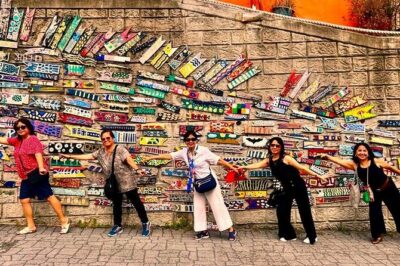
Busan Private Tour with licensed tour guide + private vehicle
Read the review →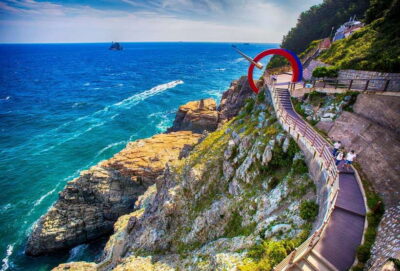
Coastal Treasures Beach Train, Culture Village & More
Read the review →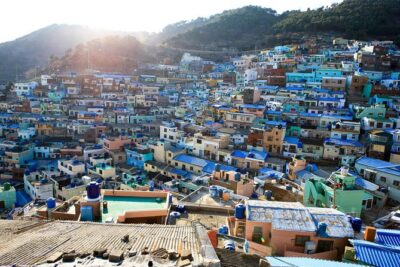
Busan’s Cultural Wonders with Beach Train & Gamcheon Village etc
Read the review →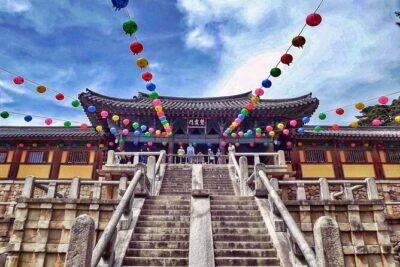
Gyeongju UNESCO World Heritage Guided Day Tour from Busan
Read the review →
Private Busan Tour -Explore Cultural Landmarks with a Local Guide
Read the review →
Old Korea Thousand History Tour of Gyeongju from Busan
Read the review →Browse the lists this tour appears in