
Reviewed · BUSAN TOURS
Make your own Makgeolli (Rice Wine) in Busan
Busan’s best food experiences do not always happen at a market stall. In this 90-minute makgeolli class, you learn how rice, water, and Korean fermentation starters become one of the country’s most traditional drinks. I like the guided tasting of several less common Korean alcohols, and I like that you actually process rice and make a batch rather than simply watching a demonstration. The class is taught in English by professional brewer Michelle, who studied with Korean master brewers.
The price is reasonable at $35.04 per person, especially since it covers instruction, tastings, ingredients, and something to continue at home. The main drawbacks are the fourth-floor stairs and the small group’s fixed 1 p.m. start. If you have heavy luggage or trouble with stairs, plan ahead.
Key points
- English-language brewing class: Michelle explains Korean alcohol and fermentation without requiring previous brewing experience.
- Several drinks to taste: Compare makgeolli, takju, yakju, and soju, including styles beyond standard convenience-store bottles.
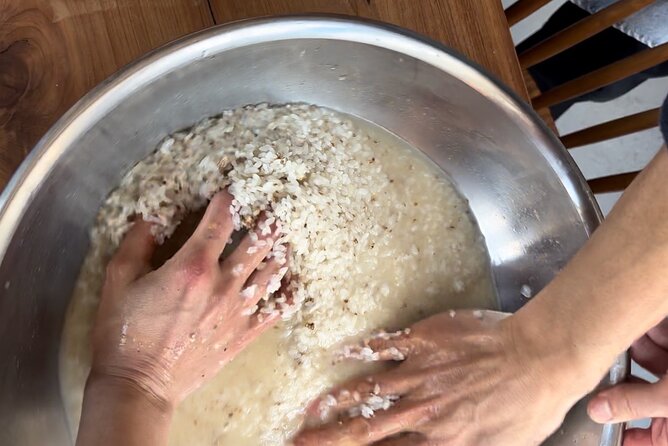
- Hands-on rice preparation: You help process the rice and add the enzymes used in Korean alcohol.
- Take-home brewing option: Keep a container to continue fermentation at home, or receive a bottle of prepared makgeolli if you are traveling onward.
- Small group setting: The class accepts a maximum of 15 people, which keeps the demonstration manageable.
- Near Gwangalli Beach: The brewery is at 5 Namcheondong-ro 16beon-gil in Suyeong-gu, with public transportation nearby.
Why Make Makgeolli in Busan?
Makgeolli is often introduced as Korea’s milky rice wine, but that quick label misses much of the fun. It is a fermented rice drink with a cloudy appearance, gentle sweetness, and a tang that can vary from bottle to bottle. It is also part of a larger Korean alcohol tradition that includes several distinct drink styles.
This class gives you a way to understand those differences through both explanation and tasting. You do not simply hear that Korean alcohol comes in several forms. You try examples of makgeolli, takju, yakju, and soju, then learn how their methods and results differ.
I like this approach because it links the cultural background to something you can taste. A short talk about fermentation can feel abstract. A tasting makes the lesson immediate. You can compare texture, strength, and flavor while the brewer explains what produced those differences.
The setting near Gwangalli Beach also makes sense for a Busan itinerary. The activity does not take a full afternoon, so you can fit it between sightseeing plans. It ends where it begins, making it easier to continue toward the beach or another part of Suyeong-gu afterward.
A few more Busan half-days to weigh up
- 4-Hours Hiking and Tasting Rice Wine in the Mountain of Busan
★ 5.0 · 79 reviews - Busan: Hiking and Tasting Rice Wine in the Hidden Village
★ 4.9 · 74 reviews - Seoul: Kimchi Dishes Cooking Class with Wine Pairing
★ 4.7 · 38 reviews
Meeting Michelle, the English-Speaking Brewer
The class is led by Michelle, a professional brewer with food and beverage experience in the United States. She also studied traditional Korean alcohol under Korean master brewers, so the class connects professional brewing knowledge with Korean methods.
That background matters for an English-speaking activity. You can ask questions about the process without relying on a translated handout or guessing at technical terms. You also get a person who can explain both the practical steps and the cultural meaning behind the drink.
No brewing experience is needed. The ingredients and instructions are supplied, and the process is presented as a guided workshop rather than an advanced technical course. I would choose this class for a first encounter with fermentation, particularly if you enjoy food traditions but do not want a long or demanding course.
The group can include up to 15 people. That is not a private lesson, but it is still small enough for a clear demonstration and direct help during the hands-on portion. The strongest praise for the class centers on Michelle’s friendly teaching and the way she explains the brewing process in detail.
The Opening Tasting: Makgeolli, Takju, Yakju, and Soju
The first major part of the class introduces Korean traditional alcohol. You learn about makgeolli, takju, yakju, and soju, then taste several examples.
This is one of the best reasons to book instead of simply buying a bottle at a shop. Convenience stores are useful, but their selection tends to favor familiar mass-produced brands. Here, the tasting includes different types and more distinctive examples, giving you a better sense of how broad the category can be.
Makgeolli is the focus, but the other drinks provide useful context. The class explains what makes these rice-based alcohols different from one another and from other drinks. That comparison helps you understand why a clear or stronger Korean spirit belongs to the same wider tradition as a cloudy fermented rice drink, yet is made and served differently.
The tasting also lets you find out what you actually like. Some visitors arrive knowing only one sweet, pale makgeolli. After trying several types, you may prefer a drier, more tart, or more textured style. I would pay close attention here and ask Michelle which bottles or breweries are worth seeking out later in Busan.
The tasting is a cultural lesson, but it is still an alcohol activity. If you are sensitive to alcohol or prefer not to drink, the class may not be the right fit. The supplied information does not specify the number or size of pours, so you should not assume this is a full tasting session with large servings.
Processing Rice and Starting Your Own Batch
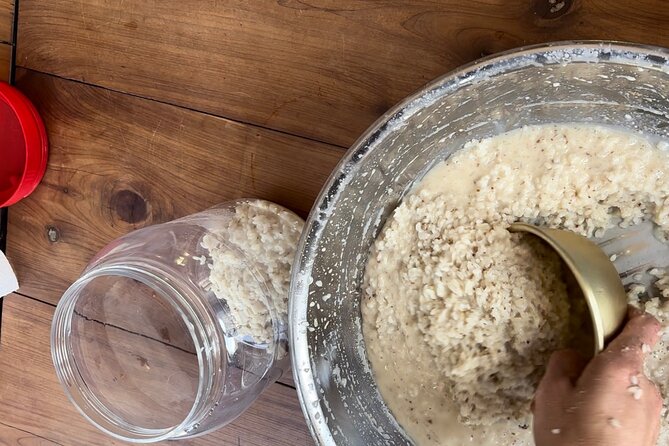
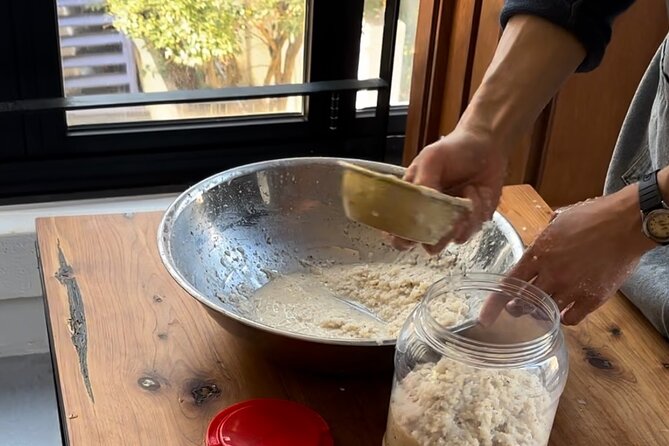
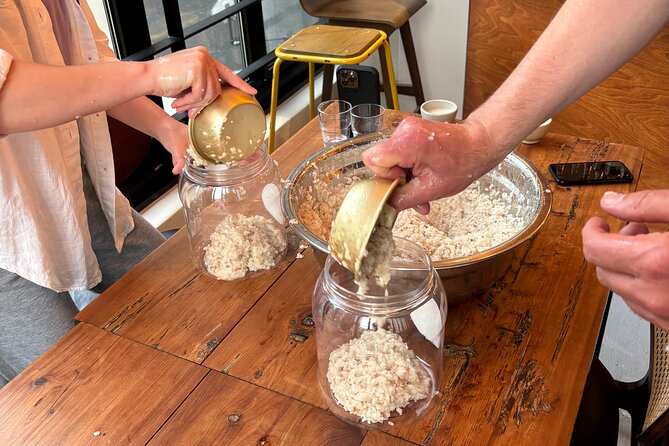
After the introduction and tasting, you make makgeolli yourself. The work begins with processing rice, then moves to incorporating the enzymes that make Korean fermentation possible.
This is the part that turns the class from a lecture into an experience. You see that makgeolli is not simply rice mixed with alcohol. The rice must be prepared, and the fermentation depends on Korean ingredients and methods that shape the final drink.
The class provides everything you need. You do not have to bring equipment, ingredients, or previous brewing knowledge. Instructions are given as you work, so this suits curious beginners as well as people who already enjoy home fermentation.
The process also gives you a better appreciation for timing. You make the batch during the class, but it is not ready to drink immediately. The information provided says that after about one week, you can enjoy your own craft makgeolli at home. That waiting period is part of the lesson. Fermentation asks for patience, not just mixing and pouring.
The workshop is approximately one hour and 30 minutes, so expect a focused introduction rather than a complete professional brewing course. You will learn the basic process and start a batch, but the class does not promise advanced instruction in sanitation, long-term storage, recipe development, or troubleshooting.
A different way to spend a day from here:
- Busan: Gyeongju Guided Day Trip to Three Kingdoms Capital
★ 4.8 · 1,925 reviews - Small Group Full Day Busan Tour (Max 6 Pax)
★ 5.0 · 1,464 reviews - From Busan: Gyeongju UNESCO World Heritage Guided Day Tour
★ 4.8 · 1,250 reviews - Busan Private Tour with licensed tour guide + private vehicle
★ 5.0 · 1,143 reviews
Taking the Fermentation Home
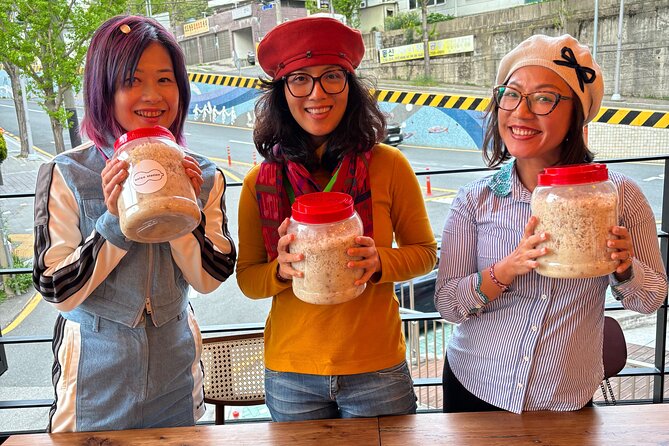
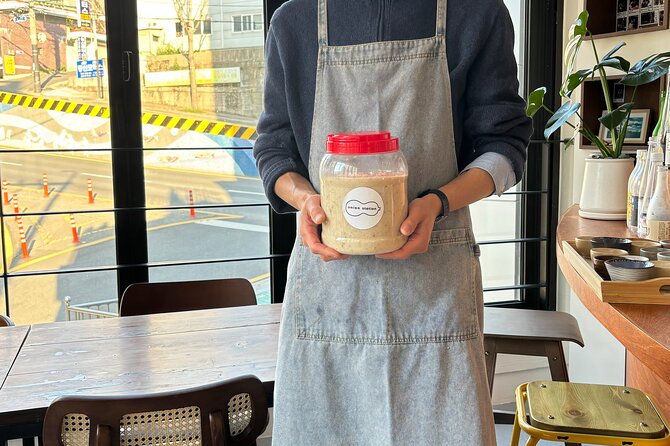
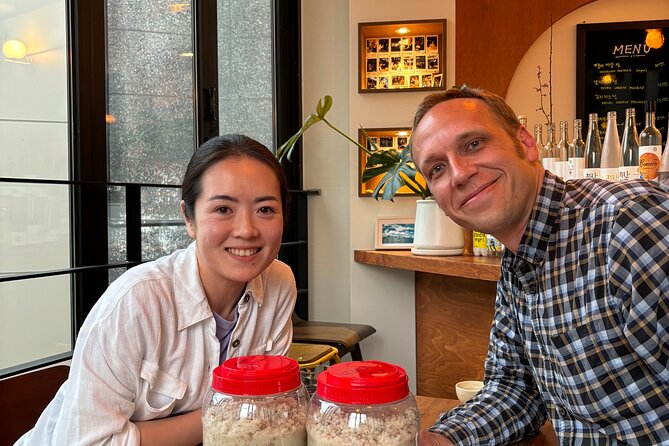
At the end, you have a choice. You can take home a container and continue brewing, or receive a bottle of makgeolli made at the brewery.
The container is the more interesting option if you are staying in Busan or returning home soon and want to continue the process. You leave with something that still needs attention, which makes the experience last beyond the afternoon. The class is therefore not just a tasting, but a small introduction to home brewing.
The prepared bottle makes more sense if you are moving from city to city. Fermentation can be awkward in a suitcase, and an unfinished container may not be convenient during a long journey. The option of a ready-made bottle means you can still enjoy the result without trying to manage the brewing process while traveling.
One practical note says the take-home amount is small and can be taken home by plane. Since airline and customs rules vary, check the rules that apply to your route before relying on that option. The information does not give a precise container size or packaging method, so ask the host if you have a flight soon after the class.
The one-week timing also matters. If you are in Busan only briefly, you will not be able to drink the batch during your stay. In that case, choose the prepared bottle or arrange your schedule so the container can travel safely and be monitored after you leave.
The Location Near Gwangalli Beach
The meeting point is 5 Namcheondong-ro 16beon-gil, in Suyeong-gu, close to Gwangalli Beach. Public transportation is nearby, but the information does not identify a particular subway exit or bus route. Use the exact address and allow time to find the building.
The class takes place on the fourth floor, and you need to use stairs. This is an important detail if you have limited mobility, are unsure on stairs, or are carrying large bags. Service animals are allowed, but the stairs may still affect whether the experience is comfortable for you.
Because the activity begins at 1 p.m. and ends back at the meeting point, it fits neatly into a day in eastern Busan. You might schedule it before an evening at Gwangalli Beach, though you should leave enough time to arrive without rushing. The class itself lasts about 90 minutes, but you should add time for transport and locating the entrance.
A mobile ticket keeps the entry process simple. Confirmation is sent within 48 hours of booking, subject to availability, so do not wait until the last minute if your Busan dates are fixed. The activity is booked an average of 23 days ahead, another sign that advance planning is sensible.
Is $35.04 a Fair Price?
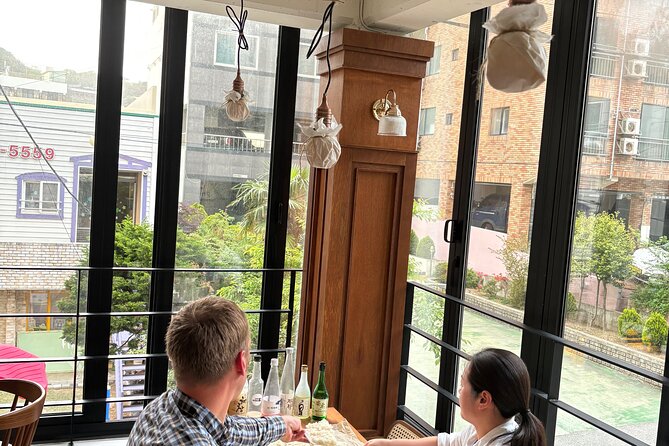
At $35.04, the class offers more than a single drink. The price includes the alcohol introduction, several tastings, guided instruction, ingredients, and a brewing project. You also receive either a container for continued brewing or a bottle of prepared makgeolli, depending on your travel plans.
I consider that good value for someone who wants context as well as flavor. Buying a bottle is cheaper, but a bottle will not show you how the drink is made or help you compare Korean alcohol styles with a professional brewer.
The value is less clear if you mainly want a large amount of alcohol. This is a small educational workshop, not a drinking party. The session is short, the group may contain as many as 15 people, and the take-home amount is limited.
The class earns its price through access and explanation. An English-speaking brewer who has studied traditional methods is not easy to find in Busan. For visitors interested in Korean food, fermentation, or craft drinks, the instruction is the main purchase. The alcohol is the enjoyable part that makes the lesson easier to remember.
Who Will Enjoy This Class Most?
I would recommend this activity to several kinds of visitors:
- People who enjoy Korean food and want to understand a traditional drink beyond the label.
- First-time brewers who want a guided introduction without buying equipment.
- Visitors interested in fermentation and the role of enzymes in food and drink.
- Couples, friends, or small groups looking for a hands-on activity near Gwangalli Beach.
- Anyone who wants an English-language cultural class in Busan.
- Visitors with enough time to carry home a bottle or continue a one-week fermentation process.
It is less suitable if you dislike alcohol, need a fully step-free venue, or are traveling with heavy luggage. It may also frustrate visitors who expect a long master class or a large tasting. The format is compact and introductory.
A useful bonus is the local advice. Michelle has offered recommendations for other places to visit around Busan, which can help you build the rest of your day. That kind of conversation is especially useful when you want more than the standard sightseeing route.
Booking, Timing, and Cancellation
The start time is 1 p.m., and the activity returns to the meeting point. The maximum group size is 15, and booking confirmation arrives within 48 hours if space is available.
Free cancellation is available until 24 hours before the local start time. Cancel at least 24 hours ahead for a full refund. Changes or cancellations made inside that window are not accepted for a refund, and the activity requires a minimum number of participants. If the provider cancels because that minimum is not met, you are offered another date or experience, or a full refund.
I would book this a few weeks ahead, particularly for a weekend or a short Busan visit. The average booking lead time is 23 days, so leaving it until arrival may not work.
Should You Book Make Your Own Makgeolli in Busan?
Book this class if you want to taste Korean alcohol with some understanding of how it is made. The combination of an English-speaking professional brewer, several traditional drink styles, hands-on rice processing, and a take-home option gives you a useful experience in a short period.
I would skip it if you are looking only for a cheap drink, cannot manage fourth-floor stairs, or have no way to handle a brewing container after class. For most food-minded visitors, though, $35.04 is a fair price for a personal introduction to makgeolli that continues after you leave the brewery.
FAQ
Where does the makgeolli class meet?
The class meets at 5 Namcheondong-ro 16beon-gil, Suyeong-gu, Busan, South Korea. The brewery is close to Gwangalli Beach and near public transportation.
What time does the activity start?
The class starts at 1 p.m. and ends back at the meeting point.
How long does the class last?
The activity lasts approximately one hour and 30 minutes.
Is the class taught in English?
Yes. It is described as the only English-speaking makgeolli-making class in Busan, and the professional brewer teaches the class in English.
Do I need previous brewing experience?
No. Previous brewing experience is not required. The ingredients, equipment, and instructions are provided.
What Korean drinks will I taste?
The class includes an overview and tasting of makgeolli, takju, yakju, and soju, along with different types of Korean alcohol.
Can I take makgeolli home after the class?
Yes. You can choose a container to continue brewing at home or receive a bottle of makgeolli made at the brewery. If you take the brewing container, the batch is expected to be ready after about one week.
Recently added around Busan
- Full Day Busan and Gyeongju Guided Tour★ 5.0 · 4 reviews
- Andong Hahoe Folk Village Day Tour From Busan★ 5.0 · 4 reviews
- Best Busan night views : Mountain observatory streets★ 5.0 · 4 reviews
- Busan: Naejangsan National Park Autumn Foliage One Day Tour★ 4.8 · 4 reviews
- Gyeongju private tour with an official tour guide (Unesco)★ 4.5 · 4 reviews
- 5 Highlights Pohang Tour from Busan (Group Tour)★ 5.0 · 5 reviews
- Busan: Winter Healing Park and (Gyeongju/Daegu) One Day Tour★ 5.0 · 5 reviews
- Full Day Private car tour to UNESCO Gyeongju&Yangdong village★ 5.0 · 5 reviews
Busan Tours, compared.

Gyeongju Guided Day Trip to Three Kingdoms Capital
Read the review →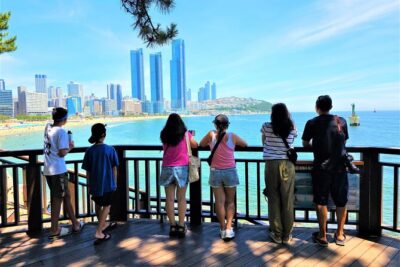
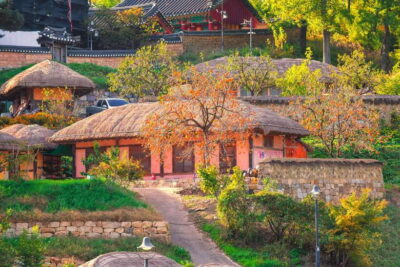
Gyeongju UNESCO World Heritage Guided Day Tour
Read the review →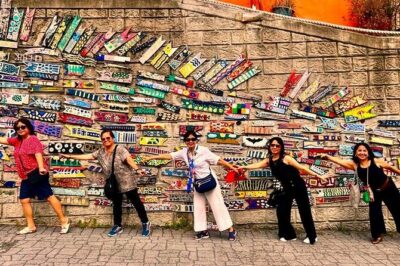
Busan Private Tour with licensed tour guide + private vehicle
Read the review →
Coastal Treasures Beach Train, Culture Village & More
Read the review →
Busan’s Cultural Wonders with Beach Train & Gamcheon Village etc
Read the review →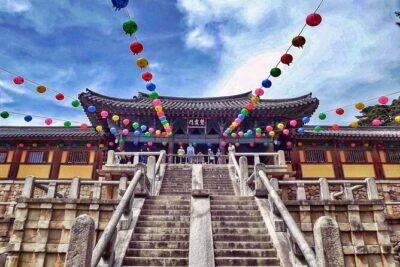
Gyeongju UNESCO World Heritage Guided Day Tour from Busan
Read the review →
Private Busan Tour -Explore Cultural Landmarks with a Local Guide
Read the review →Browse the lists this tour appears in