
Reviewed · GYEONGBOKGUNG PALACE TOURS
Layover tour to Gyeongbokgung-Folk Museum-Bukchon-Insadong
A short layover can feel like a poor excuse for leaving an airport. This tour makes a better case. In six hours, you move from Incheon Airport into central Seoul for Gyeongbokgung Palace, the National Folk Museum, Bukchon Hanok Village, Insadong, and Jogyesa Temple, then return to Seoul Station to catch the airport train.
I like two things here. First, the guide does more than point at pretty roofs. The tour uses Confucian ideas and Joseon-era architecture to explain why the buildings look the way they do. Second, the route covers several sides of Seoul in one outing: royal Korea, ordinary household life, traditional homes, Buddhist practice, and the modern city around them.
The main drawback is the clock. Six hours sounds generous until you add airport procedures, train connections, walking, and several scheduled stops. You need a long enough layover and a willingness to keep moving. This is a private tour for one group, priced at $254 per group, so it makes the most sense when shared by several people.
Key Points Before You Book
- Gyeongbokgung is the main event: You spend about two hours at Joseon Korea’s first and largest palace.
- Paul Koo guides in English: He focuses on Confucianism, architecture, history, and the meaning behind what you see.
- AREX keeps the route practical: The airport train connects Incheon with Seoul Station, with an express option when timing and availability work.
- Bukchon supplies the memorable city view: Traditional hanoks appear alongside Seoul’s modern buildings and N Seoul Tower.
- Insadong adds a slower cultural finish: The area includes Jogyesa Temple, the headquarters of Korea’s main Buddhist organization, and an hour for exploring.
- This is a private, tightly timed outing: Transportation and Gyeongbokgung admission are included, but food, drinks, and insurance are not.
Why This Layover Route Works
The route is built around architecture, not just sightseeing. That matters because Gyeongbokgung, Bukchon, and Jogyesa can otherwise blur into a parade of old buildings. Your guide explains how Joseon Confucian values shaped palace design and daily life, giving you a useful key for the rest of your time in Korea.
I especially like the contrast between stops. At Gyeongbokgung, you see the state and royal court. At the Folk Museum, you shift to births, marriages, illness, work, seasonal customs, and death. Bukchon shows how traditional homes fit into a living neighborhood, while Insadong brings you back to Seoul’s contemporary cultural center.
The private format is another practical advantage. Your group does not need to wait for strangers, and the guide can keep the pace suited to your flight schedule. The tradeoff is price. At $254 for the group, this is not a bargain for a solo passenger. For two, three, or four people, the per-person cost becomes much easier to justify, especially since the listed transportation and palace admission are covered.
More Museums in Seoul
- Seoul: War Memorial of Korea Private Guided Museum Tour
★ 4.9 · 29 reviews - DMZ Tour + The War Memorial of Korea Museum
★ 5.0 · 28 reviews - Color Pool Museum
★ 4.0 · 22 reviews
Meeting Paul Koo at Incheon Airport
The tour begins at Incheon International Airport. You choose the meeting time after booking, and the guide meets you inside the airport before taking you toward Seoul Station.
Paul Koo is the named guide for this experience. He has studied Seoul’s culture and history for more than 10 years, with particular strength in Confucianism and traditional architecture. That background fits this route well. You are not simply being led from gate to gate. You are being given the historical framework needed to understand the buildings.
The airport meeting is useful for first-time visitors because you do not need to work out the airport rail system alone. Paul escorts you to Seoul Station at the end as well. The tour finishes at Seoul Station’s airport rail area, where you continue independently to Incheon Airport.
Before booking, send a clear request for your preferred time and wait for confirmation of the guide. The meeting time is flexible, but it still needs to fit train schedules and your onward flight.
AREX From Incheon to Seoul Station
The airport-to-city transfer takes about 1.5 hours in the stated schedule. The exact ride depends on which train you use.
The AREX express train normally runs about once an hour and uses reserved seats. It is more comfortable and quicker, but seats can sell out during busy periods. The tour includes the return airport train arrangement, and the guide buys the necessary ticket according to the plan.
If waiting more than 20 minutes for an express train would waste valuable tour time, the group may use the regular train instead. The normal service takes about one hour to Seoul, only around 20 minutes longer than the express option. That is a sensible choice on a short layover. A train is useful only if it gets you into Seoul with enough time left to see the sights.
The tour description says transportation costs from the start at Incheon through the tour and back to the airport are included. Food and drinks are not included, and neither is travel insurance. Since the final handoff is at Seoul Station, keep your luggage plan simple and make sure you know what you will do with bags during the city portion.
Gyeongbokgung, Seoul’s Joseon Centerpiece
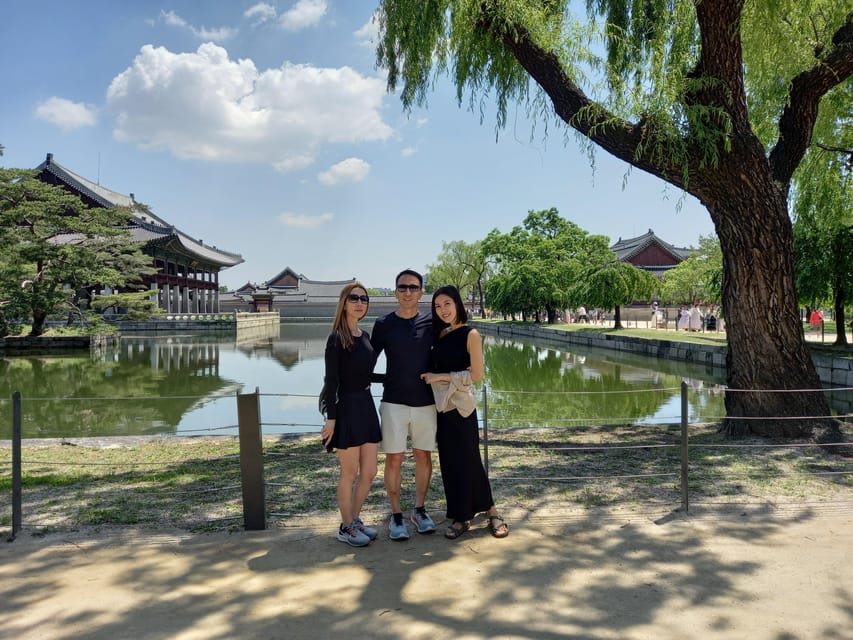
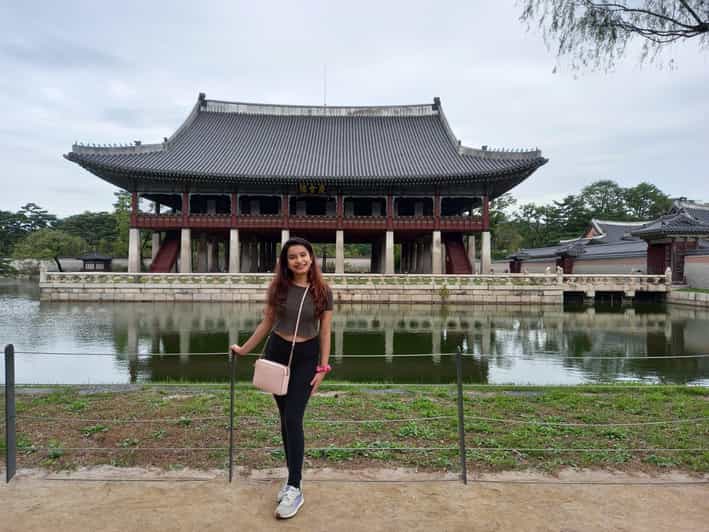
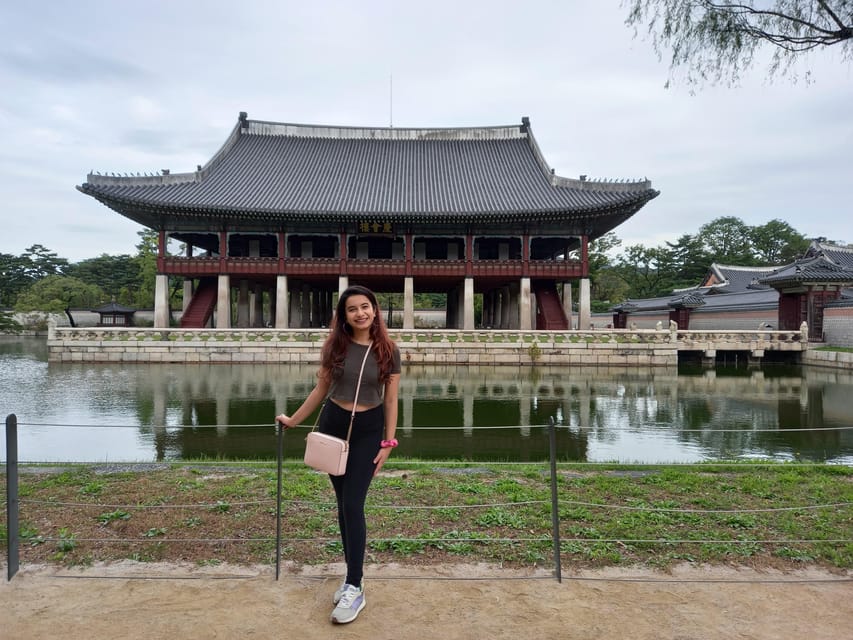
You spend about two hours at Gyeongbokgung Palace, the heart of the tour. It was built in 1395 as the main palace of the Joseon Dynasty and is the largest of Seoul’s palaces. Its position on relatively flat ground and its traditional palace layout make it especially important for understanding Korean royal architecture.
The guide’s discussion of Confucianism is the useful part here. Joseon society was shaped by Confucian principles, and those ideas influenced the arrangement of official spaces, court life, rank, and ceremony. Once you understand that, the palace becomes more than a collection of painted wooden halls and tiled roofs.
I would give this stop your best attention. It is the place where the tour’s themes come together: political power, religion, architecture, and Korean cultural identity. Two hours gives you enough time for a guided look without turning the palace into an exhausting full-day visit.
The site is also the most exposed part of the outing. You will be outside and walking across a large complex, so comfortable shoes and weather-appropriate clothing matter. The tour moves on a schedule, and you should not expect unlimited time for every courtyard or photo stop.
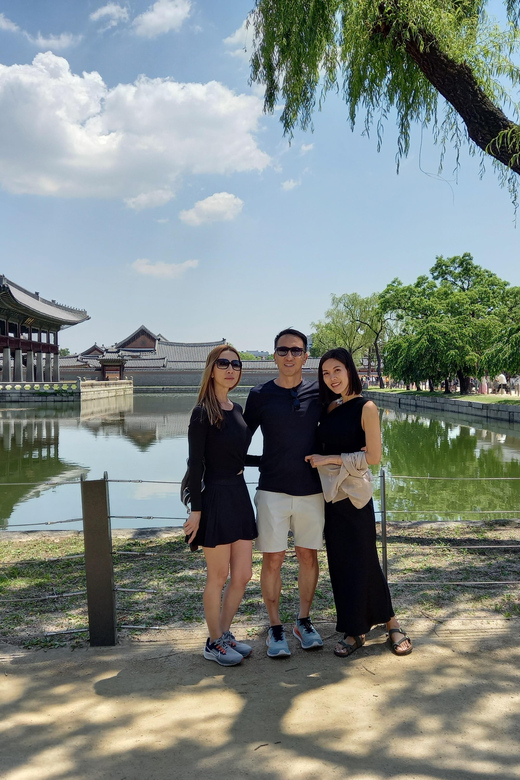
A particularly helpful feature of a private guide is the chance to ask why a structure looks a certain way. Paul is also known for knowing good photo locations and taking pictures for his group at no extra charge. That is a small service, but it can be valuable when you are trying to fit sightseeing and photography into a tight airport connection.
More Gyeongbokgung Palace visits:
- Best Seoul City Tour (Gyeongbokgung Palace,Insadong,Namsan Tower)
★ 5.0 · 1,647 reviews - Seoul City Sightseeing Tour Including Gyeongbokgung Palace, N Seoul Tower, and Namsangol Hanok Village
★ 5.0 · 1,423 reviews - Seoul: Hanbok Rental with Gyeongbokgung Palace Entry
★ 4.6 · 611 reviews - Hanbok Photoshoot and History Tour at Gyeongbokgung Palace
★ 5.0 · 276 reviews
The National Folk Museum and Everyday Joseon Life
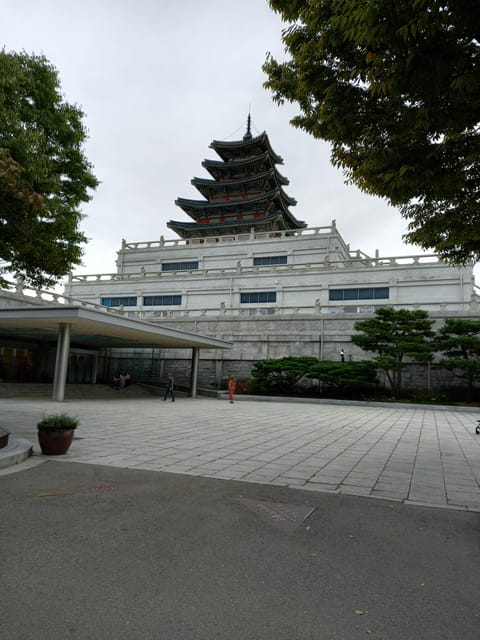
The National Folk Museum receives about 30 minutes of guided attention. That is brief, but it changes the scale of the tour.
Gyeongbokgung presents royal and official life. The museum turns to ordinary people and the stages of a lifetime: birth, growing up, marriage, aging, sickness, treatment, and death. Exhibits also cover seasonal activities, ceremonies, commemorative events, and folk customs.
This stop helps answer a question that palace visits often leave hanging: what did life look like beyond the court? You can connect the formal ideals explained at the palace with household routines and community traditions.
Thirty minutes is enough for an introduction, not a complete museum visit. If museums are your main interest, you may wish the schedule allowed longer. Still, the museum is well placed after Gyeongbokgung, and its shorter format keeps the layover route moving.
Bukchon Hanok Village and the Old-New Seoul View
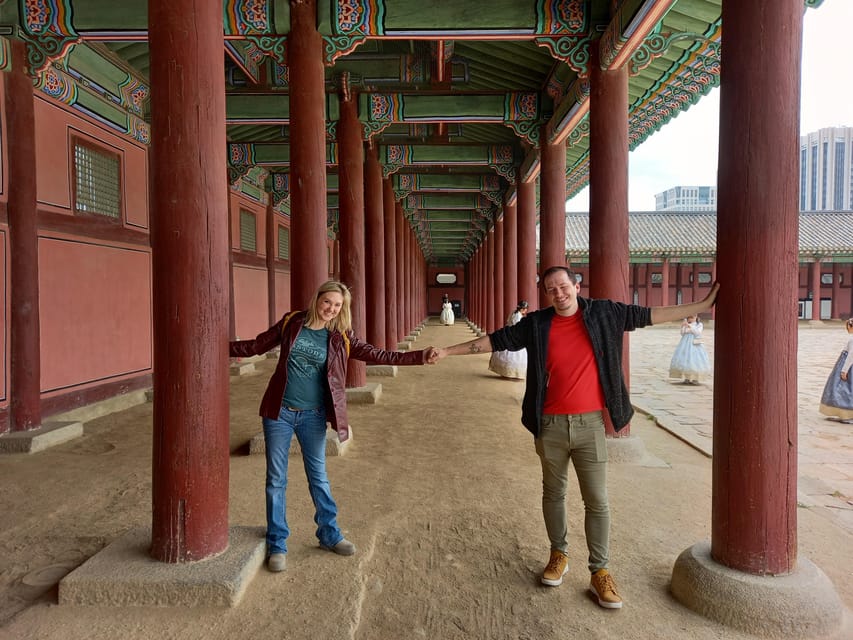
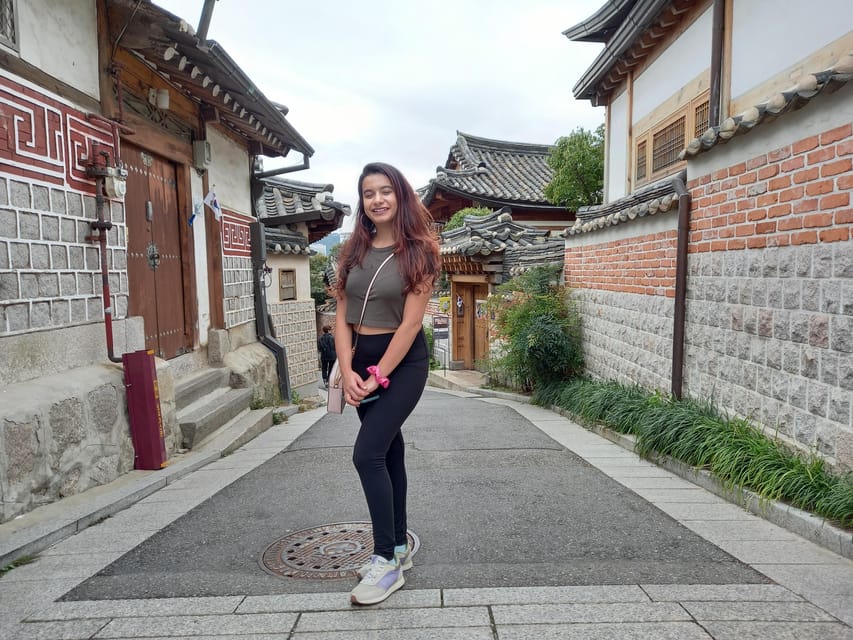
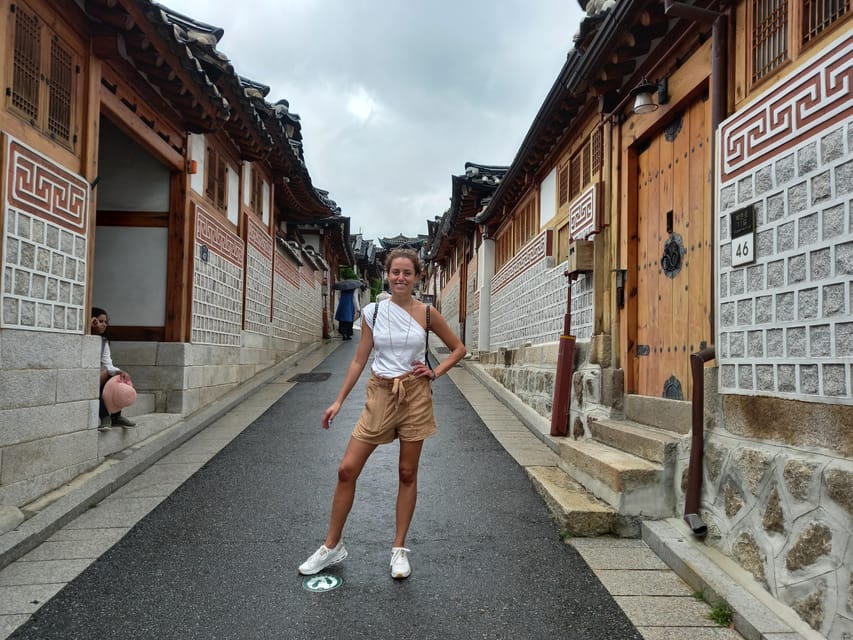
Bukchon Hanok Village takes about 40 minutes. Bukchon is known for its large cluster of hanoks, or traditional Korean houses, and the area offers one of the clearest visual contrasts in Seoul.
Traditional rooflines and narrow streets appear with Seoul’s high-rise buildings and N Seoul Tower in the distance. That meeting of old and new is the reason this stop photographs so well. It also gives you a sense that traditional architecture is not sealed away in a museum. It exists within a modern capital.
The short visit is a benefit and a limitation. Forty minutes lets you see the character of the village without consuming the whole afternoon, but it does not allow for a relaxed wander through every street. The area is a residential neighborhood, so your guide’s direction helps you focus on the appropriate viewing points and avoid treating private homes as attractions.
Pay attention to the architecture here. Hanoks were designed around courtyards, natural materials, and the needs of family life. The guide’s earlier explanation of Korean building traditions should make Bukchon easier to read. You are not just looking at an attractive street. You are seeing how older housing patterns fit into a city that has grown around them.
Jogyesa and the Insadong Hour
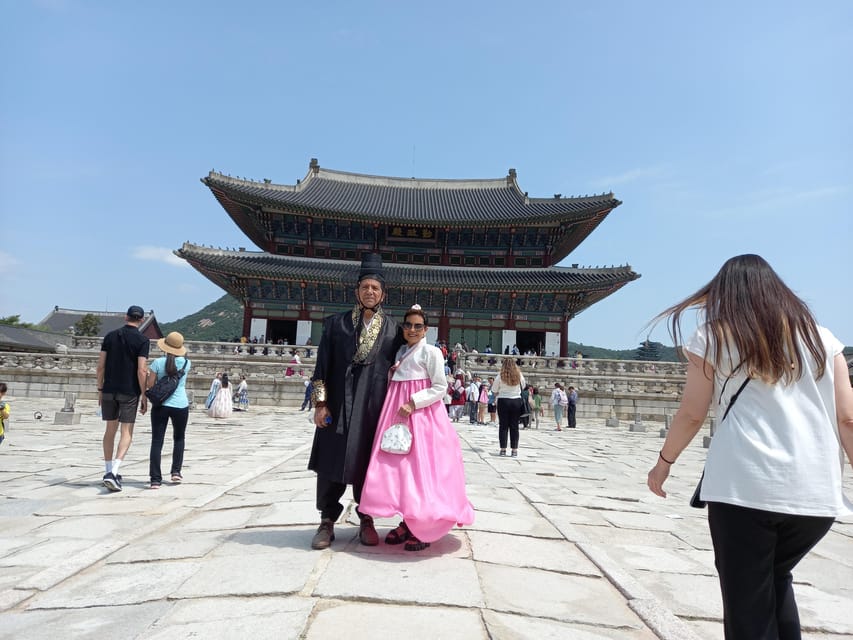
The final cultural portion centers on Insadong, with about an hour scheduled for the area. Jogyesa Buddhist Temple is a small but important stop. It was built in 1926 in Insadong and serves as the headquarters of Korea’s main Buddhist organization.
That gives the temple weight beyond its size. After spending much of the tour with Joseon Confucian culture, you get a glimpse of Korean Buddhism and its continuing place in Seoul. The temple is also close to Gyeongbokgung and the rest of the route, so visiting it does not require a long detour.
Insadong adds a different mood from the palace grounds and Bukchon lanes. It is associated with traditional culture, arts, and shopping, and the hour gives you some room to look around. The tour does not include food or beverages, so any snack or meal is your own expense. If you want to sample street food, you can ask Paul for suggestions, but do not count on a full restaurant meal within this schedule.
This is also the part of the tour where you may feel the layover pressure most clearly. An hour sounds comfortable, but it has to include the temple, the street area, and the move back toward Seoul Station. Keep purchases modest and avoid wandering too far from the meeting plan.
Returning to Seoul Station
The final public-transport segment takes about 30 minutes. Paul escorts you back to Seoul Station and helps position you for the train to Incheon Airport. The tour ends there, not at the airport.
That arrangement is practical because it gives you control of the final airport connection. You can leave on the recommended express train or use a regular service if that is the better option. The guide’s role ends at Seoul Station, so allow enough time for the return journey, airport procedures, and your flight.
The biggest planning issue is your layover length. A six-hour tour does not mean six free hours in Seoul. It includes the airport meeting, train travel, walking, guided visits, and the return to Seoul Station. I would choose this only when the gap between flights is comfortably longer than the tour itself. The exact amount of extra time depends on your airline, terminal, baggage situation, and airport requirements, none of which are set by the tour.
What the $254 Group Price Covers
The $254 price applies to a private group of up to one listed booking unit. The important question is how many people will share it. For one person, the cost is high. For a small private group, it can be reasonable because the fee includes six hours of an English-speaking guide, airport-to-city and city-to-airport AREX transportation, and admission to Gyeongbokgung Palace.
The price also buys convenience. You do not need to learn the route from Incheon, decode the palace layout alone, or guess which airport train will work best. You receive context about Confucianism and Korean architecture, which is the core value of the experience.
Still, this is not an all-inclusive day tour. Food, drinks, and insurance are extra. The arrangement also does not remove the need for your own flight planning. You are paying for a focused private introduction to Seoul during a layover, not a leisurely city day.
Who Will Get the Most From This Tour
I would recommend this for a first visit to Seoul when you have a substantial layover and want a guided cultural introduction rather than a shopping trip. It suits people who want history explained in plain terms, especially the connection between Joseon Confucianism and palace design.
It is also a good fit for small groups who value a private guide and help with airport transportation. Families and first-time visitors may appreciate being met at Incheon and escorted back to Seoul Station.
You may want a different plan if your connection is tight, you dislike structured timing, or you want long meals and unplanned wandering. The itinerary covers a lot, and each stop has a fixed place in the schedule. Bukchon and Insadong are introductions, not open-ended neighborhood explorations.
The tour has a strong rating of 4.8 from six ratings, and the most praised points are clear: Paul’s explanation of Korean culture, the ease of moving from the airport into Seoul, his grasp of Confucianism, and his help with photographs. Those strengths matter because the route depends on interpretation. Without a guide, you would still see beautiful places, but you would miss much of the reason they look and function as they do.
Should You Book This Seoul Layover Tour?
Book it if you have enough time between flights, want the main cultural sights in one compact outing, and prefer an English-speaking guide to handle the airport train details. Gyeongbokgung is the star, while the Folk Museum, Bukchon, Jogyesa, and Insadong give the visit useful range.
I would be cautious if your layover leaves little room for delays or if $254 feels too steep for one person. For a small private group with a comfortable connection, the included transport, palace entry, airport pickup, and guide can make the price worthwhile. For a solo passenger on a tight schedule, staying at Incheon may be the safer choice.
FAQ
Where does the tour begin?
The tour begins at Incheon International Airport, where the English-speaking guide meets you.
Where does the tour end?
The tour ends at Seoul Station’s airport rail area. The guide escorts you there so you can continue to Incheon Airport.
How long is the tour?
The tour lasts six hours. The listed schedule includes about 1.5 hours for the train portion, two hours at Gyeongbokgung, 30 minutes at the National Folk Museum, 40 minutes in Bukchon, one hour in Insadong, and 30 minutes on public transportation.
What language does the guide speak?
The guide speaks English.
Who is the guide?
The named experience provider and guide is Paul Koo.
Is the tour private?
Yes. It is offered as a private group experience.
Is transportation included?
Yes. Transportation from Incheon Airport to Seoul, during the tour, and back toward Incheon Airport by AREX is included according to the tour details.
Is Gyeongbokgung admission included?
Yes. Admission to Gyeongbokgung Palace is included.
Are food and drinks included?
No. Food and beverages are not included in the price.
Can the tour use a regular train instead of the express train?
Yes. If waiting more than 20 minutes for an express train would take too much time, the group may use the regular train. The regular train takes about one hour to Seoul, around 20 minutes longer than the express service.
More Bukchon and Insadong walks
- Seoul: Gyeongbok Palace, Bukchon Village, and Gwangjang Tour
★ 4.9 · 2,321 reviews - Seoul: Gyeongbok Palace, Bukchon Village, and Gwangjang Tour
★ 5.0 · 1,044 reviews - Seoul Highlights: Gyeongbok Palace, Insadong & N Seoul Tower
★ 4.7 · 726 reviews - Korean Palace and Market Tour in Seoul Including Insadong and Gyeongbokgung Palace
★ 4.0 · 174 reviews
Recently added around Seoul
- Nami & Maple Road & Theatre des Lumieres Day Tour from Seoul★ 4.8 · 4 reviews
- Gyeongbokgung Palace Photo Session with your own phone★ 5.0 · 4 reviews
- Private Tour around Suwon UNESCO Fortress and Korea Folks Village★ 4.5 · 4 reviews
- Seoul: Deoksugung Palace Night Tour★ 4.5 · 4 reviews
- N Seoul Tower + Namsan Cable Car Ticket (Collect in Myeongdong)★ 3.5 · 4 reviews
- Jisan Forest Resort: Ski Full-Day Tour or Shuttle from Seoul★ 5.0 · 4 reviews
- Seoul Private Walking Tour with a Local★ 5.0 · 4 reviews
- Private Jeonju Hanok Village – Culinary tour★ 5.0 · 4 reviews
Gyeongbokgung Palace Tours, compared.
Best Seoul City Tour (Gyeongbokgung Palace,Insadong,Namsan Tower)
Read the review →
Seoul City Sightseeing Tour Including Gyeongbokgung Palace, N Seoul Tower, and Namsangol Hanok Village
Read the review →
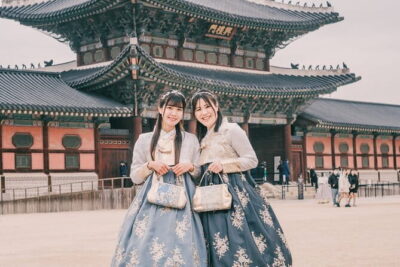
Hanbok Photoshoot and History Tour at Gyeongbokgung Palace
Read the review →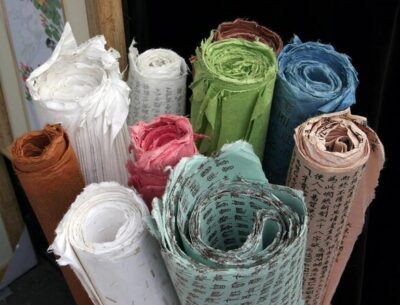
Korean Palace and Market Tour in Seoul Including Insadong and Gyeongbokgung Palace
Read the review →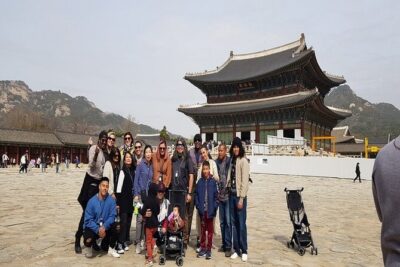
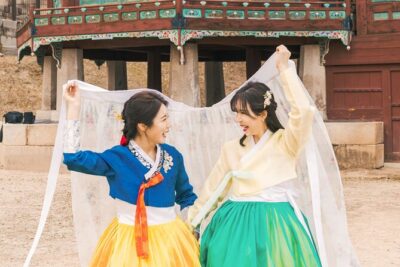
Gyeongbokgung Palace Hanbok Rental Experience in Seoul
Read the review →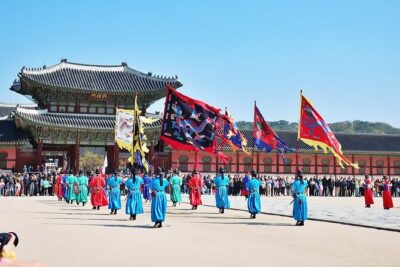
Small-Group Seoul Tour with Gyeongbokgung Palace (hotel pick-up)
Read the review →Browse the lists this tour appears in