Reviewed · PRIVATE
Korean Green Tea Tour – from Boseong to Gangjin (Private)
The most appealing part of this day is its range: you see the famous green hills of Boseong, then continue to quieter Gangjin, where tea culture reaches back more than 1,000 years. Three tea styles are part of the experience, leaf tea, powdered tea, and rice cake tea, so this is more than a photo stop among tea bushes.
I like the private car and flexible feel, especially for a long day from Gwangju. I also like the pairing of Boseong’s major tea attractions with Gangjin’s Baegundong Hermitage Garden and old tea traditions. The main drawback is the distance. With about 70 minutes from Gwangju to Boseong, 50 minutes between the tea regions, and another 70 minutes back, you spend a fair share of the day in the vehicle.
Key points to know before booking
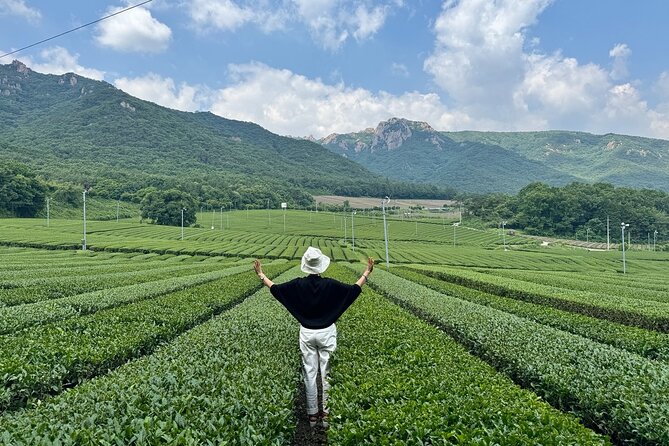
- Three tea regions and viewpoints: Visit Daehan Dawon, Choroknip tea farm on Nokcha-ro, and Gangjin Dawon.
- Tea ceremony in Boseong: Learn how Korean tea is prepared and served, rather than simply buying a drink.
- Gangjin’s older tea story: Explore Baegundong Hermitage Garden and the legacy of Baegun Okpan Tea.
- Private transportation: Your group travels together from Gwangju, with no strangers joining the activity.
- Food is separate: Lunch is not included, though the guide suggests local dishes and restaurants in Boseong-eup.
- A full-day outing: Plan on roughly 9 to 10 hours, with a 9:30 am start.
Why Boseong and Gangjin make a strong pair
Boseong is the name most visitors know for Korean tea. Its hills are planted in smooth, sweeping rows, and the county’s climate and soil suit tea production. The main farms are grown organically, according to the tour information, which adds interest for anyone curious about how Korean tea is produced rather than only interested in drinking it.
Gangjin gives the day a different purpose. It is less familiar to foreign visitors, but its tea tradition is older, and the area is tied to Korea’s first tea brand. The contrast works well. Boseong gives you the grand views and the polished visitor attractions. Gangjin provides gardens, older stories, and a quieter look at how tea fits into Korean culture.
I would choose this tour over a simple Boseong photo trip if you want context. The guide connects the fields, processing methods, ceremonies, and local history, giving the day a clear thread. Guides Veronica and Vicky are specifically associated with this experience, and the strongest praise is directed at their tea knowledge, local familiarity, warmth, and willingness to adjust the day to a group’s interests.
The private format matters here. You are not being moved through a fixed group with a single pace. The guide can explain a point again, help with restaurant choices, or respond to your interests. That personal help is especially useful in a rural region where public transportation between tea sites is not simple.
A few more South Korea half-days to weigh up
- Busan Private Tour with licensed tour guide + private vehicle
★ 5.0 · 1,143 reviews - Private DMZ Tour (No Shopping): 3rd Tunnel & Suspension Bridge
★ 5.0 · 607 reviews - Jeju Island English Private & Flexible Tour any number anywhere
★ 5.0 · 561 reviews
Daehan Dawon, Boseong’s famous green hills
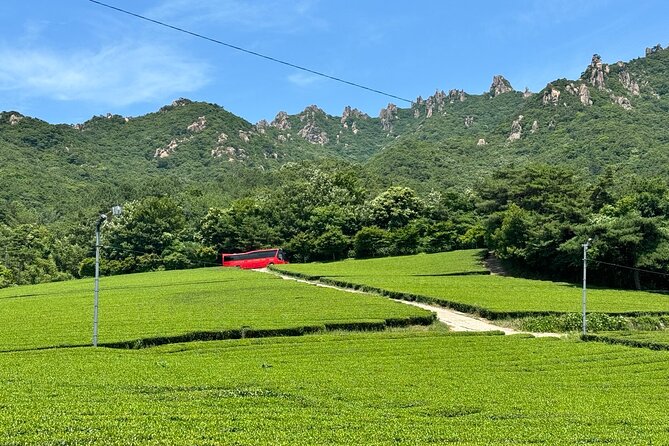
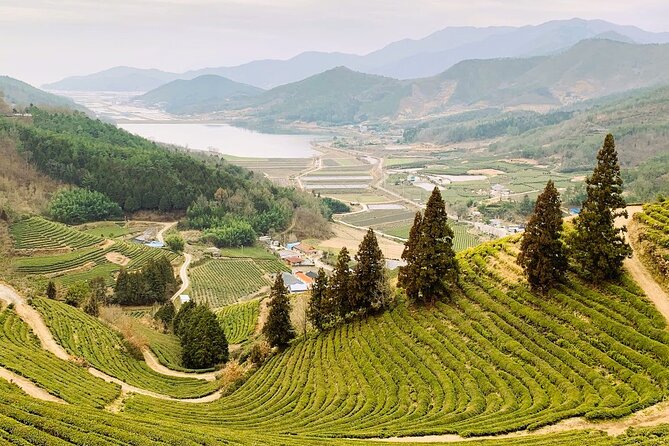
The first main stop is Boseong Green Tea Field Daehan Dawon, with about 90 minutes set aside. This is the classic Boseong view: tea plants spread across rolling hills in carefully planted rows.
You will have time to walk through the fields, take photographs, and look across the slopes. The appeal is visual, but the stop also gives you a useful introduction to the scale of tea farming in Boseong. The hills make it easy to understand why this county is one of Korea’s best-known tea areas.
Bring shoes suitable for walking on sloped paths. The supplied information does not give a detailed route or accessibility description, so anyone who has trouble with hills should ask the operator before booking. Most people can participate, but this is not simply a paved museum visit.
The 90-minute timing is sensible for a first stop. You get enough time to see the main views without spending the entire morning at one farm. If your priority is photography, this will probably be one of the day’s most important stops.
Boseong-eup lunch and local choices
Lunch takes about an hour in Boseong-eup and is not included in the $195 price. Instead, you choose a dish at the restaurant and pay there.
Suggested options include stir-fried nakji, Korean octopus, along with other popular local dishes. The important point is that the guide helps you choose from local food rather than leaving you to find a restaurant during a tight rural schedule. That is a practical benefit, especially if you do not read Korean menus.
The separate lunch cost gives you control over what and how much you eat, but it also means the final price is not limited to the advertised tour fee. Alcoholic drinks are not included either. Ask your guide about the day’s food options if you have dietary restrictions, since the supplied information does not list specific alternatives.
Korea Tea Museum and the six kinds of tea
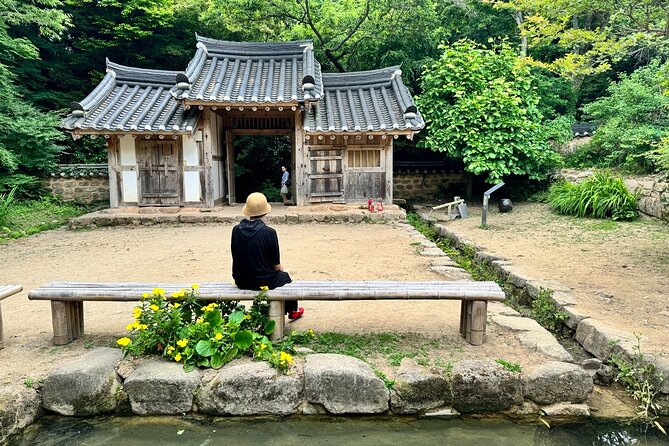
The Korea Tea Museum offers an hour indoors. It explains the tea plant, the history of Korean tea, and the six types of tea that can be made from the same plant.
This is an important pause between outdoor stops. The museum helps you understand that tea type is shaped by how the leaves are treated, not simply by different plants. That background makes the later tasting more useful because you have a basic idea of what you are tasting and why powdered tea differs from leaf tea.
I would not treat the museum as a substitute for the fields. Its value is explanatory. If you already know a great deal about tea production, an hour may feel long. For most visitors, though, it provides the facts needed to connect Boseong’s rows of plants with the cup in front of you.
The visit also supports the tea ceremony later in the day. Instead of seeing the ceremony as a decorative cultural performance, you get a little context about the plant, production, and Korean tea customs.
A different way to spend a day from here:
- Best DMZ Tour Korea from Seoul (Red Suspension Bridge Optional)
★ 5.0 · 41,422 reviews - DMZ Tour: 3rd Tunnel, Option(Suspension Bridge, Boat) from Seoul
★ 5.0 · 21,373 reviews - DMZ tour south Korea from Seoul (NK experience hall, defector)
★ 5.0 · 20,599 reviews - DMZ Insider Tour: 3rd Tunnel, NK Defector Meet & Red Bridge
★ 4.9 · 15,214 reviews
Nokcha-ro and the Choroknip tea farm view
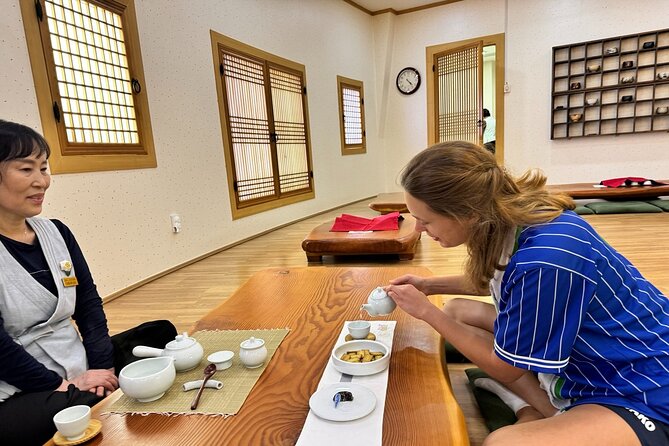
The stop at Nokcha-ro lasts about 40 minutes and focuses on one of Boseong’s best viewpoints. Choroknip tea farm is operated by Boseong Jeda, and its tea house terrace looks over the rolling fields below.
This is a short stop, but it may be one of the most rewarding for a wide view. Daehan Dawon lets you walk among the tea rows. Nokcha-ro lets you pause above them. Together, the two stops give you different ways to see the same farming region.
The included matcha affogato adds a sweet finish. It combines powdered green tea with green tea ice cream, so you get a familiar dessert with a distinctly Korean tea flavor. It is not a formal tasting flight, but it is a pleasant way to sample powdered tea in an easy, approachable form.
The 40-minute limit means you should not expect a long visit at the tea house. Use the time for the terrace, dessert, and photographs. If you want to buy tea, ask how shopping fits into the schedule before lingering over the view.
Gangjin Dawon at the foot of Mt. Wolchulsan
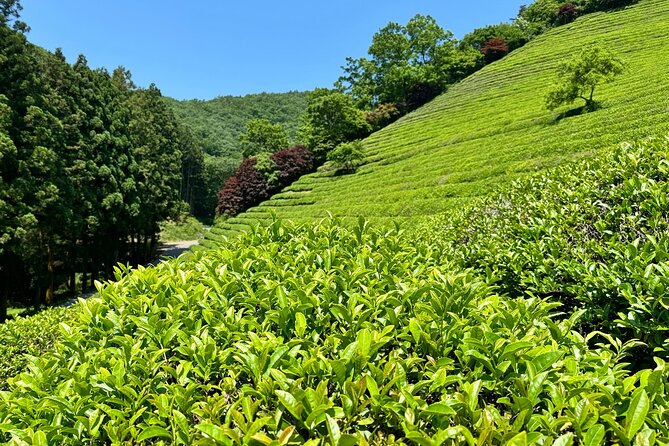
After Boseong, the drive to Gangjin takes about 50 minutes. Gangjin Dawon is a shorter stop, about 30 minutes, at the foot of Mt. Wolchulsan.
The field here connects modern tea production with an older local tradition. Osulloc, one of Korea’s leading tea producers, cultivated the site for green tea beginning in 1980. Yet Gangjin’s connection to tea reaches much further back than that recent planting.
This stop is less about spending hours on a large farm and more about placing Gangjin on the tea map. Boseong is the big visual centerpiece. Gangjin gives you a second regional setting and prepares you for the historical sites that follow.
Because the stop is short, do not expect the same walking time as at Daehan Dawon. The benefit is variety. You see another tea-growing area without turning the day into repeated visits to nearly identical fields.
Baegundong Hermitage Garden and Joseon-era design
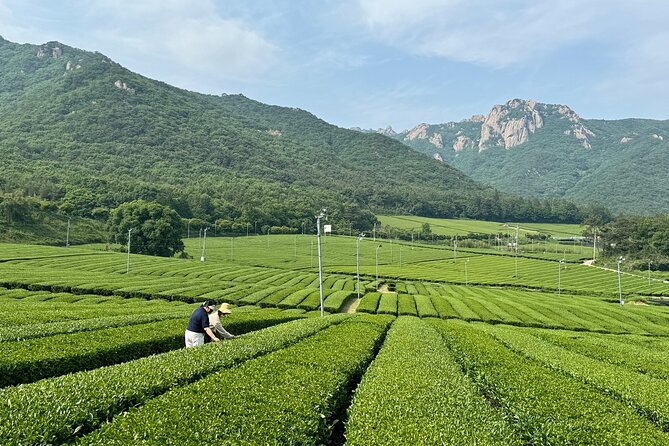
Baegundong Hermitage Garden receives about 40 minutes. Built in the late 17th century during the Joseon Dynasty, this private garden was planned to work with its natural setting.
The garden is valuable because it shows tea culture in a different setting. You are no longer looking only at commercial rows of plants. You are seeing a carefully arranged place where nature, contemplation, and tea belonged together.
The word hermitage can make the site sound grander than the visit may be. The scheduled time is modest, and the garden is one part of a busy day. Still, it adds depth that a farm-only excursion would miss.
Listen closely to the guide here. The connection between the garden and tea culture is not always obvious if you walk through on your own. The guide’s explanation is what turns a pleasant garden visit into a meaningful part of the day.
Seongjeon-myeon and Korea’s first tea brand
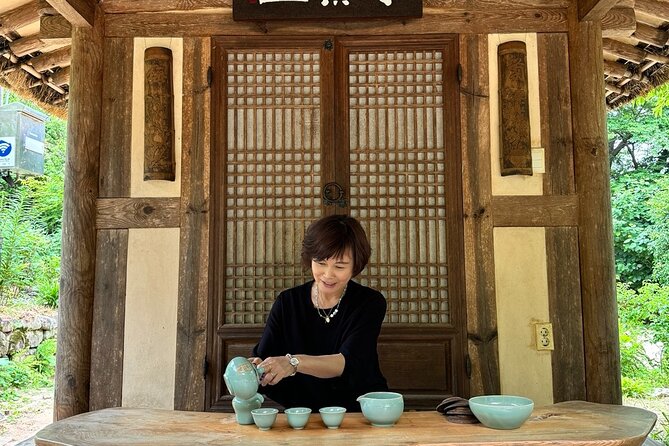
The final scheduled stop is in Seongjeon-myeon, at Baegun Tea House, for about 40 minutes. The tea house honors Baegun Okpan Tea, regarded here as Korea’s first tea brand.
The brand was created in the 1920s by Lee Han-young, a descendant of one of Jeong Yak-yong’s disciples. Jeong Yak-yong was exiled in Gangjin, and that connection helps explain why the area became important in Korean intellectual and tea culture.
This is where the tour’s historical rice cake tea comes in. The tradition is about 200 years old, giving you a very different experience from the modern matcha affogato earlier in the day. The included tasting is one of the strongest reasons to continue to Gangjin instead of returning to Gwangju after Boseong.
Rice cake tea may be unfamiliar to you. The form is part of the story: tea was shaped and preserved in a way that differs from the loose leaves or powdered tea you see elsewhere. The guide’s explanation matters, since the experience is as much about tradition as flavor.
The Korean tea ceremony in Boseong
The ceremony class is included and takes place in Boseong. It gives you a hands-on cultural element that the fields and museum cannot provide.
Expect to learn how tea is prepared and served in a Korean setting. The precise format is not specified, so I would avoid expecting an elaborate performance or a long formal course. Think of it as an introduction that helps you notice the care given to water, utensils, serving, and pace.
This is also where the private format pays off. You can ask direct questions without worrying about holding up a large group. If tea is new to you, the guide can explain the steps in plain terms. If you already drink tea regularly, you can focus on the differences between Korean customs and those you know.
What the $195 price buys you
At $195 per person, this is not a budget way to see Boseong. The price covers private transportation, admission fees, the Korean tea ceremony, matcha affogato, and historical rice cake tea. It does not cover lunch, alcohol, or travel insurance.
The value depends on how you would otherwise reach these places. From Gwangju, the return trip alone includes roughly 140 minutes of driving, before counting the 50-minute transfer between Boseong and Gangjin. Adding tea fields, museums, gardens, and tastings by public transportation would require much more planning and could be difficult within one day.
You are also paying for interpretation. A self-guided visit can show you beautiful fields, but it may not explain the six tea types, the link between Gangjin and Baegun Okpan Tea, or the reason rice cake tea matters. The guides, particularly Veronica and Vicky, are praised for clear explanations and strong knowledge of tea production and tasting.
The price makes the most sense for a couple, family, or small group that values time and comfort. Group discounts are offered, so the per-person cost may improve if you are traveling with several people. Since this is a private activity, only your group participates.
Timing, pickup, and practical details
The tour starts at 9:30 am from Gwangju Metropolitan City. Pickup is offered, and private transportation is included. The total duration is about 9 to 10 hours, so expect to return in the evening.
The basic driving pattern is:
- Gwangju to Boseong: about 70 minutes
- Boseong to Gangjin: about 50 minutes
- Gangjin to Gwangju: about 70 minutes
That leaves several hours for the seven stops, lunch, the ceremony, and tastings. The day is full, not rushed at every minute, but you should not expect long unscheduled breaks.
Mobile tickets are accepted, confirmation is received at booking, and the activity is near public transportation. Service animals are allowed, and most people can participate. The experience requires good weather. If poor weather cancels it, you are offered another date or a full refund.
Free cancellation is available up to 24 hours before the start time. Canceling or changing the booking inside that 24-hour window does not qualify for a refund.
Who should book this tea day
I would recommend it most strongly to:
- Tea drinkers who want Korean context, not just a scenic farm
- Visitors based in Gwangju without a rental car
- Couples and small groups who prefer a private day
- People interested in Joseon-era gardens and local cultural history
- Photographers who want Boseong’s rolling tea hills
- Food-minded visitors who like having local lunch choices explained
You may want to skip it if you have only a short time in Gwangju, dislike long road transfers, or want to spend a full day walking through tea fields. You should also check the physical demands with the operator if sloped paths are difficult for you.
Should you book the Boseong and Gangjin tour?
Book it if you want the full story rather than the postcard. Boseong supplies the famous views, but Gangjin gives the day its character through Baegundong Hermitage Garden, Baegun Tea House, and the old rice cake tea tradition.
The strongest reason to book is the guide. Veronica and Vicky are praised for making the day personal, explaining tea clearly, finding good local food, and helping with practical transportation questions beyond the scheduled route. That sort of local support is hard to reproduce on your own.
The main caution is the long day and extra lunch cost. If those are acceptable, the $195 fee is reasonable for private transport, entry fees, a ceremony, three major tea sites, and tastings across two important tea regions. For a tea-focused visit from Gwangju, this is a thoughtful and unusually complete choice.
FAQ
Where does the tour start?
The tour starts from Gwangju Metropolitan City at 9:30 am. Pickup is offered.
How long does the experience last?
The tour lasts approximately 9 to 10 hours.
Is this a private tour?
Yes. Only your group participates in the activity.
Is transportation included?
Yes. Private transportation is included. Travel from Gwangju to Boseong takes about 70 minutes, the drive from Boseong to Gangjin takes about 50 minutes, and the return to Gwangju takes about 70 minutes.
What tea experiences are included?
The tour includes a Korean tea ceremony experience in Boseong, matcha affogato made with powdered green tea and green tea ice cream, and historical rice cake tea in Gangjin.
Is lunch included?
No. Lunch is not included. You choose and pay for your meal at a restaurant in Boseong-eup.
Can I cancel for a full refund?
Yes, if you cancel at least 24 hours before the experience starts. Cancellations or changes made less than 24 hours in advance are not refunded.
What happens if bad weather cancels the tour?
If poor weather causes cancellation, you are offered a different date or a full refund.
Recently added around South Korea
- Gyeongbokgung Palace Photo Session with your own phone★ 5.0 · 4 reviews
- Nami & Maple Road & Theatre des Lumieres Day Tour from Seoul★ 4.8 · 4 reviews
- Private Tour around Suwon UNESCO Fortress and Korea Folks Village★ 4.5 · 4 reviews
- Jisan Forest Resort: Ski Full-Day Tour or Shuttle from Seoul★ 5.0 · 4 reviews
- Seoul: Deoksugung Palace Night Tour★ 4.5 · 4 reviews
- N Seoul Tower + Namsan Cable Car Ticket (Collect in Myeongdong)★ 3.5 · 4 reviews
- Private Jeonju Hanok Village – Culinary tour★ 5.0 · 4 reviews
- Seoul Private Walking Tour with a Local★ 5.0 · 4 reviews
Private, compared.
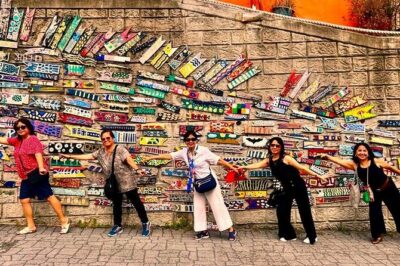
Busan Private Tour with licensed tour guide + private vehicle
Read the review →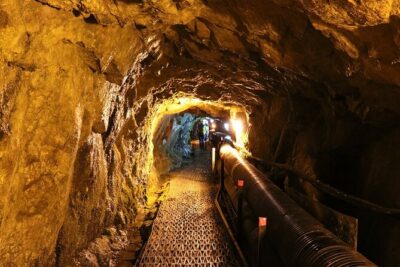
Private DMZ Tour (No Shopping): 3rd Tunnel & Suspension Bridge
Read the review →
Jeju Island English Private & Flexible Tour any number anywhere
Read the review →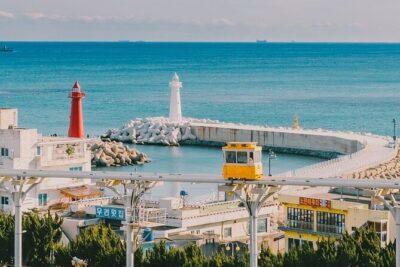
Private Busan Tour -Explore Cultural Landmarks with a Local Guide
Read the review →
Seoul City Private Full-Day Tour Including Lunch
Read the review →
Private DMZ the 3rd Tunnel Tour from Seoul (optional Red Bridge)
Read the review →
Jeju Island Popular Sightseeing Private Car Charter Tour 5/9hours
Read the review →