
Reviewed · BUSAN TOURS
Gyeongju private tour with an official tour guide (Unesco)
Gyeongju gives you South Korea’s ancient capital in one long, well-packed day. The route links Bulguksa Temple, royal tombs, an ancient observatory, and a palace pond, so you get a clear picture of Silla civilization rather than a single isolated sight.
I like the convenience of a private vehicle with pickup and drop-off from a Busan hotel, port, or station. I also like the licensed guide, who can speak English, Chinese, or Korean and explain what you are seeing as you move between far-flung sites. The drawback is the size of the day: six major stops in eight or nine hours can feel brisk, and one English-speaking guide was difficult for a customer to understand.
Key points to know
- Bulguksa Temple opens the day with Silla architecture and Buddhist art.
- Woljeonggyo Bridge is a restored Silla-era crossing with a romantic local legend.
- Daereungwon places 23 royal and noble tombs in an easy-to-walk park.
- Cheomseongdae is National Treasure No. 31, linked to seventh-century star watching.
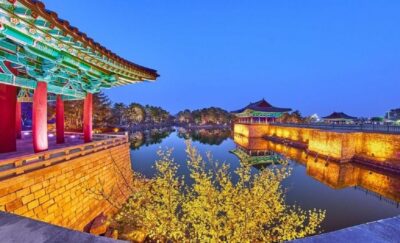
- Donggung Palace and Wolji Pond is the longest stop and one of the day’s most atmospheric sites.
- The $225 price includes transport, guide, fuel, tolls, parking, and pickup, but not lunch or two small admission fees.
Why Gyeongju makes sense as a Busan day trip
Gyeongju was the capital of the Silla dynasty from the fifth through seventh centuries. Silla later unified the Three Kingdoms, and the city became the center of a powerful Korean kingdom. That past is still visible in temples, burial mounds, palace ruins, and stone observatories scattered around the city.
The main advantage of this tour is that you do not have to piece those sites together by public transport or work out the distances yourself. Gyeongju’s attractions are spread across the city, with Bulguksa Temple away from the central tombs and palace area. A private vehicle saves time and gives you a place to return to between visits.
The day lasts about eight to nine hours. The listed stop times add up to roughly six hours and 50 minutes, leaving the rest for driving, pickup, drop-off, and transitions. That is a useful clue: this is not a slow, unhurried day at each site. It is a broad introduction to Gyeongju, designed to cover the major landmarks in one outing.
The maximum group size is 15 people, though the activity is private to your own party. Group discounts are offered, so the value improves if you are traveling with family or friends. At $225 per person, it is not a budget excursion, but the cost includes the private vehicle, licensed guide, hotel, port, or Busan Station pickup and drop-off, tolls, parking, and fuel.
A few more Busan half-days to weigh up
- Busan: Gyeongju Guided Day Trip to Three Kingdoms Capital
★ 4.8 · 1,925 reviews - Small Group Full Day Busan Tour (Max 6 Pax)
★ 5.0 · 1,464 reviews - From Busan: Gyeongju UNESCO World Heritage Guided Day Tour
★ 4.8 · 1,250 reviews
Bulguksa Temple, the grand opening
Your first major stop is Bulguksa Temple, a UNESCO cultural heritage site and Historic Site No. 502. Construction is traditionally linked to Prime Minister Kim Daeseong during the reign of King Gyeongdeok in 751, with completion by the Silla government.
You have about one hour and 10 minutes here. That is enough to see the main temple grounds and get an explanation of the site, though anyone who likes to linger over carvings, stairs, or religious details may want more time. The guide’s role matters here because a temple complex can look like a collection of buildings unless someone explains the Silla setting and Buddhist purpose.
Bulguksa is a strong first stop because it introduces the architectural and spiritual side of Silla before the tour shifts to tombs and palace ruins. The admission ticket is listed as included, so you do not need to budget an entrance charge for this stop.
The main practical point is pace. If you want long periods for quiet observation or detailed photography, the one-hour schedule may feel short. If your goal is to see the key cultural site and understand why it matters, the timing works well.
Woljeonggyo Bridge and a Silla love story
Woljeonggyo Bridge takes about 40 minutes. The bridge is associated with the Silla dynasty and was traditionally reserved for nobles and other high-ranking people. The structure you see today was restored in 2008, so this is a reconstruction rather than an untouched ancient bridge.
That distinction is worth knowing. The appeal comes from the bridge’s form, setting, and connection to Silla-era stories, not from viewing an original structure in its complete ancient state. The guide can also tell you the local love story involving a monk and Princess Yosuk, which gives the stop a human touch after the formal grandeur of Bulguksa.
Forty minutes is a sensible amount of time for photographs and a short walk. It also keeps the day moving. You will not spend half a morning here, but you get a change of pace and a chance to see how the tour connects major monuments with smaller historical sites.
Gyochon Village and the Choe family house
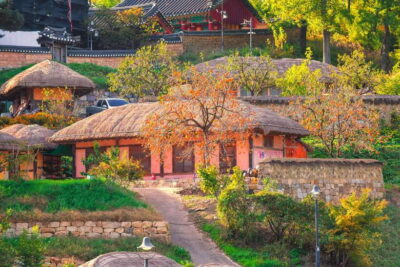
Gyeongju Gyochon Traditional Village is scheduled for about one hour and 20 minutes. A university is said to have operated here during the Silla period, and the area is also known for Mr. Choi’s house, identified in the tour description as the key place to visit.
This stop adds everyday and residential context. Temples, tombs, and palace remains can make the Silla capital seem like a parade of official monuments. A traditional village offers a closer look at the kind of built setting associated with later Korean life and local heritage.
I like having this village between the bridge and the tomb complex. It breaks up the ancient-site sequence and gives you time to walk rather than simply inspect ruins. The 80-minute slot should allow a reasonable look around, though the exact experience depends on how much time your guide spends explaining the house and village.
Do not expect a museum-heavy stop from the information provided. The value is in seeing the village setting and its notable house, not in a long list of formal exhibits. If you prefer major archaeological monuments only, this may feel less essential. If you like seeing how history is tied to homes and local neighborhoods, it earns its place.
A different way to spend a day from here:
- Busan Private Tour with licensed tour guide + private vehicle
★ 5.0 · 1,143 reviews - Busan: Coastal Treasures Beach Train, Culture Village & More
★ 4.7 · 832 reviews - Busan’s Cultural Wonders with Beach Train & Gamcheon Village etc
★ 4.5 · 663 reviews - Gyeongju UNESCO World Heritage Guided Day Tour from Busan
★ 5.0 · 660 reviews
Daereungwon’s 23 grass-covered tombs
Daereungwon Tomb Complex is one of the clearest symbols of Silla. The park contains 23 ancient tombs associated with kings, queens, and nobles. Their rounded, grass-covered forms make the site immediately recognizable and help you understand the scale of Silla’s ruling class.
You have about one hour and 20 minutes here. The tombs can look similar at first glance, which is why the guide’s explanations are useful. You can learn how the complex relates to royal burial practices and why the mounds are treated as more than ordinary archaeological remains.
An admission fee applies here if you enter Cheonmachong, listed as 3,000 won. That fee is separate from the tour price. The information provided identifies Cheonmachong within Daereungwon as the paid part, so keep a little Korean currency or another accepted payment method available.
This is a good place to set realistic expectations. You are not climbing through every tomb or exploring a large underground complex. The main experience is walking among the mounds, seeing their size and arrangement, and entering Cheonmachong if you choose to pay the fee.
Cheomseongdae and the Silla sky
Cheomseongdae Observatory is a short but important stop, scheduled for 50 minutes. It is National Treasure No. 31 and dates to the seventh century. Silla astronomers are associated with observing the stars from this structure.
The observatory gives the day a scientific angle. Silla was not only building temples and royal tombs. Its people also watched the sky and used observation as part of court and state life. A guide can help you connect the stone structure with that wider story.
There is no admission charge listed for Cheomseongdae. The 50-minute stop should give you time to see the monument and hear its background without making the visit drag. Its location also works well after Daereungwon, since both stops present different sides of the Silla capital: one focused on royal death, the other on study of the heavens.
This is another place where expectations matter. The observatory itself is a compact monument, not a large building filled with displays. Its importance comes from its age, purpose, and place in Korean history.
Donggung Palace and Wolji Pond after dark or by day
The final major stop is Donggung Palace and Wolji Pond, formerly associated with the secondary palace complex. After Silla unified the Three Kingdoms, a large pond was created here, with flowers, trees, and palace buildings around it.
You have about one hour and 30 minutes, the longest scheduled visit of the day. That gives you time to walk around the pond and take in the relationship between water, palace ruins, and reconstructed structures. It is a fitting final stop because it shifts the focus from burial places and monuments to royal leisure and ceremony.
An admission fee of 3,000 won applies. This is separate from the $225 tour price, along with the 3,000 won fee for Cheonmachong. Lunch is also not included, and neither are gratuities, tips, or tourist insurance.
The pond is likely to be one of the most memorable locations on the route, but the exact mood depends on the time of day. The supplied schedule does not promise an evening visit, so you should not book this tour assuming you will see the famous night illumination. You will still see the palace and pond, but the light and atmosphere will depend on the tour’s timing.
What the licensed guide adds
The tour includes an official licensed guide who speaks English, Chinese, or Korean. That is important in Gyeongju, where the meaning of a site is often less obvious than its appearance. The guide can explain why a bridge was associated with nobles, how the tomb complex relates to Silla royalty, and why Cheomseongdae is recognized as a national treasure.
There is one caution on language quality. A customer found the English difficult to understand, and the provider apologized and said it would work to improve the service. That does not mean every guide will have the same issue, but it is a fair consideration if detailed English commentary is central to your decision.
You can ask about the language of your guide when booking. The available choices are English, Chinese, and Korean. No individual guide’s name is provided, so you should not expect to select a particular person from the information available.
The private format gives your group more flexibility than a large shared coach tour. Still, the route contains six stops and has a fixed length, so private does not mean unlimited time. It means the vehicle and participation are limited to your group, with a guide assigned to lead the day.
Price, meals, and what you really pay for
At $225 per person, the tour is best judged as a transport-and-guide service rather than a collection of entrance tickets. The price covers an air-conditioned vehicle, fuel, toll gates, parking, licensed guide service, and pickup and drop-off from a hotel, port, or Busan Station.
Those inclusions matter because Gyeongju is not a compact walking destination from Busan. You are paying to avoid arranging a long-distance transfer, local connections between sights, parking, and route planning. For a small private group, the convenience can be worth more than the ticket savings.
You must add lunch, gratuity, tourist insurance, the 3,000 won Cheonmachong admission, and the 3,000 won Donggung Palace and Wolji Pond admission. The tour does not say where lunch takes place or how much time is set aside for it, so ask about the meal break if your group has dietary needs or a tight schedule.
The booking is commonly made well in advance, with an average lead time of 44 days. That suggests you should reserve early if your Busan dates are fixed, especially if you need a particular pickup point or language. Free cancellation is available up to 24 hours before the start time. Cancellations or changes made less than 24 hours ahead are not accepted for a refund.
Who should book this Gyeongju tour?
I would recommend this experience to you if you have one day for Gyeongju and want the major Silla sights without managing transport. It also suits families, older people, and small groups who value hotel or port pickup and a private air-conditioned vehicle.
It is a good fit if UNESCO heritage sites are your priority. Bulguksa is the central draw, while the tombs, observatory, bridge, village, and palace pond build a fuller picture of the old capital.
You may want a different plan if you prefer slow travel, long meals, or detailed visits inside each monument. Six stops in one day is ambitious. The experience favors breadth, structure, and convenience over extended time at one site.
The language point deserves a final check. If you book for the guide commentary, confirm that your preferred language is available and make sure the provider understands your expectations. The tour offers English, Chinese, and Korean service, but guide communication can affect how much history you take away.
Should you book it?
Book this tour if you want an efficient, private introduction to Gyeongju from Busan, especially when Bulguksa, the Silla tombs, and Donggung Palace are all on your must-see list. The included transport and licensed guide make the $225 price easier to justify for a group.
Skip it if you want to explore at a very relaxed pace or if you are uncomfortable paying extra for lunch and the two separate admissions. For most first visits with limited time, though, this route covers the right monuments and removes the hardest transport problems.
FAQ
How long does the Gyeongju private tour last?
The tour lasts approximately eight to nine hours, including transportation between Busan and the Gyeongju sites and the pickup and drop-off service.
Where can pickup and drop-off take place?
Pickup and drop-off are offered at hotels, ports, and Busan Station.
Is the tour private?
Yes. Only your own group participates, with a maximum group size of 15 people.
Which languages can the guide speak?
The tour provides an official licensed guide who speaks English, Chinese, or Korean.
Is Bulguksa Temple admission included?
Yes. Bulguksa Temple is listed with no additional admission charge.
Are the Daereungwon and Cheonmachong fees included?
No. Entry to Cheonmachong in Daereungwon costs 3,000 won and is paid separately.
Does the tour include Donggung Palace and Wolji Pond admission?
No. Admission to Donggung Palace and Wolji Pond costs 3,000 won and is not included.
Is lunch included?
No. Lunch is not included in the tour price.
Can I cancel for a full refund?
Yes, if you cancel at least 24 hours before the experience start time. Cancellations or changes made less than 24 hours before the start time are not accepted for a refund.
Recently added around Busan
- Full Day Busan and Gyeongju Guided Tour★ 5.0 · 4 reviews
- Andong Hahoe Folk Village Day Tour From Busan★ 5.0 · 4 reviews
- Make your own Makgeolli (Rice Wine) in Busan★ 5.0 · 4 reviews
- Best Busan night views : Mountain observatory streets★ 5.0 · 4 reviews
- Busan: Naejangsan National Park Autumn Foliage One Day Tour★ 4.8 · 4 reviews
- 5 Highlights Pohang Tour from Busan (Group Tour)★ 5.0 · 5 reviews
- Busan: Winter Healing Park and (Gyeongju/Daegu) One Day Tour★ 5.0 · 5 reviews
- Full Day Private car tour to UNESCO Gyeongju&Yangdong village★ 5.0 · 5 reviews
Busan Tours, compared.
Gyeongju Guided Day Trip to Three Kingdoms Capital
Read the review →
Gyeongju UNESCO World Heritage Guided Day Tour
Read the review →
Busan Private Tour with licensed tour guide + private vehicle
Read the review →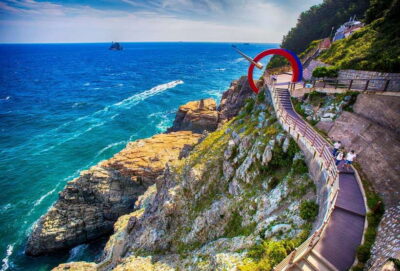
Coastal Treasures Beach Train, Culture Village & More
Read the review →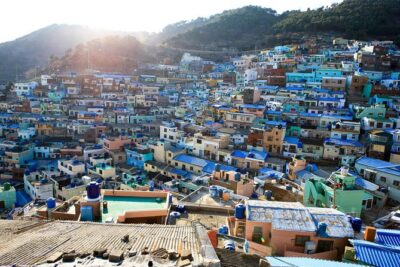
Busan’s Cultural Wonders with Beach Train & Gamcheon Village etc
Read the review →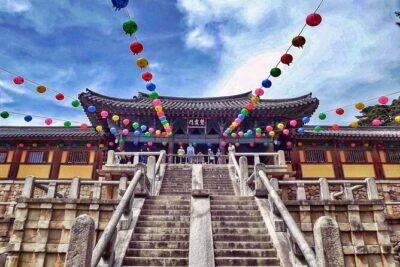
Gyeongju UNESCO World Heritage Guided Day Tour from Busan
Read the review →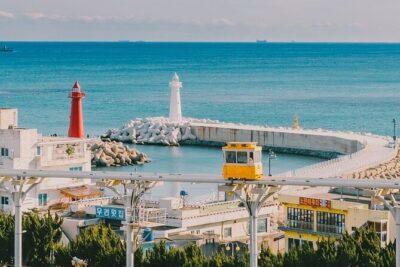
Private Busan Tour -Explore Cultural Landmarks with a Local Guide
Read the review →Browse the lists this tour appears in