
Reviewed · JEJU TOURS
Jeju: Private VIP Day Tour with Tickets
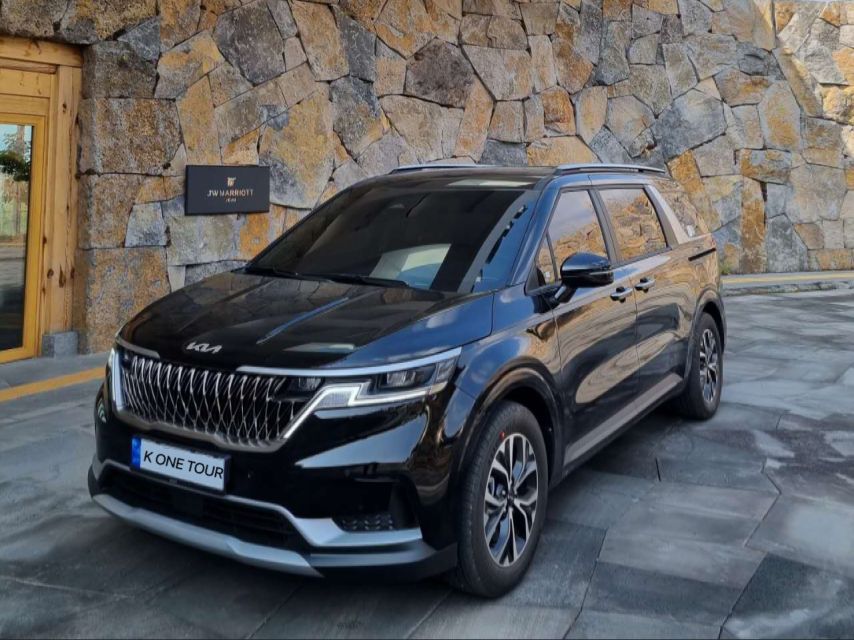
Jeju’s best feature is its variety, and this private tour lets you choose which side of the island deserves your day. In one comfortable vehicle, you can visit Seongsan Ilchulbong, lava caves, waterfalls, beaches, temples, or coastal roads without trying to keep up with a large group. I especially like the hotel pickup and drop-off and the chance to have a one-on-one guide who can shape the pace around your family.
The price is $172 per person, so it makes the most sense for a small group that values convenience and private transport. The main consideration is simple: nine hours is not enough to cover every route, and the included Udo ferry does not appear in the four main course descriptions, so ask the operator exactly how Udo fits into your chosen day.
Key points to know before booking
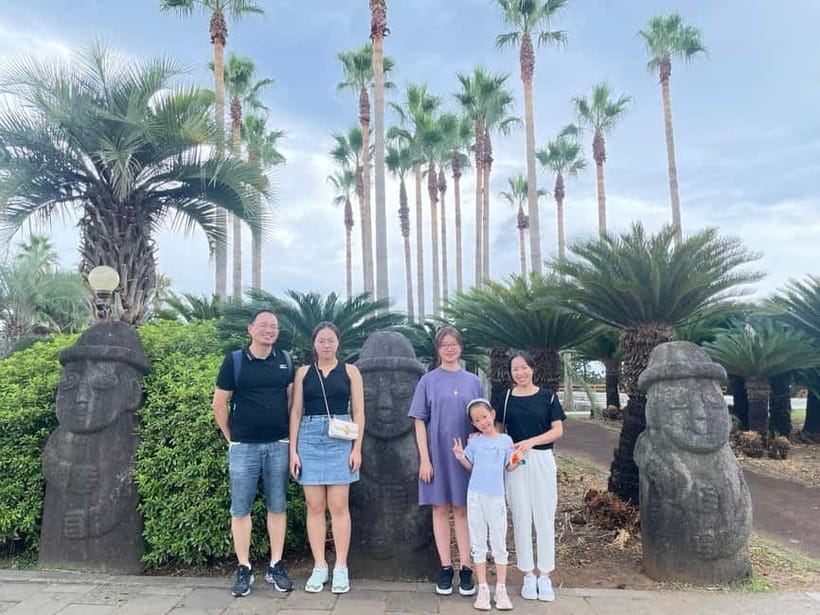
- Four route choices: East, west, south, and north routes focus on different sides of Jeju.
- Private vehicle for up to 10 people: You avoid group-tour delays and keep the day with your own family or friends.
- Licensed multilingual guide: English, Chinese, and Korean guiding is available. Past guides named in customer feedback include David, Michelle, and Daicy.
- Tickets and road costs included: Attraction admission, fuel, tolls, and parking are covered.
- Udo ferry included: Transportation on Udo itself, such as an electric bike or scooter, costs extra.
- Strong guide feedback: The most praised qualities are warm service, clear explanations, patience, and enough time at each stop.
What a private Jeju day really gives you
Jeju is a large island for a single day. The four route plans are not minor variations. Each sends you toward a different set of scenery and attractions, so your first choice matters more than the exact order of stops.
With a private vehicle, you do not need to manage buses, parking, or the long distances between coastal sites. That is especially useful when your group includes children, older adults, or anyone who would rather spend the day looking out the window than studying transport connections.
You also get a guide rather than a driver who simply points out the next stop. The service is offered in English, Chinese, or Korean, and past guide names include David, Michelle, and Daicy. The clearest praise centers on friendly service, detailed explanations, and time to explore without feeling rushed.
Still, this is a full day. Nine hours sounds generous, but Jeju’s attractions are spread out. You should pick one route based on your top priorities instead of hoping to squeeze in the whole island.
A few more Jeju half-days to weigh up
- Jeju: Eastern Jeju UNESCO Spots Day Tour
★ 4.9 · 1,148 reviews - Jeju: Western and Southern Sightseeing Day Tour
★ 4.8 · 972 reviews - East Jeju Essentials – Seongsan Ilchulbong (UNESCO) & Haenyeo
★ 5.0 · 939 reviews
East route: Seongsan, black sand, and village life
The east route is the strongest choice if you want Jeju’s most recognizable natural landmark plus a look at traditional island life.
Seongsan Ilchulbong and Gwangchigi Beach
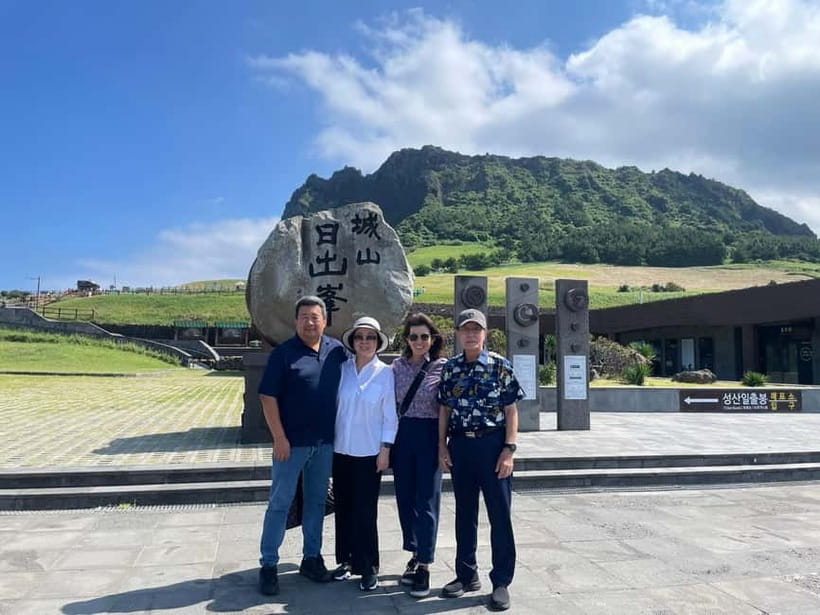
Seongsan Ilchulbong is a UNESCO World Heritage site and one of Jeju’s defining sights. This volcanic tuff cone rises beside the sea, giving the island a profile that appears on countless postcards and photographs.
The nearby Gwangchigi Beach adds a different texture. Its black sand reflects Jeju’s volcanic origin, and it gives you a shoreline view rather than another mountain overlook. I like this pairing because Seongsan provides the headline sight while Gwangchigi lets you notice the island’s geology at ground level.
Ask your guide how much walking is expected at Seongsan before you start. The listing does not specify a walking route or exact time there, and the private format gives you a better chance to adjust the pace than a fixed group schedule.
Cape Seopjiko and Seongeup Folk Village
Cape Seopjiko is known for its coastal walking route and its connection with Korean drama filming. Expect open sea views, a shore shaped by volcanic forces, and a chance to stretch your legs between vehicle stops.
Seongeup Folk Village shifts the focus from nature to daily life. Traditional thatched cottages preserve an older style of Jeju housing, and the village helps explain how island communities lived before modern tourism changed the roads and towns.
This is one of the east route’s best contrasts: dramatic coast, then a quieter look at local traditions. The village is not simply another photo stop. It gives context to the island beyond beaches and volcanic cones.
A different way to spend a day from here:
- Jeju: Southern Top UNESCO Spots Bus Tour
★ 4.9 · 648 reviews - South-West Jeju Essentials: Hallasan & Signature Highlights
★ 5.0 · 620 reviews - Jeju Island English Private & Flexible Tour any number anywhere
★ 5.0 · 561 reviews - East Jeju: Day Tour with Seongsan Peak & Haenyeo Performance
★ 4.9 · 478 reviews
Ilchul Land
Ilchul Land is a theme park built around several Jeju features. It includes Micheon Lava Cave, stone statues, and a cactus greenhouse.
You will find more variety here than at a single viewpoint, but that also means the stop may feel less essential if your priority is raw scenery. It suits families and groups who enjoy gardens, unusual rock forms, and several small attractions in one place.
West route: gardens, tea fields, and volcanic coast
Choose the west route if you want a polished garden park, a major beach, green tea scenery, and distinctive rock formations.
Hallim Park and Hyeopjae Beach
Hallim Park is Jeju’s largest garden park and contains eight themes, including lava caves, stone features, bonsai, and other planted areas. It is a useful stop when you want several types of scenery without driving to separate sites.
The park’s scale can be a benefit or a drawback. You have plenty to see, but you should not expect to cover every corner in a short visit. Tell your guide what interests you most so your time goes toward caves, gardens, bonsai, or stone displays.
Hyeopjae Beach is counted among Jeju’s top three beaches. Its clear water and pale sand make it a natural companion to Hallim Park, and the beach provides a simpler break after the park’s many sections.
Osulloc Tea Field and Museum
At the Osulloc Tea Field and Museum, the main visual draw is the long stretch of tea plants. The neat rows make strong photographs, especially if you want something different from volcanic rock and ocean views.
The museum adds a cultural and agricultural angle, showing that Jeju’s identity is not only about geology. Keep in mind that the day does not include meals, so any food or drinks you choose here would be your own expense.
Yongmeori Coast and Mount Sanbangsan
Yongmeori Coast is part of the Jeju UNESCO Global Geopark. Its name refers to the shore’s resemblance to a dragon entering the ocean with its head raised.
Mount Sanbangsan rises 395 meters and is a trachytic lava dome, another major geological feature within the UNESCO Global Geopark. The two stops work well together because Yongmeori shows volcanic rock at the coast while Sanbangsan gives you a large mountain form nearby.
Coastal access and walking conditions can affect how much you see, though no specific restrictions or weather policy are provided here. If Yongmeori is your main reason for choosing the west route, confirm the expected visit conditions with the operator.
South route: waterfalls, cliffs, and a temple
The south course is the best fit if you want the largest concentration of dramatic coast scenery and historic religious architecture.
Columnar Joint and Jeongbang Waterfall
The Columnar Joint is a UNESCO Global Geopark site with one of Korea’s largest formations of polygonal rock columns. These tall, tightly packed shapes were formed by volcanic lava cooling and cracking.
Jeongbang Waterfall is famous for sending water directly into the sea. It is described as the only waterfall in Asia with this feature, making it more than a standard forest waterfall. Here, the water, cliff, and ocean form one compact scene.
Both stops are worth time on foot. You may find wet rocks or uneven surfaces near coastal viewpoints, so comfortable shoes are sensible, though the tour information does not set out a detailed walking requirement.
Jungmun Beach and Yakcheonsa Temple
Jungmun Beach offers sand, clear water, and cliffs. It is a scenic pause rather than simply a place to swim, and the cliffs give the beach more character than a flat resort shoreline.
Yakcheonsa Temple is identified as the largest Buddhist temple built during the Joseon dynasty. Its scale and religious setting provide a change of mood after the coast. I like the south course for this reason: you move from geological drama to a place shaped by belief and architecture.
Oedolgae Rock and Olle Route 7
Oedolgae Rock is tied to the story of a grandmother waiting for her husband to return. It also connects with Olle Route 7, one of Jeju’s walking routes.
The stop gives you a small piece of local legend along with ocean scenery. It is a good place to ask your guide for the story rather than treating the rock as just another photograph. The private setup gives you room to spend more or less time walking, though the day’s total length still limits how long you can linger.
North route: mountain views and Jeju City coast
The north route suits you if your hotel is near Jeju City or you want a day that mixes the island’s famous mountain with easy-to-reach coastal sights.
Hallasan and Mysterious Road
Hallasan is Korea’s highest and best-known mountain and a UNESCO World Heritage site. Even if your day does not involve a full mountain hike, its presence gives the north route a strong natural focus.
The Mysterious Road is built around an optical illusion. Objects and vehicles can appear to move uphill, creating a short, curious stop rather than a major nature visit.
Do not choose this route expecting a complete Hallasan hiking day. The tour is nine hours and includes several other stops, while no hiking program or summit access is specified.
Yongduam Rock and Iho Beach
Yongduam Rock is a dragon-head formation shaped over time by sun, water, and wind acting on volcanic stone. It is close to Jeju City and easy to combine with the nearby coastal sites.
Iho Beach is also near downtown. Its red horse-shaped lighthouse is the feature to watch for, and the beach has a pop-culture connection because BTS member Jimin visited it.
These stops are practical if you have limited time on Jeju or want to finish near the city. They may feel less remote than the east or south routes, but that is part of their value. You get notable sights without committing the whole day to the far side of the island.
Dodu Rainbow Coastal Road
Dodu Rainbow Coastal Road runs for 1.2 kilometers and is known for its rainbow-painted concrete blocks beside the turquoise sea. It is a colorful, easy photo stop and a pleasant way to close a north route.
The road is more about views and pictures than a major cultural site. Pair it with Yongduam and Iho Beach if you want a light, accessible coastal day rather than a sequence of long walks.
What the $172 price includes
At $172 per person, this is not the cheapest way to see Jeju. The value comes from bundling several costs and removing much of the day’s transport work.
Included are attraction admissions, hotel pickup and drop-off, a private vehicle, fuel, tolls, and parking. Those details matter on Jeju, where a public transport plan can become slow and awkward when you are connecting several sites across one side of the island.
The fee also covers a professional licensed guide in English, Chinese, or Korean. The strongest service feedback focuses on guides who answer questions, explain places clearly, and keep a calm, friendly manner. One customer singled out a shared lunch as a highlight, but meals are not included, so treat lunch as your own choice and expense.
The tour accepts private groups from 1 to 10 people. For two people, the per-person cost is high, but you gain privacy and convenience. For a family or group of friends, the calculation becomes more favorable because one vehicle and one guide serve everyone.
A Udo ferry is included, but transport on Udo is not. You would pay separately for an electric bike or scooter if you use one. Since Udo is not described within the east, west, south, or north stop lists, ask before booking if you specifically want Udo included in the nine-hour plan.
Timing, communication, and practical limits
The tour lasts nine hours, with starting times based on availability. Your hotel pickup and drop-off are included, which makes the day easier from the first moment, especially if you do not have a rental car.
The operator plans to contact you through WhatsApp the day before. Leave a WhatsApp number, and contact the operator if you have not received a message by 8 p.m. You should also report any luggage in advance, since the vehicle arrangement may need to account for it.
Children aged 0 to 2 can join free if they do not occupy a separate seat. They do not count toward the number of paying people. The tour is wheelchair accessible, though the attractions themselves may have different surfaces and walking conditions.
Cancellation is free up to 24 hours before the start time, and you can reserve now and pay later. These policies are useful if your Jeju schedule is still shifting, but they do not solve the central choice: selecting a route that matches your priorities.
Who will get the most from this Jeju tour?
I would recommend this experience to families, couples, and small groups who want a private day without renting a car. It is also a good fit if you want explanations in English, Chinese, or Korean and prefer asking questions as you go.
The east route is best for Seongsan Ilchulbong, black sand, coast, and traditional cottages. The west route suits gardens, beaches, tea fields, and volcanic formations. The south route packs in waterfalls, cliffs, a temple, and Oedolgae. The north route is practical for Jeju City hotels and mixes Hallasan, optical illusions, volcanic rock, and colorful coastal roads.
I would be more cautious if you want a slow beach day, a serious Hallasan hike, or a detailed Udo visit. The schedule covers many possible sights, so the experience is built around seeing a range of Jeju highlights rather than staying in one place for hours.
Should you book it?
Book this tour if private transport and a personal guide are worth paying for, particularly when you are traveling with family or a group of friends. The combination of included tickets, road costs, hotel transfers, and multilingual guiding makes the $172 price easier to justify for a full day.
Choose your route carefully and confirm the Udo plan before payment. If you do that, this is a convenient way to see Jeju’s major natural and cultural sights while keeping the day flexible enough for questions, photos, and a sensible pace.
FAQ
How long does the Jeju private tour last?
The tour lasts 9 hours. Starting times depend on availability.
How many people can join the private group?
The private tour accepts groups of 1 to 10 people. If your group is larger than 10, contact the operator.
Which languages are available for the guide?
Guiding is available in English, Chinese, and Korean.
Does the price include hotel transportation?
Yes. Hotel pickup and drop-off are included, along with a private vehicle, fuel, toll fees, and parking fees.
Are attraction admission tickets included?
Yes. Admissions to the listed attractions are included.
Is transportation on Udo Island included?
The round-trip ferry to Udo Island is included. Transportation on Udo, such as an electric bike or scooter, is not included and must be paid for separately.
Recently added around Jeju
- Jeju Airport (CJU) Private Transfer to Jeju City Centre/Seogwipo★ 3.5 · 4 reviews
- 2 Day Private pictures of Nature Tour very experience taxi tour★ 5.0 · 4 reviews
- Jeju: K-Drama Spot When Life Gives You Tangerines Hotel Pick★ 5.0 · 4 reviews
- Seogwipo(The southern city of Jeju)City Walking Tours with Sunset★ 5.0 · 4 reviews
- Jeju Island: Sunrise Guided Tour with Hotel Pickup★ 4.7 · 4 reviews
- Jeju Highlights Day Trip (East Course)★ 5.0 · 4 reviews
- Jeju Day Tour – World Heritage & UNESCO★ 5.0 · 4 reviews
- 2 Days Private Taxi Tour – West and South of Jeju Island★ 5.0 · 4 reviews
Jeju Tours, compared.
East Jeju Essentials – Seongsan Ilchulbong (UNESCO) & Haenyeo
Read the review →
South-West Jeju Essentials: Hallasan & Signature Highlights
Read the review →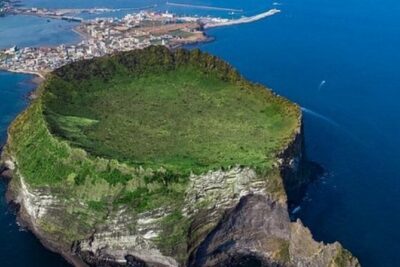
Jeju Island English Private & Flexible Tour any number anywhere
Read the review →
Day Tour with Seongsan Peak & Haenyeo Performance
Read the review →South-West Jeju Essentials: Hallasan & Signature Highlights
Read the review →Browse the lists this tour appears in