
Reviewed · JEJU TOURS
Explore Spirited Garden a Cultural Gem in Jeju
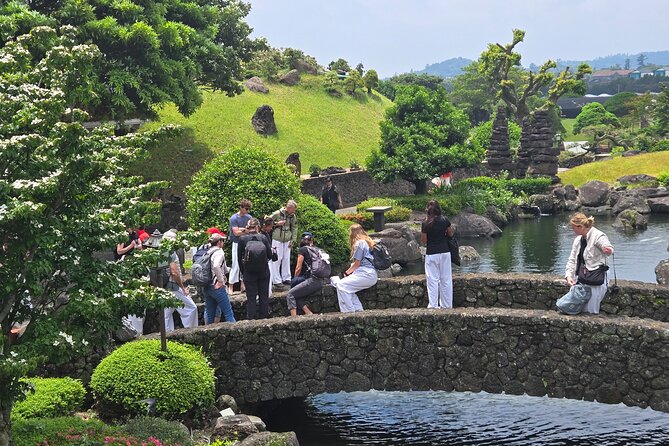
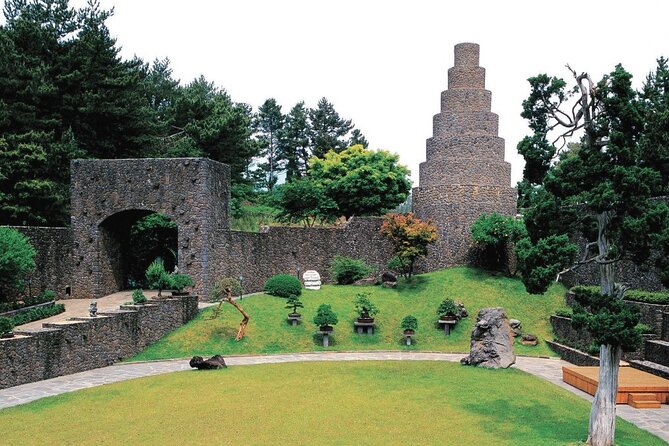
Spirited Garden is a place where bonsai trees, black volcanic stone, ponds, and quiet paths do most of the talking. Farmer Sung Beom-Young built this garden over many years, and the result feels less like a standard flower park and more like an open-air study in patience and balance.
I like the peaceful setting and the chance to see impressive bonsai, including unusual fruit trees. I also like the small human touch: Sung Beom-Young may still appear at the information center and speak with visitors. The main consideration is size. You may finish in 30 minutes, while a slow visit with photographs and quiet sitting takes closer to the advertised hour.
Key points
- Seven themed gardens: Walk among ponds, lawns, small hills, gates, bridges, and volcanic basalt walls.
- Bonsai takes center stage: The collection includes native Korean trees and striking fruit-bearing bonsai.
- Built by Sung Beom-Young: The garden reflects one farmer’s long personal project rather than a large public park.
- A quiet place for reflection: Inscriptions, streams, and seating areas encourage slow wandering and meditation.
- Good value at the listed price: Admission is listed at $8 per person, though one visitor recorded a 15,000-won entry fee.
- Simple one-hour visit: The garden begins and ends at the ticket office, with mobile admission included.
Why Spirited Garden Feels Different
Jeju has no shortage of scenic stops, but Spirited Garden asks you to pay attention to details close at hand. The garden covers about 43,000 square meters, also described as 12,000 pyeong or roughly 40,000 square meters. It is large enough to offer several distinct sections, yet compact enough to see without committing half a day.
The focus is not a carpet of seasonal flowers. Instead, you get native Korean trees, bonsai, rocks, water, stonework, and open space. That matters if you prefer shape, age, and texture over bright displays. The garden can feel especially calm because the design leaves room between its main features.
The garden’s message is philosophical, but it does not appear to rely on a long guided lecture. Inscriptions and small signs offer ideas to consider, while the arrangement of trees, stones, and water lets you form your own impression. I like that approach. You can read every sign carefully, or simply walk and enjoy the setting.
Spirited Garden has received international attention and has been named among the world’s top ten gardens by CNN, The Guardian, and National Geographic. It has also welcomed leaders from more than ten nations as a representative Korean garden. Those honors may raise expectations, but the best reason to visit is simpler: this is a quiet, personal garden with a clear point of view.
A few more Jeju half-days to weigh up
- Jeju: Eastern Jeju UNESCO Spots Day Tour
★ 4.9 · 1,148 reviews - Jeju: Western and Southern Sightseeing Day Tour
★ 4.8 · 972 reviews - East Jeju Essentials – Seongsan Ilchulbong (UNESCO) & Haenyeo
★ 5.0 · 939 reviews
Meeting Sung Beom-Young, the Garden’s Founder
The garden began with farmer Sung Beom-Young, whose work shaped both the plants and the mood of the place. He is not just a name attached to the entrance. Accounts of visits describe him appearing at the information center, speaking with people, and remaining attentive to the garden and its visitors.
You should not book this as a guaranteed personal meeting with him. Still, his presence gives the garden an unusual sense of connection. Many public gardens feel designed by a committee. Spirited Garden feels like the long work of one person who spent years deciding where a tree, rock, pond, or wall should go.
That personal history helps explain why the garden feels more thoughtful than polished. It is not simply a collection of attractive plants. Its stone walls, gates, bridges, and sitting areas are arranged to create pauses. You are meant to stop, look, and think about how time changes living things.
Walking Through the Seven Themed Gardens
Your visit begins at the ticket office, where you enter with the admission included in your booking. From there, the route leads through seven themed gardens and several supporting areas. The exact pace is up to you, which is useful because different parts reward different levels of attention.
Bonsai and native Korean trees
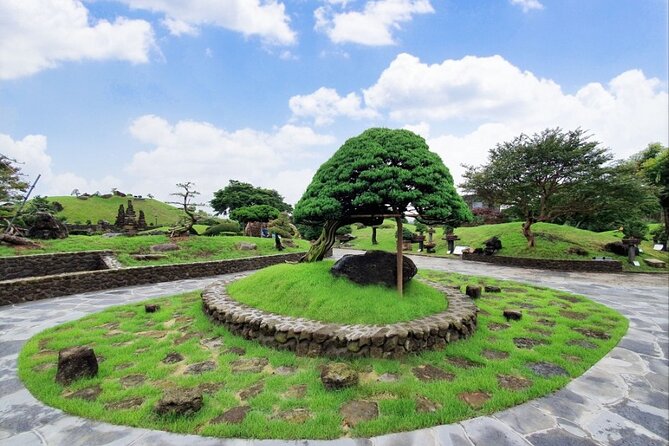
The bonsai collection is the main attraction. You will see native Korean garden trees shaped on a smaller scale, along with unusual forms that show how much patience goes into bonsai care. The fruit trees are especially interesting because they add a less expected detail to the collection.
I would plan to look at the trunks and branches, not only the overall shape. Bonsai is about age, proportion, and the way a tree carries evidence of careful shaping. If you rush past the plants as decoration, you may miss the point of the garden.
This section suits photographers, plant lovers, and anyone who enjoys quiet close-up details. It is less suited to someone hoping for large flower beds or a formal botanical display. One visitor found the bonsai particularly impressive but felt the garden offered fewer flowers than expected.
A different way to spend a day from here:
- Jeju: Southern Top UNESCO Spots Bus Tour
★ 4.9 · 648 reviews - South-West Jeju Essentials: Hallasan & Signature Highlights
★ 5.0 · 620 reviews - Jeju Island English Private & Flexible Tour any number anywhere
★ 5.0 · 561 reviews - East Jeju: Day Tour with Seongsan Peak & Haenyeo Performance
★ 4.9 · 478 reviews
Ponds, streams, and koi
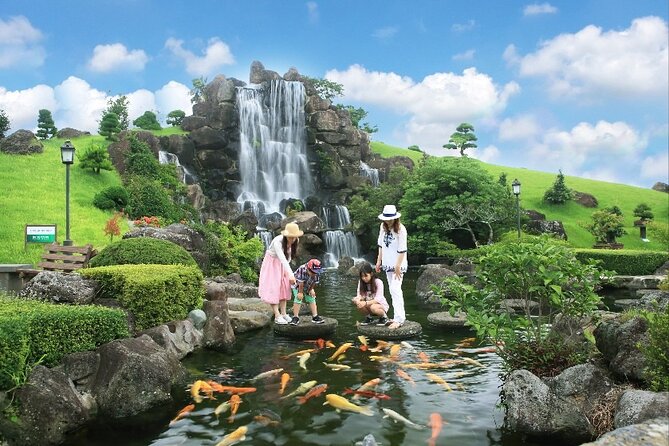
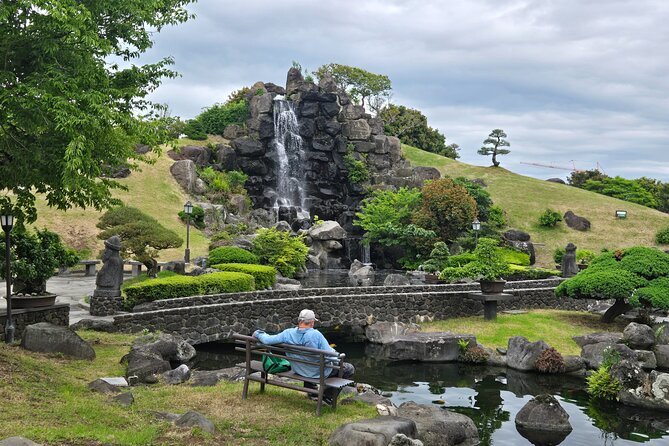
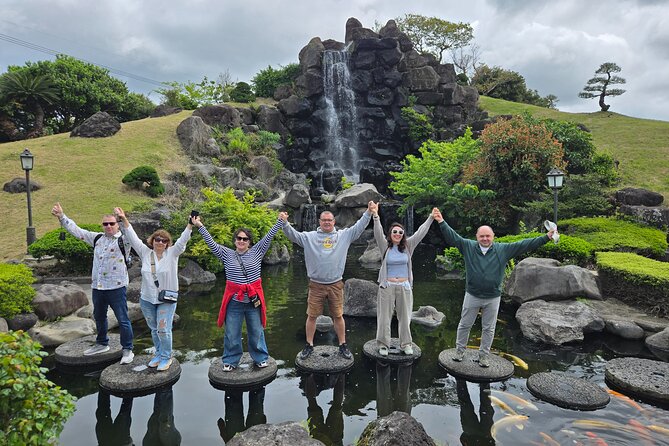
Clear ponds and streams break up the stone and greenery. Koi add movement, while the water reflects branches, rocks, and nearby structures. These features give the garden a softer rhythm and provide natural pauses along the route.
The water areas also help the garden feel varied without becoming busy. You may move from a tight arrangement of bonsai to an open pond, then across a bridge or past a small stream. That change in scale makes the one-hour visit feel fuller.
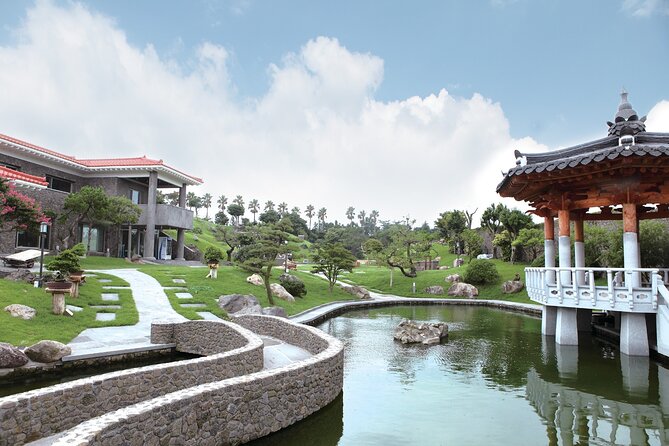
The ponds are not a separate attraction with a long program attached. They are part of the garden’s overall design. If you enjoy sitting quietly, these are the places to slow down. Several seating spots are set within antique-looking wooden structures, giving you somewhere to rest without leaving the garden.
Basalt walls, gates, and bridges
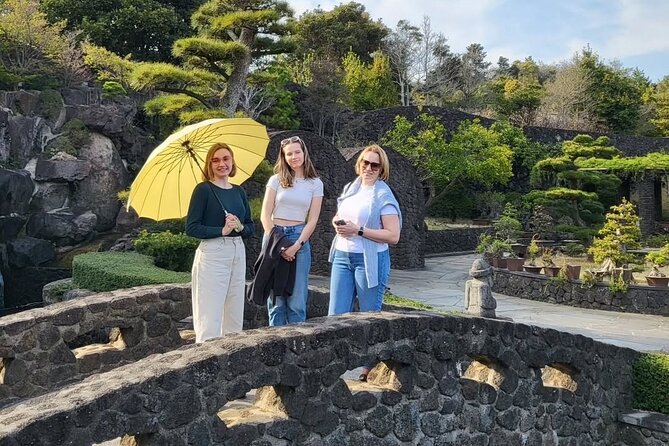
Jeju’s volcanic character appears in the walls and stone features. Dark basalt gives the garden a strong local identity, while gates and bridges frame views from one section to the next.
The stonework is practical as well as decorative. It creates boundaries without blocking the garden entirely. You can often glimpse water, trees, or a small hill beyond the wall, which keeps the route interesting.
These details are worth noticing if you are comparing Spirited Garden with a standard public park. The setting is not just plants placed in rows. Trees, rocks, water, and structures work together. That is also why the garden can look good in different weather. A winter visit, including one described during snowfall after Christmas, may give the dark stone and bare branches a completely different mood.
Lawns and small hills
The seven sections include spacious lawns and small hills called oreum. These open areas keep the garden from feeling crowded by bonsai and rockwork. They also give you wider views across the property.
The lawns are not the main reason to come, but they help with pacing. After examining closely shaped trees, you can walk through a more open space and regain a sense of the whole garden. Families and older visitors may appreciate these easier stretches, while photographers can use them to frame larger scenes.
How Long You Need and What the Visit Is Like
The advertised duration is about one hour. That is a fair target for a relaxed walk through the main sections, especially if you stop for photographs, read the inscriptions, and spend time beside the ponds.
You can also move through the garden in about 30 minutes if you walk steadily. That makes the visit easy to fit into a day of exploring western Jeju. The garden begins and ends at the same meeting point, so there is no complicated route or separate return transfer.
I would avoid treating the one-hour estimate as a timed tour. This is a self-guided visit rather than a program filled with scheduled demonstrations. You set the pace. The quiet atmosphere works best when you do not hurry.
Opening hours are listed as 9 a.m. to 5 p.m., Monday through Sunday, for the stated operating period from June 17, 2025, through February 7, 2027. Since the available information gives a closing time but no last-entry time, arriving well before 5 p.m. is the sensible choice.
The Price: Good Value for the Right Kind of Visit
The listed price is $8 per person, with admission included. At that rate, Spirited Garden can be good value if you want a peaceful cultural stop with strong photography potential and a distinct sense of place.
The value depends on how you use the visit. If you spend 30 minutes walking quickly and expect a large flower garden, the price may feel high. One account cites a 15,000-won entry fee and calls it expensive for a relatively short visit. That is a fair caution, particularly if you are comparing the garden with free outdoor areas on Jeju.
I see better value in a slower visit. Take time with the bonsai, read the inscriptions, sit beside the water, and notice the basalt construction. You are paying for the whole setting, not just a collection of plants. Coffee and tea are not included, and lunch is not part of the experience, so plan those separately.
A mobile ticket keeps entry simple. Confirmation is provided when booking, and the activity is private to your group in the sense that no larger guided group is listed. You are still visiting a public garden space, but you are not assigned to a bus tour or a fixed group route.
Who Will Enjoy Spirited Garden Most
I would recommend this garden to people who enjoy quiet, well-planned spaces and small details. It works particularly well for:
- Bonsai and plant enthusiasts
- Photographers looking for trees, water, stone, and reflections
- Couples or solo visitors who like a calm walk
- Anyone interested in Jeju’s volcanic materials and Korean garden design
- People who want a short stop away from city noise
- Visitors who enjoy reading reflective signs and making their own observations
It may not be the best choice if your priority is colorful flowers, large-scale botanical displays, or a full day of entertainment. The garden’s appeal is restrained. Its strongest moments come from careful looking rather than constant activity.
Service animals are allowed, and the garden is near public transportation. Most people can participate, though the available details do not describe the exact walking surface or level of slope. If mobility is a concern, you may want to confirm those conditions before booking.
Practical Tips for a Better Visit
Arrive with enough time to walk slowly. The garden is not huge, but stopping at every pond or bonsai can stretch the visit beyond the basic 30-minute circuit.
Bring a camera, but do not let it turn the walk into a checklist. The most effective photographs may come from combining a tree with a basalt wall, bridge, or reflection rather than photographing every plant on its own.
Read the inscriptions. They are part of the experience, not just decoration. The garden does not force one lesson on you, so you will get more from the visit if you allow the signs and setting to work together.
Look for the founder at the information center, but treat that as a fortunate possibility rather than a promised feature. If Sung Beom-Young is present, a brief conversation may add a personal layer to the visit.
Plan food and drinks elsewhere unless the garden’s facilities provide them during your visit. Lunch and coffee or tea are specifically excluded from the admission.
Finally, check the local weather. The garden can change character with the season. Clear water and dark stone may look crisp on a bright day, while winter branches or snow can create a quieter, more spare setting.
Should You Book Spirited Garden?
Book it if you want a calm, distinctive hour built around bonsai, Korean trees, water, basalt, and reflection. The garden gives you a different side of Jeju, one shaped by a single founder rather than by rides, crowds, or a large flower display.
Skip it if you need a packed schedule or expect acres of blossoms. The property may feel small for the price if you rush through it, and the one-hour duration is not guaranteed to feel long.
For most people, I would treat Spirited Garden as a worthwhile short stop, especially when paired with other sights in Jeju City or the island’s western area. Go slowly, notice the stonework, and give the garden room to be quiet. That is where its value lies.
FAQ
Where is Spirited Garden located?
Spirited Garden is at 1534 Jeoji-ri, Hangyeong-myeon, Cheju, Jeju-do, South Korea.
How long does a visit take?
The experience is listed as approximately one hour. You may complete a faster walk in about 30 minutes, while a slower visit with photographs and time for reflection can take closer to the full hour.
What is included in the admission?
Admission to Spirited Garden is included. The booking also provides a mobile ticket.
Are food and drinks included?
No. Lunch and coffee or tea are not included in the experience.
What are the opening hours?
The listed opening hours are 9 a.m. to 5 p.m., Monday through Sunday, during the stated operating period from June 17, 2025, through February 7, 2027.
Is Spirited Garden suitable for most people?
The available information says most people can participate. Service animals are allowed, and the garden is near public transportation.
Can I cancel for a full refund?
Yes. You can cancel at least 24 hours before the experience start time for a full refund. Cancellations or changes made within 24 hours are not refunded or accepted.
Recently added around Jeju
- Jeju Airport (CJU) Private Transfer to Jeju City Centre/Seogwipo★ 3.5 · 4 reviews
- 2 Day Private pictures of Nature Tour very experience taxi tour★ 5.0 · 4 reviews
- Jeju: K-Drama Spot When Life Gives You Tangerines Hotel Pick★ 5.0 · 4 reviews
- Seogwipo(The southern city of Jeju)City Walking Tours with Sunset★ 5.0 · 4 reviews
- Jeju Island: Sunrise Guided Tour with Hotel Pickup★ 4.7 · 4 reviews
- Jeju Highlights Day Trip (East Course)★ 5.0 · 4 reviews
- Jeju Day Tour – World Heritage & UNESCO★ 5.0 · 4 reviews
- 2 Days Private Taxi Tour – West and South of Jeju Island★ 5.0 · 4 reviews
Jeju Tours, compared.

East Jeju Essentials – Seongsan Ilchulbong (UNESCO) & Haenyeo
Read the review →

South-West Jeju Essentials: Hallasan & Signature Highlights
Read the review →
Jeju Island English Private & Flexible Tour any number anywhere
Read the review →
Day Tour with Seongsan Peak & Haenyeo Performance
Read the review →South-West Jeju Essentials: Hallasan & Signature Highlights
Read the review →Browse the lists this tour appears in