
Reviewed · JEJU TOURS
Jeju West: Small Group Healing Tour w/Caves & Dolphins
The best thing about this western Jeju day is its gentle rhythm. You move from Gotjawal forest and lava tubes to tea fields, volcanic cliffs, beach, and dolphin country without trying to cram in every corner of the island. Guide June is known for detailed explanations, local food advice, and giving you time to enjoy each stop.
I like the small-group format, which makes a big difference on narrow forest paths and in a minivan. I also like the mix of quiet nature and easy sightseeing: a forest walk, a cave, a tea museum, and a beach all fit into one day. The tradeoff is distance. Eight hours is a full day, and dolphin sightings are never guaranteed. One booking saw only a dorsal fin.
Key points to know before booking
- A slow 1.8-kilometer Gotjawal walk gives you a shaded introduction to Jeju’s unusual lava forest.
- Suwolbong offers one of the island’s finest volcanic rock exposures, with a guide to explain what you are seeing.
- Hallim Park combines two lava tubes with gardens, a folk village, and walking paths, so you get more than a cave visit.
- O’Sulloc and Innisfree Jeju House provide a polished break among tea fields, with tastings, displays, and products.
- Dolphin watching at Conch Park is a hopeful wildlife stop, not a guaranteed show.
- The $105 price includes transport, admissions, pickup, and an English-speaking guide, but lunch and drinks cost extra.
Why this western Jeju route works
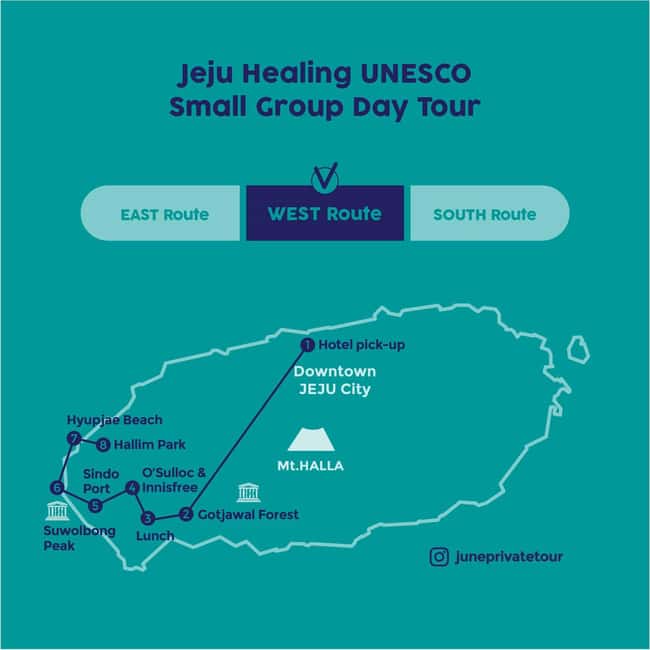
Jeju is easy to underestimate. On a map, the western sights may look close together, but the island is broad, and getting between forest, coast, tea country, and Hallim takes time. This tour solves that problem with a practical loop from downtown Jeju City.
The appeal is not one blockbuster sight. It is the variety. In a single day, you can feel the cool shade of a lava forest, walk through a dark tube formed by ancient volcanic activity, sip green tea, look for dolphins, study ash deposits at a coastal geosite, and finish beside clear water and pale sand.
The word healing is used often in the tour description, but here it has a fairly clear meaning. The schedule is not built around long hikes or a race for photographs. Several stops are designed for quiet observation, and June adjusts the amount of explanation and free time to the group.
That makes this a good choice if you want an informed day out without the rigid feel of a large coach tour. It is less suitable if you want serious hiking, a packed list of every major western attraction, or a guaranteed wildlife encounter.
More Small Group Tours in Jeju
- Jeju Premium Small Group UNESCO Day Tour – East Course
★ 5.0 · 84 reviews - Jeju Premium Small Group UNESCO Day Tour – South Course
★ 5.0 · 73 reviews - Jeju Premium Small Group UNESCO Day Tour – South
★ 4.9 · 50 reviews
Starting in Jeju City with a small group
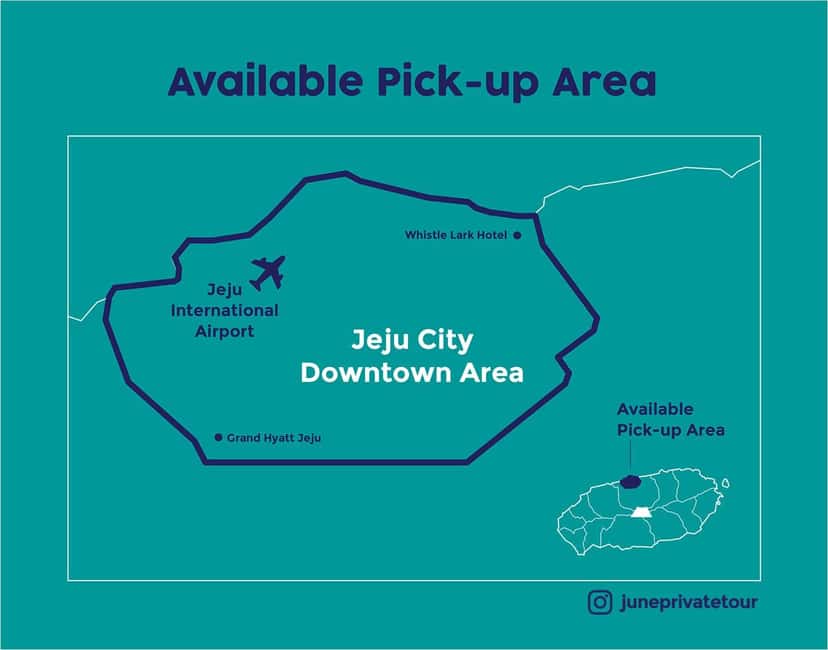
Pickup is available at hotels in downtown Jeju City, near Jeju International Airport. The exact time and vehicle details are sent through WhatsApp the day before, so make sure the phone number connected to your booking can receive messages.
Transportation is by minivan or van. That matters here. The route includes forest roads, coastal stops, and several places where a large bus would make the day less nimble. A small vehicle also leaves more room for conversation with June, who explains not only the sights but also aspects of South Korean history and Jeju itself.
The stated minimum is four participants. The tour conditions say that if this number is not reached, you may be offered another date or a full refund. At the same time, group size can sometimes be very small, which gives the day a private-tour feel when the schedule allows it.
The tour ends back in the downtown Jeju City area. You can also request a drop-off at a preferred location such as your hotel, a traditional market, or a restaurant within the stated service area.
Gotjawal Provincial Park and Jeju’s lava forest
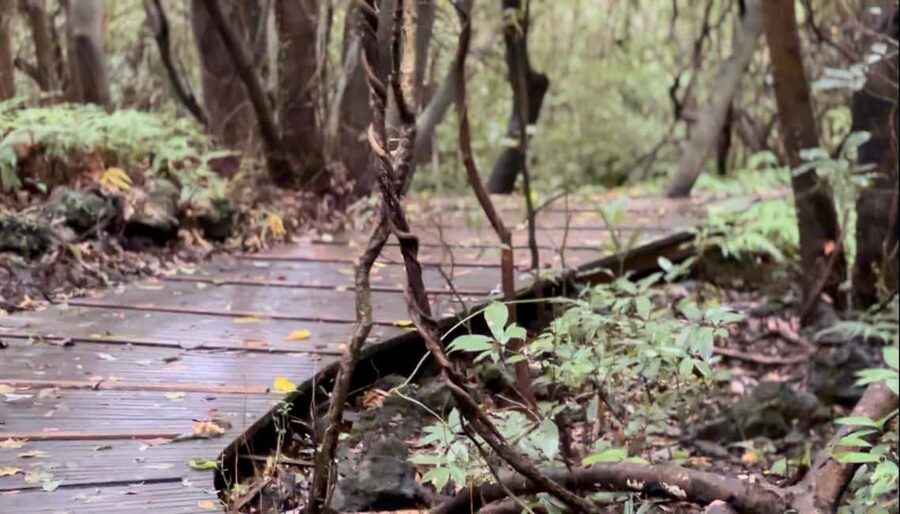
The first major stop is Jeju Gotjawal Provincial Park, with about an hour for a guided visit. The walking trail is listed at 1.8 kilometers and usually takes about 60 minutes.
Gotjawal is not a manicured woodland. Lava rock lies under and around the forest, creating uneven ground and a distinctive mix of trees, shade, and humid air. The porous volcanic rock helps water move underground, and the forest has a cool, damp feel even when the day outside is hot.
The tour presents Gotjawal as a place for clean air, quiet, and a closer connection to Jeju’s natural systems. That is a useful way to experience it. You are not simply ticking off another park. You are seeing how old lava fields can support forest and help feed underground water supplies.
Wear shoes with a good grip. The walking distance is modest, but uneven lava terrain is less forgiving than a paved park path. Comfortable clothing is also important, particularly in Jeju’s warm and humid months.
This is one of the strongest parts of the day for anyone who prefers nature to shopping. It is also the stop most likely to feel restorative rather than merely scenic.
Lunch with local advice, not a fixed meal
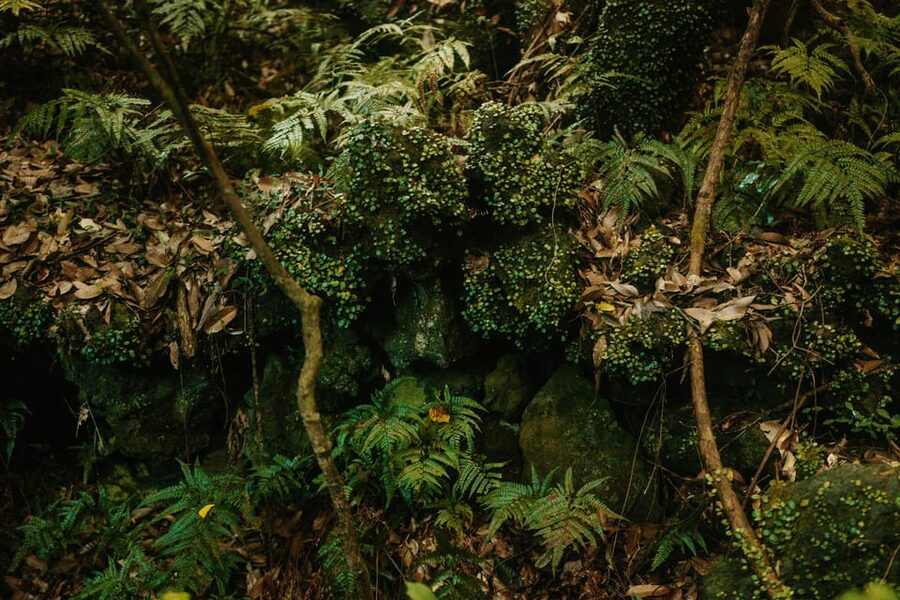
Lunch lasts about an hour at a local restaurant, but it is not included in the $105 price. June suggests suitable local kitchens, including options for vegetarians, and the meal is ordered and paid for separately.
That arrangement gives you more flexibility than a fixed tour menu. You can ask for a traditional meal at a reasonable price, and June can help explain what is available. It also means your final cost depends on what you choose, so budget for food and drinks in addition to the tour fee.
The lunch stop is especially useful because large bus routes often rely on set restaurants near major attractions. A small-group guide can point you toward a more local option, though the exact restaurant is not specified in advance.
If you have dietary needs beyond vegetarian food, raise them when booking or when the operator contacts you. The available information specifically confirms vegetarian suggestions, not a full range of dietary arrangements.
A different way to spend a day from here:
- Jeju: Eastern Jeju UNESCO Spots Day Tour
★ 4.9 · 1,148 reviews - Jeju: Western and Southern Sightseeing Day Tour
★ 4.8 · 972 reviews - East Jeju Essentials – Seongsan Ilchulbong (UNESCO) & Haenyeo
★ 5.0 · 939 reviews - Jeju: Southern Top UNESCO Spots Bus Tour
★ 4.9 · 648 reviews
O’Sulloc and Innisfree among the tea fields
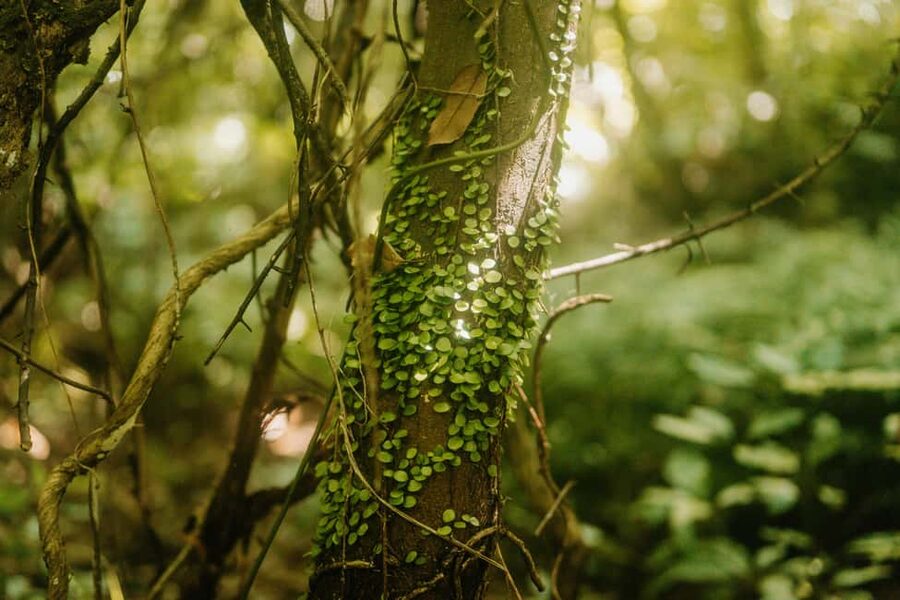
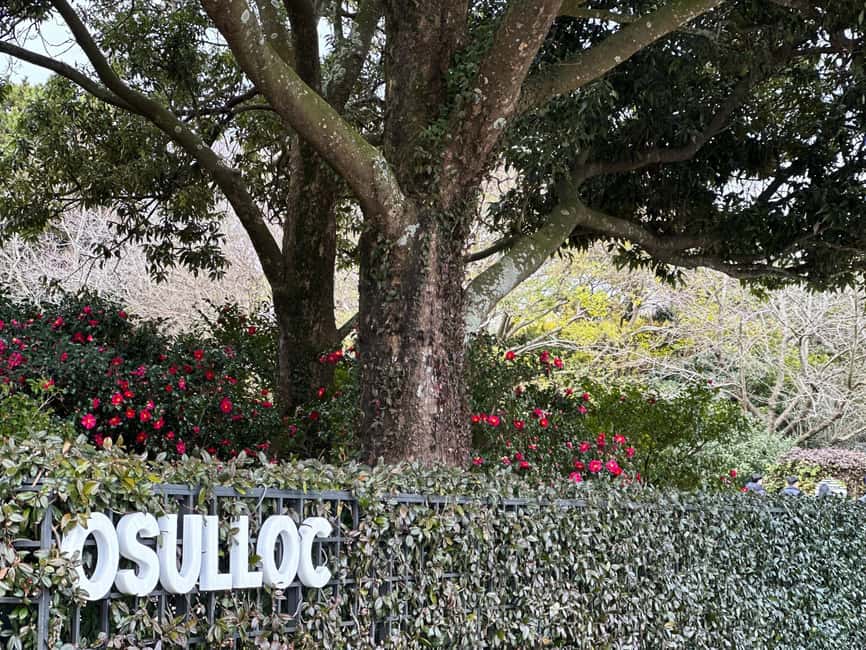
O’Sulloc Green Tea Museum provides about an hour for a guided visit and break. The setting is surrounded by tea fields, and the stop combines a tea exhibition, interactive displays, tastings, and a shop selling tea products.
This is a useful pause after the forest and before the coastal sights. You can slow down with a drink, learn about Jeju tea, and browse without needing to commit to a long walk. The location also gives you a different side of the island. Jeju is not only lava and ocean; its cultivated tea country has its own calm visual character.
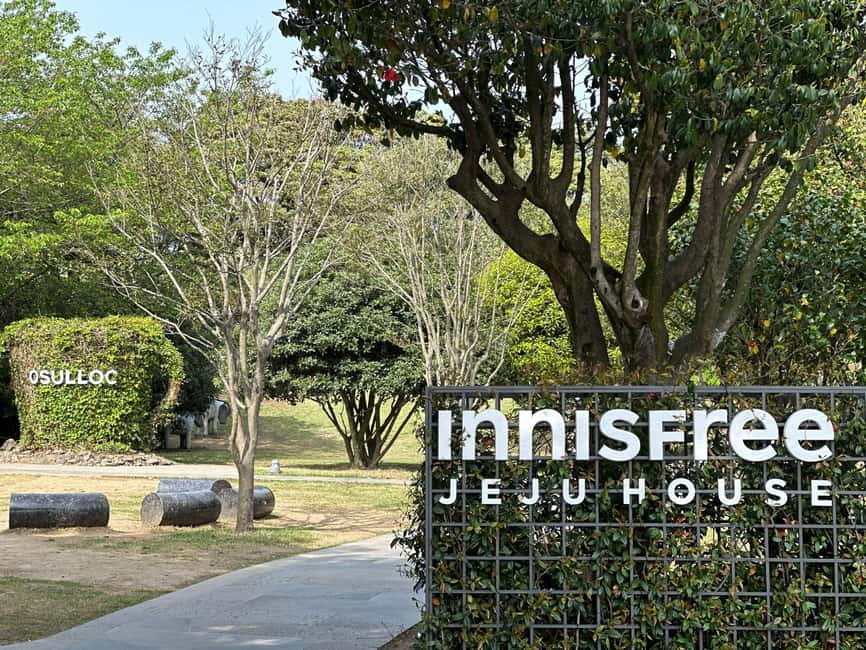
Innisfree Jeju House is part of the same picturesque area. Its skincare and beauty products use ingredients sourced from Jeju, so this stop will appeal more to shoppers and cosmetics fans than to anyone seeking a purely historical attraction.
The tour description presents both places together, while the formal schedule lists O’Sulloc for one hour. Exact free time at Innisfree may vary, so think of this as a flexible tea and product stop rather than a separate long guided visit.
Prices for food, tea products, and skincare are personal expenses. You do not need to buy anything to appreciate the gardens and displays, but the setting is clearly designed to encourage browsing.
Looking for dolphins at Conch Park
At Conch Park, the focus turns to Jeju’s dolphins. You watch the water for ripples, splashes, and the quick appearance of a fin, with the K-drama connection adding a bit of pop-culture flavor.
This is a genuine wildlife search, not a staged performance. That is part of its charm, but it also creates the day’s clearest uncertainty. Dolphins may appear briefly or remain out of sight. One particularly unlucky outing produced only a glimpse of a back fin, so you should treat the stop as a chance to look rather than a promise of a close encounter.
The stop lasts about 30 minutes. That is long enough to scan the water without allowing wildlife watching to consume the rest of the route. If you enjoy patient observation, it can be a memorable change of pace. If you need guaranteed action, this will be the least predictable part of the day.
The K-drama references to Woo Youngwoo and Samdal may make the location more appealing to fans, but you do not need to know either show to enjoy the coastal setting.
Suwolbong and some of Jeju’s finest volcanic geology
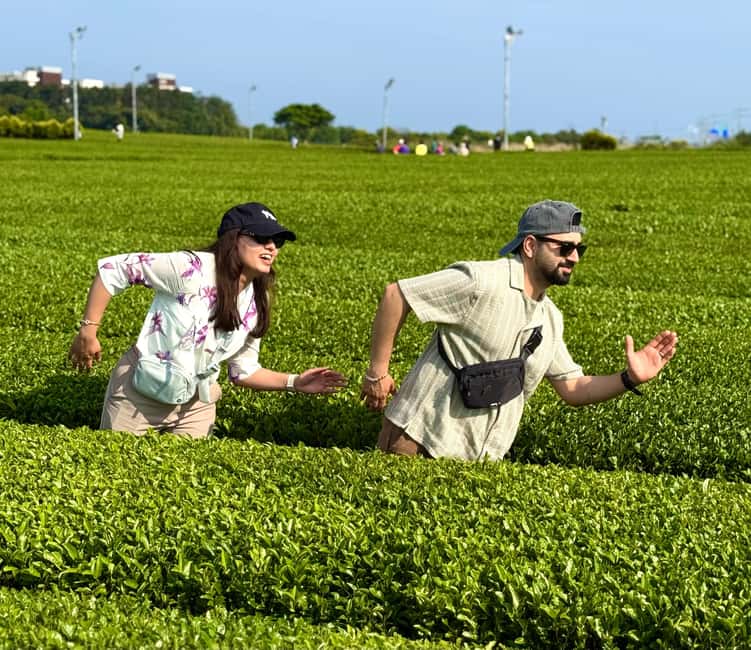
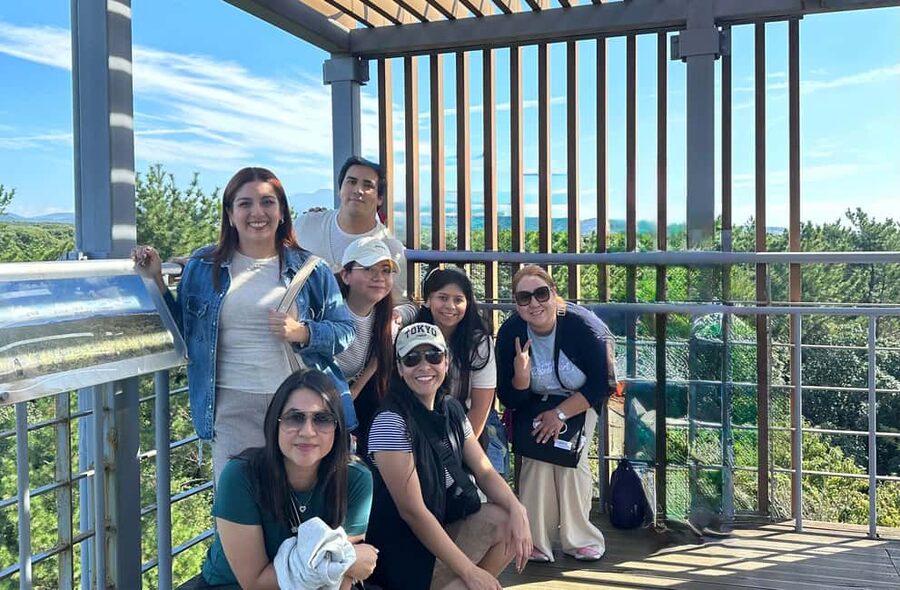
Suwolbong Observatory gets about 40 minutes. This is not just a viewpoint for taking a quick photograph. Suwolbong is an important volcanic geosite, known for an unusually clear exposure of pyroclastic surge deposits.
In plain language, the rock layers show how explosive volcanic material moved and settled. The cliff and coastal setting make the geology visible in a way that a textbook cannot. June’s explanations are valuable here because the formations may otherwise look like ordinary bands of rock.
This is one of the stops where a guide adds real value. You can see the layers on your own, but a clear explanation helps you understand why Suwolbong matters and how the deposits formed.
Forty minutes is enough for an introduction and time to look around, but not a long coastal walk. If you want an extended geological hike, this tour will feel brief. For most people, the stop offers a strong balance between explanation, views, and the need to reach the next attraction.
Hyeopjae Beach and the view toward Biyangdo
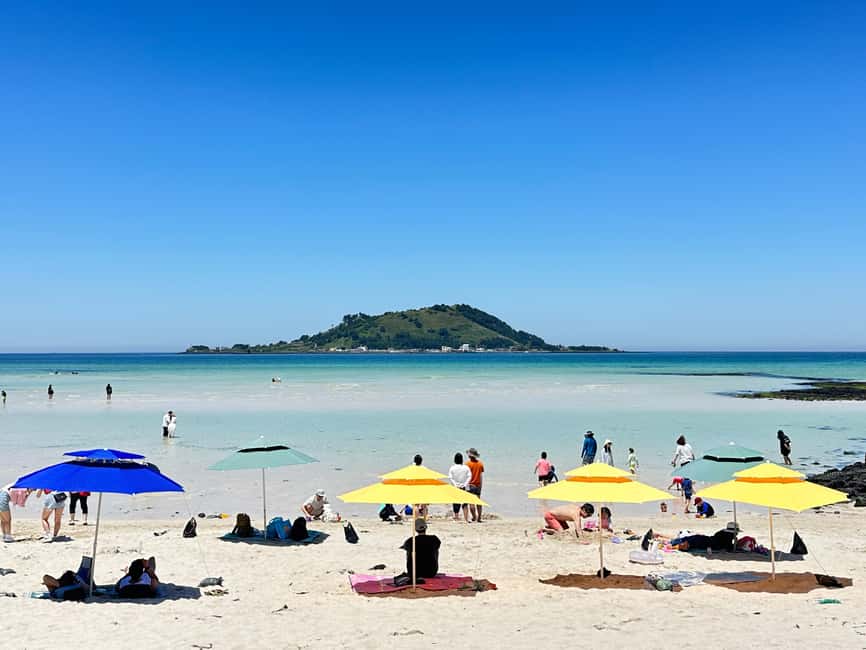
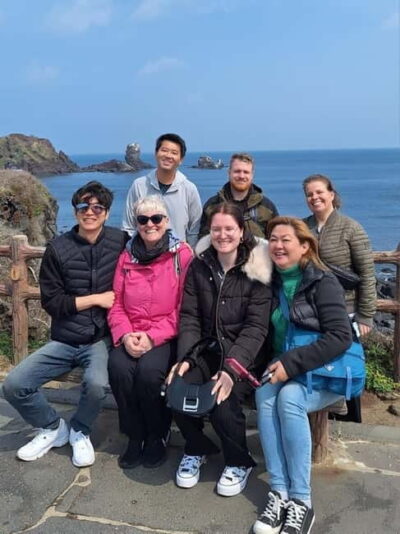
Hyeopjae receives about 30 minutes. Its silver-white sand and clear green-blue water create one of the easiest scenic pauses on the route.
Across the water, Biyangdo Island has a distinctive shape compared with the mainland coast. The tour description uses a playful comparison to a boa constrictor swallowing an elephant, which gives you a memorable way to look at the island’s outline.
Thirty minutes is enough to stand by the water, take photographs, and enjoy the color of the sea. It is not enough for a proper beach day, swimming session, or long walk along the shore. Pack your expectations accordingly.
I like this stop because it breaks up the more educational sections. After hearing about volcanic deposits and underground aquifers, you get a simple stretch of sand and open water. The drawback is that beach time is short, so anyone hoping to linger at Hyeopjae may prefer to visit separately.
Hallim Park, gardens, and two lava tubes
The final major attraction is Hallim Park, with about 80 minutes. The park contains nine themes: a subtropical botanical garden, bonsai garden, folk village, palm tree road, bird safari, pond garden, rock displays, outdoor walking paths, and lava tubes.
That list tells you what kind of place Hallim is. It is a large, organized attraction with several different sections, not a single wild nature site. You can see a lot in a short time, but you will not explore every corner deeply during an 80-minute visit.
The two lava tubes, Hyupjaegul and Ssangyonggul, are the most distinctive part of the stop. Inside, the light drops away, the air feels different, and the quiet makes the scale of the tunnels easier to appreciate. The tubes were shaped by lava, then changed over time by fine sand and other natural forces, producing unusual formations.
This is where the day’s cave theme comes together. Gotjawal showed you forest growing over lava; Hallim shows you the empty spaces left beneath it. The experience is accessible compared with a demanding cave expedition, but uneven surfaces and darkness mean comfortable shoes matter.
Hallim Park also provides variety for mixed groups. One person can focus on the gardens, another on the folk village or rock displays, and everyone can meet again as the guide directs the route. The downside is that the park can feel busy in concept, with many themes competing for your attention. June’s guidance helps you use the limited time well.
What the $105 price really covers
At $105 per person, this is not the cheapest way to see western Jeju. It is also not just a ride between attractions. The price includes downtown hotel pickup and drop-off, transportation in a minivan or van, a certified English-speaking driving guide, and admission fees.
Those inclusions add up. Admissions at O’Sulloc-related attractions, Suwolbong, and Hallim Park would otherwise require separate planning, and a private vehicle saves you from fitting multiple buses into one long day. The guide is the main value, especially at Gotjawal and Suwolbong, where context improves the visit.
You still need to pay for lunch, drinks, and personal purchases. Factor those into the budget before booking. The reserve-now, pay-later option and free cancellation up to 24 hours before departure also make the booking less rigid, provided you follow the stated terms.
For a solo visitor or couple who wants a full western Jeju day without renting a car, the price is reasonable. For a larger family already using a rental car, the value depends more on how much you want guided interpretation and help with the route.
Who will enjoy this tour most
Choose this tour if you want a broad taste of western Jeju without spending the day driving. It suits first-time visitors, couples, solo travelers who prefer company, and anyone drawn to forests, volcanic geology, tea, caves, and beaches in equal measure.
It is particularly useful for people who value a guide’s local judgment. June can explain the places, recommend lunch, discuss South Korean history, and adjust the day’s feel when the group is small.
You should think twice if your priority is a long hike, extended beach time, shopping, or guaranteed dolphins. The walking is moderate rather than strenuous, but you are still out for eight hours and moving through several attractions.
Wheelchair users cannot be accommodated according to the tour information. Baby strollers are not allowed. Infants and children must be counted as passengers, and car seats are compulsory for infants and children under six. You must provide the child’s birth month and year so the correct seat can be arranged.
Should you book the western Jeju healing tour?
I would book this if you want the western side of Jeju explained rather than simply photographed. The strongest combination is Gotjawal, Suwolbong, and Hallim Park, with O’Sulloc and Hyeopjae providing lighter breaks between them.
The guide can make or break a sightseeing day, and June receives especially strong praise for being precise, considerate, fun, and generous with local knowledge. The small group also gives you more chance to ask questions and request a little breathing room.
Book with realistic expectations about dolphins and beach time. You may see a fin, or you may see nothing. Hyeopjae is a short stop, and lunch is not included. If those limits are acceptable, this is a well-balanced way to meet Jeju’s forests, volcanic coast, tea fields, and lava caves in one unhurried day.
FAQ
How long does the Jeju western tour last?
The tour lasts eight hours, including transportation and the scheduled visits to Gotjawal, O’Sulloc, Conch Park, Suwolbong, Hyeopjae, and Hallim Park.
Where does pickup take place?
Pickup is available from hotels within the downtown Jeju City area near Jeju International Airport. The listed meeting point is Jeju City Council, written as 제주시의회.
Is lunch included?
No. Lunch is not included in the tour price. The guide suggests local restaurants, and vegetarian options are available to suggest. Meals, drinks, and personal purchases are extra.
Is dolphin watching guaranteed?
No. Dolphin watching depends on whether dolphins are present and visible at the time of the visit. The Conch Park stop lasts about 30 minutes.
What should I wear and bring?
Bring comfortable shoes and comfortable clothing. Shoes with good grip are sensible for the Gotjawal trail and the lava tubes.
Can children join the tour?
Yes, but infants and children must be included in the passenger headcount. Car seats are compulsory for infants and children under six, and you must provide the child’s birth month and year so the appropriate seat can be supplied.
Is the tour accessible to wheelchair users?
No. The activity is not suitable for wheelchair users, and baby strollers are not allowed.
More Dolphin Watching in Jeju
- Small Group Tour in West Jeju Healing Island w/Caves & Dolphins
★ 5.0 · 17 reviews
Recently added around Jeju
- Jeju Airport (CJU) Private Transfer to Jeju City Centre/Seogwipo★ 3.5 · 4 reviews
- Jeju: K-Drama Spot When Life Gives You Tangerines Hotel Pick★ 5.0 · 4 reviews
- 2 Day Private pictures of Nature Tour very experience taxi tour★ 5.0 · 4 reviews
- Seogwipo(The southern city of Jeju)City Walking Tours with Sunset★ 5.0 · 4 reviews
- Jeju Island: Sunrise Guided Tour with Hotel Pickup★ 4.7 · 4 reviews
- Jeju Highlights Day Trip (East Course)★ 5.0 · 4 reviews
- Jeju Day Tour – World Heritage & UNESCO★ 5.0 · 4 reviews
- 2 Days Private Taxi Tour – West and South of Jeju Island★ 5.0 · 4 reviews
Jeju Tours, compared.

East Jeju Essentials – Seongsan Ilchulbong (UNESCO) & Haenyeo
Read the review →

South-West Jeju Essentials: Hallasan & Signature Highlights
Read the review →
Jeju Island English Private & Flexible Tour any number anywhere
Read the review →
Day Tour with Seongsan Peak & Haenyeo Performance
Read the review →South-West Jeju Essentials: Hallasan & Signature Highlights
Read the review →Browse the lists this tour appears in