
Reviewed · JEJU TOURS
Jeju Day Tour – World Heritage & UNESCO
Jeju’s volcanic story comes alive on this full-day private tour, which links Seongsan Ilchulbong, a UNESCO World Heritage site, with waterfalls, lava formations, and sea cliffs. I like the choice of starting in Seogwipo or Jeju City, and I like having a private vehicle for a route that would be awkward to cover by public transport in one day.
The main consideration is pace. You will cover a lot of ground in 8 to 9 hours, and entrance fees, lunch, and personal expenses are extra. Manjanggul Cave is also listed as closed through August 31, 2025, so check the current operating status before booking.
Key points to know before booking
- Two departure patterns: Seogwipo focuses on Oedolgae, waterfalls, Seongsan Ilchulbong, and a choice of Manjanggul Cave or O’Sulloc Tea Museum.
- Jeju City route: Hamdeok Beach, Manjanggul Cave, Woljeongri Beach, Seongsan Ilchulbong, and a choice between Seopjikoji and Seongeup Folk Village.
- Private transport: Up to four people use a regular taxi, with larger vehicles arranged for bigger groups.
- Natural sights dominate: Expect volcanic rock, sea cliffs, lava tubes, beaches, and waterfalls rather than a museum-heavy day.
- Guide communication is simple: Drivers speak simple English, Japanese, or Chinese. Mr. Hyun-woo Lee is one named driver associated with the experience.
- Costs beyond the tour: Fuel, parking, and insurance are included, but several admission tickets and meals are not.
What this Jeju day tour does well
This is best understood as a private sightseeing circuit, not a slow walking tour. You get a driver, a flexible vehicle arrangement, pickup and drop-off on Jeju Island, and a carefully packed day of major natural sights.
The strongest feature is the range. In one day, you can see a volcanic tuff cone rising beside the sea, a waterfall dropping into the ocean, a lava tube shaped by ancient eruptions, and beaches with pale sand and clear water. Those sights feel connected because Jeju’s geology is the thread running through the whole day.
I also like the private format. A group of four can use a regular taxi, while five or more use a jumbo taxi or minivan, and groups of nine or more use a mini-bus. You are not joining a large coach group, and only your own party takes part.
The tradeoff is that the day can feel full. Several stops allow only 15 to 50 minutes, while Seongsan Ilchulbong gets about an hour. That is enough for a good look, but not enough to explore every path, browse every cafe, or wait around for perfect weather and photographs.
More Historical Tours in Jeju:
- Jeju Island UNESCO Heritage Bus Tour
★ 5.0 · 54 reviews - Private Full Day Tour World Natural Heritage & UNESCO in jeju
★ 5.0 · 9 reviews - Jeju UNESCO Natural Heritage Private Tour by Certified Guide
★ 5.0 · 5 reviews
Choosing between Jeju City and Seogwipo
Your pickup point determines the shape of the day, so choose with care.
From Seogwipo City, the route includes Oedolgae, Cheonjiyeon Falls, Jeongbang Falls, Seongsan Ilchulbong, and Jusangjeolli Cliff. You then choose one extra stop, either Manjanggul Cave or O’Sulloc Tea Museum.
This version favors dramatic coastal scenery and waterfalls. It is the better match if you are staying in Seogwipo and want to see the area’s famous shore formations without arranging several separate rides.
From Jeju City, the route includes Hamdeok Beach, Manjanggul Cave, Woljeongri Beach, and Seongsan Ilchulbong. You choose between Seopjikoji and Seongeup Folk Village for the final stop.
This route has more beach time and a clearer eastern Jeju feel. Choose Seopjikoji if you want cliffs, grass, a lighthouse, and ocean views. Choose Seongeup if you prefer a traditional village where people still live among old Jeju buildings and trees.
Oedolgae and the coastal beginning near Seogwipo
Oedolgae is a 20-meter stone pillar rising alone from the sea. Its name means something close to solitary rock, and local names include General Stone and Grandma Rock. The formation was made by volcanic activity, then shaped as waves wore away the softer rock around it.
The site also marks the beginning of Jeju Olle Trail Course 7. You do not need to walk the full trail to appreciate the setting. An hour gives you time to see the pillar, look along the coast, and notice the way Jeju’s sea culture is tied to these rocks and waters.
The old stories add a human layer. One tale connects the rock with General Choi Yeong, who used it as part of a wartime deception. Another links it with the women and families waiting for people who worked at sea. You get both the natural formation and the local meaning attached to it.
Cheonjiyeon Falls, where water meets a forested valley
Cheonjiyeon Falls is a short nature stop with a strong payoff. Water drops 22 meters from a rock cliff, and the sound is a major part of the experience. The name means sky connected with land, an apt description for a tall white fall framed by dark stone and greenery.
The valley supports several temperate plants, including camellias and a natural monument species of Elaeocarpus. It is also known for the habitat of giant mottled eels, which are nocturnal and may not be visible during a daytime visit.
This stop is listed between Oedolgae and Jeongbang Falls on the Seogwipo route. The exact time is not specified, so ask the driver how long you have before setting off. If you want quiet nature, this is one of the more restful parts of the day.
A few more Jeju half-days to weigh up
- Jeju: Eastern Jeju UNESCO Spots Day Tour
★ 4.9 · 1,148 reviews - Jeju: Western and Southern Sightseeing Day Tour
★ 4.8 · 972 reviews - East Jeju Essentials – Seongsan Ilchulbong (UNESCO) & Haenyeo
★ 5.0 · 939 reviews - Jeju: Southern Top UNESCO Spots Bus Tour
★ 4.9 · 648 reviews
Jeongbang Falls, one of Jeju’s rare sea-facing waterfalls
Jeongbang Falls drops directly into the sea, a feature that gives it a different character from Cheonjiyeon. Two streams fall about 23 meters over a black cliff, with pine trees and steep rock around the water.
Allow about 40 minutes here. That is enough to reach the viewing area and take in the unusual meeting of fresh water and ocean. The approach involves uneven ground and a waterfall-side setting, so sturdy shoes are sensible.
An admission fee is not included. The tour information also notes an old legend connected with Seobul, a man sent by China’s Qin ruler in search of an elixir plant. The story is part of the place’s identity, but the main reason to stop is the direct drop into the sea.
Seongsan Ilchulbong, Jeju’s volcanic landmark
Seongsan Ilchulbong is the anchor of the day. This broad volcanic tuff cone formed about 5,000 years ago from an eruption on the ocean floor. Its crater and position beside the blue sea make it one of Jeju’s most recognizable sights.
You get roughly one hour here. Use it wisely. If you are fit and the path is open, walking toward the summit gives you a view into the volcanic crater and back across the sea. If you prefer an easier visit, enjoy the lower paths and the profile of the cone from below.
The site is famous for sunrise, but this day tour does not promise a sunrise departure. You will still see the formation in daylight, and the ocean setting remains impressive. Admission is extra.
Seongsan also connects with Jeju’s haenyeo tradition, the island’s female sea divers. The tour information suggests heading toward Seongsanpo Port if time allows, but your one-hour stop may not leave room for every nearby activity. Treat the port as a bonus, not a guaranteed separate visit.
Manjanggul Cave and the current closure issue
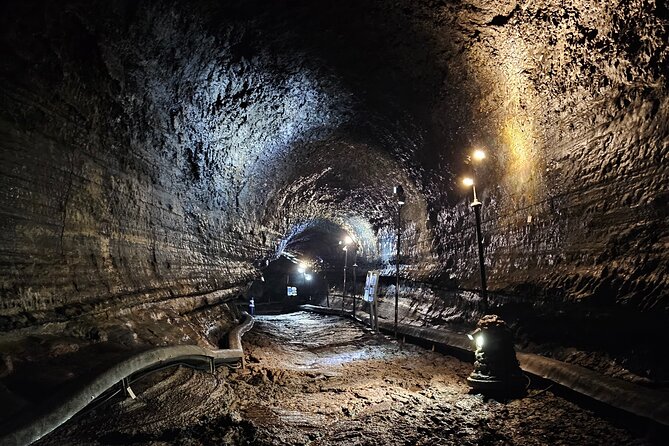
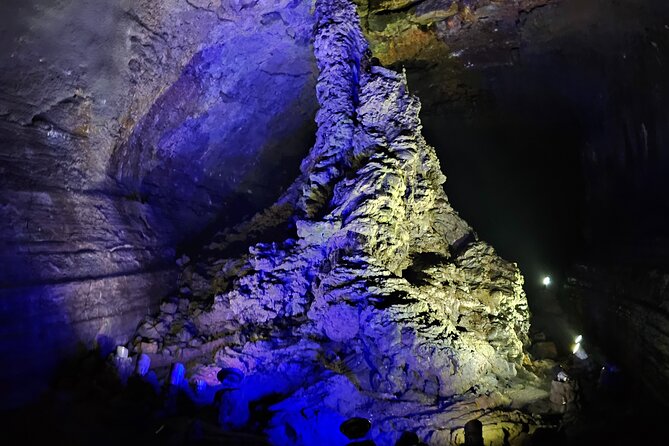
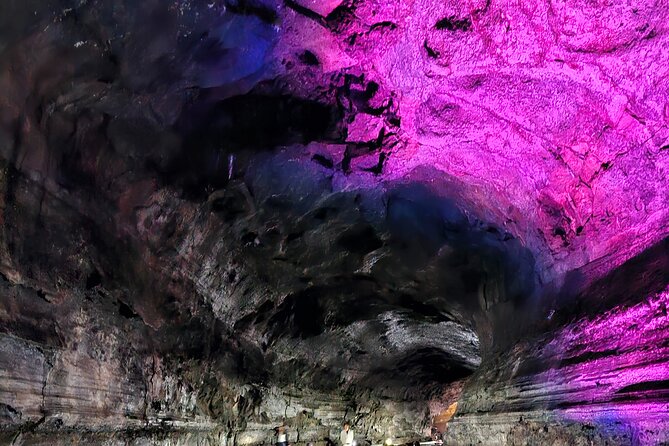
Manjanggul Lava Tube is the most unusual stop on the route when it is operating. Jeju’s Geomunoreum volcanic system contains more than 20 caves, though only Manjanggul is open to the public. Inside, the tunnel reveals lava formations and a giant rock pillar at the end of the public section.
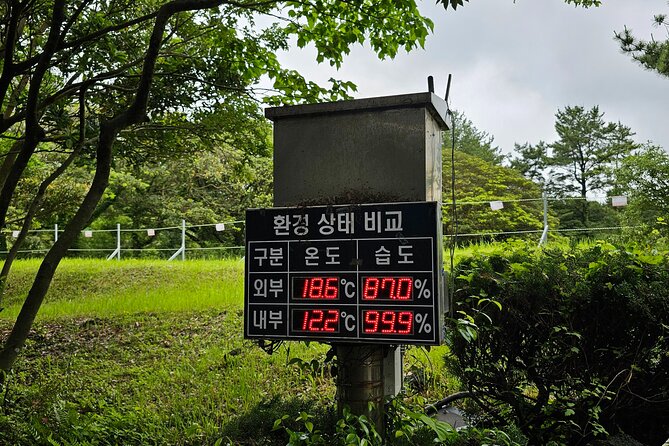
The cave temperature remains roughly 11 to 21 degrees Celsius across the year, so it can feel cool even on a hot Jeju day. Bring a light layer and wear shoes suited to a cave path.
There is an important catch. The supplied tour details state that Manjanggul Cave is closed for safety inspection and internal construction from December 29, 2023, through August 31, 2025. If it is closed on your date, another place is used instead. The regular monthly closure is also noted as the first Wednesday, with Jeju Haenyeo Museum offered as an alternative.
Because the closure information has a stated end date, confirm the current status before paying for the tour. Do not book this route solely for the cave unless the operator confirms that it will be open.
Hamdeok and Woljeongri, Jeju’s beach stops
The Jeju City departure adds two beaches, each with a different feel.
Hamdeok Beach is about 20 kilometers from Jeju Airport and is known for emerald water, white sand, clear shallows, and palm trees. Seoubong Peak rises beside the beach, and the area connects with Jeju Olle Course 19.
You get about 30 minutes here. That is enough for photographs, a short walk, and a quick look at the water. It is not enough for a proper beach day, so adjust your expectations. Hamdeok works as a refreshing break between inland and coastal stops.
Woljeongri Beach gets about 15 minutes. Its white sand, green-blue water, and road of tea houses and coffee shops make it a pleasant photo stop. The short visit means you will probably not have time to settle into a cafe, but you can see why the beach is popular.
These stops add color and breathing room to the Jeju City route. If beaches matter more to you than village culture, this departure pattern is the natural choice.
Seopjikoji or Seongeup Folk Village
The final choice from Jeju City lets you shape the day around your interests.
Seopjikoji is a cape near Seongsan Ilchulbong. Its cliffs project into the ocean, and a walk along the coast leads toward a white lighthouse with dark blue water behind it. Jeju ponies may be grazing on the grass, though sightings are not guaranteed.
You get about 40 minutes. That is enough for a brisk coastal walk and photographs, but not a long visit to the Glasshouse or Yumin Art Gallery, both designed by architect Tadao Ando. Choose this stop if you want open air and sea views.
Seongeup Folk Village takes about 20 minutes. It remains a living village, not simply a staged display, and is protected as an Important Folklore Cultural Heritage site. Residents act as volunteer guides, and the old saw-leaf zelkova and Japanese hackberry in the village center are worth noticing.
Choose Seongeup if you want a glimpse of traditional Jeju life. The short time makes this more of a compact introduction than a full cultural visit.
O’Sulloc Tea Museum as the Seogwipo alternative
From Seogwipo, you can choose O’Sulloc Tea Museum instead of Manjanggul Cave. The museum sits beside the Seogwang tea fields and opened in 2001 to present Korean tea and tea culture.
The visit lasts about 50 minutes and includes the museum, a nature-focused rest area, and a cafe serving tea-based food and drinks. Admission is listed as free, though anything you buy at the cafe is your own expense.
This is a calmer option than a lava tube. Pick it if you want a break from cliffs and walking, or if Manjanggul is closed. It also gives the day a different rhythm after the busier volcanic and waterfall stops.
What the $320 group price really covers
The price is $320 per group of up to four, not $320 per person. At full capacity, that works out to $80 each before entrance fees and meals.
That is fair value if you are traveling as a family or small group and would otherwise need several taxis. Fuel, parking, insurance, pickup, and drop-off are included. You also have the advantage of a vehicle waiting while you visit each site.
The value is weaker for one or two people unless convenience matters greatly. Public transport or self-arranged taxis could cost less, but they would require more planning and might make this many-stop route difficult in one day.
The driver speaks simple English, Japanese, or Chinese. Communication should be enough for pickup times, stop names, and basic route questions, but do not expect a full historical lecture in English. One named driver, Hyun-woo Lee, is noted as having workable English. Manager Hong-min Lee handles the service and has been responsive to schedule requests, including an earlier 7:30 a.m. pickup request.
Entrance fees are extra for Jeongbang Falls, Jusangjeolli, Seongsan Ilchulbong, and Manjanggul Cave when open. Lunch, drinks, and personal purchases are also not included.
Who should book this private route?
I would choose this tour if you want to see Jeju’s major natural sights without renting a car. It suits families, couples, and groups of friends who value pickup, a private vehicle, and the ability to choose between a few final stops.
It also works well for a first visit when you want broad coverage rather than a single long hike. The route introduces Jeju’s volcanic origins, coastal scenery, waterfalls, beaches, tea culture, and village traditions in one day.
I would hesitate if you dislike tight schedules or want long walks at each attraction. Seongsan Ilchulbong, Seopjikoji, and Oedolgae all reward extra time, while this tour gives you only a taste of each. You should also reconsider if Manjanggul Cave is your main goal, since the stated closure may affect your date.
Free cancellation is available up to 24 hours before the start time. Inside that window, the payment is not refunded and changes are not accepted.
Should you book the Jeju UNESCO day tour?
Book it if you have one full day, are staying in Jeju City or Seogwipo, and want a private way to connect the island’s headline sights. The strongest value comes with four people sharing the $320 price.
Before booking, confirm three things: your pickup city, the exact choice of optional stop, and whether Manjanggul Cave is open on your date. If those details fit your plans, this is a practical and varied introduction to Jeju, with enough scenery to leave you planning a slower return visit.
FAQ
How long does the Jeju day tour last?
The tour lasts approximately 8 to 9 hours.
How many people can join the tour?
Up to four people use a regular taxi. Groups of five or more use a jumbo taxi or minivan, and groups of nine or more use a mini-bus.
Is pickup and drop-off included?
Yes. Pickup and drop-off services are offered from Jeju Island, with the route based on whether you depart from Jeju City or Seogwipo City.
Are fuel and parking fees included?
Yes. Fuel and parking fees are included in the tour price.
Are entrance fees included?
No. Entrance fees for Jeongbang Waterfall, Jusangjeolli, Seongsan Ilchulbong, and Manjanggul Cave are not included.
What happens if Manjanggul Cave is closed?
If Manjanggul Cave is closed, Jeju Haenyeo Museum is offered as an alternative. The supplied information also states that the cave is closed for safety inspection and internal construction through August 31, 2025.
What languages does the driver speak?
The driver speaks simple English, Japanese, or Chinese. Mr. Hyun-woo Lee is one named driver associated with the service.
Recently added around Jeju
- Jeju Airport (CJU) Private Transfer to Jeju City Centre/Seogwipo★ 3.5 · 4 reviews
- 2 Day Private pictures of Nature Tour very experience taxi tour★ 5.0 · 4 reviews
- Jeju: K-Drama Spot When Life Gives You Tangerines Hotel Pick★ 5.0 · 4 reviews
- Seogwipo(The southern city of Jeju)City Walking Tours with Sunset★ 5.0 · 4 reviews
- Jeju Island: Sunrise Guided Tour with Hotel Pickup★ 4.7 · 4 reviews
- Jeju Highlights Day Trip (East Course)★ 5.0 · 4 reviews
- 2 Days Private Taxi Tour – West and South of Jeju Island★ 5.0 · 4 reviews
- Full Day Jeju Private Customizable highlight Tour★ 5.0 · 5 reviews
Jeju Tours, compared.
East Jeju Essentials – Seongsan Ilchulbong (UNESCO) & Haenyeo
Read the review →
South-West Jeju Essentials: Hallasan & Signature Highlights
Read the review →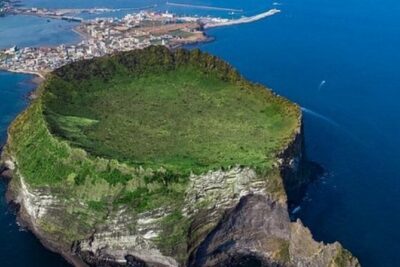
Jeju Island English Private & Flexible Tour any number anywhere
Read the review →
Day Tour with Seongsan Peak & Haenyeo Performance
Read the review →South-West Jeju Essentials: Hallasan & Signature Highlights
Read the review →Browse the lists this tour appears in