
Reviewed · JEJU TOURS
2Days Private tour in jeju island – East/West/South of Jeju
Jeju’s big appeal is its variety, and this two-day private tour packs in lava caves, a volcanic crater, waterfalls, sea cliffs, beaches, a folk village, and a traditional market. You move by private vehicle, so you are not tied to a large group or a fixed bus route.
I like the way the tour joins Jeju’s natural sights with local life, especially the Haenyeo Museum, Seongeup Folk Village, and Dongmun Market. I also like the flexible guiding style associated with Mr. Ko, who can help with restaurant ideas and is happy to take photos.
The main catch is the pace. There are 17 stops across two long days, and some visits are brief. Admission costs are also not fully covered, so you should budget extra for the paid attractions.
Key points to know before booking
- A private vehicle covers the island’s far-flung sights: Pickup and drop-off are offered anywhere in Jeju, with fuel and parking included.
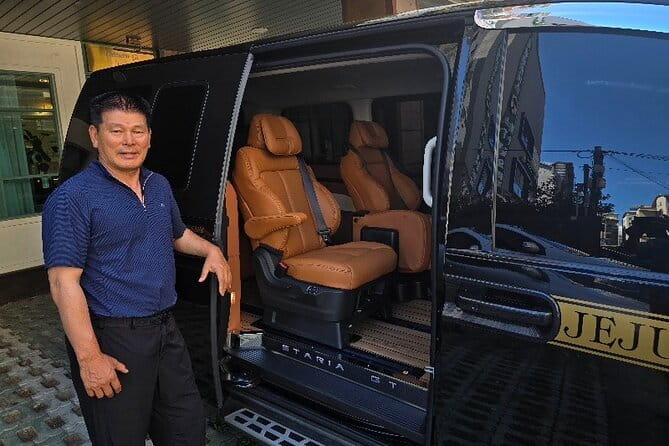
- Mr. Ko adds a personal touch: He is described as friendly, flexible, enthusiastic about Jeju, and skilled at taking photos.
- The east gets the strongest nature focus: Manjanggul Cave, Seongsan Ilchulbong, Seopjikoji, and Sangumburi Crater bring the island’s volcanic past to life.
- Day two follows the south and west coast: Expect waterfalls, basalt cliffs, Yongmeori Coast, tea fields, wind turbines, and beaches.
- The schedule is ambitious: You see a great deal, but this is better for sightseeing coverage than slow, unhurried exploration.
- Admission fees need planning: About $20 per person is listed separately, with lunch, drinks, and personal spending also extra.
Why this two-day Jeju tour works
Jeju is easy to underestimate on a map. The island’s main sights sit around the coast and inland volcanic areas, and public transport can turn a simple sightseeing day into a string of long waits and transfers. This private tour solves that problem with an air-conditioned taxi, jumbo taxi, minivan, or minibus.
You are booking the vehicle for your own group, up to four people at the listed price of $640. That works out to $160 per person for four people, or $320 per person for two. It is not the cheapest way to see Jeju, but the value improves when you split the cost among a full group and consider the included fuel, parking, pickup, and drop-off.
The driver provides basic English or Chinese, depending on the assigned guide. Mr. Ko is the name most closely linked with the strongest personal service. He is also a photography enthusiast, which matters at places such as Seopjikoji, Woljeongri Beach, and Handam Coastal Trail, where a few well-timed photos can make the stop more rewarding.
The route can change slightly if you stay in Seogwipo instead of Jeju City. That is sensible: reducing backtracking matters on an island where road time can eat into your sightseeing.
A few more Jeju half-days to weigh up
- Jeju English Private Taxi Tour(1day, 2days, 3days & 1 to 12pax)
★ 5.0 · 118 reviews - 2 Days Jeju Island Private Taxi Tour (East/West of Jeju Island )
★ 5.0 · 22 reviews - Private 2Days Tour Best Jeju attraction place in Jeju island
★ 5.0 · 11 reviews
Day one: lava, sea views, and Jeju’s volcanic east
Manjanggul Cave and the island beneath your feet
Manjanggul Cave is one of the day’s most unusual stops. It is a lava tube formed when molten rock flowed through the ground, leaving a long underground passage behind. The full cave system reaches about 7,400 meters, but you explore roughly one kilometer.
Give yourself the full two hours listed here. The cave is not simply a quick photo stop. You are seeing the shapes left by flowing lava, including the rough walls and tunnel forms that make Jeju’s geology easier to understand. The floor may feel uneven, so sensible shoes are useful.
The cave is a UNESCO World Natural Heritage site, but the real appeal is its directness. You do not need a museum label to understand what happened here. The tunnel itself tells the story.
Woljeongri Beach for coffee and coastal air
Woljeongri adds a gentler change of pace. Cafes line the beach, and you have about an hour for coffee, photographs, or a short look at the water. Wind generators and benches give the shoreline a distinctive feel.
This is a good place to avoid rushing out of the vehicle, especially after the cave. You can sit, take in the sea air, and watch the coastal road traffic pass. Food and drinks are not included, so this is one of the easiest points to buy something at your own expense.
The stop is strongest for people who enjoy a relaxed seaside setting rather than a formal attraction. If you prefer major monuments, you may find the hour more than you need.
A different way to spend a day from here:
- Jeju: Eastern Jeju UNESCO Spots Day Tour
★ 4.9 · 1,148 reviews - Jeju: Western and Southern Sightseeing Day Tour
★ 4.8 · 972 reviews - East Jeju Essentials – Seongsan Ilchulbong (UNESCO) & Haenyeo
★ 5.0 · 939 reviews - Jeju: Southern Top UNESCO Spots Bus Tour
★ 4.9 · 648 reviews
Seongsan Ilchulbong, Jeju’s volcanic crown
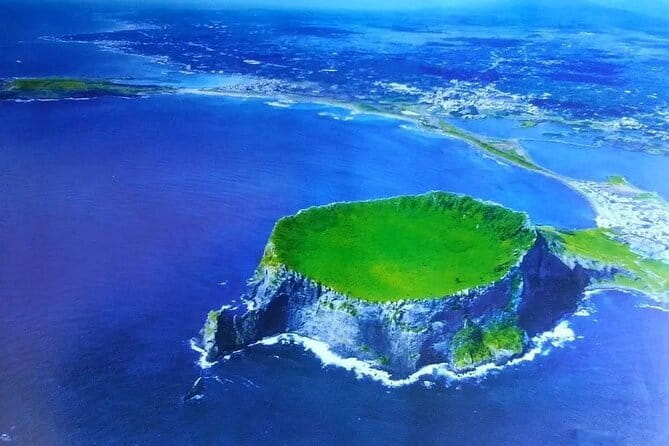
Seongsan Ilchulbong is one of Jeju’s signature sights. The volcanic peak rises 182 meters and has a broad crater at the top. Its name refers to a mountain shaped like a castle, while Ilchulbong means sunrise peak.
The schedule allows two hours, enough for the listed climb up and down, which takes about an hour round trip. You will want extra time for views and photographs. This is the most physically demanding stop on day one, though the climb is relatively short compared with a full mountain hike.
The admission fee is not included. Bring water and wear shoes with a good grip. If rain or wind arrives, the climb becomes less pleasant, and the guide may need to adjust the timing.
Seopjikoji and the eastern coast
Seopjikoji offers open coastal scenery and another chance for photographs. The itinerary description repeats details about Woljeongri Beach, so the exact focus at Seopjikoji is less clearly spelled out. Still, its place in the east-coast route makes it a useful scenic stop after Seongsan Ilchulbong.
Allow about an hour. You can expect sea views and space to stretch your legs, but the quality of the visit will depend on weather. This is one of the stops where a flexible driver and a camera-friendly guide can make a difference.
Seongeup Folk Village, with a look at older Jeju life
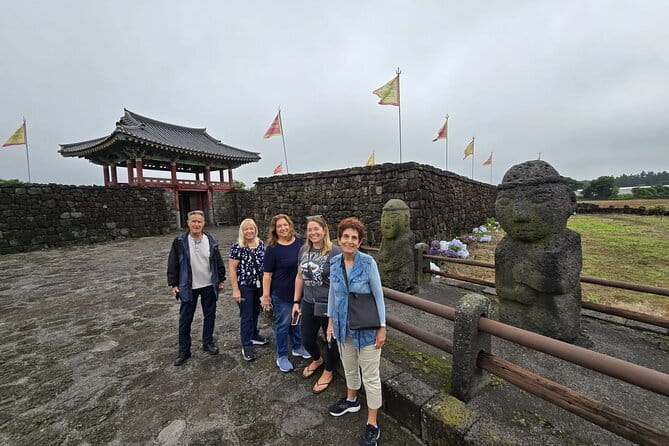
Seongeup Folk Village sits near Hallasan and preserves a village culture dating from 1410 to 1914. Here, the tour shifts from rocks and water to the way people lived on Jeju.
You have about an hour. That is enough for a first look at the village and its cultural features, though it is not enough for a slow study of every building. I like this stop because it gives the day some human context. Jeju can otherwise become a parade of scenic viewpoints.
Keep your expectations grounded. This is a short guided visit rather than a full cultural workshop, and the tour does not list a hands-on activity.
Jeju Stone Park and Sangumburi Crater
Jeju Stone Park explains the island’s stone culture through museum displays and outdoor ecological areas. Jeju is often called a land of stones, and this stop helps connect the black volcanic rock you see around the island with local building traditions and daily life.
Admission is extra, and the visit lasts about an hour. If you are more interested in scenery than exhibitions, you may prefer to keep this stop brisk.
Sangumburi Crater brings you back outdoors. It is a parasitic volcanic crater linked to Hallasan and is described as Jeju’s only submerged volcano. The crater’s outer circumference is about 2,067 meters.
The tour gives you an hour here. That is a reasonable amount of time for a walk and views, though conditions can change the experience. Wind, rain, and visibility matter at open volcanic sites.
Haenyeo Museum and Dongmun Market
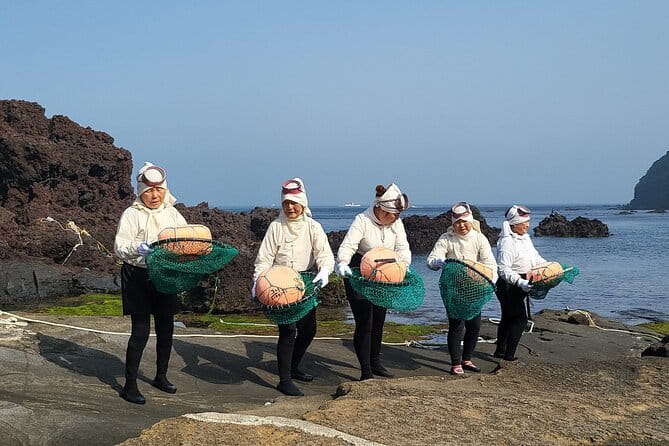
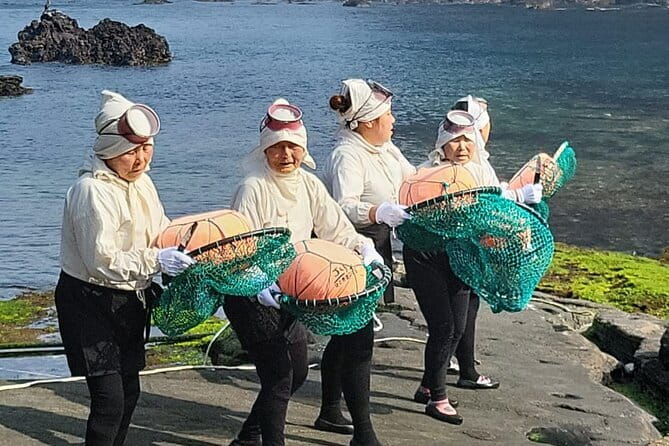
The Haenyeo Museum focuses on Jeju’s famous female divers and the wider life of fishing villages. Exhibits cover the ocean, fishing, folklore, and coastal communities. This is one of the most meaningful stops on the tour because it presents Jeju through the work and traditions of its people, not just its scenery.
Admission is not included, and the planned visit is one hour. It is worth protecting that time rather than treating the museum as an afterthought.
Day one ends at Dongmun Market, with only 30 minutes listed. The market offers food and a look at ordinary Jeju life. That half-hour is enough for a quick walk and perhaps a snack, but not a full meal. Since lunch and drinks are not included, you should plan your eating around the route rather than assume the market visit will cover it.
Day two: waterfalls, basalt cliffs, and the western coast
Jeongbang Waterfall, where fresh water meets the sea
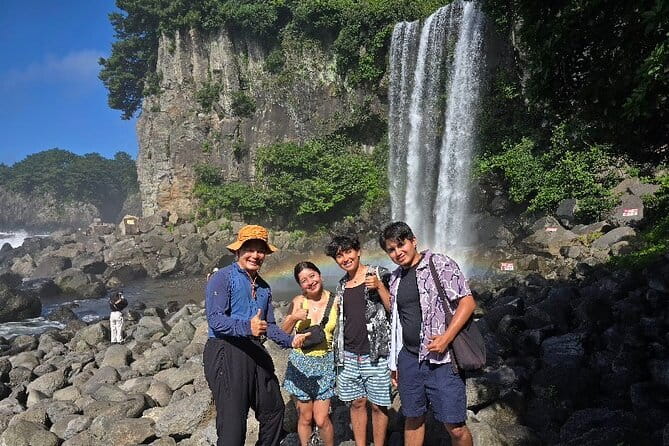
Jeongbang Falls is one of Jeju’s three major waterfalls and the only one in Korea described as falling directly into the sea. The water drops about 23 meters, making this a memorable first stop in the south.
The visit lasts about an hour, and admission is extra. Expect some walking near the shore, so shoes with decent grip help. The combination of falling water and open sea makes this more distinctive than a standard inland waterfall.
Oedolgae and Jeju Olle Course 7
Oedolgae is a solitary stone pillar rising about 20 meters from the sea. It marks the beginning of Jeju Olle Trail Course 7 and is also known as Janggun-seok or Halmang Rock.
The tour allows an hour. You do not need to walk the entire trail to enjoy the sight. The value here is the coastal path and the chance to see one of Jeju’s striking offshore rock formations without committing to a long hike.
Jusangjeolli, the basalt columns
The columnar joints, listed in Korean as Jusangjeolli, look like carefully cut stone pillars along the coast. They formed when basaltic lava cooled and cracked into regular vertical shapes.
The stop is only 30 minutes, so think of it as a focused viewpoint rather than an extended walk. That short timing keeps day two moving, but it can feel tight if you want many photographs.
Yongmeori Coast at Sanbangsan
Yongmeori Coast curves below Sanbangsan Mountain. Its name means dragon’s head because the sandstone shoreline appears to reach into the sea in that shape.
The planned visit is 90 minutes, and admission is extra. This is one of the places where weather and sea conditions matter. The coast is best enjoyed at a safe, comfortable pace, and the route may need adjusting if conditions are poor.
I would keep this stop high on your priority list. It gives you a different rock formation from the volcanic basalt seen elsewhere, and the coastal setting feels more rugged and sculpted.
O’sulloc Tea Museum
O’sulloc Tea Museum opened in 2001 and presents tea-related items from Korea and abroad. It combines traditional East Asian tea culture with modern design and a more polished visitor setting.
The visit lasts an hour, with no admission fee listed. This is a useful rest stop after the coast, especially if you want a calmer indoor break. It also gives the itinerary a different flavor from the repeated cliffs and beaches.
Sinchang Windmill Coastal Road
At Jeju’s western end, the Sinchang Windmill Coastal Road runs beside an offshore wind farm. White wind turbines line the coast, creating a strong contrast between industrial energy and open sea.
You have an hour here. The stop is mainly about the drive and the views rather than a formal attraction. It is also a good example of how this tour uses the road itself as part of the sightseeing.
Hyeopjae Beach and Handam Coastal Trail
Hyeopjae Beach is one of western Jeju’s best-known beaches and forms part of Jeju Olle Course 14. The visit is only 30 minutes, so you will get a quick coastal look rather than swimming time or a long beach afternoon.
Handam Coastal Trail, also called Gwakgeum Olle Trail, runs 1.2 kilometers from Aewol Port to Gwakji Gwamul Beach. The tour allows another 30 minutes, which means you will walk only a portion of the path.
That short timing is the clearest sign of this tour’s style. It gives you a taste of many places instead of a full experience at each one. If you want a leisurely beach day, this is not the right format. If you want to compare several parts of Jeju in two days, it makes good sense.
The pace, the vehicle, and the guiding
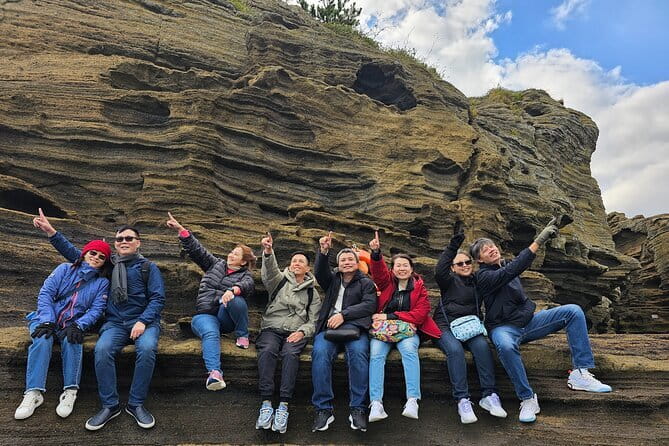
The private setup is the tour’s biggest practical advantage. You can leave from your Jeju location, ride in air conditioning, and avoid arranging separate taxis between distant sights. Fuel and parking are included, which removes two common costs from a self-planned island trip.
The price is $640 per group of up to four. For a full group, that is a fairer deal than it first appears, especially if you value door-to-door transport and a driver who can adjust the order of stops. For two people, the cost is harder to justify unless convenience is a high priority.
Mr. Ko is repeatedly associated with a warm, attentive approach. He is described as prompt, easy to communicate with, flexible about stops, and willing to help with restaurant suggestions. He even contacted other people for food advice when he did not have a firm answer himself, which is the sort of small effort that can rescue a meal.
You should also know that the two days may not use the same guide. One booking experience had different guides for each day, with Mr. Ko accompanying the first day. That is not necessarily a problem, but you should not assume you will have one named guide throughout.
Basic English or Chinese is offered, not advanced interpretation. The tour works best when you want practical help, route management, photos, and simple explanations rather than a long academic talk at every stop.
What the tour costs beyond $640
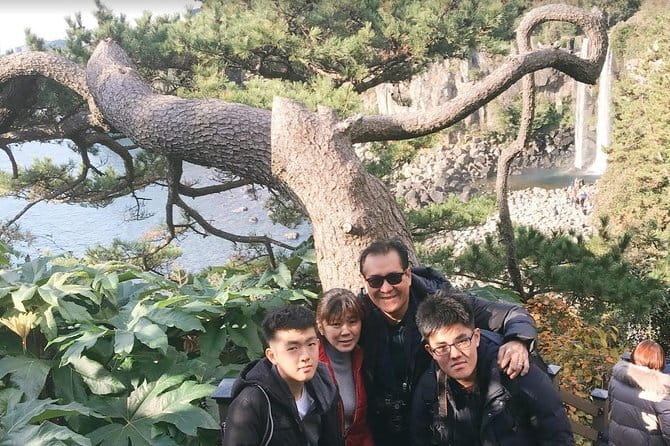
The package includes the vehicle, insurance, pickup, drop-off, fuel, and parking. Lunch, snacks, drinks, and personal purchases are not included.
Admission charges are listed separately at about $20 per person. Since individual paid stops include places such as Seongsan Ilchulbong, Jeju Stone Park, the Haenyeo Museum, Jeongbang Waterfall, and Yongmeori Coast, confirm the exact total when booking.
Gratuities are recommended but not required. If your driver handles restaurant help, photos, umbrellas in bad weather, and route changes, you may decide to tip for that extra care.
The tour is generally suitable for most people, but the climbing and walking stops still require ordinary mobility. Seongsan Ilchulbong is the main uphill section, while the coasts may involve uneven ground.
Who should book this Jeju itinerary
I would recommend it to first-time visitors with only two days, families or friends who can share the group price, and anyone who does not want to drive on unfamiliar roads. It is also a good fit if you want a broad introduction to Jeju rather than a specialist trip focused only on food, hiking, or beaches.
You will get the most from it if you accept the brisk schedule. Keep meals simple, wear comfortable shoes, and tell the guide early if one or two stops matter most to you.
I would hesitate if you prefer long museum visits, extended beach time, or a quiet pace. The itinerary covers east, south, and west Jeju, but that reach comes at the cost of lingering.
Should you book this private Jeju tour?
Book it if your priority is seeing Jeju’s major natural sights without wasting time on transport. The combination of Manjanggul Cave, Seongsan Ilchulbong, Jeongbang Falls, Yongmeori Coast, O’sulloc, and the western beaches gives you an unusually broad first look at the island.
The strongest reasons to choose it are the private vehicle, flexible routing, included fuel and parking, and the personal service linked with Mr. Ko. The main reasons to pause are the price for smaller groups, extra admission fees, and the packed schedule.
For four people sharing the cost, this is a practical and well-rounded way to cover Jeju in two days. For two people, compare the price with hiring separate taxis or building a smaller itinerary around your top priorities.
FAQ
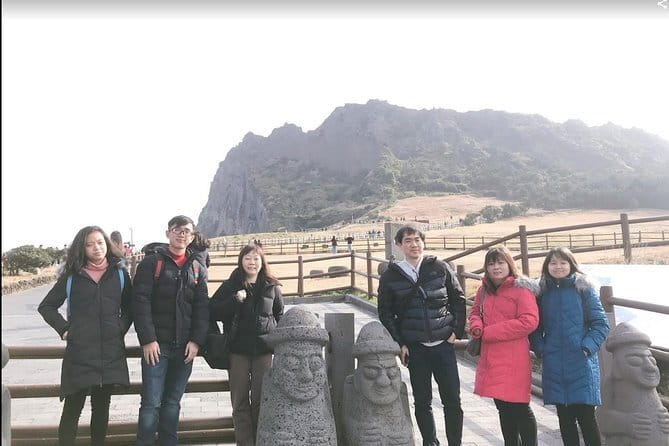
Where does the tour start?
The standard itinerary starts from Jeju City, with pickup available from your location in Jeju.
Can the tour start in Seogwipo City?
Yes. If you start in Seogwipo City, the route changes slightly to reduce unnecessary driving and include suitable natural attractions.
How long is the experience?
The tour lasts approximately two days.
How many people can join the private tour?
The listed price covers one private group of up to four people.
What type of transportation is provided?
Transportation may be by regular taxi, jumbo taxi, minivan, or minibus. The vehicle is air-conditioned.
Are fuel and parking included?
Yes. Fuel and parking fees are included in the tour price.
Is pickup and drop-off provided?
Yes. Pickup and drop-off services are offered from your location in Jeju.
Are meals included?
No. Lunch, food, drinks, and personal expenses are not included.
Are attraction admission fees included?
No. Admission fees are listed separately, at about $20 per person.
Can I cancel for a full refund?
Yes, if you cancel at least 24 hours before the experience start time. Cancellations made less than 24 hours before the start time are not refunded.
Recently added around Jeju
- Jeju Airport (CJU) Private Transfer to Jeju City Centre/Seogwipo★ 3.5 · 4 reviews
- 2 Day Private pictures of Nature Tour very experience taxi tour★ 5.0 · 4 reviews
- Jeju: K-Drama Spot When Life Gives You Tangerines Hotel Pick★ 5.0 · 4 reviews
- Seogwipo(The southern city of Jeju)City Walking Tours with Sunset★ 5.0 · 4 reviews
- Jeju Island: Sunrise Guided Tour with Hotel Pickup★ 4.7 · 4 reviews
- Jeju Highlights Day Trip (East Course)★ 5.0 · 4 reviews
- Jeju Day Tour – World Heritage & UNESCO★ 5.0 · 4 reviews
- 2 Days Private Taxi Tour – West and South of Jeju Island★ 5.0 · 4 reviews
Jeju Tours, compared.
East Jeju Essentials – Seongsan Ilchulbong (UNESCO) & Haenyeo
Read the review →
South-West Jeju Essentials: Hallasan & Signature Highlights
Read the review →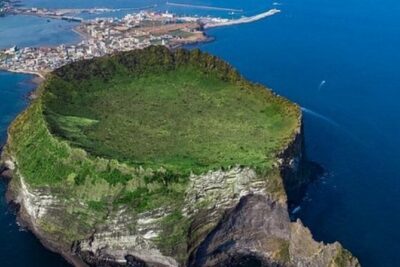
Jeju Island English Private & Flexible Tour any number anywhere
Read the review →
Day Tour with Seongsan Peak & Haenyeo Performance
Read the review →South-West Jeju Essentials: Hallasan & Signature Highlights
Read the review →Browse the lists this tour appears in